



Latest Version
October 26, 2026
Rollic Games
Puzzle
iOS
0
Report a Problem
More About :game
Game Overview
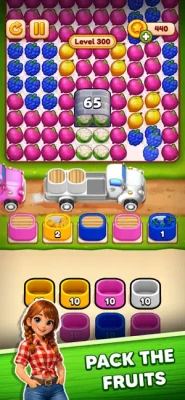
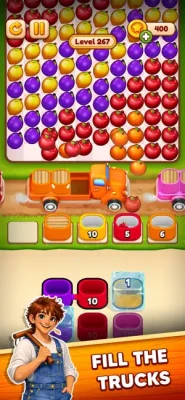
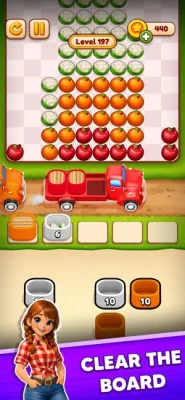
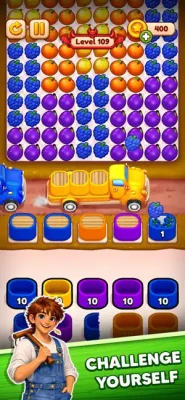
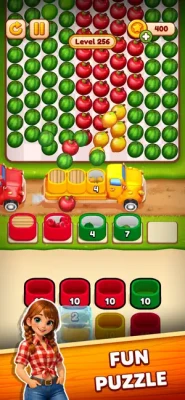
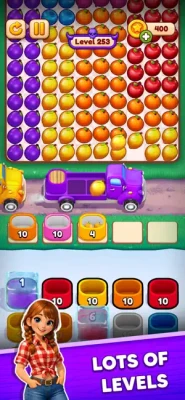
Harvest Jam is a casual farming-themed puzzle game developed by Rollic Games. It combines colorful fruit sorting with a truck-loading mechanic that challenges players to think ahead before making each move. Instead of simply matching identical items, players must manage a sequence of tasks, moving fruits into the correct boxes and ensuring those boxes reach trucks of the corresponding colors.
The game is designed for players who enjoy satisfying sorting puzzles, simple controls, and challenges that become more demanding as they progress. Its straightforward mechanics make it easy to understand, while the need to coordinate fruits, boxes, and trucks adds a layer of strategy to each level.
Harvest Jam is available on iPhone and iPad and is free to download, with optional in-app purchases. Its appeal comes from the balance between relaxing gameplay and the careful decisions required to complete more complicated puzzles.
What Is Harvest Jam?
Harvest Jam puts players in charge of an orderly harvest operation. Colorful fruits need to be collected and sorted into matching boxes. Once a box is full, it must be sent to a truck with the same color. Filling the truck allows it to depart, making room for the next order and bringing the player closer to completing the level.
The central challenge is managing these connected actions without creating unnecessary obstacles. A fruit may appear easy to collect, but choosing it at the wrong moment can complicate the next steps. Likewise, filling a box is only part of the task because the corresponding truck must also be handled correctly.
Success depends on recognizing useful patterns, prioritizing the right colors, and thinking about how each action affects the remaining puzzle. Players who take a moment to study the board before moving will often find the game easier to manage.
Main Features of Harvest Jam
Color-Based Fruit Sorting
The main gameplay mechanic revolves around collecting fruits and placing them into boxes that match their colors. Players need to pay attention to the available colors and the order in which fruits should be collected. Good sorting decisions help prevent unnecessary moves and make the rest of the level easier to manage.
Matching Boxes With Trucks
Harvest Jam adds another layer to its sorting gameplay by requiring completed boxes to be loaded onto trucks of the same color. This means that players must consider both the box-filling process and the delivery process. A box that is ready to go is only useful when the corresponding truck can receive it.
Challenging Puzzle Levels
The game features multiple levels designed to test planning and organization. As players advance, new levels and additional mechanics introduce fresh challenges. Familiar sorting rules remain important, but the best approach may change depending on the arrangement of fruits, boxes, and trucks in a particular puzzle.
Simple and Accessible Controls
Harvest Jam uses straightforward interactions that are easy to learn. Players can focus on observing the board, selecting fruits, and planning their next actions instead of mastering complicated controls. This makes the game suitable for short gaming sessions as well as longer puzzle-solving sessions.
Casual Gameplay With Strategic Depth
Although Harvest Jam has a bright and friendly appearance, completing difficult stages can require considerable thought. Players must balance immediate progress with future possibilities, especially when several colors compete for limited space or attention.
How to Play Harvest Jam
The objective of Harvest Jam is to complete the sorting and delivery process required by each level. Players collect fruits, organize them into boxes of matching colors, and send completed boxes to the corresponding trucks.
The first step is to examine the available fruits and identify the colors that can be collected efficiently. Look for combinations that help fill a box without making the remaining board more difficult to manage.
Next, place the collected fruits into their matching boxes. Keep track of which boxes are close to being completed and which colors still require more fruits. Avoid making random selections, because an apparently convenient move may create problems later.
Once a box is full, direct it toward the truck displaying the same color. Completing this delivery helps clear the way for additional boxes and orders. Continue the process until the level's completion requirements are satisfied.
The most important rule is to think about the entire sequence rather than treating fruit collection, box filling, and truck loading as separate activities. Every stage of the process affects what can happen next.
Complete Harvest Jam Strategy Guide
Study the Board Before Making Your First Move
One of the most effective habits in Harvest Jam is to inspect the puzzle before collecting anything. Identify the visible fruit colors, available boxes, and matching trucks. This quick assessment helps you understand which actions are likely to create progress and which ones may leave you with awkward combinations.
Do not rush simply because a fruit is immediately available. Consider whether collecting it will help complete a box or whether another color should take priority. A short planning phase can prevent several unnecessary moves later in the level.
Prioritize Colors That Can Be Completed Soon
When several fruit colors are available, focus on the colors that can be organized into a complete box with the least disruption. Completing a box creates a clear objective and moves the delivery process forward.
However, do not automatically choose the color with the fewest remaining fruits. Consider whether its matching truck is accessible and whether collecting that color will interfere with a more practical sequence. The best priority is the color that offers useful progress without creating additional complications.
Plan the Entire Box-to-Truck Sequence
A frequent mistake is concentrating on filling boxes without thinking about what happens afterward. In Harvest Jam, a completed box must be sent to a truck of the corresponding color.
Before committing to a box, consider its destination. If the matching truck is not ready to receive it, completing that box may not immediately help you progress. When the board gives you several choices, prefer a sequence that allows you to fill a box and complete its delivery efficiently.
This approach helps you avoid focusing on an isolated objective while overlooking the next step in the puzzle.
Avoid Unnecessary Color Switching
Switching repeatedly between different fruit colors can make a level harder to organize. Whenever possible, work toward completing one useful color group before moving to another.
This does not mean you should always finish one color before touching another. Some puzzles may require a mixed approach because of the available fruit arrangement or other restrictions. The goal is to make deliberate changes rather than collecting fruits without a clear purpose.
A good move should either advance a box toward completion, prepare a useful delivery, or create a better opportunity for the next move.
Keep Track of Incomplete Boxes
Partially filled boxes are important because they represent unfinished tasks. Remember which colors need only a small number of fruits and which ones require more work.
If a box is nearly full and its matching truck can accept it, completing that box may be more useful than starting a new color group. On the other hand, if completing it would create a bottleneck, working on another color may be the better decision.
Regularly reviewing unfinished boxes helps you maintain a clear plan as the board changes.
Make Every Move Serve a Purpose
Random actions are one of the easiest ways to lose control of a sorting puzzle. Before selecting a fruit, ask yourself what the move will accomplish.
Will it help complete a box? Will it support a truck delivery? Will it make the remaining colors easier to organize? If the answer is unclear, take another look at the board before proceeding.
This simple habit encourages logical decisions and becomes especially valuable in more demanding levels.
Adapt Your Strategy to Each Level
Not every Harvest Jam puzzle should be solved in the same way. Some boards may allow a straightforward sequence of matching and delivery, while others may require you to alternate between colors or prepare several boxes before making progress.
If your usual approach stops working, do not keep repeating it automatically. Reassess the current arrangement, identify the biggest obstacle, and look for a different sequence.
Flexibility is an important part of puzzle-solving. The most effective strategy is the one that fits the current board, not necessarily the one that worked in the previous level.
Beginner Tips for Harvest Jam
Learn the Core Color-Matching Rules
New players should begin by mastering the relationship between fruits, boxes, and trucks. Fruits belong in boxes of matching colors, and completed boxes must be delivered to trucks of the corresponding colors.
Understanding this sequence makes the rest of the game easier to follow. Once the basic mechanics become familiar, you can spend more time planning and less time deciding what each action means.
Start With the Clearest Opportunities
At the beginning of a level, look for color groups that offer an obvious path toward completion. These opportunities are useful because they allow you to make progress while learning how the current board is organized.
Avoid overcomplicating an early puzzle by attempting several different plans at once. Establish a clear objective, work toward it, and reconsider your options when the situation changes.
Take Your Time
Harvest Jam rewards thoughtful decisions more than hurried selections. Even when a move seems obvious, consider how it affects the remaining puzzle.
Taking a few extra seconds to examine your options can help you avoid mistakes and reduce the need to restart a difficult level. A steady pace is particularly useful when several colors and delivery options are available.
Build Good Planning Habits Early
The habits developed in easier levels can become valuable when the game introduces more complicated challenges. Practice tracking incomplete boxes, checking truck colors, and identifying the most useful next move.
By developing these habits early, you can approach difficult puzzles with a consistent method instead of relying on guesswork.
Advanced Tips for Difficult Levels
Think Several Moves Ahead
As puzzles become more demanding, planning only one action at a time may not be enough. Consider how your next move affects the move after it.
For example, completing a box might seem beneficial, but it may not be the best choice if another color has a clearer delivery opportunity. Comparing short sequences of actions helps you identify the path that creates the most progress.
You do not need to predict every possible outcome. Simply thinking two or three steps ahead can improve your decisions considerably.
Identify the Main Bottleneck
When a level becomes difficult, look for the element preventing progress. It may be an unfinished box, a color that is difficult to complete, or a delivery step that has not yet become possible.
Once you identify the bottleneck, prioritize actions that address it. Making progress elsewhere can feel productive, but it may not solve the actual problem.
A focused strategy is often more effective than trying to advance every color at the same time.
Balance Immediate Rewards With Future Flexibility
Completing a box is satisfying, but the best move is not always the one that produces the quickest visible result. Some actions are valuable because they preserve useful options for later in the level.
When comparing two possible moves, consider both their immediate benefits and their effect on future choices. Prefer the option that makes progress while keeping the remaining puzzle manageable.
Reevaluate After Every Major Delivery
Whenever a box is delivered and a truck leaves, review the board again. The available opportunities may have changed, and your original plan may no longer be the most efficient one.
Check which colors remain, which boxes are unfinished, and what delivery opportunities are available. Adjust your priorities based on the new situation rather than following an outdated plan.
Use Restarting as a Learning Opportunity
If a level becomes unsolvable or your sequence of moves creates a difficult situation, restarting may be more productive than continuing without a clear plan.
Before restarting, identify the decision that caused the problem. Perhaps you completed the wrong box first, switched colors too often, or failed to consider the matching truck.
Use that observation to change your approach on the next attempt. A restart is most valuable when it teaches you something about the puzzle.
Common Harvest Jam Mistakes to Avoid
Collecting Fruits Without a Clear Plan
Selecting whatever fruit appears most convenient can create a disorganized board. Instead, choose fruits according to the box you want to complete and the delivery you intend to make.
Ignoring the Matching Trucks
A full box is not the end of its journey. Remember to consider the corresponding truck when planning your collection and sorting decisions.
Focusing on Only One Color
Concentrating on one color can be useful, but it is not always the best option. If that color cannot be completed efficiently, another group may offer a better opportunity to make progress.
Switching Between Too Many Objectives
Constantly changing your target makes it harder to track incomplete tasks. Establish a priority, follow it while it remains useful, and switch only when the board gives you a good reason.
Repeating a Failed Strategy
If the same sequence repeatedly leads to trouble, change your approach. Review the board, identify the cause of the problem, and test a different order of actions.
Playing Too Quickly on Hard Levels
Fast decisions may work in familiar situations, but complicated puzzles deserve more attention. Slowing down gives you time to notice useful combinations and avoid preventable errors.
How to Beat Hard Levels in Harvest Jam
The best way to approach a difficult Harvest Jam level is to divide the puzzle into manageable objectives. Start by identifying the available colors and the boxes that can realistically be completed. Then check which matching trucks can receive those boxes.
Choose an initial objective that offers clear progress. As you collect fruits, monitor the remaining requirements for each box instead of concentrating exclusively on the color you started with.
If another color becomes a better opportunity, adjust your plan. The goal is to keep the puzzle moving forward without creating unnecessary complications.
After each completed delivery, reassess the board. A new opportunity may become more attractive, or a previous priority may no longer be useful. Treat every major change as a reason to review your next move.
When you reach a point where no obvious action helps, stop and examine the relationship between unfinished boxes and their matching trucks. Look for the task that is preventing other tasks from progressing. Solving that problem can make the rest of the level easier to handle.
If you must restart, use the previous attempt to identify a better opening sequence. Repeating the same choices without learning from them is unlikely to improve the result.
The Best Strategy for Efficient Progress
Efficient play in Harvest Jam comes from combining three habits: prioritization, planning, and regular reassessment.
Prioritization helps you choose which color to work on first. Planning helps you understand how fruit collection leads to box completion and truck delivery. Reassessment allows you to change your approach when the board develops in an unexpected way.
These habits work together. Prioritizing without planning can lead to premature decisions, while planning without reassessment can leave you following an outdated strategy. Combining all three makes it easier to manage increasingly complicated puzzles.
There is no single move sequence that works for every level. Instead, develop a reliable decision-making process that helps you recognize the best available option in each situation.
Is Harvest Jam Suitable for Casual Players?
Harvest Jam is a good option for players who enjoy simple controls, colorful puzzle environments, and challenges based on sorting and organization. The main mechanics are easy to understand, so newcomers can begin playing without a lengthy learning process.
At the same time, the combination of fruit collection, box filling, and truck delivery gives players several things to consider. This added planning element can make the experience more engaging for people who enjoy thinking through a puzzle before making a move.
The game can also suit players who prefer short sessions. Each level provides a defined objective, allowing players to focus on a specific challenge whenever they have time to play.
However, players who dislike repeated puzzle attempts, advertising, or optional in-app purchases should consider those aspects before deciding whether the game fits their preferences.
Harvest Jam on iPhone and iPad
Harvest Jam is available for Apple mobile devices, including iPhone and iPad. Its straightforward controls and visual sorting mechanics are well suited to touchscreen play.
The game is free to download and includes optional in-app purchases. Players can begin with the standard experience without needing to purchase a bundle, although optional purchases may be offered during gameplay.
Device compatibility and minimum operating system requirements can change with future updates, so players should check their device's compatibility before installing the game.
Frequently Asked Questions
What Is Harvest Jam?
Harvest Jam is a casual farming-themed puzzle game developed by Rollic Games. Players collect colorful fruits, sort them into matching boxes, and load completed boxes onto trucks of the same color.
How Do You Play Harvest Jam?
Collect fruits, organize them by color, fill the matching boxes, and deliver those boxes to their corresponding trucks. Continue completing the required tasks until the level is finished.
What Is the Main Goal of Harvest Jam?
The main goal is to solve each level's sorting and delivery puzzle. Players must organize fruits efficiently, complete boxes, and match them with the correct trucks.
Is Harvest Jam Easy to Learn?
Yes. The basic rules are straightforward, making the game accessible to beginners. More challenging levels require additional planning and careful decisions.
How Can I Get Better at Harvest Jam?
Study the board before moving, prioritize useful color groups, keep track of unfinished boxes, and consider truck availability before completing a delivery. Review your strategy whenever the board changes significantly.
Why Should I Plan Before Collecting Fruits?
Planning helps prevent disorganized sorting and makes it easier to complete boxes efficiently. It also helps you anticipate which truck should receive each completed box.
What Should I Do When a Harvest Jam Level Feels Impossible?
Reexamine the board, identify the main obstacle, and look for a different sequence of moves. If restarting is necessary, use the previous attempt to avoid repeating the same mistake.
Can I Play Harvest Jam Without Paying?
The game is free to download and offers optional in-app purchases. Players can start playing without buying a paid bundle, although specific progression and purchase options may vary.
Is Harvest Jam Available on iPhone and iPad?
Yes. Harvest Jam is listed for iPhone and iPad, with compatibility depending on the device and its operating system.
Does Harvest Jam Require Strategy?
Yes. Although the controls are simple, successful play involves planning fruit collection, managing box completion, matching colors, and considering the order of truck deliveries.
Final Thoughts on Harvest Jam
Harvest Jam offers a colorful twist on sorting puzzles by combining fruit collection with box organization and truck deliveries. Its basic rules are easy to understand, but the need to coordinate each stage gives the gameplay a satisfying strategic element.
The most reliable approach is to examine each board carefully, choose a useful objective, and think about how every move affects the remaining puzzle. Avoid unnecessary color switching, pay attention to incomplete boxes, and remember that successful deliveries are just as important as filling containers.
Whether you are learning the basics or tackling more demanding levels, patience and careful planning can make a noticeable difference. With a consistent strategy and a willingness to adapt, you can approach Harvest Jam's puzzles with greater confidence and enjoy the challenge of turning a chaotic harvest into an organized operation.
Rate the Game
User Reviews








Popular Games



















 Android
 iOS
 Windows
 Xbox