
Latest Version
October 26, 2026
MOBIRIX
Puzzle
iOS
0
Report a Problem
More About :game
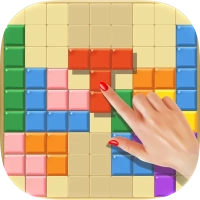
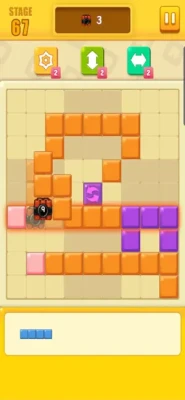
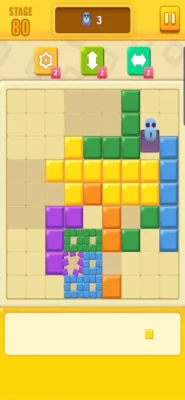
Block Cross Puzzle takes the familiar block puzzle concept and adds special objectives that require more than simply filling rows and columns. Every placement can affect the available space, the position of future blocks, and your ability to complete a stage.
The basic controls are easy to understand: drag blocks into position and create complete horizontal or vertical lines to remove them. However, the game becomes more challenging as you encounter special blocks and mission-specific requirements. Some obstacles need repeated clearing, certain blocks must be positioned inside a target area, and timed hazards can punish careless moves.
Success depends on looking beyond your next placement. You need to consider how each block fits into the current board, which lines can be completed, and how much room you should preserve for future moves.
Whether you are a beginner learning the basics or an experienced player trying to improve your scores, this guide explains the essential mechanics, practical strategies, common mistakes, and techniques for tackling more difficult stages.
What Is Block Cross Puzzle?
Block Cross Puzzle is a casual logic and board puzzle game built around arranging blocks on a grid. Instead of moving characters through levels or matching colored objects, you place block shapes to complete lines and satisfy specific objectives.
The game features a stage-based progression system, allowing you to work through missions that introduce different challenges. Classic Mode offers a separate experience focused on achieving a high score.
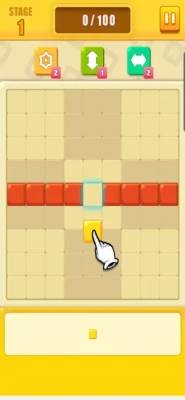
One of the game's distinctive mechanics is the ability to clear a 3 × 3 rectangular area at a specified location. This creates another tactical consideration beyond ordinary horizontal and vertical line clearing.
Special objects make the gameplay more varied. Stone blocks have durability, ice blocks require clearing to melt, water-drop objectives require blocks to be placed inside the target, and bombs introduce time-sensitive decisions. Jelly bombs can increase the durability of surrounding blocks if they are not removed within the required time, while ghosts can interfere with progress by moving around the board.
The result is a puzzle game that rewards both immediate decisions and long-term planning.
Main Features of Block Cross Puzzle
1. Simple Drag-and-Drop Controls
Blocks are moved by dragging them into position. The basic controls are straightforward, allowing new players to concentrate on learning the puzzle mechanics rather than mastering complicated inputs.
2. Horizontal and Vertical Line Clearing
Completing a horizontal or vertical line removes its blocks. Clearing lines creates more space, helps manage crowded boards, and can contribute to completing mission objectives.
3. Special 3 × 3 Clearing Mechanic
Some objectives involve creating a 3 × 3 rectangle at a specified location to remove blocks. This mechanic encourages players to consider the board's layout and plan around particular target areas.
4. Numerous Stages and Missions
The game includes multiple stages with different challenges. As you progress, you must adapt your block placement to the objectives and obstacles presented in each puzzle.
5. Stone Blocks
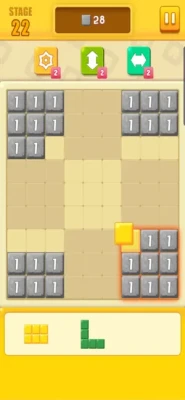
Stone blocks have durability, meaning they may require more than one clearing action to remove. They can obstruct useful spaces until you have weakened or cleared them.
6. Ice Blocks
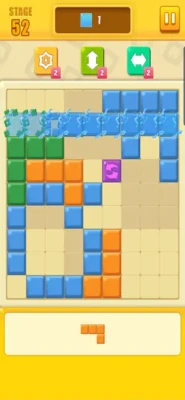
Ice-related objectives require blocks to be placed and removed to melt the ice. These challenges encourage you to focus on the relevant locations instead of clearing convenient lines without considering the mission.
7. Water-Drop Objectives
Water-drop mechanics require all relevant blocks to be placed inside the designated water drop to trigger its effect. Careful placement is important because blocks outside the target area may not contribute to the objective.
8. Jelly Bombs and Timed Bombs
Jelly bombs can increase the durability of surrounding blocks if they remain uncleared for the required time. Bombs attached to blocks must also be removed within a limited period.
These mechanics add urgency and make it important to prioritize dangerous objects before they create larger problems.
9. Moving Ghosts
Ghosts are obstacles that can move randomly and interrupt your progress. Their unpredictable movement means you should remain flexible rather than relying entirely on a plan that assumes every obstacle will stay in place.
10. Classic Mode and High Scores
Classic Mode gives players an opportunity to challenge their highest scores. It is useful for practicing efficient placement, improving spatial awareness, and learning how to preserve room on the board.
11. Achievements and Leaderboards
Achievements provide additional milestones, while leaderboards allow players to compare their results where supported. These features give you reasons to keep improving after becoming comfortable with the basic mechanics.
How to Play Block Cross Puzzle
Understanding the controls is only the first step. To make steady progress, you must learn how blocks interact with the board and how to use each move efficiently.
Step 1: Examine the Board
Before placing a block, take a moment to inspect the available spaces and identify the main objective.
Look for nearly completed rows or columns, special target areas, obstacles that need attention, and places where a new block could create a useful clearing opportunity.
A brief inspection can prevent you from filling a space that you will need later.
Step 2: Drag Blocks into Position
Move the available block into a suitable location on the board. Consider both the immediate result and the spaces that will remain afterward.
If a placement completes a horizontal or vertical line, those blocks will be removed, opening space for subsequent moves.
Step 3: Complete Lines to Clear Blocks
Try to create full horizontal or vertical lines whenever doing so supports your objective. Clearing a line can remove ordinary blocks and may help you make progress against certain obstacles.
However, not every line is equally valuable. A clearing that advances the mission is often more useful than one that simply removes a convenient row.
Step 4: Follow the Stage Objective
Pay attention to special requirements, including specified clearing areas and target objects. A stage may demand more than ordinary line completion, so check your progress and make sure your moves contribute to the required task.
Step 5: Handle Special Blocks
Stone, ice, water-drop, bomb, jelly-bomb, and ghost mechanics can change the priorities of a stage.
Identify which objects are most urgent, then choose placements that help remove obstacles or satisfy their conditions without unnecessarily crowding the board.
Step 6: Preserve Useful Space
Avoid filling every available area without a plan. Keep enough open space to accommodate future shapes and maintain access to important clearing opportunities.
If the board becomes crowded, focus on placements that create the largest practical improvement.
Step 7: Complete the Mission or Improve Your Score
In stage-based play, continue making objective-focused moves until the required task is completed. In Classic Mode, prioritize efficient clearing and board management to pursue a higher score.
Complete Block Cross Puzzle Strategy Guide
The following strategies can help you solve stages more consistently and avoid unnecessary mistakes.
Strategy 1: Plan Before Every Placement
One of the most common mistakes in block puzzle games is placing a piece simply because it fits.
Before moving a block, ask yourself three questions:
Will this placement complete a line or advance the objective?
What useful spaces will remain afterward?
Could this move make it harder to place a future block?
A placement that creates immediate progress while preserving flexibility is generally more valuable than one that fills an awkward gap without a clear benefit.
Strategy 2: Prioritize Mission Objectives
In stage-based gameplay, the objective should guide your decisions. Clearing ordinary blocks may be useful, but it is not always the fastest way to complete the mission.
If a stage focuses on ice, stone, water drops, or timed hazards, concentrate on actions that directly affect those mechanics.
For example, when working with a water-drop objective, consider whether the placement moves the relevant blocks into the required area. When dealing with a bomb, evaluate how quickly you can remove the attached block before the time limit becomes a problem.
Strategy 3: Keep the Board Flexible
Open space is one of your most valuable resources. A board with several different placement options gives you more freedom to respond to the next shape.
Try to avoid creating large, awkward gaps that are difficult to fill. At the same time, do not force every available space to become part of a complete line if doing so leaves you unable to place future blocks.
A flexible board makes it easier to adapt when the available shapes do not match your original plan.
Strategy 4: Clear Multiple Useful Lines When Possible
A placement that completes more than one line can create a substantial clearing opportunity. When considering a block, check whether it could finish both a row and a column.
Multiple line clears can open the board and help remove obstacles, but the value of the move depends on the mission. If a special target is more urgent, focus on the objective rather than pursuing a large clearing for its own sake.
Strategy 5: Understand Stone Block Durability
Stone blocks can withstand clearing actions according to their durability. Do not assume that one line clear will remove every stone block.
Track which stone blocks still need attention and look for placements that can contribute to clearing them. If a stone block is obstructing a valuable area, it may be worth prioritizing over ordinary blocks.
Avoid repeatedly clearing unrelated lines while leaving a critical stone obstacle untouched.
Strategy 6: Use Ice Mechanics to Your Advantage
Ice objectives require blocks to be placed and removed to melt the ice. This means the position of your clearing opportunities matters.
When planning a move, consider whether the affected blocks are connected to the ice objective and whether the clearing will help you progress. If several placements are possible, prefer the one that supports the required ice removal while keeping the rest of the board manageable.
Strategy 7: Complete Water-Drop Objectives Carefully
Water-drop challenges require the relevant blocks to be placed inside the specified target. These stages reward deliberate positioning rather than indiscriminate clearing.
Identify the target area early. Before placing a block, check whether it helps satisfy the requirement and whether it creates a useful arrangement for subsequent moves.
Do not focus entirely on clearing blocks elsewhere if the mission depends on moving all relevant blocks into the designated location.
Strategy 8: Remove Timed Bombs Promptly
Bombs attached to blocks must be removed within a limited time. Treat these objects as priorities because delaying the required clearing can put the stage at risk.
When a bomb appears, identify the quickest reasonable way to include its block in a clearing action. Avoid unnecessary moves that do not help address the timer.
The best decision is not always the largest line clear; it is the move that deals with the immediate threat while leaving enough room to continue.
Strategy 9: Watch Jelly Bombs
Jelly bombs can increase the durability of surrounding blocks if they are not removed within the required time. Allowing them to remain may make nearby obstacles more difficult to handle.
When one appears, consider which clearing opportunity can remove it before its effect becomes a bigger problem. If several objectives compete for attention, weigh the jelly bomb's timing against other urgent hazards.
Strategy 10: Adapt to Moving Ghosts
Ghosts can move randomly and interfere with your progress. Because their positions may change, a rigid plan can become less useful.
Recheck the board before each important placement. Adjust your approach to account for the ghost's current position and avoid relying on a gap or arrangement that may no longer be available.
Flexibility is particularly important when a ghost disrupts an area needed for a mission objective.
Strategy 11: Use the 3 × 3 Clearing Mechanic Intelligently
The game includes a special mechanic involving a 3 × 3 rectangle at a specified location. This gives you another way to remove blocks when the relevant objective calls for it.
Before attempting this clearing action, inspect the designated area and consider how the removal will affect surrounding spaces. If the mechanic contributes directly to the mission, plan your placements around it rather than treating it as an unrelated bonus.
Strategy 12: Learn from Failed Attempts
If you fail a stage, consider which decision created the biggest problem. Perhaps you ignored a timed bomb, used an important space too early, or focused on ordinary line clearing instead of the objective.
Identify the earliest move that limited your options, then try a different approach on your next attempt.
Understanding why a strategy failed is more valuable than repeating the same placements and hoping for a different result.
Best Tips for Beginners
New players can make faster progress by building a few simple habits.
Read the objective first. Understand what the stage requires before making your first move.
Look for easy line clears. Completed rows and columns can free up space and simplify the board.
Avoid random placement. Every block should have a purpose.
Leave room for future shapes. A board that is too crowded can make later moves difficult.
Learn special block behavior. Knowing what each obstacle does helps you make better decisions.
Watch timers carefully. Bombs and jelly bombs can require more urgent attention than ordinary blocks.
Recheck the board frequently. Moving ghosts and changing layouts may affect your original plan.
Practice in Classic Mode. High-score play can help you improve your placement and space-management skills.
Advanced Strategies for Difficult Stages
As the missions become more demanding, you will need to balance several objectives at once.
Identify the Most Urgent Threat
Not every obstacle deserves equal attention. A timed bomb may require immediate action, while an ordinary block can often wait.
Start by identifying any mechanic with a deadline or a growing negative effect. Then consider how to handle it without creating a more serious space problem.
Work Backward from the Objective
Instead of asking only where a block can fit, consider what must happen before the stage can be completed.
If a target area must be filled or a particular obstacle must be cleared, identify the placements and line completions that could lead to that result. This creates a more purposeful sequence of moves.
Avoid Narrowing the Board Too Quickly
A placement that seems efficient may divide the board into awkward sections or leave isolated gaps. Think about the overall shape of the remaining open space, not just the number of empty cells.
When possible, maintain broad areas that can accommodate different block shapes. This makes it easier to react when the next placement opportunity is less convenient.
Combine Clearing with Objective Progress
The strongest moves often accomplish more than one useful task. A single placement might complete a line, remove an obstacle, and open a path toward a target.
Look for these combinations, especially when the board is crowded or a mission has several requirements. However, do not sacrifice an urgent objective simply to create a larger clearing.
Reassess After Every Major Change
A large line clear, obstacle removal, or ghost movement can change the best available options. Once the board changes significantly, pause and evaluate it again.
The most effective strategy is the one that fits the current situation, not necessarily the plan you started with.
How to Get a Higher Score in Classic Mode
Classic Mode is designed for players who want to challenge their high scores. Strong results depend on maintaining space, clearing efficiently, and avoiding placements that leave the board difficult to use.
Make Useful Clears Consistently
Look for line completions that improve the board rather than relying on isolated moves. Regular clearing helps keep the available space under control.
Avoid Unnecessary Gaps
Large gaps and awkward corners can limit your placement options. Try to organize blocks so that future shapes have several possible locations.
Think Beyond the Current Piece
A placement may work perfectly for the current block but create problems for the next one. Consider the overall board after the clearing action and preserve enough space to handle different shapes.
Stay Calm as the Board Fills
When the board becomes crowded, rushed decisions can make the situation worse. Identify the most valuable available clearing and choose a placement that restores as much flexibility as possible.
Practice Consistency
Improving your high score is easier when you understand why successful placements work. Pay attention to the decisions that keep the board open and repeat those habits in later sessions.
Common Mistakes to Avoid
Placing Blocks Without a Plan
A block may fit in an empty area but still be a poor choice. Consider the resulting gaps, available line clears, and mission progress before placing it.
Ignoring Special Objectives
Ordinary clearing is not always enough to complete a stage. Make sure your moves address the specific requirement, whether it involves ice, stone, water drops, bombs, or a designated rectangle.
Leaving Timed Hazards Until the Last Moment
Waiting too long to handle a bomb or jelly bomb can create unnecessary pressure. Pay attention to timers and prioritize hazards before they become difficult to manage.
Filling the Board Too Quickly
Using every available space can leave you without a suitable place for the next block. Preserve flexible areas whenever possible.
Forgetting Stone Durability
Stone blocks may require repeated clearing actions. Track their remaining durability and avoid assuming they will disappear after a single line clear.
Following a Fixed Plan Despite Changes
Ghosts can move, and clearing blocks can change the board significantly. Reassess the situation whenever the layout changes instead of continuing with an outdated plan.
Choosing Large Clears Over Better Moves
A move that clears many blocks is not automatically the best option. Completing an urgent objective or removing a dangerous obstacle may be more important than maximizing the number of blocks cleared at once.
Is Block Cross Puzzle Good for Beginners?
Yes. Block Cross Puzzle uses simple drag-and-drop controls and familiar line-clearing mechanics, making it easy to start playing. Its stage-based missions gradually encourage players to think more carefully about placement and planning.
Beginners should concentrate on understanding the objective, recognizing useful line clears, and keeping enough space for future blocks. Learning the behavior of special objects is also important because these mechanics can change the best move in a particular stage.
Is Block Cross Puzzle Free to Play?
Block Cross Puzzle is free to download and includes advertising and optional in-app purchases. Gold packages are available for purchase, but players can begin enjoying the core puzzle experience without buying a package.
Does Block Cross Puzzle Have a Classic Mode?
Yes. Classic Mode lets players challenge their high scores. It is a useful option for anyone who enjoys open-ended block placement and wants to improve board management over repeated attempts.
Can You Play Block Cross Puzzle on a Tablet?
Yes. The game supports compatible iPhone and iPad devices. A larger screen may make the board easier to inspect and help you place blocks more precisely.
Frequently Asked Questions
What is the main goal of Block Cross Puzzle?
The main goal is to place blocks strategically, clear horizontal and vertical lines, and complete the requirements of each stage. Some missions also involve special mechanics, including 3 × 3 clearing areas and unique obstacles.
How do you clear blocks in Block Cross Puzzle?
Drag blocks into suitable positions to complete a horizontal or vertical line. The completed line is removed, creating additional space and potentially helping you advance the current objective.
What are stone blocks?
Stone blocks have durability, so they may require multiple clearing actions before they are removed. Plan placements that help reduce their durability, particularly when they obstruct important areas.
How do ice blocks work?
Ice-related objectives require blocks to be placed and removed to melt the ice. Focus on clearing opportunities that contribute to the ice objective rather than clearing unrelated spaces without a purpose.
What does the water-drop objective require?
The water-drop mechanic requires all relevant blocks to be placed inside the designated water drop to trigger its effect. Careful positioning is essential for completing this type of challenge.
How should you handle bombs?
Bombs attached to blocks must be removed within a limited time. Prioritize clearing the relevant block before the timer expires, while avoiding placements that leave the board too crowded.
What do jelly bombs do?
Jelly bombs can increase the durability of surrounding blocks if they are not removed within the required time. Removing them promptly can prevent nearby obstacles from becoming harder to clear.
How do ghosts affect gameplay?
Ghosts move randomly and can interrupt your progress. Check their positions regularly and adapt your placements instead of relying on a plan that assumes they will remain in one place.
What is the best strategy for difficult stages?
Read the objective first, identify urgent hazards, preserve open space, and prioritize moves that advance the mission. Reassess the board after major clearings and avoid placing blocks without considering future options.
How can you improve your Classic Mode score?
Keep the board flexible, complete useful lines consistently, avoid awkward gaps, and consider how each placement affects the next move. Regular practice will help you recognize more efficient arrangements.
Final Thoughts
Block Cross Puzzle combines familiar block-clearing gameplay with special objectives that reward careful planning. Horizontal and vertical lines provide the foundation, while stone blocks, ice, water drops, timed bombs, jelly bombs, moving ghosts, and designated 3 × 3 clearing areas add variety to the challenge.
The best approach is to understand the mission before placing blocks, prioritize urgent hazards, and preserve enough space to handle future shapes. In Classic Mode, efficient clearing and flexible board management are essential for pursuing higher scores.
With patience, practice, and a clear plan for each move, you can become more confident at solving stages, managing special obstacles, and getting the most out of Block Cross Puzzle.
Rate the Game
User Reviews






Popular Games



















 Android
 iOS
 Windows
 Xbox