
Latest Version
October 26, 2026
MOBIRIX
Puzzle
iOS
0
Report a Problem
More About :game
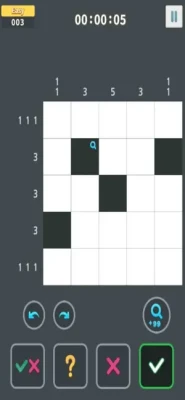
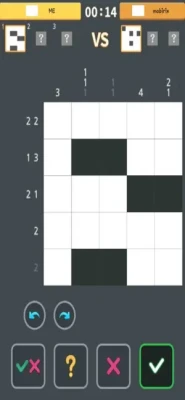
Nonogram King turns simple numbers into a satisfying test of logic and concentration. Each puzzle contains a grid with number clues along its rows and columns. Your goal is to determine which squares should be filled and which should remain empty until the hidden image is complete.
At first, the rules may seem unfamiliar, but the game becomes much easier once you understand how the clues work together. Every number provides information about a sequence of filled squares, and each correct deduction helps narrow down the possible patterns.
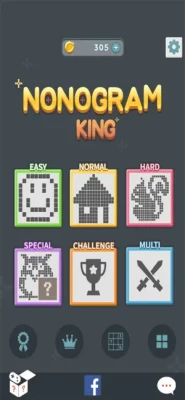
The game includes several difficulty levels, giving beginners room to learn while allowing experienced players to tackle more demanding puzzles. Special picture-completion and time-attack modes add variety, while versus gameplay provides an opportunity to test your puzzle-solving skills against another player.
Whether you want a relaxing brain-training activity or a challenge that rewards fast, accurate thinking, Nonogram King offers plenty of reasons to keep solving.
What Is Nonogram King?
Nonogram King is a picture logic puzzle game based on the nonogram format, also known as Picross or picture cross. Instead of matching colors or moving pieces, you use numerical clues to reconstruct a hidden image.
Each row and column has one or more numbers. These numbers tell you the lengths of consecutive groups of filled squares, in the order they appear. At least one empty square must separate two separate groups.
For example, a clue of 3 2 means that the line contains a group of three filled squares followed by a group of two filled squares, with one or more empty squares between them.
You must use the clues from both directions to determine the correct pattern. A square that seems uncertain when viewed from its row may become obvious when you examine its column.
This combination of deduction, pattern recognition, and careful planning is what makes Nonogram King engaging.
Main Features of Nonogram King
1. Multiple Difficulty Levels
The game offers Easy, Normal, and Hard levels. Beginners can start with simpler puzzles to learn how clues work, while experienced players can move toward more complex grids that require several steps of deduction.
2. A Variety of Puzzle Stages
Different stages provide new grids and hidden pictures to uncover. Working through the available puzzles helps you become more familiar with common patterns and improves your ability to recognize useful clues.
3. Special Picture-Completion Mode
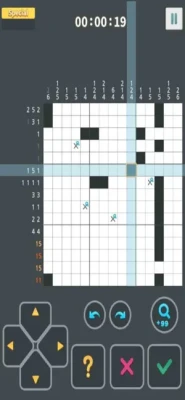
The special mode challenges players to complete a picture using pieces. It offers a different experience from standard grid solving and gives you another way to enjoy the game's picture-based puzzle design.
4. Challenge Mode
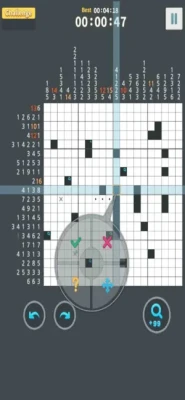
Challenge Mode introduces a time-attack format in which the goal is to complete a picture faster. It is particularly useful for players who already understand the rules and want to improve their speed.
5. Versus Gameplay
Nonogram King includes a versus mode for competitive play. This gives puzzle fans a different objective from simply clearing stages and encourages them to combine accuracy with efficient decision-making.
6. Leaderboards and Achievements
Leaderboard and achievement features give you additional goals beyond completing individual puzzles. You can track progress, pursue milestones, and compare performance where supported.
7. Simple Controls
The game uses a straightforward interface designed for touch-based puzzle solving. This makes it accessible to new players, although small numbers and grids may require extra attention on compact screens.
8. Offline Play
Nonogram King supports offline puzzle play, making it suitable for travel, waiting rooms, breaks, or other situations where an internet connection is unavailable. Online-related features, such as competitive functions or leaderboards, may require connectivity.
9. Multiple Languages and Tablet Support
The game supports 16 languages and works on compatible phones and tablets. A larger display can be especially helpful when reading small clues or checking complicated grids.
How to Play Nonogram King
Learning the basic rules is the first step toward solving puzzles efficiently.
Step 1: Choose a Difficulty
Start with Easy if you are new to nonograms. This gives you time to understand the relationship between row clues, column clues, and filled squares without immediately facing the most demanding patterns.
If you already have experience with picture logic puzzles, try Normal and gradually progress to Hard.
Step 2: Understand the Number Clues
Look at the numbers beside each row and above each column. Each number represents a group of consecutive filled cells.
A clue of 5 means five squares must be filled consecutively. A clue of 2 3 means two filled squares, at least one empty square, and then three filled squares.
The numbers describe the order and size of groups, not the exact positions of those groups.
Step 3: Find Lines with Limited Possibilities
Some lines are easier to solve than others. A long group in a short row or column may have very little room to move.
Start with those lines because they often reveal squares that must be filled regardless of where the remaining groups are placed.
Step 4: Mark Certain Empty Squares
A successful nonogram solution depends on knowing both where squares belong and where they do not belong. If a square cannot be part of any valid group, mark it as empty when the interface allows.
Empty-square marks help you separate groups and avoid accidentally filling cells that do not belong to the picture.
Step 5: Cross-Check Rows and Columns
Every filled square affects two clues: one row and one column. After making a deduction in a row, examine the corresponding column immediately.
Likewise, when a column reveals a certain square, return to its row and check whether the new information allows additional progress.
Step 6: Continue Until the Picture Is Complete
Repeat the process of identifying certain squares, marking empty spaces, and checking both directions. Avoid guessing whenever logical deductions are available.
When the grid matches the puzzle's solution, the hidden image is revealed and the stage can be completed.
Complete Nonogram King Strategy Guide
The most reliable way to solve Nonogram King puzzles is to use a consistent process. Instead of filling squares based on visual intuition, work from the clues and eliminate impossible arrangements.
Strategy 1: Calculate the Minimum Space Required
Before solving a line, determine how much space its clues require.
Add together all the group lengths, then add one mandatory empty square between every pair of groups.
For example, a line with clues 4 2 1 requires at least:
Four squares for the first group.
One empty square separating the first and second groups.
Two squares for the second group.
One empty square separating the second and third groups.
One square for the final group.
The minimum required length is nine squares.
If the line contains exactly nine cells, the arrangement is completely determined. If it contains more, the groups have some flexibility.
This simple calculation is one of the fastest ways to identify easy deductions.
Strategy 2: Use Overlapping Groups
Overlapping is one of the most powerful nonogram techniques.
Imagine a line with ten cells and a clue of seven. The group could begin in several positions, but it must occupy seven consecutive cells.
If the group starts as far left as possible, it covers cells one through seven. If it starts as far right as possible, it covers cells four through ten.
The cells shared by both arrangements must be filled. In this example, cells four through seven are guaranteed to belong to the group.
You can use the same technique on lines containing multiple groups, provided you account for their required separation and remaining space.
Strategy 3: Solve the Most Constrained Lines First
Do not feel obligated to solve the grid from top to bottom or left to right.
Instead, look for lines with the fewest possible arrangements. These may include lines with large numbers, several groups, or clues that nearly fill the available space.
A line with only one valid arrangement can immediately reveal several squares. Those discoveries may simplify other rows and columns, creating a chain of deductions.
Strategy 4: Alternate Between Rows and Columns
Solving only horizontal lines can leave you stuck because some clues do not provide enough information on their own.
After every important deduction, switch directions. Check the affected column, identify any newly forced cells, and return to the relevant rows.
This alternating process gradually reduces the number of possible patterns across the entire grid.
Strategy 5: Use Empty Cells as Logical Boundaries
Empty squares are not wasted space. They are essential clues that separate groups and rule out invalid arrangements.
For example, if a row contains a group of three followed by a group of two, at least one empty square must separate them. If another deduction establishes that a particular cell is empty, it may help determine where one group ends and the next begins.
Marking confirmed empty cells can make complex puzzles much easier to read.
Strategy 6: Recognize Completed Groups
Once a group has been fully identified, use its position to eliminate impossible cells around it.
If a group of four has been confirmed, neighboring cells may be required to remain empty when another group must follow. The exact deduction depends on the line's remaining clues and available space.
Do not assume that a visually complete-looking section is correct until it agrees with the numerical clues.
Strategy 7: Avoid Guessing Too Early
Guessing may seem like a quick way to escape a difficult puzzle, but an incorrect choice can create several conflicting lines.
Before guessing, revisit every row and column that still has unresolved cells. Check the minimum-space calculations, look for overlapping groups, and see whether confirmed empty cells restrict the possible arrangements.
If the puzzle remains ambiguous, use any available in-game assistance or carefully test possibilities only when the game permits it. If a choice produces a contradiction, return to the last confirmed logical state rather than continuing to build on an uncertain pattern.
Strategy 8: Keep the Grid Organized
A clean grid makes mistakes easier to spot. Use the game's available marking controls consistently and avoid treating uncertain squares as confirmed.
On a small phone screen, take extra care when tapping cells near one another. If a line suddenly appears inconsistent with its clue, check for accidental taps before assuming your logic is wrong.
Beginner Tips for Nonogram King
If you are just starting, these habits will help you learn faster.
Begin with Easy puzzles. Build confidence with straightforward clues before attempting complicated grids.
Read every clue carefully. The order of the numbers matters just as much as their values.
Start with large groups. Long groups often create useful overlapping cells.
Mark confirmed empty cells. This helps separate groups and reduces confusion.
Check both directions. Every square belongs to a row and a column, so both clues must remain valid.
Pause when progress stops. A fresh look at the grid may reveal an overlooked deduction.
Prioritize accuracy over speed. Consistent correct solving will eventually make you faster.
Use a comfortable screen size. A tablet may make small numbers easier to read if your phone display feels crowded.
Advanced Strategies for Hard Puzzles
Hard puzzles often require several deductions before a new square becomes obvious. The key is to keep track of possibilities without committing to unsupported assumptions.
Analyze Remaining Space
For each unresolved line, compare the total number of cells with the minimum space required by its clues. Then consider how much room remains for the groups to shift.
If a line has very little spare space, its groups have limited movement. This can reveal cells that must be filled or left empty.
Work with Line Boundaries
Once a group is forced against a boundary or a confirmed empty square, its possible positions may become much more restricted.
For example, if the first group must begin at the left edge, its length determines exactly which initial cells are filled. The next group must then fit after the required separation, reducing the available space for everything that follows.
Follow Chains of Deductions
A single confirmed square may constrain a column, which may then resolve a second row, which may finally establish another group.
After each significant discovery, inspect nearby lines again rather than continuing with an unrelated section of the grid. This makes it easier to find the next logical step.
Recheck Conflicting Lines
If a line appears impossible to satisfy, do not immediately add more marks. Review the cells that have already been filled or marked empty.
A contradiction usually means that an earlier deduction or tap needs to be checked. Correcting the first mistake is often easier than repairing several later decisions.
Develop a Repeatable Solving Routine
Experienced players benefit from following the same process on every grid:
Scan all clues for lines with limited arrangements.
Calculate minimum space for promising lines.
Fill guaranteed overlapping cells.
Mark confirmed empty cells where useful.
Cross-check affected rows and columns.
Repeat until the grid is solved or no immediate deduction remains.
This routine reduces random decisions and makes complex puzzles more manageable.
How to Win Challenge Mode
Challenge Mode introduces a time limit, so efficiency becomes more important. However, rushing without a plan can create mistakes that cost more time than careful solving.
Learn the Patterns Before Racing
Spend time practicing in the regular puzzle stages. Become familiar with common clue arrangements and the way overlapping groups reveal certain cells.
When you enter a timed challenge, you will be able to recognize straightforward deductions more quickly.
Solve Easy Lines Immediately
Look for lines that can be completed at once. A line whose clues exactly fit its length is a good example because the groups and required gaps are fully determined.
Completing these lines first can provide useful information for the rest of the grid.
Avoid Unnecessary Cell Changes
Accidental taps and repeated corrections slow you down. Make deliberate moves, especially on compact displays, and verify that the selected cells match your intended pattern.
Balance Speed with Accuracy
The objective is to finish the picture quickly, not merely to tap as many cells as possible. A short pause to verify a difficult line may prevent a much longer correction later.
Practice the Same Types of Patterns
When you encounter a clue arrangement that initially slows you down, remember the logic that solved it. Recognizing similar patterns in later puzzles will improve your performance naturally.
How to Approach Versus Mode
Versus mode adds a competitive element to the usual picture logic experience.
Know the rules before competing. Learn how the selected mode works so that you can concentrate on solving rather than figuring out the controls.
Use your strongest solving habits. Begin with clear deductions instead of making random moves under pressure.
Stay calm after a mistake. One error should not lead to several rushed decisions.
Practice before competitive sessions. Regular puzzles help build speed without the added pressure of another player.
Check connection requirements. Features involving other players may depend on network availability or the current matchmaking experience.
The best competitive approach is to combine steady accuracy with quick recognition of easy patterns.
Special Picture-Completion Mode Tips
The special mode focuses on completing a picture with pieces, offering an alternative to the standard clue-grid format.
Take a moment to understand the objective and how the pieces relate to the picture. Look for obvious placements first, then use the information from completed sections to guide the remaining choices.
If a piece does not appear to fit, avoid forcing it into place. Reconsider its orientation or position according to the mode's rules, and use the visible picture as a guide when appropriate.
Because this mode differs from ordinary nonogram solving, practice is the best way to develop a reliable approach.
Common Mistakes to Avoid
Ignoring the Order of Clues
A clue such as 2 4 is not interchangeable with 4 2. Both describe groups of different lengths, but the order changes their arrangement.
Forgetting the Required Gaps
Separate groups must have at least one empty cell between them. Filling two groups directly next to each other creates a single longer group and violates the clue.
Solving Only One Direction
A row may have several valid arrangements on its own. The matching column clue often provides the information needed to determine which arrangement is correct.
Filling Cells Based on the Picture Alone
It can be tempting to guess where a recognizable part of the hidden image belongs. However, nonograms must be solved according to the numerical clues, not by assuming what the picture should look like.
Rushing Through Hard Stages
Moving too quickly can lead to accidental taps, forgotten gaps, and inconsistent clues. Slow down whenever the grid becomes difficult to interpret.
Overlooking Empty Cells
Knowing where not to fill is just as important as identifying filled squares. Use confirmed empty cells to narrow the possible positions of remaining groups.
Repeating the Same Unproductive Approach
If a line does not reveal anything new, move to another line with more restrictive clues. Returning later with additional information may make the original line easier to solve.
How to Improve Your Nonogram Skills
Progress comes from learning how to recognize valid patterns and eliminate impossible ones.
Practice a little at a time. Short, regular sessions can help you become more comfortable with the clues without making puzzle solving feel tiring.
Review difficult deductions. When you solve a challenging line, identify what made the answer certain. Was it overlapping, a boundary, a required gap, or information from another line?
Use mistakes as feedback. If your grid becomes inconsistent, retrace your decisions and find the earliest incorrect assumption. This is more useful than simply starting over without understanding the problem.
Increase difficulty gradually. Move from Easy to Normal and then Hard when you can solve most of your current puzzles confidently.
Practice before time attacks. Build a reliable foundation before focusing on speed. Accuracy and pattern recognition will make timed play easier.
Choose a comfortable device. Clear visibility helps prevent misreading clues and selecting the wrong cells.
Is Nonogram King Suitable for Beginners?
Yes. The Easy difficulty level gives new players an opportunity to learn the basic rules at a manageable pace. The interface is designed for straightforward touch controls, and the different difficulty settings provide a path toward more demanding puzzles.
New players should begin by understanding group lengths, required gaps, and the relationship between rows and columns. Once those principles become familiar, even larger puzzles feel less intimidating.
Can You Play Nonogram King Offline?
Yes. Nonogram King supports offline play for its puzzle experience, making it useful when an internet connection is unavailable. Online-dependent functions, such as certain competitive or leaderboard features, may still require connectivity.
Frequently Asked Questions
What type of game is Nonogram King?
Nonogram King is a picture logic puzzle game. Players use number clues beside rows and columns to determine which grid cells should be filled, gradually revealing a hidden picture.
How do you solve a nonogram puzzle?
Read the numerical clues, calculate the minimum space needed for each group, fill squares that must be occupied, and mark cells that must remain empty. Check both rows and columns repeatedly until the complete pattern is determined.
What do the numbers mean in Nonogram King?
Each number represents the length of a consecutive group of filled squares. Multiple numbers represent separate groups in the order they appear, with at least one empty square between neighboring groups.
Which difficulty should beginners choose?
Easy is the best starting point for most new players. It allows you to practice the basic rules before progressing to Normal and Hard.
Does Nonogram King have a time limit?
The game includes Challenge Mode, which uses a time-attack format. Standard puzzle solving and timed challenges offer different experiences, so you can practice logic at your own pace before attempting to finish pictures faster.
Does Nonogram King include multiplayer?
Yes. The game includes a versus mode for competitive puzzle play. Availability and matchmaking may depend on connection conditions and the current player pool.
Can Nonogram King be played without Wi-Fi?
Yes. The game supports offline puzzle play, although features that rely on online services may require an internet connection.
Is Nonogram King free to play?
The game is free to download and includes advertising and optional in-app purchases. Some purchases offer in-game gold.
Is Nonogram King available on tablets?
Yes. The game supports compatible tablet devices as well as supported phones.
What is the best strategy for Hard puzzles?
Focus on the most constrained rows and columns, use overlapping groups to find guaranteed cells, mark confirmed empty spaces, and alternate between horizontal and vertical clues. Avoid guessing until you have exhausted the available logical deductions.
Final Thoughts
Nonogram King offers a satisfying blend of logic, patience, and picture discovery. Its different difficulty levels make it approachable for beginners, while Hard puzzles and Challenge Mode provide additional tests for experienced players. Special picture-completion gameplay and versus mode add variety beyond standard grid solving.
The most important skill is learning to trust the clues. Calculate the space required by each group, identify cells that must be filled, keep track of confirmed empty spaces, and check every deduction against both its row and column.
With a consistent method and a little practice, you can solve puzzles more confidently, make fewer mistakes, and enjoy revealing each hidden picture one square at a time.
Rate the Game
User Reviews






Popular Games



















 Android
 iOS
 Windows
 Xbox