
Latest Version
October 25, 2026
MOBIRIX
Puzzle
iOS
0
Report a Problem
More About :game
Bubble Shooter Clash Overview
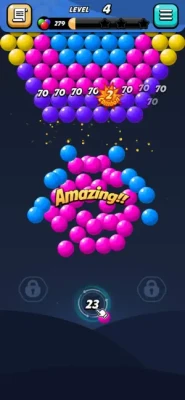
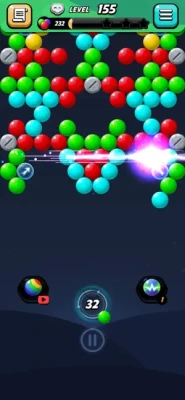
Bubble Shooter Clash combines classic bubble-shooter gameplay with increasingly challenging layouts and additional mechanics. The basic idea is easy to understand: shoot a bubble toward a group of the same color to create a match of at least three bubbles. Matching groups disappear, opening space and helping you work toward clearing the entire board.
However, finishing a level requires more than simply shooting at the largest group you can see. Each stage gives you a set number of bubbles to use. If you cannot remove all the required bubbles before running out of shots, the level ends. This makes every launch important, especially when the board contains awkward angles, isolated groups, or special obstacles.
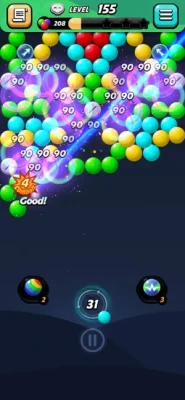
The game also introduces features that add variety to the familiar formula. You can switch to the next available bubble, use the walls to reach difficult targets, and activate items that clear lines or remove bubbles of a particular color. Special mechanics, including locks and deformation bubbles, create additional obstacles that require a different approach.
With thousands of stages and an endless mode, Bubble Shooter Clash is designed for players who enjoy both short puzzle sessions and longer attempts to improve their records.
Game Information
Game title: Bubble Shooter Clash
Developer: MOBIRIX
Genre: Puzzle and arcade
Platform: iPhone and iPad
Price: Free to download, with in-app purchases
Main objective: Clear the bubbles from each stage using the available shots
Main mechanic: Match three or more bubbles of the same color
Game modes: Stage-based levels and endless mode
Special features: Wall-bounce aiming, bubble switching, obstacles, power-ups, and leaderboards
Offline support: Yes
Device compatibility: The App Store listing specifies iOS 13.0 or later for iPhone and iPadOS 13.0 or later for iPad
How to Play Bubble Shooter Clash
The controls are straightforward, but learning how to use them effectively is the key to completing difficult levels.
1. Aim Your Bubble
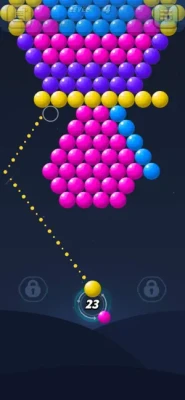
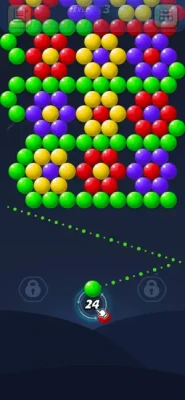
Touch the screen to display the dotted aiming guide. Move the guide until it points toward the group you want to hit, then release to fire the bubble.
Take a moment to check the projected path before launching. Aiming directly at a visible group is not always the best option. Sometimes a shot through an opening or around an obstacle can clear a much larger section of the board.
2. Match Three or More Bubbles
A successful match requires at least three bubbles of the same color to connect. If your shot joins a group of matching bubbles, the connected group is removed.
For example, firing a blue bubble into a connected group of two blue bubbles creates a match of three. Larger groups can also disappear when the shot connects them correctly.
Focus on the color of the target rather than simply choosing the closest cluster. A well-planned match can open the board, expose new targets, and prepare a more valuable follow-up shot.
3. Use the Next-Bubble Switch
The circle near the bottom of the screen lets you switch to the next bubble. This small feature can make a major difference when the current color does not match your immediate target.
Before firing, check whether switching colors would create a better match. You may be able to remove a cluster with the next bubble and save the current one for a more useful position later.
Avoid changing bubbles automatically without considering the board. The goal is to make each shot contribute to clearing the stage.
4. Bounce Shots off the Walls
Some bubbles are difficult to reach because other clusters block the direct route. Bubble Shooter Clash allows you to use wall rebounds to send a bubble toward a target from an angle.
Aim at the side wall and adjust the dotted guide until the projected path reaches the desired group. This technique is especially useful when a matching cluster sits behind another section of bubbles.
Wall shots take practice, so start with simple rebounds before attempting narrow openings or complicated angles.
5. Clear the Board Before Shots Run Out
Each stage provides a limited number of bubbles. Your objective is to remove all the bubbles required by the level before using up those shots.
If a shot fails to clear a group or create a useful connection, it can make the remaining puzzle more difficult. Try to identify the purpose of every launch before releasing it.
When only a few bubbles remain, slow down and inspect the entire board. A small group that looks unimportant may be the key to completing the level.
Complete Bubble Shooter Clash Strategy Guide
The following strategies can help you progress more consistently, reduce wasted shots, and deal with increasingly complicated stages.
Strategy 1: Look for the Most Valuable Match
The largest visible group is not always the best target. A smaller match may open a passage to several other clusters or remove bubbles that support a much larger section.
Before shooting, consider three questions:
How many bubbles will this match remove?
Will the shot expose a useful target behind the group?
Can removing this cluster disconnect other bubbles from the main formation?
The best shot is often the one that improves the board rather than simply producing an immediate match.
Strategy 2: Prioritize Groups That Support Other Bubbles
Some bubble formations depend on a small connection to the rest of the board. If you remove the connecting bubbles, the unsupported section may fall away without requiring you to match every bubble individually.
Look for narrow connections near the top or sides of the formation. A successful shot can sometimes remove a large group indirectly, saving several launches.
This is one of the most important skills in advanced bubble-shooter gameplay. Instead of treating every bubble as a separate target, study how the entire formation is connected.
Strategy 3: Clear the Upper Connections When Possible
Bubbles near the top can play an important structural role. If a large section hangs from a small group, removing that connection may clear many bubbles at once.
Do not automatically shoot toward the highest point, though. First confirm that the target is actually supporting a larger section. If the connection is not important, a different match may provide better value.
Look for opportunities to remove a small number of bubbles that hold up a much larger formation.
Strategy 4: Plan Two or Three Shots Ahead
A useful shot should solve an immediate problem while making the next move easier.
For example, imagine that a green cluster is blocked by a group of red bubbles. If the current bubble cannot reach the green cluster directly, you may need to clear or weaken the red formation first.
Before launching, identify the next likely target and consider which colors you will need afterward. This prevents you from clearing one area only to discover that the remaining bubbles are difficult to reach.
Planning several moves ahead is particularly useful when the number of available shots becomes tight.
Strategy 5: Make Smart Use of Bubble Switching
Bubble switching helps you avoid placing a color where it offers little value.
Suppose the current bubble is yellow, but there is no useful yellow target within reach. If the next bubble is purple and a purple cluster is accessible, switching may allow you to make progress immediately.
Use the feature when it improves your position, not simply because the next color looks more attractive. Sometimes keeping the current bubble is the better choice because it can complete a larger match later.
A good habit is to inspect both available colors before every important shot.
Strategy 6: Master Wall Rebounds
Wall bouncing is essential for reaching targets hidden behind other bubbles or positioned along awkward edges.
To improve your accuracy:
Identify the target cluster and the side from which it can be reached.
Estimate where the bubble should contact the wall.
Adjust the dotted aiming guide slowly.
Check whether the rebound path enters the desired opening.
Fire only when the trajectory looks reliable.
Practice with targets that are close to the wall before attempting difficult bank shots through narrow gaps.
Remember that the purpose of a rebound is not merely to reach a distant bubble. It should produce a useful match or create an opening for a later move.
Strategy 7: Learn to Read the Board Before Shooting
Rushing is one of the easiest ways to waste bubbles. A formation may look simple at first glance, but its connections can make certain shots much more valuable than others.
Spend a few seconds examining the board. Identify large clusters, isolated colors, narrow access points, and any special bubbles or obstacles.
Then decide whether your first shot should remove bubbles immediately or prepare the board for a stronger combination. In difficult stages, a setup shot can be more valuable than a quick match.
Strategy 8: Use Power-Ups When They Solve a Real Problem
Bubble Shooter Clash includes items designed to help players clear difficult formations. The game listing mentions tools that remove bubbles in a row or clear bubbles of the same color.
These items are most useful when ordinary shots cannot produce enough progress or when a difficult obstacle blocks the best route.
Consider using a power-up when:
A difficult cluster is consuming too many shots.
A special obstacle prevents access to an important area.
A color-based clearing item can remove a large number of matching bubbles.
A line-clearing item can open a useful route through the formation.
You are close to completing a stage but lack an efficient final move.
Avoid spending a booster simply because it is available. First check whether switching bubbles, using a wall rebound, or removing a connecting cluster can solve the problem without assistance.
Strategy 9: Adjust Your Approach to Each Stage
Not every level should be played the same way. Open formations often reward straightforward matching, while dense layouts may require careful targeting and indirect shots.
When a level begins, look at its overall structure and identify the main obstacle. Is the board crowded? Are the matching colors separated? Is a small group supporting a large formation? Are special bubbles preventing easy access?
Your answer should determine your plan. A strategy that works well on an open board may waste shots on a stage filled with obstacles.
Strategy 10: Learn from Failed Attempts
A failed level can still teach you something useful. Instead of repeating the same sequence, identify which shot caused the greatest problem.
Perhaps you cleared a small group that did not improve access, used a power-up too early, or left a difficult color until the end. Adjust that decision on the next attempt.
If the same stage repeatedly causes trouble, try changing your opening move. A different first shot can create a completely different set of opportunities later.
Tips for Beginners
New players can improve quickly by building a few reliable habits.
Focus on Accuracy Before Speed
There is no need to fire immediately. Use the dotted guide to understand where the bubble will travel, then make a deliberate shot.
Accuracy is more valuable than speed when a stage limits the number of launches. A careful player often makes better progress with fewer bubbles.
Match Existing Groups Whenever Possible
Creating a match with an existing cluster is usually more efficient than leaving a new bubble isolated. Before shooting, look for a target of the same color and check whether the shot will connect successfully.
If no useful direct match is available, consider switching bubbles or opening a route to another area.
Avoid Building Unnecessary Layers
Every poorly placed bubble can make the board harder to navigate. If a shot does not clear anything, think about whether it creates a useful connection for the next move.
Try to avoid leaving isolated bubbles in positions that block access to more valuable targets.
Check the Remaining Shot Count
The number of available bubbles should influence your decisions. When you have plenty of shots, you may be able to prepare the board gradually. When only a few remain, prioritize moves that clear large groups or remove important connections.
Do not wait until the final shot to start thinking about efficiency.
Experiment with the Controls
Learn how bubble switching, wall rebounds, aiming cancellation, and the expanded aiming view work. These features give you more control over difficult shots.
The game allows you to cancel aiming by dragging the dotted guide downward. It also provides a press-and-hold aiming view that offers a larger space for inspecting the shot. Become comfortable with these controls before the most difficult levels.
Advanced Techniques for Difficult Levels
Once the basic mechanics become familiar, more deliberate techniques can help you handle demanding formations.
Remove the Key Bubble, Not Just the Obvious Group
A small cluster can be more important than a large one if it connects separate sections of the board.
Look for a narrow bridge between a large formation and the rest of the bubbles. If a matching shot removes that bridge, the unsupported section may disappear as well.
This can save several shots compared with clearing the formation bubble by bubble.
Create Access to Hidden Colors
Some targets are difficult to reach because the route is blocked by bubbles of another color. Instead of repeatedly trying to reach the hidden target, clear the blocking group or use a wall rebound to approach it from a different direction.
Think of the board as a set of connected areas. Your goal is to create the most useful path through those areas.
Save Useful Colors for High-Value Matches
A color that appears unhelpful early in a level may become valuable later. If the current bubble cannot create a productive match, consider whether the next bubble offers a better opportunity.
Avoid using a rare or useful color on a shot that only adds another bubble to the formation. Wait for a position where it can remove a group or help disconnect a larger section.
Combine Natural Matches with Power-Ups
Power-ups can be especially effective after the board has been prepared. For instance, clearing a connecting group first may expose a larger area where a line-clearing item can provide greater value.
Whenever possible, use ordinary shots to improve the board and reserve special items for the most difficult remaining formations.
Stay Flexible When the Board Changes
A successful match may cause other bubbles to fall or reveal new routes. After each major clear, reassess the board rather than continuing with a plan that no longer applies.
The best next move may change dramatically after a large section disappears. Check the available colors, remaining shots, and newly exposed clusters before firing again.
Special Bubbles and Obstacles
Bubble Shooter Clash includes additional mechanics such as locks and deformation bubbles. These features help distinguish later challenges from simple color-matching stages.
Locks
Lock-related obstacles can restrict how easily you clear a formation. When you encounter them, examine the surrounding bubbles and determine which parts of the board remain accessible.
Do not waste several shots targeting an obstacle without understanding how it interacts with nearby bubbles. Look for matching groups that create a route toward the affected area, and use special items if they provide a more efficient solution.
Deformation Bubbles
Deformation bubbles introduce a different type of challenge from ordinary color groups. Their behavior can affect how you approach a shot, so observe how they interact with the surrounding formation before committing to a plan.
When an unfamiliar mechanic appears, take time to understand its effect. A short pause is better than wasting several bubbles on an approach that does not work.
General Obstacle Strategy
When facing any special mechanic, follow this process:
Identify the obstacle and the part of the board it affects.
Check whether it blocks a direct route to a useful color group.
Look for surrounding matches that can improve access.
Consider whether a power-up can remove the obstacle or clear the affected area more efficiently.
Reassess the board after each successful move.
This method helps you adapt without needing a completely different strategy for every new stage.
Understanding the Main Game Modes
Bubble Shooter Clash offers standard stage progression and an endless mode. Each provides a different reason to keep playing.
Stage-Based Puzzle Mode
The stage-based experience challenges players to clear individual formations using a limited number of bubbles. The game advertises more than 10,000 levels, giving players a large collection of puzzles to work through.
The difficulty comes from learning how to manage shots, reach awkward targets, and deal with special mechanics. Later stages can reward more careful planning than the opening levels.
For the best results, focus on completing each stage efficiently instead of relying on repeated random shots. Use difficult levels as opportunities to improve your aiming and board-reading skills.
Endless Mode
Endless mode provides an alternative to the traditional stage structure. It is suitable for players who want a different type of challenge and enjoy testing their performance over a longer session.
In this mode, concentrate on consistent decisions and efficient clearing. Avoid unnecessary shots, pay attention to the formation as it changes, and use available tools when they provide meaningful value.
If your goal is to set a better record, review the decisions that helped you maintain progress and the mistakes that caused you to lose control of the board.
Leaderboards and Record Competition
The game includes a leaderboard where players can compare records with others. This adds a competitive element to the puzzle experience.
If you enjoy improving your results, set small goals for each session. You might aim to finish more stages, use fewer shots on familiar formations, or improve your performance in endless mode.
Rather than chasing a record through rushed play, build consistency. Accurate shots and efficient clearing provide a stronger foundation for long-term improvement.
How to Progress Through More Levels
A large stage collection can make it tempting to rush forward, but a steady approach is often more effective.
Build a Consistent Opening Routine
Start every level by checking the formation, available colors, special obstacles, and shot limit. Identify the most valuable connection or the easiest route to a large match.
This brief inspection gives you a plan before the first bubble is fired.
Practice Difficult Shot Types
If wall rebounds or narrow openings cause problems, practice those shots whenever the board provides a safe opportunity. Better aiming reduces wasted bubbles and makes complicated formations easier to manage.
Save Resources for Genuine Roadblocks
Use boosters when they make a meaningful difference, especially on levels where several ordinary shots would produce little progress. Avoid using them on simple formations that can be cleared through normal matching.
Review Your Last Move After a Mistake
If a level fails, identify whether the main problem was poor aim, an inefficient target, a missed connection, or an unnecessary use of a special item.
Change one part of your strategy and try again. This makes each attempt more informative than simply repeating the same sequence.
Common Mistakes to Avoid
Even experienced players can lose stages by making a few predictable errors.
1. Shooting Without Checking the Trajectory
A shot that appears easy may hit a nearby bubble or miss a narrow opening. Always inspect the dotted guide and use the wall when a direct path is blocked.
2. Choosing the Biggest Group Automatically
A large match may clear bubbles without improving access to the rest of the board. Check whether another group is supporting a larger section before deciding where to aim.
3. Ignoring the Next Bubble
The next-bubble switch can help you choose a more productive color. Forgetting to check it may result in an unnecessary shot.
4. Wasting Shots on Isolated Bubbles
An isolated bubble may not contribute to a useful match. Before placing it, consider whether the shot creates a connection or blocks access to another target.
5. Forgetting About Wall Rebounds
Some of the most valuable targets cannot be reached directly. If a group is blocked, try to calculate a bank shot rather than spending several launches clearing the wrong area.
6. Using Power-Ups Too Early
Special items can solve difficult problems, but using them on an easy formation may waste their value. Try ordinary matching and strategic aiming first when those options are practical.
7. Failing to Reassess After a Large Clear
A major match can change the entire board. Look at the new formation before firing again, because the best next move may be different from your original plan.
8. Treating Every Obstacle the Same Way
Locks and deformation bubbles add different challenges. Observe their behavior and adapt your approach instead of assuming every formation can be cleared through ordinary color matching.
Can You Play Bubble Shooter Clash Offline?
Yes. The game's App Store description states that Bubble Shooter Clash supports offline play without a Wi-Fi connection or network access.
This makes it suitable for travel, waiting rooms, commutes, and other situations where a stable connection is unavailable. Its puzzle-based structure also makes it easy to play in short sessions.
Some connected features, such as comparing records through a leaderboard, may require an internet connection to access or update. For the most reliable experience, reconnect when you want to use online features.
Is Bubble Shooter Clash Free to Play?
Bubble Shooter Clash is free to download and includes in-app purchases. Players can enjoy the core bubble-shooting gameplay without buying the game upfront.
The App Store listing includes a No Ads Package. The exact price may vary by storefront or change over time, so check the purchase details displayed on your device before buying.
Power-ups can help with difficult stages, but good aiming, efficient color matching, and careful use of wall rebounds remain important parts of the game. You can improve your performance by learning the mechanics rather than depending on items for every challenging level.
If you prefer uninterrupted gameplay, consider whether an ad-removal purchase is worthwhile for your playing habits. It is optional rather than a requirement for learning the game.
Graphics, Controls, and Overall Experience
Bubble Shooter Clash uses bright colors and a familiar bubble-shooter format. Its simple central mechanic makes it easy for new players to understand, while its large stage collection and special obstacles provide reasons to keep improving.
The dotted aiming guide is particularly useful because it lets players judge their shots before committing. Bubble switching adds a small but meaningful strategic decision, while wall rebounds create more advanced opportunities for accurate players.
The game's appeal comes from the balance between straightforward controls and increasingly demanding puzzles. Casual players can enjoy the satisfaction of matching colors, while more experienced players can focus on efficient clears, difficult angles, and better records.
Its offline support and lack of an action-energy limit also make it suitable for extended play sessions. Players who prefer short sessions can complete individual stages, while those who enjoy a longer challenge can explore endless mode.
Frequently Asked Questions
What is Bubble Shooter Clash?
Bubble Shooter Clash is a puzzle game developed by MOBIRIX. Players aim and shoot colorful bubbles, matching three or more of the same color to clear formations and complete levels.
How do you win a level in Bubble Shooter Clash?
You need to clear all the required bubbles using the number of shots available for that stage. Plan your matches carefully, look for useful connections, and use wall rebounds when direct shots are blocked.
How many levels does Bubble Shooter Clash have?
The game's App Store description advertises more than 10,000 bubble stages. It also features an endless mode for a different style of challenge.
How do you aim accurately?
Touch the screen to display the dotted aiming guide. Adjust the trajectory before releasing the bubble. For difficult targets, use the wall to create a rebound path, and take advantage of the expanded aiming view when needed.
Can you switch bubbles before shooting?
Yes. You can touch the circle near the bottom of the screen to switch to the next bubble. Use this feature when the alternative color offers a more effective match.
What is the purpose of wall bouncing?
Wall bouncing lets you reach bubbles that are difficult to hit directly. By adjusting the angle, you can send a bubble off the side wall and into a target group behind an obstruction.
Does Bubble Shooter Clash have power-ups?
Yes. The game includes special items that can clear bubbles in a row or remove bubbles of the same color. These items can help with difficult formations and should be used when they offer significant value.
Are there special obstacles?
Yes. The game includes mechanics such as locks and deformation bubbles. These features change the challenge and may require more careful targeting or the use of special items.
Does Bubble Shooter Clash have an endless mode?
Yes. Endless mode offers an alternative to the standard stage-based experience. It is useful for players who want a different challenge and enjoy trying to improve their records.
Can you play without Wi-Fi?
Yes. The game supports offline play, allowing you to enjoy its core gameplay without a Wi-Fi or network connection. Online leaderboard features may still require connectivity.
Is Bubble Shooter Clash free?
The game is free to download, with optional in-app purchases. The US App Store listing includes a No Ads Package. Check your local store for the current price and available purchase options.
Which devices support Bubble Shooter Clash?
The App Store listing specifies support for iPhone with iOS 13.0 or later and iPad with iPadOS 13.0 or later. Check the current store listing for compatibility details for your particular device.
How can you improve your leaderboard record?
Focus on accuracy and efficient clearing. Learn to remove important connecting bubbles, switch colors strategically, and use wall rebounds to reach difficult targets. Consistent decisions are more reliable than rushing through shots.
Final Verdict
Bubble Shooter Clash is a strong choice for players who enjoy classic color-matching puzzles with plenty of stages to explore. Its familiar mechanics make it approachable, while limited shots, wall rebounds, special obstacles, and power-ups provide additional depth as the challenge increases.
The best way to succeed is to think beyond the next match. Study the formation, look for connections that support large groups, check the next available bubble, and use each shot to improve your position. Save special items for situations where they can make a real difference, and learn from failed attempts rather than repeating the same strategy.
With more than 10,000 advertised stages, endless mode, leaderboard competition, and offline support, Bubble Shooter Clash offers a flexible puzzle experience for both casual sessions and longer play. If you enjoy aiming carefully, solving colorful formations, and gradually mastering more demanding levels, it is worth trying.
Rate the Game
User Reviews






Popular Games



















 Android
 iOS
 Windows
 Xbox