


Latest Version
October 25, 2026
MOBIRIX
Puzzle
iOS
0
Report a Problem
More About :game
Although the rules are easy to understand, the game challenges players to think ahead, recognize number combinations, and manage their remaining options carefully. Every selection affects the board, so a quick decision is not always the best decision. In timed situations, players must balance speed with accuracy to avoid running out of time or getting stuck without a valid combination.
The game features several ways to play, including Puzzle Mode, Classic Mode, and a Daily Quiz. Puzzle Mode introduces increasingly difficult levels and special mechanics, while Classic Mode challenges players to clear 170 fruits. Daily Quiz offers fresh puzzles and national rankings, giving players another reason to return regularly.
Players can also change the fruit designs, track their statistics, compare records with others, and enjoy supported gameplay offline. With simple drag controls and a number-based objective, Apple Number Puzzle is suitable for casual players who enjoy quick mental challenges as well as puzzle fans looking for a more strategic experience.
What Is Apple Number Puzzle?
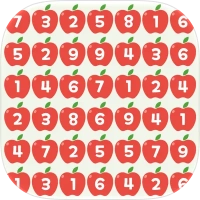
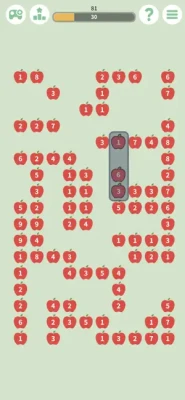
Apple Number Puzzle is a mathematical matching game in which fruits carry numerical values. You select fruits by dragging across a valid range, and if the selected values add up to 10, those fruits are removed.
The main objective is to eliminate every fruit from the board. This sounds straightforward, but the available combinations can become more difficult to recognize as the puzzle develops. Removing one group may change your options for the next move, so planning ahead is important.
For example, a group containing 2, 3, and 5 adds up to 10. A pair of 4 and 6 also works, as does a group containing 1, 2, 3, and 4. The challenge is finding valid combinations among the fruits available on the board while keeping enough useful options for later.
The game combines basic arithmetic with pattern recognition, timing, and decision-making. You do not need advanced mathematics, but being comfortable with numbers can help you identify combinations more quickly.
Its main features include:
Number-based fruit matching with a target sum of 10.
Drag controls for selecting fruits within a range.
Puzzle Mode with progressively challenging levels.
Special puzzle mechanics that introduce different rules.
Classic Mode featuring 170 fruits to clear.
Daily Quiz challenges and national rankings.
Multiple fruit themes, including apples, bananas, oranges, grapes, and pineapples.
Statistics for tracking personal performance.
Global record comparisons and competitive features.
Offline play without requiring a continuous internet connection.
No energy or action limits, allowing players to continue playing freely.
The most important skill is learning to recognize combinations without making unnecessary moves. Once you develop a consistent strategy, the puzzles become easier to understand and more satisfying to complete.
How to Play Apple Number Puzzle
Before exploring advanced strategies, it helps to understand the basic rules and how each move affects the board.
1. Look at the Numbers on the Fruits
Start by examining the numbers displayed on the fruits. Your objective is to find a valid group whose total equals exactly 10.
Do not select fruits simply because they are close together. Check their numerical values first and make sure their sum matches the target.
2. Drag Across a Valid Group
Use the drag control to select fruits within the permitted range. The game allows you to select a group of fruits, and a successful selection removes them when their combined value equals 10.
Pay attention to the game's selection rules. The valid range matters, so a combination that adds up correctly may not be usable if the fruits cannot be selected together according to the board layout.
3. Remove Fruits That Add Up to 10
When your selected fruits total 10, they disappear from the board.
For example:
1 + 9 = 10
2 + 8 = 10
3 + 7 = 10
4 + 6 = 10
5 + 5 = 10
1 + 2 + 3 + 4 = 10
These combinations are useful starting points when scanning the board for possible moves.
4. Continue Until the Board Is Empty
Your objective is to remove all the fruits. Each successful move reduces the number of items remaining and changes the combinations you can use next.
Avoid focusing exclusively on the easiest combination. Consider whether removing a particular group will leave you with useful options for the rest of the puzzle.
5. Watch the Timer When Applicable
Some situations require you to complete the puzzle within a time limit. If you cannot make a valid move, run out of time, or fail to clear the board, you can lose the game.
The best approach is to make quick decisions without abandoning basic calculation. A few seconds spent checking a combination can save you from an unnecessary mistake.
6. Choose the Right Game Mode
Apple Number Puzzle offers several modes for different play styles. Puzzle Mode is ideal for progressing through increasingly challenging stages, Classic Mode emphasizes clearing a large group of fruits, and Daily Quiz provides a fresh challenge with ranking competition.
Understanding the objective of each mode helps you choose a strategy that suits the challenge.
Complete Apple Number Puzzle Strategy Guide
Winning consistently requires more than spotting combinations that equal 10. You also need to understand how your selections affect future opportunities, manage your time, and recognize when a seemingly easy move might create a difficult board.
The following strategies can help you become more efficient.
Strategy 1: Memorize the Most Useful Number Pairs
The fastest way to improve is to become familiar with the number pairs that total 10.
These combinations should become almost automatic:
1 and 9
2 and 8
3 and 7
4 and 6
5 and 5
When you see one of these pairs within a valid selection range, you can recognize the opportunity immediately.
This saves time and leaves more attention available for complicated combinations involving three or more fruits.
Do not stop at pairs, however. Some boards require combinations such as 1 + 2 + 7, 1 + 3 + 6, or 2 + 3 + 5. The more combinations you recognize, the easier it becomes to scan the board efficiently.
Strategy 2: Search for Larger Combinations When Necessary
Pairs are easy to recognize, but they may not always be available in the right position. When that happens, look for groups of three or more numbers.
Useful examples include:
1 + 2 + 7 = 10
1 + 3 + 6 = 10
1 + 4 + 5 = 10
2 + 3 + 5 = 10
2 + 2 + 6 = 10
2 + 4 + 4 = 10
3 + 3 + 4 = 10
You can also use four-number combinations when the board allows them.
The goal is not to memorize every possible combination. Instead, learn a few common patterns so you can recognize them quickly.
When a pair is unavailable, checking combinations of three numbers can reveal moves that are easy to overlook.
Strategy 3: Scan the Board Before Making Your First Move
It is tempting to remove the first valid combination you notice. However, a brief scan can help you identify several possible moves and choose the most useful one.
Look for obvious pairs, then examine groups of three or more numbers. Consider where those combinations appear and whether removing them might leave other useful groups available.
This does not mean you must plan every move from the beginning. Some puzzles require you to adapt as the board changes.
A quick initial assessment simply gives you a better understanding of the available opportunities before you start clearing fruits.
Strategy 4: Prioritize Moves That Preserve Options
A valid combination is not automatically the best move.
Suppose you see two groups that both total 10. One is easy to remove but may leave awkward numbers behind, while the other may open up several useful combinations.
When possible, prefer the move that keeps your future options flexible.
This requires you to look beyond the immediate reward. Ask yourself what numbers will remain after the selection and whether those numbers are likely to form additional groups.
You will not always be able to predict the entire board, but even a small amount of forward planning can prevent unnecessary dead ends.
Strategy 5: Understand the Importance of Selection Order
Apple Number Puzzle uses drag-based selection, so the arrangement of fruits matters alongside their numerical values.
A combination may be mathematically correct but unavailable if its fruits cannot be selected together under the game's range rules.
Before dragging, identify both the numbers and the valid selection path. Avoid spending time trying combinations that cannot be selected as a permitted group.
Learn how the board's arrangement affects your available moves, and use that knowledge when deciding which fruits to remove first.
Strategy 6: Clear Obvious Combinations Without Becoming Impulsive
Recognizing an easy pair is useful, but clearing every obvious pair immediately is not always ideal.
When the board contains several valid combinations, compare them before choosing. A quick 4 + 6 selection might be perfectly reasonable, but another available group could leave a more manageable arrangement.
The best strategy is to combine speed with a little planning.
As you become more experienced, this comparison will take less time. You will start recognizing which combinations are immediately useful and which ones deserve a closer look.
Strategy 7: Keep an Eye on Remaining Numbers
As the board becomes smaller, each remaining fruit becomes more important. A combination that was easy to overlook on a crowded board may become the key to completing the puzzle.
After removing a group, quickly reassess the remaining numbers. Look for pairs that total 10 and then check whether larger combinations are available.
Do not continue using a mental picture of the previous board. The available options may have changed after your last move.
A short reassessment after each selection helps you stay aware of the current puzzle state.
Strategy 8: Manage the Timer Efficiently
When a time limit applies, avoid spending too long considering every possible move.
Start by recognizing obvious pairs. If none are available, scan for common three-number combinations. If you still cannot find a move, widen your search rather than repeatedly checking the same area.
Use a consistent scanning pattern so you can examine the board quickly without missing opportunities.
At the same time, do not rush so much that you select invalid combinations. An inaccurate move wastes time that could have been spent finding a valid one.
The ideal approach is steady, deliberate speed.
Strategy 9: Avoid Repeatedly Checking the Same Numbers
Unstructured searching can cause you to revisit the same fruits several times while overlooking other parts of the board.
Instead, scan in a fixed direction. For example, start at one end of the available range and move toward the other, checking pairs first and then larger groups.
If you find no useful combination in one section, continue rather than restarting the entire search immediately.
A consistent pattern makes your search more efficient and reduces unnecessary hesitation.
Strategy 10: Learn From Dead Ends
If you reach a point where no valid combination remains, consider how the board became difficult to clear.
Did you remove a group that could have been used more effectively later? Did you overlook a larger combination? Did you focus too much on pairs and fail to recognize another valid selection?
Reviewing these questions helps you make better decisions in future puzzles.
Not every unsuccessful attempt means you made a poor decision. Some stages introduce special mechanics or challenging arrangements that require experimentation. Treat each attempt as an opportunity to understand the puzzle more clearly.
Strategy 11: Adapt to Special Puzzle Mechanics
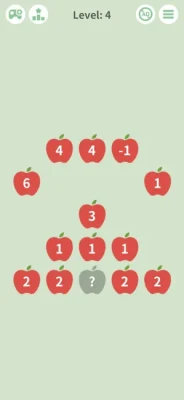
Puzzle Mode includes levels with different rules and special gimmicks. This means a strategy that works well in one stage may not be sufficient for another.
Before making your first move, read any instructions associated with the level and identify what makes the puzzle different.
Adjust your approach according to the mechanics. You may need to focus more carefully on selection order, the available range, or other restrictions introduced by the stage.
Do not assume that every puzzle can be solved by repeatedly searching for the same familiar pairs.
Strategy 12: Practice Mental Arithmetic
You can improve your speed by practicing simple number combinations outside the game.
For example, challenge yourself to find the numbers that complete 10 when given a starting value. If you see 6, think of 4. If you see 3, think of 7.
This helps you recognize useful pairs more quickly during play.
You can also practice combining three numbers mentally. Given 2 and 5, for example, you know that 3 is needed to reach 10.
The goal is to make basic arithmetic feel automatic so you can focus more attention on the arrangement of the fruits.
Best Tips and Tricks for Apple Number Puzzle
These practical tips are useful for beginners and experienced players alike.
Learn Number Pairs First
Memorize the five basic pairs that total 10. They are easy to recognize and provide a foundation for more complicated combinations.
Do Not Ignore Three-Number Groups
When pairs are unavailable, check combinations of three numbers. They can reveal moves that a pair-focused strategy would miss.
Scan Before Dragging
Take a brief look at the board and identify several possible moves. This helps you avoid committing to the first combination you notice.
Think About What Remains
Before removing a group, consider whether the remaining fruits are likely to form useful combinations.
Follow a Consistent Search Pattern
Scan in a predictable direction rather than jumping randomly around the board. This makes it easier to check every available option.
Read Special-Level Instructions
Puzzle Mode introduces different rules and mechanics. Understanding the objective before making a move can prevent unnecessary mistakes.
Use Classic Mode for Practice
Classic Mode provides a different challenge centered on clearing 170 fruits. It can help you practice number recognition and become more comfortable with the selection controls.
Keep Track of Your Statistics
Use the game's statistics to review your progress. If you notice improvements in completion or performance, continue using the strategies that helped you achieve them.
Avoid Rushing Every Move
Speed is valuable when a timer is active, but a quick calculation is better than an incorrect selection.
Take a Short Break When You Lose Focus
If you start overlooking simple combinations, a short break can help you return with better concentration.
Apple Number Puzzle Game Modes Explained
Apple Number Puzzle includes several modes that provide different ways to enjoy the number-matching mechanics.
Puzzle Mode
Puzzle Mode offers levels that become progressively more difficult. It also introduces different rules and special gimmicks, encouraging players to adjust their approach as they advance.
This is a good starting point for players who enjoy structured progression and learning new mechanics over time.
To succeed, read each level's instructions, identify the valid combinations, and consider how your selections will affect the remaining board.
Do not assume that a familiar strategy will work in every stage. As the puzzles become more challenging, you may need to think more carefully about selection order and the range of fruits you can use.
Classic Mode
Classic Mode challenges players to eliminate 170 fruits using an interface designed for this style of gameplay.
The larger number of fruits makes efficient scanning especially important. Instead of evaluating the entire board repeatedly, work through the available selections systematically and keep track of the numbers that remain.
Recognizing common combinations quickly can help you maintain a steady pace.
Classic Mode is useful for players who want to practice the core mechanics without focusing exclusively on the progression of individual puzzle stages.
Daily Quiz
Daily Quiz provides a new puzzle challenge each day and allows players to compete through national rankings.
This mode is ideal for people who enjoy a regular puzzle routine and want to compare their results with other players.
Approach each daily challenge with the same principles you use in other modes: scan the board, identify useful combinations, and avoid unnecessary mistakes.
If you want to improve your ranking, focus on consistency rather than trying to solve every puzzle through speed alone.
Fruit Theme Options
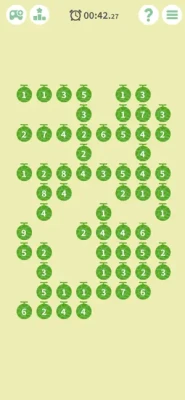
The game lets you change the appearance of the fruits, with options including apples, bananas, oranges, grapes, and pineapples.
These changes provide visual variety without altering the core objective of making groups that total 10.
Choose the design you find easiest to read. Clear recognition of the numbers is more important than the appearance of the fruit itself.
How to Clear 170 Fruits in Classic Mode
Classic Mode is one of the game's most distinctive challenges because it asks you to eliminate 170 fruits. The number of items makes planning and efficient selection especially important.
Step 1: Familiarize Yourself With the Layout
Before selecting anything, look at the available fruits and understand how the selection range works.
Knowing how to drag across valid groups helps you avoid wasting time on combinations that cannot be selected as permitted.
Step 2: Identify Easy Pairs
Look for pairs such as 1 and 9, 2 and 8, 3 and 7, 4 and 6, and 5 and 5.
These combinations are quick to recognize and can help reduce the number of fruits on the board.
Step 3: Search for Larger Groups
If no useful pair is available, examine groups of three or more numbers. Familiar combinations can help you continue clearing fruits without becoming stuck.
Step 4: Reassess After Each Selection
Every successful move changes the board. Check the remaining fruits rather than assuming your next move will be in the same place as the previous one.
Step 5: Maintain a Steady Pace
If the game imposes a time limit in your current situation, balance quick recognition with careful selection.
Do not spend too long considering minor possibilities, but avoid making random selections that could waste valuable time.
Step 6: Learn From Difficult Sections
If the board becomes harder to clear, identify which combinations you may have overlooked and adjust your scanning pattern.
With practice, you can become more comfortable managing large numbers of fruits and recognizing opportunities efficiently.
How to Improve Your Daily Quiz Results
Daily Quiz gives players a recurring opportunity to test their skills and compete through national rankings.
Because the challenge changes, the best preparation is to develop general number-matching skills rather than memorize one solution.
Practice Common Combinations
Know the most useful pairs and three-number groups before starting. This reduces the time needed to evaluate obvious possibilities.
Scan the Board Systematically
Use a consistent search pattern to avoid missing combinations or repeatedly checking the same fruits.
Minimize Unnecessary Moves
Choose combinations that make sense for the current board and avoid rushing into a selection before checking its total.
Review Your Performance
If your results vary, consider whether the problem is calculation speed, scanning efficiency, or difficulty understanding the selection range.
Work on the weakest part of your approach before the next challenge.
Focus on Consistency
A reliable method is more useful than an occasional fast result. Develop habits that help you recognize combinations and make accurate selections under pressure.
Common Mistakes to Avoid in Apple Number Puzzle
Even though the rules are simple, several mistakes can make the game unnecessarily difficult.
1. Selecting Fruits Without Checking the Total
Every successful group must add up to exactly 10. Always verify the numbers before dragging across a selection.
2. Looking Only for Pairs
Pairs are convenient, but some puzzles require three or more fruits. Learn common larger combinations so you have more options.
3. Removing the First Available Group Automatically
A valid move may not be the most useful move. When several options are available, consider which one leaves the board in a better position.
4. Ignoring the Selection Range
The numbers must add up correctly, but the fruits also need to be selectable together according to the game's rules. Check the available range before making a move.
5. Forgetting to Recheck the Board
After removing fruits, reassess the remaining numbers. Your next opportunity may be different from the one you expected.
6. Spending Too Long on One Section
If you cannot find a combination after checking carefully, move to another part of the available range rather than repeating the same search.
7. Rushing When Time Is Running Out
Quick decisions are important, but careless selections waste time. Focus on the most promising combinations instead of guessing.
8. Ignoring Special Puzzle Rules
Some Puzzle Mode stages include different mechanics. Read the instructions before applying a familiar strategy.
9. Neglecting Practice
Recognizing combinations quickly takes repetition. If you struggle, spend time learning the basic pairs and common three-number groups.
10. Treating Every Mode the Same Way
Puzzle Mode, Classic Mode, and Daily Quiz offer different objectives. Adjust your approach to suit the challenge rather than using an identical routine for every mode.
Is Apple Number Puzzle Free to Play?
Yes. Apple Number Puzzle is free to download and includes optional in-app purchases.
The App Store listing includes a Continue Game purchase and a No Ads Package. The displayed US prices may change, so check the purchase screen on your device for the current amounts.
The game advertises no action limits, allowing you to enjoy its puzzle modes without a traditional energy system restricting your play.
If you prefer not to spend money, you can begin with the free version and focus on improving your number-matching skills. Learn the rules, explore the available modes, and decide whether any optional purchase is worthwhile for your needs.
The game also supports offline play, so you can enjoy supported puzzles without a continuous internet connection. Some online features, such as rankings or record comparisons, may require connectivity.
Graphics, Controls, and Overall Gameplay Experience
Apple Number Puzzle uses colorful fruit designs to present its number-matching challenges in a simple and accessible format. Rather than relying on complex controls, it centers the experience on dragging across groups of fruits and calculating their combined values.
The fruit theme adds visual variety to a familiar arithmetic puzzle. Players can change the appearance of the items while continuing to work toward the same target sum.
Its main strength is the combination of straightforward rules and increasingly challenging decisions. New players can begin by matching obvious pairs, while more experienced players can look for larger combinations and plan selections more carefully.
The game also offers different ways to play. Puzzle Mode provides progression and special mechanics, Classic Mode offers a larger clearing challenge, and Daily Quiz encourages regular participation.
Offline support adds convenience for casual sessions, while statistics and rankings give players additional reasons to improve their results.
Overall, Apple Number Puzzle is best suited to players who enjoy light mathematical challenges, pattern recognition, and quick puzzle sessions.
Benefits of Playing Apple Number Puzzle
Apple Number Puzzle provides an entertaining way to engage with basic arithmetic and visual pattern recognition.
Mental Arithmetic Practice
The target of 10 encourages you to calculate combinations quickly and become familiar with simple number relationships.
Pattern Recognition
Repeatedly searching for useful combinations can help you recognize familiar number patterns during gameplay.
Attention to Detail
You need to examine the available fruits and their numerical values before making a selection.
Strategic Thinking
Considering which group to remove first encourages you to think about the consequences of each move.
Concentration
Timed challenges can encourage focused play, especially when you need to scan the board efficiently.
These are general benefits associated with number-based puzzles, not a guarantee of measurable cognitive improvement. The primary purpose of the game is entertainment.
Apple Number Puzzle System Requirements and Compatibility
Apple Number Puzzle is available for iPhone and iPad through the Apple App Store. The listing specifies iOS 13.0 or later for iPhone and iPadOS 13.0 or later for iPad.
The listed download size is approximately 146 MB, although the installed size may vary depending on the device and version.
The game is categorized as a puzzle title, is free to download, and has a listed age rating of 4+ on the US App Store.
It supports 16 languages: English, French, German, Hindi, Indonesian, Italian, Japanese, Korean, Portuguese, Russian, Simplified Chinese, Spanish, Thai, Traditional Chinese, Turkish, and Vietnamese.
Before installing, check the current App Store listing for the latest compatibility details and requirements.
Frequently Asked Questions About Apple Number Puzzle
What is Apple Number Puzzle?
Apple Number Puzzle is a number-matching game developed by MOBIRIX. Players select groups of fruits whose numerical values add up to 10 and remove them from the board.
How do you play Apple Number Puzzle?
Drag across a valid group of fruits. If the selected numbers total exactly 10, the fruits are removed. Continue until the board is empty.
What number do the fruits need to add up to?
Every successful selection must total 10.
What are the easiest combinations to remember?
The simplest pairs are 1 and 9, 2 and 8, 3 and 7, 4 and 6, and 5 and 5. Larger combinations such as 1 + 2 + 7 and 2 + 3 + 5 are also useful.
What happens if I cannot make 10?
If you can no longer make a valid selection or fail to remove the fruits within the applicable time limit, you lose the game.
Does Apple Number Puzzle have different game modes?
Yes. It includes Puzzle Mode, Classic Mode, and Daily Quiz. Each offers a different way to enjoy the number-matching mechanics.
What is Puzzle Mode?
Puzzle Mode contains progressively challenging levels and introduces special mechanics with different rules.
What is Classic Mode?
Classic Mode challenges you to eliminate 170 fruits using an interface designed for this style of gameplay.
What is the Daily Quiz?
Daily Quiz offers new puzzles and allows players to compete through national rankings.
Can I change the fruit designs?
Yes. You can change the appearance of the fruits, with options including apples, bananas, oranges, grapes, and pineapples.
Can I play Apple Number Puzzle offline?
Yes. The game supports offline play without requiring Wi-Fi or a continuous network connection for supported gameplay. Online rankings and record comparisons may need internet access.
Is Apple Number Puzzle free?
Yes. The game is free to download and includes optional purchases, including a Continue Game option and a No Ads Package.
Does the game have a leaderboard?
Yes. Apple Number Puzzle offers competitive record comparisons and rankings associated with its available modes.
How can I solve puzzles faster?
Learn the basic pairs that total 10, practice common three-number combinations, scan the board systematically, and consider how each selection affects the remaining fruits.
Who developed Apple Number Puzzle?
Apple Number Puzzle was developed by MOBIRIX, a mobile game developer.
Is Apple Number Puzzle suitable for beginners?
Yes. The rules are straightforward, and beginners can start by matching simple pairs. More challenging levels encourage players to recognize larger combinations and plan their moves carefully.
Final Verdict: Is Apple Number Puzzle Worth Playing?
Apple Number Puzzle is a strong option for players who enjoy casual number games with simple rules and room for strategic improvement. Its central objective is easy to learn: select fruits that total 10, remove them, and clear the board.
The different game modes provide variety, from progressively challenging Puzzle Mode levels to the 170-fruit Classic Mode and the competitive Daily Quiz. Fruit themes, statistics, and rankings add further reasons to keep playing, while offline support makes the game convenient for short sessions.
To get the most from Apple Number Puzzle, memorize common number combinations, scan the board before making selections, and think about what will remain after each move. Avoid random dragging and adapt your strategy when a level introduces different rules.
Whether you want a quick arithmetic challenge or a puzzle game that rewards careful planning, Apple Number Puzzle offers an accessible and engaging experience for players who enjoy numbers, patterns, and satisfying board-clearing challenges.
Rate the Game
User Reviews














Popular Games



















 Android
 iOS
 Windows
 Xbox