
Latest Version
August 23, 2026
Blizzard Entertainment, Inc.
Role Playing
iOS
0
Report a Problem
More About :game
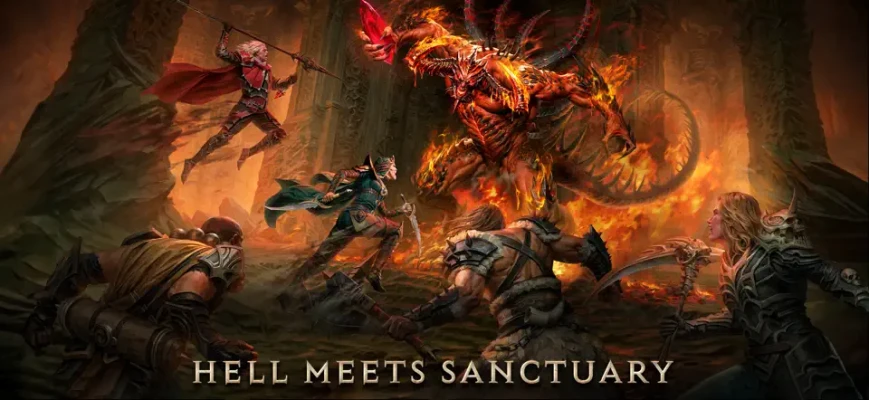
Designed for mobile and PC, Diablo Immortal combines fast-paced hack-and-slash combat with character progression, legendary equipment, dungeon crawling, raids, open-world exploration, cooperative activities, and competitive PvP. Players can adventure alone or team up with other heroes to battle demons and powerful bosses across Sanctuary.
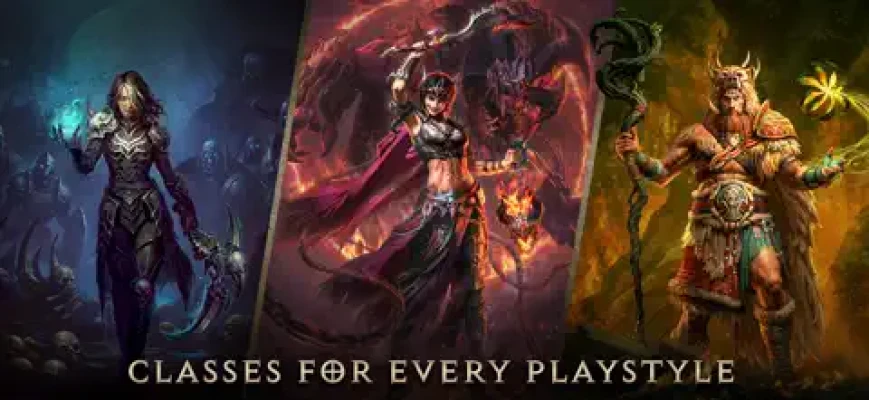
The current game features ten playable classes, including Barbarian, Blood Knight, Crusader, Demon Hunter, Druid, Monk, Necromancer, Tempest, Wizard, and the newer Warlock class. Each class offers a different combat style and build potential.
What Is Diablo Immortal?
Diablo Immortal is an online action MMORPG built around the familiar Diablo formula: defeat hordes of monsters, collect powerful loot, improve your character, complete quests, and take on increasingly difficult challenges.
Unlike a traditional single-player action RPG, the world of Diablo Immortal is shared with other players. You can encounter adventurers throughout Sanctuary, join clans and Warbands, participate in multiplayer dungeons and raids, and compete against other players in PvP activities.
The game is free to play and includes optional in-game purchases. The App Store listing also notes that some purchases can include random items.
Diablo Immortal Story and Setting
The story takes place after the destruction of the Worldstone but before the events of Diablo III. Sanctuary remains threatened by demonic forces, while fragments of the Worldstone create new dangers throughout the world.
Players travel across dangerous regions, investigate supernatural events, fight demonic armies, and uncover the growing threat to Sanctuary. The campaign combines cinematic storytelling with exploration and real-time combat.
The world includes recognizable locations and new areas inspired by Diablo lore, giving both longtime fans and newcomers a large dark-fantasy setting to explore.
Fast-Paced Action RPG Combat
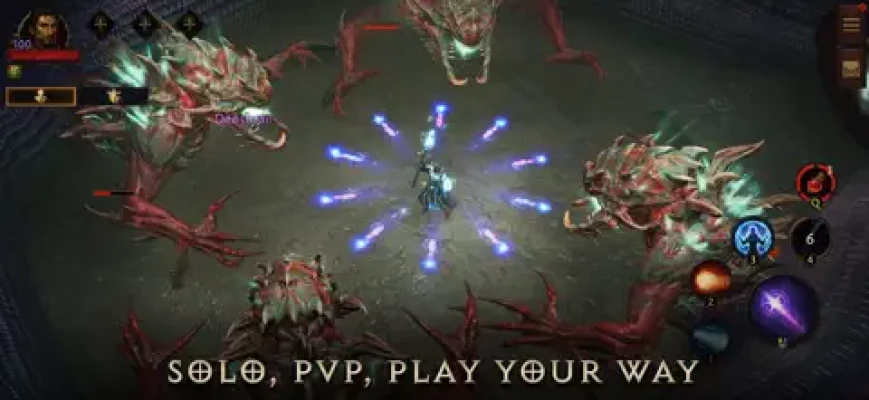
Combat is at the heart of Diablo Immortal. Players control their chosen hero directly, combining basic attacks, powerful abilities, movement, positioning, and Ultimate skills to defeat groups of enemies.
Battles can quickly become chaotic as demons surround your character, requiring you to manage abilities and positioning rather than simply attacking without a plan.
Different classes dramatically change the way combat feels. A Barbarian can charge into groups of enemies, while a Demon Hunter can attack from range. A Necromancer can manipulate the dead, a Wizard uses powerful arcane attacks, and a Warlock specializes in forbidden infernal magic and demon-based abilities.
Diablo Immortal Classes
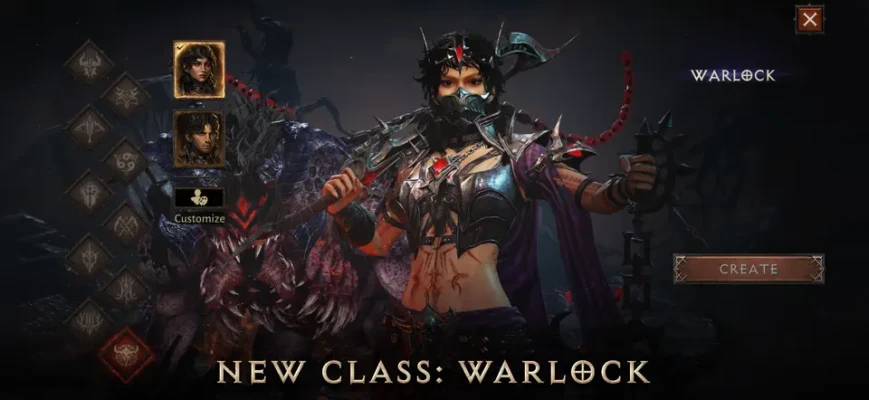
Warlock
The Warlock is a dark-magic class built around infernal abilities, demonic powers, battlefield control, and the Soulgorger companion. It provides a distinctive playstyle focused on commanding Hell rather than simply fighting its creatures.
Barbarian
The Barbarian is a close-range powerhouse specializing in brutal melee attacks, mobility, and fighting multiple enemies at once.
Blood Knight
The Blood Knight combines vampiric powers with polearm combat, giving players a distinctive hybrid playstyle built around aggressive attacks and supernatural abilities.
Crusader
The Crusader is a heavily armored holy warrior who uses faith, defensive strength, and powerful battlefield attacks to destroy demonic enemies.
Demon Hunter
The Demon Hunter specializes in ranged combat and sustained attacks, making it a strong choice for players who prefer keeping enemies at a distance.
Druid
The Druid channels the power of nature, using transformations, summoned creatures, and primal abilities to overwhelm enemies.
Monk
The Monk is a highly mobile martial artist focused on rapid strikes, movement, and combinations of abilities.
Necromancer
The Necromancer controls the forces of life and death, using undead powers and curses to dominate the battlefield.
Tempest
The Tempest combines wind and water-based powers with fast twin-blade attacks, offering a highly mobile combat style.
Wizard
The Wizard is a ranged spellcaster capable of unleashing devastating arcane attacks and controlling enemies from a distance.
Exploring Sanctuary
Exploration is an important part of Diablo Immortal. Players can travel through different zones, complete quests, encounter monsters, discover events, and collect equipment.
Sanctuary is designed as a shared online world where other players can appear alongside you. Certain activities can involve multiple players, creating opportunities for spontaneous cooperation and large-scale battles.
Dungeons and PvE Activities
Dungeons provide focused combat experiences filled with enemies, bosses, rewards, and story content. They can be completed alone or with a group, making them useful for both casual sessions and cooperative progression.
For players looking for repeatable challenges, Rifts offer randomly generated combat encounters with increasingly difficult enemies. Challenge Rifts also provide leaderboard-based competition and rewards.
Elder Rifts and Challenge Rifts
Elder Rifts are repeatable activities designed around fast combat, randomized encounters, and rewards. Crests can modify Rift experiences and influence potential rewards.
Challenge Rifts focus more heavily on difficulty and performance. Players can compete for better placements on weekly leaderboards while testing the strength of their character builds.
Helliquary and Boss Battles
Players can take on powerful bosses and endgame challenges that require stronger builds and coordinated combat.
Large-scale encounters provide a reason to continue improving equipment and character progression after completing ordinary quests and dungeons.
PvP and Competitive Gameplay
Diablo Immortal isn't limited to fighting computer-controlled enemies. Players can also compete against one another through PvP activities and battleground-style encounters.
The game's Cycle of Strife adds a larger competitive structure involving factions, Dark Houses, Immortals, and major endgame confrontations.
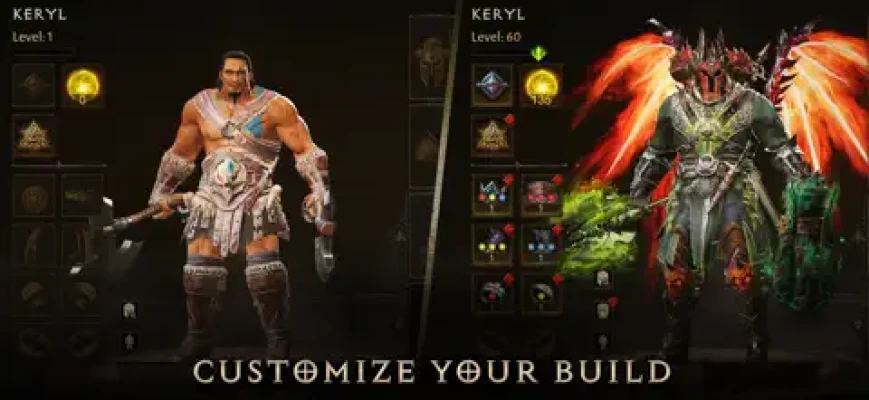
Gear, Loot and Character Builds
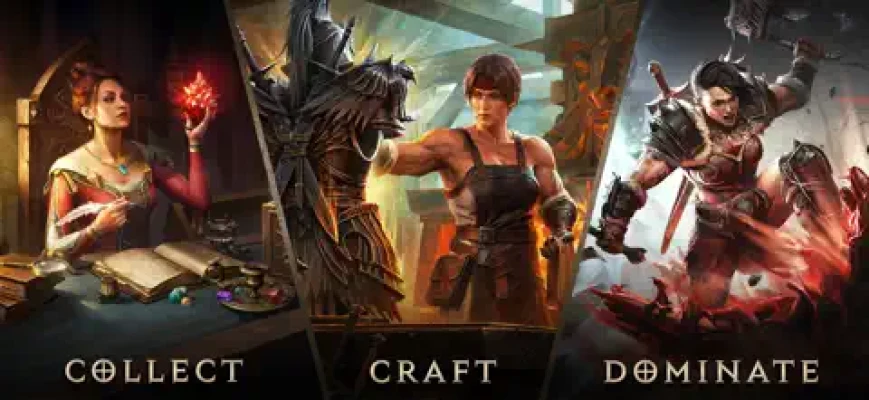
Loot is one of the main reasons to keep exploring and fighting. Enemies and activities can provide equipment that increases character power and changes the effectiveness of different builds.
Players can upgrade and customize equipment using materials and other progression systems. Legendary items can significantly influence how a character performs by changing skills or encouraging specific playstyles.
Legendary Gems
Legendary Gems provide additional character customization and can introduce powerful effects that influence builds. Players can upgrade these gems to further improve their characters.
Runes and Charms
Runes are connected to the game's crafting and progression systems, while Charms can provide bonuses that improve selected skills.
Together, these systems allow players to experiment with different character builds instead of relying on a single fixed setup.
Multiplayer, Warbands and Clans
Diablo Immortal is designed to support both solo and cooperative play.
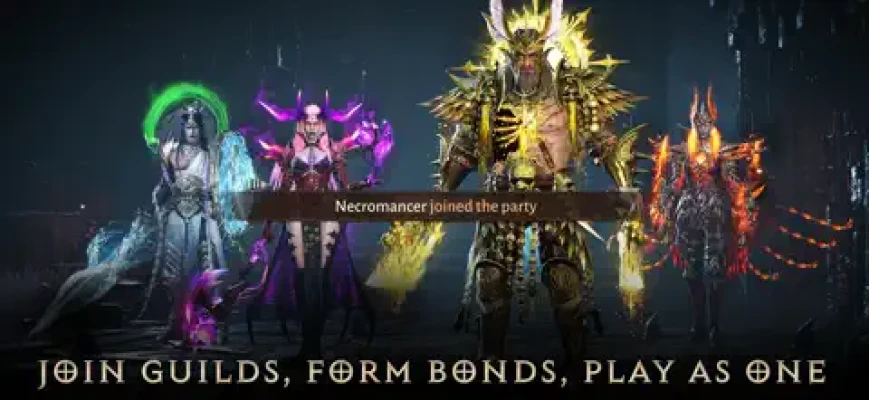
Players can create small groups, join Warbands, participate in multiplayer dungeons and raids, and become members of larger clans. Social systems give players additional ways to work toward shared objectives and compete for rankings.
Westmarch
Westmarch acts as one of the game's major social and activity hubs. Players can manage equipment, interact with vendors, access progression services, organize groups, participate in activities, and prepare for their next adventure.
It functions as an important home base between battles and exploration.
Game Progression
Character progression in Diablo Immortal goes beyond simply gaining experience levels.
Players can improve their heroes through:
- Equipment upgrades
- Legendary items
- Legendary Gems
- Skills and abilities
- Build customization
- Paragon progression
- Charms
- Runes
- Endgame activities
- Increasingly challenging content
Paragon progression provides additional character development after reaching the game's regular level progression, giving experienced players more opportunities to specialize their builds.
Game Modes
Story Campaign
Follow the main Diablo Immortal storyline and investigate the threats spreading throughout Sanctuary.
Open-World Exploration
Explore zones, complete quests, fight monsters, and discover activities while encountering other players.
Dungeons
Take on compact PvE challenges featuring enemies, bosses, story elements, and loot.
Elder Rifts
Fight through randomized encounters while pursuing rewards and build progression.
Challenge Rifts
Test your character against increasingly difficult Rift challenges and compete for leaderboard positions.
Raids and Boss Encounters
Work with other players to overcome powerful enemies and endgame encounters.
PvP
Battle other players and test your character build in competitive activities.
Clan and Warband Activities
Team up with other players for social, cooperative, and competitive progression.
Controls and Interface
On mobile devices, Diablo Immortal uses touchscreen controls designed for real-time action combat. Players can move their character, target enemies, activate abilities, use Ultimate skills, and interact with the environment directly from the interface.
The game also supports controller play, while cross-platform functionality allows players to experience Diablo Immortal across mobile and PC.
Beginner's Guide
If you're new to Diablo Immortal, focus on learning your chosen class before worrying about perfect endgame equipment.
Start with the campaign: The story introduces core mechanics while helping you understand Sanctuary.
Experiment with skills: Try different abilities to discover which combinations suit your preferred playstyle.
Upgrade regularly: Replace outdated equipment rather than holding onto weaker gear simply because it has a familiar name.
Learn your class role: Ranged, melee, support, summoning, and control-focused builds require different approaches.
Join other players: Multiplayer activities can make difficult encounters easier and provide additional opportunities to learn the game.
Don't ignore progression systems: Gems, equipment upgrades, skills, and Paragon development become increasingly important as your character grows.
Advanced Build Tips
Experienced players should focus on creating a build where skills, equipment, gems, and bonuses complement one another.
Instead of selecting powerful items individually, consider how your entire setup works together. A strong build should have a clear purpose, whether that is high single-target damage, crowd control, survivability, mobility, area damage, or PvP performance.
For endgame content, understanding positioning and timing can be just as important as raw character power.
Diablo Immortal Features
- Dark fantasy Diablo universe
- Fast-paced action RPG combat
- Ten playable classes
- Solo and multiplayer gameplay
- Shared open-world zones
- Cooperative dungeons
- Raids and powerful bosses
- Elder Rifts and Challenge Rifts
- PvP battles
- Clans and Warbands
- Legendary equipment
- Legendary Gems
- Character build customization
- Paragon progression
- Regular content updates
- Cross-platform mobile and PC play
- Free-to-play model with optional in-game purchases
Updates and New Content
Diablo Immortal continues to receive new content, including story developments, classes, events, equipment, challenges, and other gameplay additions.
The App Store version history shows recent updates introducing new content and the Warlock class, alongside ongoing bug fixes and enhancements.
Graphics and Atmosphere
Diablo Immortal maintains the series' recognizable dark fantasy atmosphere with ruined settlements, corrupted landscapes, demonic enemies, dramatic environments, and intense combat effects.
Its visual presentation is designed to bring the Diablo experience to mobile devices while also supporting PC gameplay.
Who Should Play Diablo Immortal?
Diablo Immortal is a strong choice for players who enjoy:
- Action RPGs
- MMORPGs
- Dungeon-crawling games
- Loot-driven progression
- Dark fantasy worlds
- Character customization
- Multiplayer RPGs
- Diablo-style combat
- PvP and PvE activities
- Long-term character progression
Players who prefer completely offline RPGs or dislike free-to-play monetization may find the game's online structure less appealing.
Pros and Cons
Pros
- Fast and satisfying action combat
- Large amount of PvE content
- Multiple classes with different playstyles
- Extensive character progression
- Cooperative multiplayer
- PvP activities
- Strong dark-fantasy atmosphere
- Regular content updates
- Mobile and PC support
Cons
- Requires an online connection
- Free-to-play monetization may not appeal to everyone
- Endgame progression can be complex for new players
- The game contains optional purchases, including purchases involving random items
Diablo Immortal vs Traditional Diablo Games
Diablo Immortal retains many familiar elements of the Diablo formula, including demon-slaying combat, loot collection, character builds, legendary equipment, and dark fantasy storytelling.
Its biggest difference is its MMORPG-style structure. Shared zones, clans, Warbands, PvP, frequent updates, and persistent online activities make Diablo Immortal feel more like a continuously evolving online world than a traditional standalone Diablo campaign.
Technical Details
Game: Diablo Immortal
Developer: Blizzard Entertainment, Inc.
Genre: Action RPG / MMORPG
Platform: iPhone, iPad, PC
Business Model: Free to play with in-app purchases
Age Rating: 18+ on the U.S. App Store
App Store Size: Approximately 4 GB at the time of the current listing
Multiplayer: Online multiplayer
Controller Support: Yes
Cross-Platform: Mobile and PC gameplay supported
Player Experience
The strongest part of Diablo Immortal is the combination of quick combat and long-term progression. A short session can involve clearing enemies or completing a dungeon, while longer sessions can focus on raids, PvP, gear optimization, or cooperative activities.
The variety of classes also encourages experimentation. Players who enjoy trying different builds can spend significant time refining skills and equipment to match their preferred combat style.
The App Store currently shows a 4.7/5 rating from more than 300,000 ratings, along with an Editors' Choice designation.
Expert Rating
Overall: 8.5/10
Combat: 9/10
Graphics: 9/10
Content Variety: 9/10
Character Progression: 9/10
Multiplayer: 9/10
Story: 8/10
Accessibility: 8/10
Monetization: 6.5/10
Final Verdict
Diablo Immortal successfully brings the recognizable Diablo formula to a persistent online RPG environment. Its fast combat, extensive loot system, varied classes, cooperative dungeons, PvP activities, and continuing content make it much more than a short mobile adventure.
For fans of action RPGs and dungeon crawlers, Diablo Immortal offers a huge amount of content to explore. Its online MMORPG structure and free-to-play monetization are important considerations, but players who enjoy character progression and regular multiplayer activities will find plenty to do in Sanctuary.
Frequently Asked Questions
Is Diablo Immortal free to play?
Yes. Diablo Immortal is available as a free-to-play game with optional in-game purchases.
Is Diablo Immortal available on iPhone and iPad?
Yes. The game is available for iPhone and iPad through the App Store.
Can you play Diablo Immortal on PC?
Yes. Diablo Immortal supports PC alongside its mobile versions, with cross-platform play available.
How many classes are in Diablo Immortal?
The current official game information lists ten playable classes: Warlock, Barbarian, Blood Knight, Crusader, Demon Hunter, Druid, Monk, Necromancer, Tempest, and Wizard.
Can you play Diablo Immortal solo?
Yes. The game supports solo adventuring, while many activities can also be completed cooperatively with other players.
Does Diablo Immortal have PvP?
Yes. Diablo Immortal includes competitive PvP activities as well as its larger Cycle of Strife system.
Does Diablo Immortal have dungeons?
Yes. Dungeons are a major PvE activity and can be completed solo or with other players.
Does Diablo Immortal receive updates?
Yes. Blizzard continues to add new content, classes, story material, events, equipment, and gameplay improvements.
Is Diablo Immortal suitable for new Diablo players?
Yes. The game provides a story campaign and progression systems that allow newcomers to learn the Diablo universe while developing their characters.
What makes Diablo Immortal different from other mobile RPGs?
Its combination of Diablo's fast hack-and-slash combat, extensive loot progression, dark fantasy setting, shared online world, multiplayer activities, PvP, clans, and continuing content gives it a distinctive position among mobile action RPGs.
Rate the Game
User Reviews












Popular Games


















 Android
 iOS
iOS Windows
 Xbox
Xbox