
Latest Version
October 26, 2026
MOBIRIX
Puzzle
iOS
0
Report a Problem
More About :game
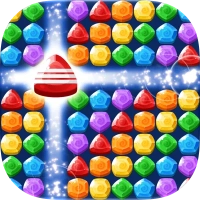
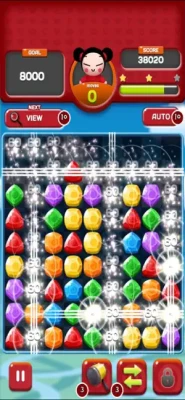
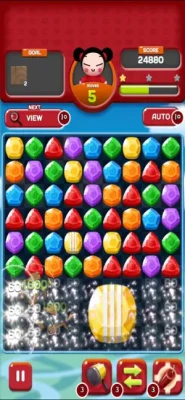
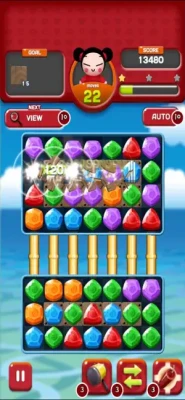
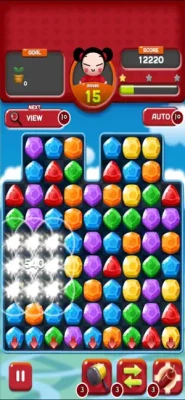
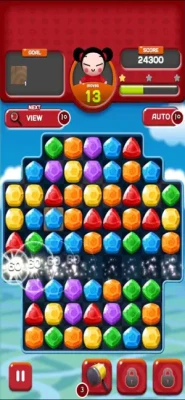
Jewelry King: Pucca is a classic jewel-matching puzzle game that challenges players to recognize patterns, plan moves, and complete specific objectives. Its colorful jewelry graphics and familiar characters create an inviting experience for players of different ages.
The main gameplay revolves around swapping adjacent jewels to create combinations of three or more matching pieces. Every successful match clears jewels from the board and can create new opportunities as the remaining pieces shift into place.
Although the basic rules are simple, completing more demanding stages requires careful planning. Some missions may focus on achieving a target score, while others require players to clear particular arrangements or complete specific objectives. Understanding the goal of each stage is essential to making the best use of your available moves.
The game also includes helpful items, sneak peek and auto-play functions, Arcade mode for score-based challenges, and a one-on-one versus mode for competing with other players. Achievements and leaderboards provide additional goals for players who want to improve their performance.
Main Features of Jewelry King: Pucca
Classic Match-3 Puzzle Gameplay
The central mechanic involves swapping jewels to create matches of three or more identical pieces. Successful combinations clear the matched jewels and allow new pieces to enter the board.
The challenge comes from choosing moves that accomplish the stage objective while creating useful opportunities for future matches.
Pucca and Garu Characters
The game features Pucca and Garu, adding familiar animated characters to the jewel-matching experience. Their presence gives the puzzle game a distinctive identity while keeping the focus on matching and completing missions.
Numerous Stages and Missions
Jewelry King: Pucca offers a large collection of stages with different objectives and challenges. Each stage encourages players to adapt their strategy rather than relying on a single matching pattern.
Helpful Power-Up Items
Powerful in-game items can assist with difficult situations. Used at the right moment, these tools can help players make progress when ordinary matches are not enough to complete an objective efficiently.
Sneak Peek Function
The sneak peek function provides an additional way to inspect the game before making a move. Use this feature when available to help evaluate the board and consider possible matching opportunities.
Auto-Play Function
The game supports auto-play, giving players an alternative way to approach gameplay. Manual play remains valuable for developing your own strategy and making deliberate decisions about important moves.
Arcade Mode
Arcade mode focuses on achieving strong results and competing for high scores. It is a useful option for players who want to test their matching speed, decision-making, and consistency.
One-on-One Versus Mode
The versus mode allows players to compete against others in direct matches. Strong performance depends on finding effective combinations, making efficient decisions, and maintaining concentration under pressure.
Achievements and Leaderboards
Achievements offer additional milestones, while leaderboards allow players to compare their results with other participants where supported.
Offline Play Support
The game supports offline play, allowing you to enjoy its puzzle challenges without a continuous internet connection. Online features, such as competitive play and leaderboards, may require connectivity.
Multiple Language Options
Jewelry King: Pucca supports 16 languages, helping players from different regions enjoy the game.
How to Play Jewelry King: Pucca
Understand the Board
At the beginning of a stage, examine the arrangement of jewels and read the mission objective. Identify which colors or positions are most relevant to your goal.
Avoid making the first available match automatically. A moment of observation can reveal a move that clears more jewels or creates a better opportunity for the next turn.
Match Three or More Jewels
Swap adjacent jewels to create a line or combination of at least three matching pieces. Valid matches clear the corresponding jewels from the board.
After a match, new jewels may fall into the cleared spaces, creating additional combinations. These chain reactions can help you achieve more progress from a single move.
Complete the Stage Objective
Every mission should guide your decisions. If the objective involves reaching a target score, look for combinations that clear several jewels or produce useful chain reactions.
If the stage requires a particular type of progress, prioritize moves that directly contribute to that requirement rather than making matches simply because they are available.
Use Helpful Items When Necessary
If a board becomes difficult, consider whether an available item can help you overcome the obstacle. Check the item's effect and decide whether using it now is more valuable than saving it for a later challenge.
Aim for Efficient Results
Try to complete the objective with well-planned moves. Efficient matching can improve your score, help you manage limited opportunities, and make challenging stages easier to finish.
Complete Strategy Guide for Jewelry King: Pucca
Study the Entire Board Before Making a Move
One of the most important habits in match-3 games is learning to scan the board before acting. Look for possible matches, unusual jewel arrangements, and areas where a single move might create additional combinations.
Consider how the board will change after each match. Removing jewels from one section may cause other pieces to fall and create new opportunities elsewhere.
Instead of selecting the first obvious combination, compare several possible moves and choose the one that best supports the mission.
Prioritize the Mission Objective
The best move is not always the one that clears the most jewels. It is the one that helps you complete the current stage efficiently.
Before every move, ask yourself whether the combination contributes to your main objective. If the mission requires a specific result, focus on moves that directly support it.
This approach prevents wasted turns and keeps your strategy focused when the board becomes complicated.
Look for Matches That Create Chain Reactions
Chain reactions occur when clearing one group of jewels causes new pieces to fall into matching positions. These combinations can provide extra progress without requiring a separate move for every match.
Before swapping jewels, inspect the spaces above and around the expected match. Consider whether the resulting gaps might bring identical jewels together.
Although not every match produces a chain reaction, learning to recognize promising arrangements can improve your overall efficiency.
Create Larger Matches Whenever Possible
Matching more than three identical jewels can be especially valuable when the arrangement creates a useful bonus or helps clear a larger section of the board.
Look for opportunities to connect four or more matching jewels, but always consider the mission objective and resulting board position.
Do not sacrifice a clearly beneficial move merely to create a larger combination. The value of a match depends on how effectively it advances your goal.
Focus on Difficult Areas
Some sections of a board may be harder to clear because of their position or arrangement. If a mission requires progress in a particular area, prioritize combinations that affect that section.
Avoid spending too many moves clearing easy matches elsewhere when the real challenge remains untouched.
By identifying the most difficult part of the objective early, you can build a strategy around it instead of trying to solve the entire board without direction.
Plan One or Two Moves Ahead
Whenever possible, think about what the board will look like after your current match. A move that creates a useful setup may be more valuable than one that offers an immediate but limited result.
For example, you might move one jewel into position to prepare a larger match on the following turn. This kind of planning becomes increasingly useful as missions demand more careful decisions.
You do not need to predict every falling jewel perfectly. Even a simple plan for the next move can improve your results.
Use Power-Ups Strategically
Helpful items are most valuable when they solve a specific problem. Before using one, identify the obstacle preventing you from completing the objective.
Consider saving assistance for a difficult stage or a situation where ordinary matching offers limited progress. However, do not hesitate to use an item when it can prevent a likely failure and help you finish the mission.
Learn the effect of each available item from its in-game description, since different tools may serve different purposes.
Make Use of the Sneak Peek Function
Use the sneak peek feature when you need additional information before deciding on a move. It can support a more thoughtful approach to the board and help you avoid unnecessary guesses.
Combine this feature with regular observation rather than depending on it for every decision. The goal is to develop your own ability to recognize useful combinations and anticipate board changes.
Understand When Auto-Play Is Useful
Auto-play offers an alternative to making every move manually. It can be convenient when you want to explore the game's supported automatic gameplay feature.
For missions that require careful planning, however, manual decisions can help you focus on specific objectives and evaluate the consequences of each match.
Use the available mode that best suits your immediate goal, and remember that understanding the board is the foundation of good puzzle strategy.
Improve Your Arcade Mode Performance
Arcade mode challenges players to pursue better scores. To improve your results, look for combinations that clear multiple jewels and create opportunities for further matches.
Avoid spending too much time considering minor alternatives when a strong move is already available. At the same time, do not make random swaps that offer little progress.
The ideal balance is quick recognition supported by sound judgment. With practice, you can become faster at identifying productive combinations without losing accuracy.
Develop a Strong Versus Mode Strategy
In one-on-one matches, efficient decisions become particularly important. Focus on making useful combinations consistently rather than relying entirely on luck or rushed moves.
Keep the board's possible opportunities in mind and prioritize actions that help you progress effectively. When a strong combination is available, take advantage of it instead of spending too long searching for a theoretically perfect alternative.
Remaining calm and avoiding careless swaps can help you perform more consistently in competitive matches.
Learn From Difficult Stages
When you fail to complete a mission, review the decisions that led to the result. You may have focused on the wrong section, missed a chain reaction, or used an item too early.
Try changing one part of your approach on the next attempt. A more focused strategy is often more useful than repeating the same moves and hoping for a different outcome.
Over time, these adjustments can improve your ability to recognize patterns and manage difficult boards.
Best Tips and Tricks for Beginners
Read the Objective First
Understand what the stage requires before making your first swap. This helps you avoid unnecessary moves.
Scan for the Best Match
Look beyond the first available combination. Compare potential matches and choose one that advances your objective.
Watch for Falling Jewels
Consider how pieces may shift after a match. New arrangements can create valuable follow-up opportunities.
Focus on Useful Combinations
Larger matches and chain reactions can be helpful, but prioritize combinations that support the mission.
Avoid Random Swapping
Every move should have a purpose. Make deliberate decisions instead of selecting combinations without considering their results.
Save Items for Difficult Situations
Learn what each item does and use it when it provides a meaningful advantage.
Practise Pattern Recognition
Regular play helps you recognize matching arrangements more quickly and anticipate possible outcomes.
Use Arcade Mode for Practice
Arcade mode provides an opportunity to work on speed, consistency, and score improvement.
Stay Calm in Versus Mode
Competitive pressure can lead to mistakes. Concentrate on productive matches and avoid rushing without a plan.
Review Your Mistakes
If a stage proves difficult, identify the problem and adjust your approach rather than repeating unsuccessful moves.
Advanced Techniques for Challenging Missions
Work Backward From the Objective
Instead of asking which match looks best, identify what must happen to complete the mission. Then look for moves that bring the board closer to that result.
This method helps you avoid spending turns on combinations that have little practical value.
Set Up Future Matches
Some of the strongest moves prepare the board for a better combination on the following turn. Look for arrangements where a small adjustment can position several matching jewels together.
Planning ahead is especially helpful when immediate matches are limited.
Maximize Cascades
When a match causes jewels to fall, the new arrangement may create additional combinations. Before making a move, look for spaces where falling pieces could connect.
Cascades are not always predictable, so treat them as opportunities rather than guaranteed outcomes.
Balance Speed and Accuracy
Arcade and versus modes may encourage faster decisions, but careless moves can reduce your effectiveness.
Practise identifying strong matches quickly while maintaining a clear understanding of the objective. With experience, you can improve your speed without sacrificing good judgment.
Adapt to Each Board
Do not rely on a fixed sequence of swaps. Jewel arrangements and mission requirements can differ, so the best approach should respond to the current situation.
A flexible strategy helps you handle unexpected board changes and make better use of available opportunities.
Use Assistance at the Right Moment
Before activating an item, consider whether it will solve the immediate problem or whether a normal match could achieve the same result.
Using assistance thoughtfully can make difficult stages more manageable and help you preserve resources for situations where they are most useful.
Common Mistakes to Avoid
Making the First Match You See
An obvious combination may not be the most effective one. Check the board for alternatives before swapping.
Ignoring the Mission Requirements
A large match can feel rewarding, but it may not help much if it does not contribute to the objective. Keep the stage goal in mind.
Overlooking Chain Reactions
Failing to consider falling jewels can cause you to miss useful combinations. Look at the spaces surrounding your intended match.
Using Power-Ups Too Early
Items should solve a problem, not simply be used whenever they are available. Evaluate the situation before activating them.
Depending Entirely on Auto-Play
Automatic gameplay may be convenient, but manual practice helps develop pattern recognition and decision-making skills.
Rushing in Arcade Mode
Fast moves are useful only when they produce results. Avoid sacrificing accuracy for speed.
Panicking in Versus Mode
Competitive play can make even simple decisions feel urgent. Stay focused on productive combinations instead of making rushed swaps.
Repeating the Same Failed Strategy
If your current approach is not working, change it. Reassess the objective, focus on difficult areas, and look for alternative combinations.
Is Jewelry King: Pucca Difficult?
Jewelry King: Pucca is easy to understand because its main mechanic involves matching identical jewels. However, the increasing variety of missions and board arrangements can make later stages more demanding.
Beginners can learn the basic rules quickly, while experienced match-3 players may recognize familiar patterns and combinations. More difficult missions reward careful observation, forward planning, and the effective use of available items.
The challenge comes from choosing the right moves rather than learning complicated controls.
Is Jewelry King: Pucca Worth Playing?
Jewelry King: Pucca is a good choice for players who enjoy classic match-3 puzzles, colorful graphics, and short gameplay sessions. Its many stages provide a reason to keep improving, while Arcade mode and one-on-one versus matches offer alternatives to regular mission progression.
The sneak peek and auto-play functions provide additional gameplay options, and the inclusion of achievements and leaderboards gives competitive players more goals to pursue.
The game is also listed as supporting offline play, which makes it suitable for situations where an internet connection is unavailable. Advertisements and optional in-app purchases are included, so the overall experience may vary depending on how you choose to play.
Frequently Asked Questions
What Is Jewelry King: Pucca?
Jewelry King: Pucca is a match-3 puzzle game developed by MOBIRIX. Players swap matching jewels to complete missions, clear stages, and pursue higher scores with Pucca and Garu.
How Do You Play Jewelry King: Pucca?
Swap adjacent jewels to create combinations of three or more identical pieces. Focus on completing the stage objective while looking for larger matches and useful chain reactions.
What Is the Main Goal of the Game?
The main goal is to complete the missions presented in each stage. Depending on the objective, you may need to achieve a particular score or make specific types of progress.
Does Jewelry King: Pucca Have Power-Ups?
Yes. The game includes helpful items that support gameplay. Check their descriptions to understand their individual effects and decide when to use them.
What Is the Sneak Peek Function?
The sneak peek function is an additional feature designed to help players inspect the game before making decisions. Its availability can be useful when evaluating possible moves.
Does the Game Have Auto-Play?
Yes. Jewelry King: Pucca supports an auto-play function that provides an alternative to manual play.
What Is Arcade Mode?
Arcade mode challenges players to compete for high scores and improve their performance. It is useful for practising efficient matching and quick decision-making.
Can You Play Against Other Players?
Yes. The game includes a one-on-one versus mode that allows players to compete against other participants.
Can You Play Jewelry King: Pucca Offline?
Yes. The game supports offline gameplay, although online competitive features and leaderboards may require an internet connection.
Is Jewelry King: Pucca Free?
Yes. The game is listed as free to download on the Apple App Store, with advertisements and optional in-app purchases.
Does the Game Support Tablets?
Yes. The game supports compatible tablet devices as well as supported mobile devices.
How Can You Get Better at Match-3 Puzzles?
Study the board before swapping jewels, prioritize the mission objective, look for larger combinations, and anticipate how falling pieces may create additional matches. Learn from unsuccessful moves and adjust your strategy.
What Is the Best Strategy for Difficult Stages?
Focus on the stage objective, identify the most challenging area, and select matches that directly contribute to progress. Use helpful items when they solve a specific problem, and plan future combinations whenever possible.
Final Thoughts
Jewelry King: Pucca combines classic jewel-matching gameplay with a colorful presentation featuring Pucca and Garu. Its collection of stages, special items, Arcade mode, and competitive features offers plenty of ways to test your puzzle-solving skills.
For better results, study the board before every move, prioritize the mission objective, look for chain reactions, and use assistance strategically. Practise recognizing patterns and adapt your approach whenever a stage becomes difficult.
Whether you are a casual player looking for an enjoyable puzzle or a dedicated match-3 fan aiming for higher scores, Jewelry King: Pucca offers a straightforward but engaging challenge that rewards thoughtful decisions and consistent practice.
Rate the Game
User Reviews








Popular Games



















 Android
 iOS
 Windows
 Xbox