
Latest Version
October 26, 2026
MOBIRIX
Puzzle
iOS
0
Report a Problem
More About :game
Bubble Shooter Pop Puzzle: Complete Game Overview
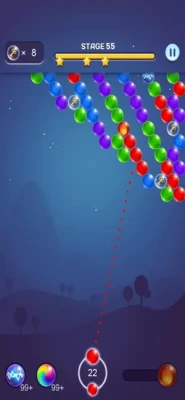
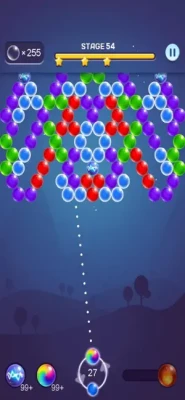
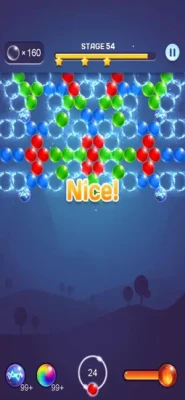
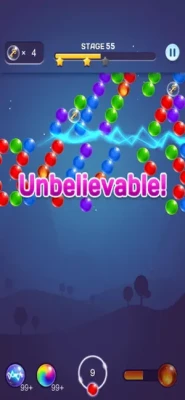
Bubble Shooter Pop Puzzle brings the familiar fun of bubble-shooting games to mobile devices with a collection of stages that challenge your accuracy, timing, and ability to plan ahead. The objective is straightforward: aim a colored bubble at a group of matching bubbles, create a connection of at least three, and clear bubbles from the board.
Although the basic mechanics are easy to understand, completing difficult stages requires more than simply shooting at the largest cluster. You must consider the current bubble color, the arrangement of the board, the location of important connections, and the number of useful shots available.
The game includes numerous stage layouts, special bubbles, support items, and free skills that help you handle difficult situations. These features provide different ways to approach a puzzle, allowing you to experiment with direct matches, carefully planned shots, and strategic combinations.
Bubble Shooter Pop Puzzle also includes a one-on-one multiplayer mode, achievements, and leaderboards. These options add variety for players who want to compete, track their progress, or improve their shooting accuracy over time.
Whether you are new to bubble shooters or already familiar with the genre, learning how to manage every shot can make the game more enjoyable and help you clear challenging boards more consistently.
Main Features of Bubble Shooter Pop Puzzle
Classic Bubble-Matching Gameplay
The core mechanic involves aiming and firing bubbles toward groups of the same color. Connect at least three matching bubbles to remove them from the board. The more carefully you choose your targets, the easier it becomes to create useful combinations.
Numerous Challenging Stages
The game features a wide range of stage layouts, each presenting different bubble arrangements and puzzle-solving opportunities. Some stages can be completed with straightforward matches, while others require you to reach specific areas or clear difficult formations.
Four Special Bubble Types
Special bubbles introduce additional ways to remove obstacles or change the board. Their effects can be useful when ordinary matching is not enough to reach the target. Learn what each special bubble does in your current version before deciding when to use it.
Two Support Items
Support items provide extra assistance when a stage becomes difficult. They can help you deal with challenging arrangements, but it is best to understand their effects and save them for situations where they offer meaningful value.
Helpful Free Skills
The game includes skills that can assist with bubble removal. Using these abilities at the right moment can help you recover from a difficult position or make progress toward a stage objective.
One-on-One Multiplayer
The one-on-one mode allows you to test your skills against another player. This adds a competitive element to the traditional puzzle experience and rewards players who can make accurate decisions under pressure.
Achievements and Leaderboards
Achievements give you additional goals to pursue, while leaderboards allow you to compare your progress with other players. These features offer extra motivation beyond simply completing individual stages.
Multiple Language Options
The game supports 16 languages, making its gameplay accessible to a broad range of players. It also supports tablet devices, allowing you to enjoy the puzzle experience on a larger screen.
How to Play Bubble Shooter Pop Puzzle
Understand the Objective
Before firing your first bubble, examine the board and determine what the stage requires. In many situations, the objective is to remove the bubbles, but individual stages may introduce different layouts or specific targets.
Look for the most important areas of the board. A large cluster may appear attractive, but clearing a smaller group can sometimes open a path to a more valuable target.
Aim Before Shooting
Use the game's drag-and-touch controls to line up your shot. Instead of firing immediately, examine where the bubble will land and which bubbles it will connect with.
Aiming carefully helps prevent wasted shots. If a direct route is blocked, look for an available angle that allows your bubble to reach the intended group.
Match at Least Three Bubbles
To remove a group, connect three or more bubbles of the same color. The new bubble you fire must join a matching group to create a valid match.
Try to choose shots that remove several bubbles or improve your access to important sections of the board. A small match can still be useful if it creates a better opportunity for the next move.
Use the Available Bubble Wisely
Pay attention to the color of the bubble currently ready to fire. If it does not match the group you want to clear, consider another target or use a suitable special ability if available.
Avoid shooting randomly just to remove the current bubble. Each shot should either clear bubbles, open a useful route, or prepare the board for a stronger combination.
Remove Unsupported Bubbles
Some bubbles remain on the board because they are connected to other bubbles above them. When you remove a group that supports a larger section, the disconnected bubbles beneath it may fall away as well.
These shots can be especially valuable because they may clear more bubbles than a direct color match. Look for narrow connections that hold large formations in place.
Complete the Stage
Continue matching bubbles and opening useful paths until you meet the stage objective. If you are running low on useful shots or have reached a difficult position, reconsider your target selection and available support options.
When you complete a stage, move forward and apply what you learned. Different board arrangements may require different strategies, so avoid relying on one approach for every puzzle.
Complete Bubble Shooter Pop Puzzle Strategy Guide
Study the Board Before Making Your First Move
A strong opening begins with observation. Look at the entire bubble arrangement and identify the largest clusters, narrow connections, isolated sections, and any visible targets that appear difficult to reach.
Do not assume the largest cluster should always be your first target. A smaller group near the top may be supporting a large section below it, making that connection more important than a large cluster elsewhere.
Consider how your first shot will affect the available routes. A well-chosen opening can create opportunities for several future matches, while a careless shot may leave awkward bubbles that are difficult to clear.
Aim for the Most Valuable Match
The best shot is not always the one that removes the greatest number of bubbles immediately. Sometimes a small match is more valuable because it opens a route to a larger group or breaks an important connection.
Before shooting, ask yourself three questions: How many bubbles will this move remove? Will it expose a better target? Will it make the remaining board easier to manage?
Comparing these possibilities helps you make deliberate decisions instead of choosing targets based only on their size.
Focus on Upper Connections
Bubbles near the top can support many other bubbles below them. If you remove a critical group near an upper connection, the unsupported bubbles beneath it may drop away together.
This can be much more efficient than clearing every bubble individually. Look for narrow points where a large section connects to the rest of the board.
If your current bubble matches the color of that connection, consider whether removing it will produce a larger result than targeting a lower cluster.
Learn to Use Angled Shots
Direct shots are easy to understand, but some useful targets are hidden behind other bubbles. The aiming system can allow you to send a bubble along an angled path toward a reachable section.
Practice adjusting your aim slowly until you understand how the trajectory works. Use the visible aiming guide, where available, to predict the landing position.
Angled shots are particularly useful when a direct path is blocked. However, do not attempt a difficult angle without considering whether a safer target could achieve the same objective.
Create Larger Bubble Drops
One of the most effective strategies is to remove a supporting group rather than clearing every bubble in a formation. If an upper connection disappears, any bubbles no longer attached to the main structure may fall away.
To create this result, trace the connections between different sections of the board. Identify the small group holding the larger formation in place and check whether you can reach it with your current bubble.
A successful drop can save several shots and make the remaining puzzle much easier. The key is to understand how the board is connected before choosing your target.
Plan Around the Current Bubble Color
The bubble you have available determines which matches you can make immediately. If it matches a large group, you may have a valuable opportunity to clear a substantial section.
When the current color does not match your preferred target, avoid forcing an awkward shot. Look for another useful group of the same color or choose a move that improves the board without creating unnecessary clutter.
Over time, learn to recognize which colors are useful in each section. This makes it easier to respond to changing arrangements and avoid wasting opportunities.
Use Free Skills at the Right Time
Free skills can provide assistance when normal shots are insufficient. However, using an ability as soon as it becomes available may not be the most efficient choice.
First, examine whether an ordinary match can solve the problem. If a standard shot can clear the target or open the required route, save the skill for a more difficult situation.
Use a skill when it can remove a major obstacle, improve access to a difficult area, or prevent a promising run from becoming unnecessarily complicated. The exact best moment depends on the skill's effect and the stage layout.
Understand Special Bubbles
Bubble Shooter Pop Puzzle includes four special bubble types. These add variety to the standard matching system and can create opportunities that ordinary bubbles cannot provide on their own.
Learn the effect of each special bubble by checking its in-game explanation or experimenting in a suitable stage. Some special effects may be more useful for clearing a large formation, while others may help with a particular obstacle or difficult section.
Do not activate a special bubble without considering the surrounding board. Its value depends on where it is used and what you need to accomplish.
Make Every Shot Serve a Purpose
A shot should have a clear objective. It might remove a matching group, break an important connection, reach a hidden section, or prepare the board for a larger drop.
Before firing, identify what you expect the shot to accomplish. If the result would leave the board almost unchanged, check whether another target offers a better opportunity.
This habit is particularly important on stages where the number of useful shots is limited. A few carefully planned moves can be more effective than many small, poorly connected matches.
Avoid Creating Difficult Color Pockets
Sometimes a shot removes part of a cluster but leaves isolated bubbles of different colors in awkward positions. These remaining bubbles can become difficult to clear if the board changes around them.
Whenever possible, choose matches that reduce clutter and preserve access to important sections. If you must leave isolated bubbles behind, consider whether the next available colors are likely to help you reach them.
The goal is not merely to remove bubbles now, but to leave the board in a position that supports useful future moves.
Prioritize the Stage Objective
Different stage layouts may require different approaches. A strategy that works well for clearing a large group may not be ideal when the main challenge is reaching a specific area.
Identify the target before deciding on your opening. If the objective is positioned behind other bubbles, focus on opening a path rather than clearing unrelated sections.
Keep checking your progress as the board changes. If your initial plan no longer helps you reach the objective, adapt instead of continuing to make the same type of shot.
Use Support Items Strategically
The game includes two support items that can help with challenging stages. Their value depends on the situation, so learn what each one does before using it.
Consider saving support items for stages where ordinary matching leaves you with few useful options. If an item can remove a major obstacle or help you finish a difficult objective, using it at that moment may be more effective than spending it early.
You should also consider whether a normal shot can achieve the same result. Saving an item when it is unnecessary gives you more flexibility for later challenges.
Develop a Consistent Aiming Routine
Accuracy improves when you follow a repeatable process. Start by identifying your target, check the bubble color, line up the trajectory, and examine the expected result before shooting.
If the shot requires an angle, take a little more time to adjust the aim. Avoid making last-second changes unless you notice a clear problem with the trajectory.
A consistent routine reduces careless mistakes and makes it easier to understand why a shot succeeded or failed.
Adapt When the Board Changes
A good strategy is flexible. After every successful match, look at the new arrangement and reassess your options.
A falling section may reveal a new route, remove a useful target, or expose a difficult group. Do not continue following an old plan if the board has changed significantly.
The most effective players make decisions based on the current position rather than relying on a fixed sequence of shots.
Prepare for One-on-One Multiplayer
The one-on-one mode introduces competition against another player. Accuracy and efficient bubble clearing become especially important when your opponent is also trying to complete the challenge.
Stay focused on your own board and avoid rushing simply because the match feels competitive. An inaccurate shot can cost more than a brief pause to assess your target.
Practice the basic mechanics in stage-based play before concentrating on multiplayer performance. Better color recognition, more accurate aiming, and stronger target selection can all help you compete more confidently.
Beginner Tips for Bubble Shooter Pop Puzzle
Start with Easy Matches
Learn the basic controls and matching rules before attempting difficult shots. Simple matches help you understand how bubbles connect and how the board responds when a group is removed.
Look for Large Connected Sections
A small group near an important connection may be more valuable than a large cluster elsewhere. Examine how different bubble groups support one another.
Aim Before Every Shot
Take a moment to line up the bubble and predict where it will land. A little extra care can prevent many unnecessary mistakes.
Avoid Random Shooting
Choose a target for a specific reason. Every move should help clear bubbles, open a route, or improve your position.
Learn the Special Bubble Effects
Experiment with the available special bubbles and understand their benefits. Knowing what each one does makes it easier to recognize the right moment to use it.
Save Support Items for Difficult Situations
Do not spend assistance items automatically. Consider whether an ordinary match can solve the problem before using a limited resource.
Reassess the Board After Each Match
Removing bubbles can change the entire arrangement. Look at the new position and choose your next move based on the updated board.
Advanced Strategies for Better Results
Target Structural Weak Points
Rather than clearing random clusters, look for the places where different sections connect. Removing a small group from a structural weak point can cause a much larger section to fall.
Combine Matching with Board Preparation
Some shots are useful because they prepare a better match for the following turn. For example, you may clear one group to expose a hidden cluster that matches a future bubble.
Think beyond the immediate result and consider how the move will affect your next few opportunities.
Choose Between Direct Matches and Bubble Drops
Direct matches remove bubbles of the same color. Bubble drops can remove unsupported sections when their connection to the main formation is broken.
Compare the likely results of both approaches. If a small direct match can trigger a large drop, it may be more valuable than a bigger match that leaves the structure intact.
Make Difficult Shots Only When They Matter
Angled shots can help you reach blocked areas, but they may also be harder to execute. Use them when the target is important and a direct route is unavailable.
If another move can accomplish the same goal more safely, consider choosing the simpler option.
Preserve Access to Important Areas
Avoid filling the board with poorly placed bubbles that block routes to valuable targets. When choosing a match, consider how the remaining bubbles will affect your ability to reach other sections.
Keeping useful routes open can make later stages of the puzzle much easier to solve.
Improve Through Pattern Recognition
As you play more stages, you will begin to recognize recurring arrangements. Some patterns favor direct matching, while others are better solved by removing an upper connection or opening an angled route.
Pay attention to these patterns and remember what worked. Recognizing familiar structures can help you decide more quickly without sacrificing accuracy.
Common Mistakes to Avoid
Shooting Without Aiming
Firing too quickly can lead to missed matches and unnecessary clutter. Take a moment to confirm the target and trajectory.
Ignoring Upper Connections
Clearing lower bubbles may have little effect if a large section remains attached above them. Look for important connections that support multiple bubbles.
Using Special Abilities Too Early
Special bubbles and support items can be valuable in difficult situations. Consider whether you really need them before spending them.
Focusing Only on the Largest Cluster
The biggest cluster is not always the most important target. A smaller group that connects several sections may produce a better result.
Forgetting the Stage Objective
Clearing random bubbles does not always move you closer to completing a level. Keep the main target in mind and choose shots that support it.
Making Difficult Shots Without a Plan
Angled shots are useful when they provide access to important areas, but unnecessary attempts can waste opportunities. Make sure the target is worth the extra effort.
Failing to Reconsider Your Strategy
The board changes after successful matches. If a new arrangement creates a better opportunity, adjust your plan instead of repeating the same approach.
Game Modes and Additional Features
Stage-Based Puzzle Mode
The stage-based experience provides a variety of bubble arrangements and challenges. Each stage encourages you to improve your accuracy and adapt your approach to the current board.
One-on-One Multiplayer Mode
This mode offers a competitive alternative to solving stages alone. It is a good way to test your ability to make accurate decisions while playing against another person.
Special Bubbles and Support Items
Four special bubble types and two support items expand the range of available tactics. Learn their effects and consider how they can help you overcome difficult board layouts.
Free Skills
Helpful skills provide additional ways to clear bubbles or improve a difficult position. Use them thoughtfully and focus on the stage objective.
Achievements and Leaderboards
Achievements offer extra milestones, while leaderboards provide a way to compare progress with other players. These features add motivation for players who enjoy improving their results.
Is Bubble Shooter Pop Puzzle Good for Beginners?
Bubble Shooter Pop Puzzle is accessible to beginners because its central rule is simple: aim at bubbles of the same color and create matches of three or more. The drag-and-touch aiming system is straightforward, and early practice can help new players become comfortable with the controls.
The challenge increases as board layouts become more complicated. Players must learn to identify important connections, choose efficient targets, and use special bubbles or support items at the right time.
Newcomers should focus on accuracy rather than speed. Once the basic mechanics become familiar, they can begin experimenting with angled shots, large bubble drops, and more advanced planning.
Is Bubble Shooter Pop Puzzle Worth Playing?
Bubble Shooter Pop Puzzle is worth considering if you enjoy colorful puzzle games that combine simple controls with tactical decision-making. Its range of stage layouts, special bubbles, support items, and one-on-one multiplayer gives players several ways to enjoy the core mechanics.
The game is suitable for short sessions because each puzzle provides a clear objective. At the same time, more demanding stages encourage players to improve their aim and think carefully about the consequences of each shot.
Players who prefer strategy, pattern recognition, and casual competition may find it particularly enjoyable. Those looking for a story-driven adventure or complex character progression may prefer a different type of game.
Frequently Asked Questions
What is Bubble Shooter Pop Puzzle?
Bubble Shooter Pop Puzzle is a bubble-matching game developed by MOBIRIX. Players aim and fire colored bubbles to create matches, remove bubbles from the board, and complete stage objectives.
How do you play Bubble Shooter Pop Puzzle?
Use the drag-and-touch controls to aim a bubble at a group of the same color. Connect at least three matching bubbles to remove them, then continue making useful matches until the stage objective is complete.
How many bubbles are needed to make a match?
You generally need at least three connected bubbles of the same color to remove a group. The fired bubble must connect with matching bubbles to create a valid match.
Does Bubble Shooter Pop Puzzle have special bubbles?
Yes. The game includes four special bubble types that provide additional ways to handle difficult situations. Their exact effects can be checked through the in-game explanations.
Are there support items in the game?
Yes. Bubble Shooter Pop Puzzle includes two support items that can assist with challenging stages. Use them when they provide a meaningful advantage.
Can you play against other people?
Yes. The game includes a one-on-one multiplayer mode, allowing you to test your bubble-shooting skills against another player.
Does the game have achievements?
Yes. Achievements and leaderboards are supported, giving players additional goals and a way to track or compare progress.
How can I clear bubbles more efficiently?
Look for upper connections that support large sections, prioritize matches that open useful routes, and avoid shooting randomly. A small match that causes a large section to fall can be more valuable than a larger match with little effect on the board.
When should I use special bubbles?
Use special bubbles when their effects help you clear a difficult formation, reach an important target, or improve your position. Learn what each one does and consider whether an ordinary match can achieve the same result.
What is the best beginner strategy?
Start by learning the controls, aim carefully, and focus on useful matches rather than random shots. Study the board before each move and look for connections that can remove several bubbles at once.
Final Thoughts
Bubble Shooter Pop Puzzle combines familiar bubble-shooting mechanics with a variety of stage layouts, special bubbles, support items, and competitive features. Its easy-to-understand controls make it accessible, while its more challenging puzzles reward careful aiming and forward planning.
To improve your results, study the board before shooting, target important connections, and look for opportunities to remove large sections with a single well-planned match. Use special abilities thoughtfully, adapt to the changing layout, and keep the stage objective in mind.
With practice, you can make more accurate shots, solve difficult arrangements more efficiently, and enjoy everything Bubble Shooter Pop Puzzle has to offer.
Rate the Game
User Reviews


Popular Games



















 Android
 iOS
 Windows
 Xbox