
Latest Version
October 26, 2026
MOBIRIX
Puzzle
iOS
0
Report a Problem
More About :game
Sudoku World brings the classic number puzzle experience to mobile devices with thousands of stages and several ways to test your logical thinking. Instead of relying on quick reactions or complicated controls, the game asks you to study a grid, identify missing numbers, and use logical deduction to complete each puzzle correctly.
The basic rules are easy to learn, but solving more difficult grids requires patience and a systematic approach. Every number you place affects the possibilities available in its row, column, and surrounding box. A single incorrect entry can make the remaining puzzle much harder to solve.
Developed by MOBIRIX, Sudoku World includes four difficulty levels, a collection of 4,000 stages, and additional challenges for players who want to improve their skills. Highlighting features make it easier to examine the board, while save and load functionality helps players continue their progress.
Whether you are learning Sudoku for the first time or looking for a demanding number puzzle, Sudoku World offers a structured way to practice logical reasoning and enjoy increasingly challenging stages.
What Is Sudoku World?
Sudoku World is a single-player and multiplayer number puzzle game centered on the traditional nine-by-nine Sudoku grid. The objective is to fill every empty cell with a digit from 1 to 9 while following the game's core rules.
Each row must contain every digit without repetition. The same rule applies to every column and each three-by-three box. Players must use the numbers already provided in the puzzle to determine which digits belong in the remaining cells.
The game combines traditional Sudoku mechanics with a progression system that includes thousands of stages. Its four difficulty levels help players find puzzles suited to their experience, while Challenge Mode introduces additional tests of speed, consistency, and independent problem-solving.
Sudoku World also includes highlighting tools, saved game progress, multiplayer support, achievements, and leaderboards. These features make it suitable for casual puzzle sessions as well as longer attempts to improve your solving performance.
Main Features of Sudoku World
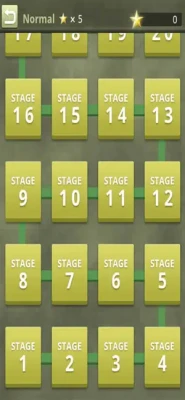
4,000 Sudoku Stages
Sudoku World offers a collection of 4,000 stages, providing a substantial selection of number puzzles to explore.
The large stage collection gives players room to progress gradually, practice familiar techniques, and encounter more demanding grids as their confidence improves.
Four Difficulty Levels
The game features four difficulty levels designed to accommodate different skill levels.
Beginners can start with easier puzzles and become familiar with the rules. More experienced players can choose harder challenges that require closer examination of possible numbers and more advanced deduction techniques.
Challenge Mode
Challenge Mode offers additional ways to test your abilities. Its options include random puzzles, Time Attack, maximum difficulty, and challenges without hints.
These modes encourage players to develop different skills, from solving unfamiliar grids to maintaining accuracy under time pressure.
Highlighting Feature
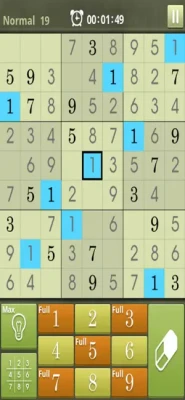
The highlighting feature helps players examine the board more conveniently. Visual emphasis can make it easier to focus on relevant cells, rows, columns, or numbers while working through a puzzle.
Use the available highlighting options to support your reasoning rather than relying on visual cues alone.
Save and Load Progress
Sudoku World supports saving and loading playing data, allowing players to preserve their progress and return to their puzzles later.
This feature is particularly useful when a difficult grid requires more time than you have available in a single session.
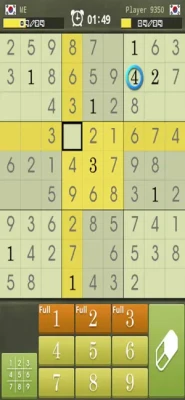
Multiplayer Support
The game includes multiplayer functionality, giving players an additional way to experience Sudoku beyond the standard solo stages.
The precise multiplayer rules may depend on the available mode, so review its in-game instructions before starting a match.
Achievements and Leaderboards
Achievements provide extra objectives for players who want to accomplish more than simply completing stages. Leaderboards offer opportunities to compare performance and pursue stronger results.
These features add motivation for players who enjoy tracking their progress.
Smartphone and Tablet Compatibility
Sudoku World supports iPhone and iPad devices. Its grid-based design makes it suitable for playing on a phone during a short break or using a larger tablet display for more detailed puzzle analysis.
Multiple Language Options
The game supports English and 15 additional languages, making its interface accessible to a wider audience.
How to Play Sudoku World
Understand the Sudoku Grid
A standard Sudoku puzzle consists of a nine-by-nine grid divided into nine smaller three-by-three boxes. Some cells already contain numbers, while the remaining cells must be completed.
Your goal is to fill every empty cell while ensuring that no digit is repeated within any row, column, or three-by-three box.
Check the Row
Before placing a number, inspect the row containing the empty cell. Identify which digits are already present and eliminate those numbers from consideration.
For example, if a row already contains 1, 2, 4, 6, and 8, the missing digits must come from 3, 5, 7, and 9. The column and box will help determine which of those candidates can occupy the empty cell.
Check the Column
Look vertically through the grid to identify digits that are already used in the same column.
A number that is missing from the row may still be unavailable because it appears elsewhere in the column. Combining row and column information narrows the possible choices.
Check the Three-by-Three Box
Each three-by-three box must also contain the digits 1 through 9 without repetition.
Examine the box surrounding the empty cell and eliminate any numbers already present. The remaining candidates must satisfy all three rules simultaneously.
Fill Cells With Certain Answers
When only one digit can legally occupy a cell, enter that number. Then recheck the surrounding row, column, and box because the new entry may reveal another solution.
Continue this process until the entire grid is complete.
Use Hints When Necessary
If you cannot determine the next number, consider using an available hint. However, try to solve the cell independently first so you can learn from the reasoning process.
Hints are most useful when you have exhausted the obvious possibilities or want help understanding a particularly difficult stage.
Complete Sudoku World Strategy Guide
Start by Scanning the Entire Grid
Before entering any numbers, examine the complete puzzle. Look for rows, columns, and boxes that already contain many digits, as these often provide the easiest opportunities to make progress.
A row with only one or two empty cells is generally easier to analyze than a row with several missing numbers. The same principle applies to columns and three-by-three boxes.
Begin with the most constrained areas instead of trying to solve the grid from top to bottom without considering the available information.
Search for Missing Numbers
A reliable beginner technique is to examine which digits are missing from each row, column, or box.
Suppose a row contains every number except 7. If one cell is empty and all the other cells are filled, that empty cell must contain 7.
More complicated situations require checking whether a missing digit can fit into multiple cells. When a digit has only one legal location within a row, column, or box, you can enter it confidently.
This method is called finding a hidden single when the digit's unique position is identified within a unit, even if the cell has other possible candidates.
Use the Naked Single Technique
A naked single occurs when an empty cell has only one possible candidate after checking its row, column, and box.
Imagine that a cell could initially contain 2, 5, or 8. If other entries eliminate 2 and 5, only 8 remains.
Enter 8 because no other number satisfies all the Sudoku rules for that cell.
Naked singles are among the most useful techniques for beginners because they rely on direct elimination rather than complex patterns.
Look for Hidden Singles
A hidden single occurs when a particular digit can fit in only one cell within a row, column, or box, even though that cell may have other possible candidates.
For example, a three-by-three box may have several empty cells, but only one of them can legally contain 6. That cell must therefore contain 6.
To find hidden singles, examine one digit at a time and consider every possible location for it within the selected unit.
This technique can reveal solutions that are not immediately obvious when looking at individual cells alone.
Use Pencil Marks for Difficult Puzzles
Pencil marks are notes listing the candidate digits that could fit in an empty cell. They are especially useful when a puzzle contains many unresolved positions.
After checking the row, column, and box, record the remaining legal candidates for selected cells. Update these notes whenever a new number is placed.
For example, a cell may have candidates 2, 4, and 9. If a later deduction eliminates 2 and 9, you know that 4 must be correct.
Keep candidate notes accurate. Outdated or incorrect notes can create confusion and make a puzzle harder to solve.
Apply the Naked Pair Technique
A naked pair occurs when two cells within the same row, column, or box contain exactly the same two candidates.
For example, if two cells can contain only 3 or 8, those two digits must occupy those cells in some order.
As a result, 3 and 8 can be removed from the candidate lists of other cells within that same unit.
This technique does not immediately reveal which cell contains which number, but it reduces the available options and may expose a single elsewhere.
Use the Hidden Pair Technique
A hidden pair occurs when two digits can appear in only the same two cells within a row, column, or box.
Those two cells must contain the pair in some order, even if their candidate lists include additional numbers.
Once you identify the hidden pair, remove the other candidates from those two cells.
This method can simplify a difficult grid by reducing the possibilities in cells that initially appear to have several valid numbers.
Focus on One Digit at a Time
When the grid becomes complicated, choose a digit and examine where it can legally appear throughout a particular row, column, or box.
For example, check every possible location for 5 in a three-by-three box. If several cells are unavailable because their rows or columns already contain 5, the remaining positions become easier to identify.
This digit-focused approach can reveal hidden singles and other patterns that are difficult to notice when examining every candidate simultaneously.
Recheck the Grid After Every Placement
Every confirmed number changes the available candidates in its row, column, and box.
After entering a digit, review the affected areas and update your notes. A new placement may eliminate a candidate from several cells or create an immediate single.
Do not wait until the entire grid is nearly complete before checking for newly available solutions. Frequent review helps maintain accuracy and reduces the amount of work required later.
Avoid Guessing Too Early
Randomly entering numbers may appear to speed up progress, but it can create contradictions that are difficult to trace.
Instead, look for a cell with one candidate, a digit with one possible location, or a useful candidate pattern.
If you cannot find a clear deduction, review your notes and check whether you overlooked a restriction in a row, column, or box.
For advanced puzzles, controlled trial and error may occasionally be necessary, but it should come after logical techniques have been exhausted rather than serving as the first approach.
Use Highlighting to Improve Accuracy
Sudoku World includes a highlighting feature that can make the board easier to inspect.
Use it to focus on relevant parts of the grid and reduce the chance of overlooking a repeated number or candidate. When studying a particular digit, pay attention to the rows, columns, and boxes that already contain it.
Highlighting is most effective when combined with systematic reasoning. It should help you organize the information rather than replace the process of checking candidates.
Use Hints as a Learning Tool
Hints can help you progress, but they are also an opportunity to learn a new solving technique.
Before requesting assistance, identify the cells and digits you have already checked. After receiving help, examine why the suggested move is valid.
Was it a naked single, a hidden single, or the result of eliminating candidates? Understanding the reasoning makes it easier to recognize the same pattern in future puzzles.
Over time, this approach can reduce your reliance on hints and improve your ability to solve harder stages independently.
Manage Time Attack Challenges
Time Attack tests your ability to solve puzzles efficiently while working under time pressure.
Practice with easier puzzles before attempting more demanding timed challenges. Develop a scanning routine that lets you identify obvious singles quickly and avoid repeatedly checking the same cells.
Prioritize accuracy because incorrect entries can interrupt your progress and waste valuable time.
As you become more familiar with common Sudoku patterns, you will naturally make decisions more quickly without needing to rush.
Prepare for Maximum Difficulty
The maximum-difficulty challenge is best approached with a methodical strategy rather than rapid guessing.
Use candidate notes, look for singles, identify pairs, and examine how digits are restricted within rows, columns, and boxes.
When a simple scan produces no result, switch to a more advanced technique. Reassess the grid after every deduction and keep your candidate notes up to date.
Difficult puzzles often require several small deductions before a major breakthrough becomes visible.
Practice Without Hints
No-hint challenges encourage you to rely on your own reasoning and remember the techniques you have learned.
Start with puzzles that match your current skill level and gradually move to harder ones. If you become stuck, review the grid carefully rather than immediately abandoning the attempt.
After completing a puzzle, think about which deductions helped you make progress and which patterns you initially missed.
Regular practice without hints can strengthen your confidence and help you recognize useful patterns more quickly.
Beginner Tips for Sudoku World
Begin With Easy Puzzles
Start at a comfortable difficulty and learn how rows, columns, and boxes restrict possible numbers.
Look for Nearly Complete Rows
Rows with only one or two empty cells often provide straightforward opportunities to fill in missing digits.
Check All Three Restrictions
Always consider the row, column, and three-by-three box before entering a number.
Record Candidate Numbers
Use pencil marks when several digits remain possible. Update them as the puzzle develops.
Avoid Random Guessing
Search for a logical deduction before entering a number. Guessing too early can create unnecessary confusion.
Use Hints to Understand the Logic
When you need assistance, focus on learning why the suggested move works rather than simply copying the answer.
Save Your Progress
Use the game's save and load functionality when you need to stop playing before finishing a puzzle.
Advanced Sudoku Techniques for Experienced Players
Use Pointing Pairs and Triples
Sometimes a digit's possible positions within a three-by-three box all lie in the same row or column.
If every possible location for 7 in a box lies within one row, then 7 cannot appear in the other cells of that row outside the box.
The same reasoning applies to columns. This technique, commonly called a pointing pair or pointing triple when two or three candidates are involved, can eliminate possibilities without immediately filling a cell.
Apply Box-Line Reduction
Box-line reduction works in the opposite direction. If a digit can appear in a row only within one particular three-by-three box, that digit can be eliminated from the other cells of the box outside that row.
This technique helps connect the information in rows and columns with the smaller boxes.
Recognize Naked Triples
A naked triple occurs when three cells within one unit collectively contain exactly three candidate digits, although the candidates may be distributed differently among those cells.
For example, the three cells might contain the candidate sets 2 and 6, 2 and 9, and 6 and 9. Together, they use only 2, 6, and 9.
Those three digits can therefore be removed from the candidate lists of other cells in the same unit.
Look for X-Wing Patterns
An X-Wing is an advanced technique involving one digit appearing as a candidate in exactly two positions in each of two rows, with those positions aligned in the same two columns.
This pattern allows the digit to be eliminated from other candidate cells in those two columns.
The same idea can be applied with rows and columns reversed. X-Wing is especially useful when straightforward elimination no longer produces obvious results.
Reassess Candidate Lists Regularly
Advanced techniques depend on accurate candidate information. Whenever you place a number or eliminate a candidate, update the affected rows, columns, and boxes.
A single outdated candidate can hide a useful pattern or lead to an invalid deduction.
Organized notes make it easier to identify pairs, triples, and other relationships that are difficult to see at a glance.
Common Mistakes to Avoid in Sudoku World
Repeating a Digit in a Row
Every row must contain the digits 1 through 9 without repetition. Check the entire row before entering a number.
Forgetting the Column Rule
A number that fits the row may still be invalid because it already appears in the same column.
Ignoring the Three-by-Three Box
Always inspect the smaller box surrounding the cell. It is just as important as the row and column.
Making Entries Without Checking Candidates
Entering a number based on appearance or intuition can create contradictions. Confirm that the digit is permitted in all three relevant units.
Leaving Pencil Marks Outdated
When a new number is placed, remove candidates that are no longer possible. Incorrect notes can make later deductions unreliable.
Relying Too Heavily on Hints
Hints can help you progress, but solving independently provides more practice with logical techniques.
Rushing Through Timed Challenges
Speed is useful only when your entries are accurate. Build a reliable solving routine before trying to improve your completion time.
Failing to Review Contradictions
If a digit appears twice in a row, column, or box, or a cell has no possible candidates, stop and review recent entries. A contradiction usually indicates an incorrect placement or an earlier mistake in your candidate analysis.
Best Strategy for Completing More Sudoku World Stages
The most effective approach combines systematic scanning, accurate candidate tracking, and gradual use of advanced techniques.
Begin each puzzle by checking rows, columns, and boxes with the fewest empty cells. Enter obvious singles and then examine the grid again for newly available opportunities.
When simple deductions stop working, record candidate numbers and look for hidden singles, naked pairs, and other elimination patterns. Use highlighting to make the relevant parts of the board easier to examine, and keep your notes updated after every confirmed placement.
For timed challenges, practice accuracy before concentrating on speed. For maximum-difficulty puzzles, remain patient and work through the available deductions methodically.
Use hints when they help you understand a difficult move, and take advantage of saved progress when a puzzle requires a longer session. With regular practice, you can become more confident and solve increasingly demanding stages without unnecessary guessing.
Is Sudoku World Suitable for Beginners?
Yes. Sudoku World is suitable for beginners because its fundamental rules are straightforward and its four difficulty levels provide a way to progress gradually.
New players can begin by identifying missing numbers in nearly complete rows and boxes. As they gain confidence, they can learn candidate notation, hidden singles, pairs, and more advanced solving techniques.
The highlighting feature can help make the grid easier to examine, while hints provide assistance when a puzzle becomes challenging.
Experienced players can explore maximum-difficulty and no-hint challenges to test their ability to solve puzzles independently.
Is Sudoku World Worth Playing?
Sudoku World is a strong option for players who enjoy number puzzles and logical problem-solving. Its 4,000 stages provide a substantial collection of challenges, while four difficulty levels help accommodate different experience levels.
Challenge Mode adds variety through random puzzles, Time Attack, maximum difficulty, and no-hint play. The highlighting feature and saved progress provide practical support, while multiplayer, achievements, and leaderboards offer additional goals.
The game's number-based mechanics are simple to understand but can become demanding as the puzzles grow more complex. Players who enjoy patient reasoning, pattern recognition, and steady improvement should find plenty to appreciate.
Those who prefer action-oriented gameplay may find Sudoku less exciting, but fans of traditional logic puzzles will likely enjoy its structured challenges.
Frequently Asked Questions About Sudoku World
What Is Sudoku World?
Sudoku World is a number puzzle game developed by MOBIRIX. Players fill a nine-by-nine grid with digits from 1 to 9 while ensuring that no number repeats within a row, column, or three-by-three box.
Who Developed Sudoku World?
Sudoku World is developed by MOBIRIX, a mobile game publisher known for puzzle, arcade, and casual games.
How Many Stages Does Sudoku World Have?
The game listing describes a total of 4,000 stages, providing a large selection of puzzles for players to complete.
How Many Difficulty Levels Are Available?
Sudoku World features four difficulty levels, allowing players to choose puzzles that match their current experience.
What Is Challenge Mode?
Challenge Mode offers additional puzzle formats, including random puzzles, Time Attack, maximum difficulty, and no-hint challenges.
Does Sudoku World Have a Hint Feature?
Yes. The game offers hints as an assistance option. You can use them when you need help progressing through a difficult puzzle.
Can You Save Your Progress?
Yes. Sudoku World supports saving and loading playing data, allowing you to continue your progress later.
Does Sudoku World Support Multiplayer?
Yes. The game listing includes multiplayer support. Available rules and match options depend on the mode provided in the game.
Can You Play Sudoku World on an iPad?
Yes. The game supports iPad as well as compatible iPhone devices.
How Do You Solve a Sudoku Puzzle Faster?
Start by finding nearly complete rows, columns, and boxes. Use singles and candidate elimination, maintain accurate notes, and develop a consistent scanning routine. Practice improves speed while helping you maintain accuracy.
What Is the Best Strategy for Difficult Sudoku Puzzles?
Use candidate notes, search for hidden singles and pairs, and apply advanced elimination techniques when basic scanning stops producing results. Avoid guessing until you have carefully examined the logical possibilities.
Is Sudoku World Free to Play?
The Apple App Store lists Sudoku World as free to download with in-app purchases. Optional purchases include hint packs, and the game contains advertising.
Is Sudoku World Good for Brain Training?
Sudoku World provides exercises in logical deduction, attention, and pattern recognition. It can be an enjoyable way to practice these skills, although playing Sudoku should not be treated as a guarantee of broader cognitive or health benefits.
Final Thoughts
Sudoku World offers a substantial number puzzle experience built around logical thinking, careful observation, and steady improvement. Its 4,000 stages and four difficulty levels provide opportunities for beginners to learn the basics and for experienced players to tackle demanding challenges.
The key to success is to approach every grid systematically. Check rows, columns, and boxes, identify certain answers, record candidates when needed, and use advanced techniques when simpler deductions no longer work.
Challenge Mode, saved progress, highlighting, and multiplayer support add variety to the traditional Sudoku experience. Whether you want to solve a few puzzles during a break or work toward mastering the hardest stages, Sudoku World provides an engaging way to test your reasoning skills one number at a time.
Rate the Game
User Reviews










Popular Games



















 Android
 iOS
 Windows
 Xbox