
Latest Version
October 26, 2026
Rollic Games
Puzzle
iOS
0
Report a Problem
More About :game
Game Overview
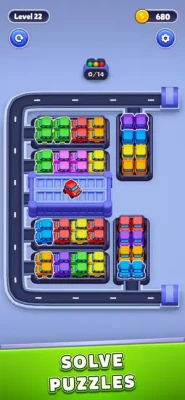
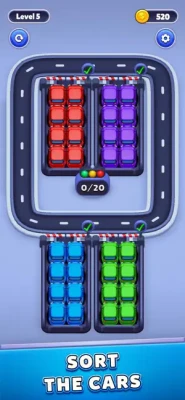
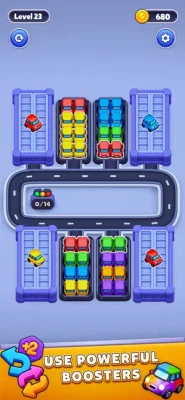
Car Sort: Color Puzzle is a mobile puzzle game developed by Rollic Games. Available for iPhone and iPad, it combines color matching, traffic management, and strategic decision-making in a simple tap-based experience. The main objective is to guide colorful cars toward matching garages while avoiding situations that prevent other vehicles from reaching their destinations.
The game is easy to understand at first, but later stages introduce more complicated layouts and special mechanics. Players must pay attention to car colors, track arrangements, blocked routes, and the order in which vehicles move. A decision that seems harmless at the beginning can make the remaining puzzle much harder if it blocks a useful path.
Rather than relying entirely on quick reactions, successful play often comes down to thinking ahead. Observing the board, identifying the most important moves, and keeping future options open can make a significant difference when tackling difficult stages.
Car Sort: Color Puzzle is suitable for short gaming sessions because individual puzzles encourage quick decisions while still providing opportunities for deeper planning. Its combination of colorful visuals, straightforward controls, and increasingly varied challenges makes it appealing to players who enjoy sorting games and traffic-based logic puzzles.
How to Play Car Sort: Color Puzzle
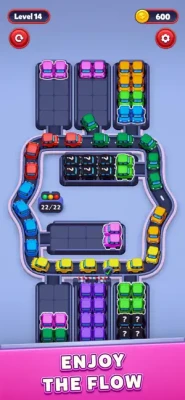
The basic controls are straightforward. Players tap cars to send them around the track and guide them toward garages that match their colors. The goal is to clear the board by completing the required matches without creating an unavoidable traffic jam.
Before making a move, examine the cars currently available and the garages they need to reach. Think about which vehicle can move safely, which route it may use, and whether its movement could interfere with another car.
Each successful match brings you closer to completing the level. However, moving cars in the wrong order can complicate the remaining puzzle, especially when the board contains limited space or special obstacles.
The best approach is to treat every move as part of a larger plan. Instead of focusing only on the car that looks easiest to move, consider how that action affects the rest of the board.
Main Features of Car Sort: Color Puzzle
Color-Matching Car Puzzles
Color matching is the foundation of the game. Cars must reach garages that correspond to their colors, and players need to decide which vehicles should move first. As more cars and destinations appear, recognizing useful patterns becomes increasingly important.
Hundreds of Challenging Levels
The game offers a large collection of short puzzles with different arrangements and obstacles. Early levels help players understand the basic mechanics, while later stages demand more careful planning and better control of the available routes.
Traffic Management Gameplay
Moving cars around a track adds a traffic-management element to the puzzle. Players must consider how each vehicle moves and whether its path will interfere with other cars. Efficient traffic flow is often the key to finishing a complicated board.
Special Obstacles and Mechanics
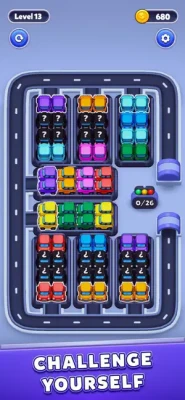
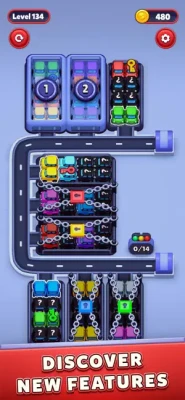
As players progress, new challenges introduce additional rules. The game's updates have featured mechanics and obstacles such as Linked Cars, Passage, Glass Cars, Stone, Shrinking Parking Lot, Flip Cars, Color Station, Mystery Cars, and Driveway.
These elements add variety to the familiar sorting formula. Some require players to pay attention to connected vehicles, restricted passages, fragile cars, or changing board conditions. The exact solution depends on the rules and layout of the particular level.
Events and Competitive Challenges
Car Sort: Color Puzzle has also introduced additional activities, including Champion's Cup, Speed Cup, Streak Tower, and leaderboard features. These modes offer extra goals beyond completing standard puzzles, although their availability and rules may vary by game version.
Simple Tap Controls
The game uses an accessible control system that makes it easy to begin playing. Players can concentrate on analyzing the board instead of learning complicated button combinations. This simplicity also makes the game suitable for brief breaks and casual puzzle sessions.
Complete Car Sort: Color Puzzle Strategy Guide
Study the Entire Board Before Moving
One of the most effective habits is to inspect the whole puzzle before tapping your first car. Identify the available colors, the matching garages, and any obstacles that could affect movement.
Look for vehicles that have a clear route and determine whether moving them will help open the board. Also notice cars that appear trapped behind other vehicles or depend on a particular sequence of moves.
Spending a few seconds studying the layout can prevent mistakes that would otherwise require restarting the level.
Match the Easiest Cars First
Cars with clear routes and accessible matching garages are often good starting points. Removing these vehicles can simplify the board and make other cars easier to manage.
However, do not automatically move every car that can reach a garage. Check whether a particular vehicle is blocking another car or occupying a position that may be useful later.
The best first move is not always the quickest match. It is the move that makes the remaining puzzle easier to solve.
Plan Several Moves Ahead
Try to anticipate the consequences of each action. Before tapping a car, consider which vehicles will remain, which routes will become available, and whether the next matching car can move safely.
You do not need to calculate every possible outcome. Planning two or three moves ahead is often enough to avoid obvious dead ends.
As levels become more complicated, this habit becomes more valuable because a seemingly successful move can leave the remaining cars in an unfavorable arrangement.
Prioritize Restricted Routes
Pay special attention to narrow passages, blocked areas, and routes that only certain cars can use. These sections can become the main source of difficulty when several vehicles compete for access.
If a car needs a restricted route, consider moving it before other vehicles occupy or obstruct the necessary space. At the same time, avoid clearing a passage in a way that creates a new problem elsewhere.
Think of the board as a network of connected paths. The goal is to maintain enough access for every required car to reach its destination.
Avoid Random Tapping
Random moves may work in the easiest levels, but they become less reliable as the number of cars and obstacles increases.
Every tap should serve a purpose. It might complete a color match, clear a route, remove a blocker, or prepare the board for a later move.
If you cannot explain why a move is useful, pause and reconsider your options. A short delay is better than creating a traffic jam that could have been avoided.
Keep Track of Every Color
When several colors appear together, it is easy to focus on the most visible vehicles and overlook the cars waiting behind them.
Mentally group the cars by color and identify which matching garages remain available. This makes it easier to recognize which matches can be completed immediately and which require additional preparation.
When multiple cars share a color, look for an order that clears the most useful space without interfering with other colors.
Preserve Useful Space
Open space can be important when a puzzle contains limited movement options. Avoid occupying a useful area simply because a car can move there immediately.
Before sending a vehicle along a route, consider whether its movement could make it harder for another car to pass. Keeping important paths accessible can prevent a small mistake from becoming a larger problem.
This is particularly helpful in stages with shrinking spaces or tightly arranged vehicles.
Handle Special Mechanics Carefully
Special obstacles require you to adjust your usual approach. Learn what each new mechanic changes before committing to a sequence of moves.
For Linked Cars, pay attention to the relationship between the connected vehicles and consider how their movements affect one another.
For Glass Cars, observe any level-specific restrictions associated with fragile vehicles and avoid unnecessary moves that could put their progress at risk.
For Stone, identify how the obstacle affects the available route and whether the level provides a particular way to deal with it.
For Passage and Driveway challenges, focus on the conditions that allow cars to access the relevant routes or spaces.
For Flip Cars and Color Station, check how the special mechanic affects color matching and the order in which vehicles should move.
When the parking area shrinks, give greater priority to moves that preserve the space you still need. Mystery Cars may require additional observation before you can confidently determine the best sequence.
These are strategic starting points rather than universal solutions. The precise method depends on the mechanic's rules and the arrangement of each level.
Use Boosters Only When Necessary
If a level offers boosters or other assistance, consider saving them for stages where ordinary moves are unlikely to succeed. A difficult board may become manageable with a well-timed boost, but using assistance too early can leave fewer options for later challenges.
First, inspect the board again and see whether changing the order of your moves solves the problem. If you repeatedly reach the same dead end, assistance may be worth considering.
Before spending coins or other resources, check the cost and the exact benefit offered. This helps you decide whether the extra help is worth the investment.
Learn From Failed Attempts
A failed attempt can reveal useful information about a level. Instead of immediately repeating the same sequence, identify the move that caused the problem.
Perhaps a car blocked a passage, a color match was attempted too early, or a useful space was occupied unnecessarily. Adjust that decision on your next attempt.
Small changes in the move order can produce a substantially different result. Treat each retry as an opportunity to test a better plan rather than simply repeating previous actions.
Best Tips for Difficult Levels
Identify the Critical Car
Some cars have a greater effect on the puzzle than others. A vehicle positioned in front of several other cars may determine whether the rest of the board can be cleared.
Identify these important vehicles before making easy matches. If moving one car opens several routes, it may deserve priority even when its matching garage is not the nearest destination.
Work Backward From the Final Matches
Imagine what the board should look like near the end of the level. Which cars need to remain available? Which routes must stay clear? Are there vehicles that should be moved early to prevent a final blockage?
Working backward from the desired result can reveal a logical order that is not obvious when looking only at the first available move.
Avoid Blocking Future Matches
A car can be correctly matched and still create difficulties if its movement interferes with other vehicles. Before completing a match, consider whether it affects any route that another car will need.
The safest sequence is the one that makes progress while preserving the options required to finish the board.
Recognize Repeating Patterns
Many sorting puzzles use similar ideas even when their layouts differ. Once you become familiar with common arrangements, you can recognize situations in which one car must move before another or a passage needs to be cleared first.
Remember the reasoning behind a successful solution, not just the exact sequence of taps. Understanding the pattern will help you adapt when the next level changes the colors, obstacles, or starting positions.
Take a Break When Necessary
If you repeatedly fail the same level, step away for a moment. Returning with fresh attention can make it easier to notice a route or move order that you previously overlooked.
There is no need to rush through every puzzle. A calm, deliberate approach is often more effective than repeatedly tapping in frustration.
Common Mistakes to Avoid
Moving Cars Without a Plan
Moving the first available car may seem productive, but it can create unnecessary complications. Always consider how the move affects the remaining vehicles.
Ignoring Special Obstacles
Treating every level like a basic color-sorting puzzle can lead to avoidable failures. When a new mechanic appears, take time to understand its effect on movement and matching.
Using Assistance Too Quickly
Boosters can be useful, but spending them whenever a level looks difficult may waste valuable resources. Try a more deliberate move sequence before using paid or limited assistance.
Forgetting About the Remaining Cars
Completing one match is only part of the task. Keep track of the cars that still need garages and make sure the moves you choose leave a viable way to finish the board.
Repeating the Same Failed Sequence
If an approach consistently fails, repeating it without changes is unlikely to help. Identify the problem and test a different order, particularly around blocked routes and special mechanics.
How to Progress Faster in Car Sort: Color Puzzle
Consistent progress depends on combining careful planning with a willingness to learn from each stage. Begin by mastering the basic movement rules and understanding how matching garages work. Once these fundamentals become familiar, focus on identifying critical cars and preserving the routes they need.
When a level introduces a new obstacle, treat it as a separate problem to understand. Pay attention to how it changes your usual strategy instead of assuming the same sequence will work everywhere.
It is also helpful to distinguish between puzzles that require a simple matching order and those that demand more involved planning. Straightforward levels can usually be completed quickly, while complicated stages deserve a slower approach.
If the game includes events or competitive challenges, check their objectives before participating. Understanding the goal can help you decide whether to prioritize speed, consistent completion, or a particular milestone.
Most importantly, avoid treating every failed attempt as wasted effort. Each retry can improve your understanding of the board and help you recognize patterns that make future levels easier.
Is Car Sort: Color Puzzle Free to Play?
Car Sort: Color Puzzle is listed as a free download with in-app purchases. Players can start playing without buying the game, although optional purchases and other monetization features may be available.
The game may offer coins, bundles, passes, or other forms of assistance. Their availability and pricing can vary by region and version.
Players who prefer not to spend money should review the available options carefully before purchasing boosters or additional resources. If a stage feels unusually difficult, try changing the move order and analyzing the board again before deciding whether paid assistance is necessary.
The game also includes advertising, according to its App Store listing. The exact advertising experience and purchase options may change with updates.
Is Car Sort: Color Puzzle Worth Playing?
Car Sort: Color Puzzle is a good option for players who enjoy colorful casual games, sorting challenges, and puzzles that reward logical thinking. Its simple tap-based controls make it accessible to newcomers, while the increasing variety of obstacles creates additional challenges for experienced players.
The strongest part of the experience is the balance between straightforward objectives and the need to plan individual moves. Matching cars to garages is easy to understand, but completing a crowded board can require patience and careful sequencing.
Players looking for a fast-paced racing simulator may prefer a different type of car game. Those who enjoy organizing objects, clearing blocked routes, and solving compact logic puzzles are more likely to appreciate this title.
The addition of special mechanics and competitive activities also gives players different goals to pursue beyond basic color matching.
Frequently Asked Questions
What is Car Sort: Color Puzzle?
Car Sort: Color Puzzle is a mobile logic game in which players move colorful cars around a track and guide them to matching garages. The objective is to clear each puzzle while managing routes and obstacles.
How do you win a level in Car Sort: Color Puzzle?
Study the board, identify available matching garages, and move cars in an order that keeps essential routes accessible. Continue matching vehicles until the level's completion objective is satisfied.
What is the best strategy for Car Sort: Color Puzzle?
The most reliable strategy is to plan before tapping, prioritize important routes, and avoid moves that restrict future options. For difficult stages, consider several moves ahead rather than focusing only on the next match.
Why do some levels feel more difficult?
Later stages may introduce more cars, restricted routes, limited space, or special mechanics. These changes increase the number of decisions players must consider and make the order of moves more important.
How can I get past a difficult level?
Review the entire board, identify the car or obstacle causing the main problem, and try a different sequence. If the same approach repeatedly fails, change the move that creates the blockage rather than repeating the entire sequence unchanged.
Does Car Sort: Color Puzzle have special obstacles?
Yes. The game's updates have introduced different mechanics and obstacles, including Linked Cars, Glass Cars, Passage, Stone, Flip Cars, and other challenges. Each can require a different approach depending on the level.
Can I play Car Sort: Color Puzzle for free?
Yes. The game is available as a free download, with optional in-app purchases. Some additional resources or offers may involve spending money.
Is Car Sort: Color Puzzle suitable for beginners?
Yes. Its tap-based controls and straightforward color-matching objective make it easy to learn. Beginners can gradually develop their planning skills as the puzzles become more complex.
Does Car Sort: Color Puzzle require fast reactions?
The main challenge is usually strategic decision-making rather than rapid reactions. Taking time to inspect the board and plan the move order can help you complete levels more consistently.
What should I do when I run out of good moves?
Pause and examine the remaining cars, garages, and available routes. If no useful move is apparent, consider restarting the level and changing the order of the first few moves. This can help prevent the same blockage from developing again.
Final Thoughts on Car Sort: Color Puzzle
Car Sort: Color Puzzle turns a simple idea into an engaging series of color-matching and traffic-management challenges. Its accessible controls make it easy to start, while special obstacles and increasingly complicated arrangements reward players who think ahead.
The key to success is not moving cars as quickly as possible. It is understanding how each move affects the rest of the board, keeping essential routes open, and choosing an order that allows every car to reach its matching garage.
With patience, careful observation, and a willingness to learn from mistakes, players can develop stronger puzzle-solving skills and approach difficult levels with greater confidence. Whether you enjoy a few quick puzzles during a break or prefer working through more demanding challenges, Car Sort: Color Puzzle offers a satisfying way to test your logic and planning abilities.
Rate the Game
User Reviews




Popular Games



















 Android
 iOS
 Windows
 Xbox