



Latest Version
August 08, 2025
MeeGame Studio
Word
0
com.dailyword.challenge.addictive
Report a Problem
More About :game
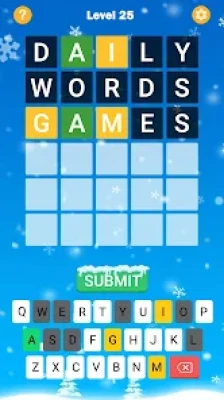
Each puzzle gives you up to six guesses, with the colors of the letter blocks providing clues about your progress. You can use your vocabulary, test different letter combinations, and rely on hints when a puzzle becomes difficult. The game also supports unlimited play, making it suitable for short sessions or longer word-puzzle challenges.
Google Play currently lists the game under the Word and Casual categories as a single-player, offline title. It is rated Everyone and is available on Android, with a Windows version also listed.
Game Information
Game: Word Challenge-Daily Word Game
Developer: MeeGame Studio
Genre: Word / Casual / Puzzle
Game Mode: Single-player
Puzzle Type: Five-letter word guessing
Attempts: Six guesses per puzzle
Hints: Available
Play Style: Daily challenges and unlimited puzzles
Offline: Yes
Age Rating: Everyone
Platforms: Android and Windows
Contains: Ads and in-app purchases
Google Play Rating: 4.3 stars
Google Play Downloads: 1M+
Latest listed update: March 2, 2026
What Is Word Challenge-Daily Word Game?
Word Challenge is a five-letter word guessing game that tests vocabulary, spelling, deduction, and pattern recognition.
The objective is straightforward: enter a valid five-letter word and study the color feedback. Every guess gives you additional information about which letters belong in the solution and where they should be placed.
Because you only have six attempts for a puzzle, random guessing can quickly waste valuable opportunities. The key is to use each guess as a source of information.
The game describes itself as a brain-training and relaxing word experience, while also allowing players to continue playing beyond a single daily puzzle.
How to Play Word Challenge
The basic gameplay is easy to understand:
Enter a valid five-letter word.
Submit your guess.
Check the colors assigned to the letters.
Keep correctly positioned letters in mind.
Move misplaced letters into new positions.
Eliminate letters that do not belong in the solution.
Use the information from previous guesses to narrow down the possibilities.
Find the hidden word within six attempts.
The game also provides hint options when you need additional assistance.
Understanding the Letter Clues
The color system is the most important part of the game.
Instead of simply telling you whether a guess is right or wrong, the puzzle uses the letters in your guess to provide useful information.
A strong player should treat every color as evidence.
Correctly Positioned Letters
When a letter is confirmed to be in the correct position, keep that position fixed in future guesses whenever possible.
For example, if you discover:
S _ A _ E
you already have valuable information about the structure of the answer.
Letters in the Wrong Position
A letter may belong to the answer but appear in the wrong location.
Do not remove these letters from consideration. Instead, place them in different positions on your next guesses.
Incorrect Letters
Letters that have been ruled out should generally not be reused.
This is particularly important toward the end of a puzzle because wasting an attempt on known incorrect letters gives you very little new information.
Full Strategy Guide
1. Start With an Information-Rich Word
Your first guess should reveal as much information as possible.
Instead of immediately trying an unusual word, choose a common five-letter word containing several different letters.
Words with a mixture of common vowels and consonants can help reveal the general structure of the hidden word.
The goal of the opening guess isn't necessarily to solve the puzzle.
It is to learn as much as possible.
2. Avoid Repeating Letters Too Early
If your first guess contains repeated letters, you may receive less information about the overall letter pool.
When beginning a puzzle, a word containing five different letters can be useful because it tests more possibilities at once.
Once you know that a particular letter appears in the answer, repeated letters can become more useful later.
3. Use Vowels to Narrow the Search
Vowels are extremely useful when solving five-letter words.
If your early guesses reveal that certain vowels are absent, you can dramatically reduce the number of possible answers.
Try to establish the vowel pattern before spending too many attempts on obscure possibilities.
4. Lock In Confirmed Letters
Once you know the position of a letter, treat it as an anchor.
For example:
_ _ R _ T
gives you a much smaller search space than five completely unknown positions.
Do not casually move confirmed letters around unless the game's feedback indicates that your interpretation was incorrect.
5. Move Misplaced Letters Strategically
Suppose a letter is confirmed to belong to the word but is in the wrong position.
Don't simply move it randomly.
Place it in a position that tests another possibility while also introducing new letters.
This allows one guess to perform two jobs:
Test the known letter's location.
Discover additional information.
6. Eliminate Letters Aggressively
One of the most powerful techniques in word puzzles is elimination.
If several letters have already been ruled out, mentally remove them from your available alphabet.
This makes it easier to recognize possible word patterns.
Instead of thinking:
“What five-letter word could this be?”
think:
“What five-letter word fits these known letters while avoiding everything already eliminated?”
That change in approach can make difficult puzzles much easier.
7. Don't Guess the Same Information Twice
Every attempt should ideally teach you something new.
If a previous guess already established that a letter cannot occupy a certain position, there is little value in repeating exactly the same configuration.
Use each new attempt to test a different possibility.
8. Use Hints Carefully
Word Challenge includes hints for players who get stuck.
Hints are most useful when you have already narrowed down the answer but cannot determine the final combination.
Try solving the puzzle yourself first, then use a hint when several possibilities remain.
This keeps the game challenging while preventing one particularly difficult word from stopping your session.
Advanced Word Challenge Tips
Think in Patterns
Instead of focusing on individual letters, recognize common word structures.
Examples include:
_ A _ E _
S _ _ R _
_ _ I N _
C _ A _ E
Once several positions are known, your brain can quickly generate possible words that fit the pattern.
Separate Confirmed and Possible Letters
Keep two mental groups:
Confirmed: Letters and positions you know.
Possible: Letters that may belong somewhere else in the word.
This prevents one of the most common mistakes: treating a misplaced letter as though it were completely wrong.
Consider Letter Frequency
Common English letters such as E, A, R, S, T, O, I, N, and L can be useful early in a puzzle.
However, don't assume the answer must contain the most common letters. The objective is to gather evidence from the puzzle rather than rely entirely on probability.
Save Your Final Guess
If you reach the sixth attempt and have a strong candidate, check every known clue before submitting.
Ask yourself:
Does every confirmed letter appear?
Are confirmed positions correct?
Have I accidentally used a ruled-out letter?
Does the word satisfy all the previous clues?
Is there another possible word that fits the pattern?
A few seconds of checking can prevent an avoidable final-attempt mistake.
How to Solve Difficult Daily Challenges
When a puzzle becomes difficult, slow down rather than guessing faster.
Start by writing down the information you have mentally:
Known positions:
_ A _ _ E
Known letters:
R, A, E
Ruled-out letters:
T, S, M, P
Now search for words that satisfy all three conditions.
This turns the puzzle from a vague vocabulary test into a logical deduction problem.
Common Mistakes to Avoid
Random Guessing
Random words consume attempts without providing a clear strategy.
Ignoring Previous Clues
If a letter has already been confirmed or eliminated, incorporate that information into every subsequent guess.
Reusing Incorrect Letters
Known incorrect letters should generally be removed from your mental candidate list.
Moving Confirmed Letters
A correctly positioned letter is extremely valuable. Keep it in place while testing the remaining possibilities.
Using Hints Too Quickly
Hints can help, but solving a puzzle independently is more rewarding and provides better practice for future challenges.
Searching for Rare Words Too Early
Start with familiar vocabulary. Only consider less common words when the clues strongly point in that direction.
Best Way to Improve at Word Challenge
The best improvement comes from learning how to extract information from every guess.
A useful progression is:
Beginner: Learn the color clues.
Intermediate: Start planning guesses around confirmed letters.
Advanced: Use elimination, letter frequency, word patterns, and strategic testing.
Expert: Make every guess serve a specific purpose.
The objective isn't simply to know more words. It is to become better at narrowing down possibilities.
Why Word Challenge Is Relaxing
Word Challenge combines a simple interface with short puzzle sessions. The developer presents it as a relaxing way to exercise your brain while searching for the daily word.
There is no complicated character progression or lengthy story to follow. You can simply open the game, solve a word puzzle, and stop whenever you're finished.
That makes it a convenient choice for:
Short breaks
Daily word practice
Vocabulary challenges
Casual puzzle sessions
Brain-training activities
Players who enjoy five-letter word games
Difficulty and Progression
Word Challenge doesn't rely on a traditional adventure-style progression system.
Instead, the challenge comes from the words themselves.
Some puzzles can be solved quickly when several letters become obvious. Others require careful deduction, especially when multiple words share similar patterns.
The six-attempt limit adds pressure without making the controls complicated.
Graphics and Controls
The game focuses on functional word-puzzle presentation rather than elaborate graphics.
Its controls are straightforward: select or enter letters, submit a word, and interpret the resulting clues.
This simplicity allows the puzzle itself to remain the central focus.
Offline Play
Google Play lists Word Challenge as an offline game, which makes it suitable for playing without a continuous internet connection.
That can be convenient when you're traveling, waiting somewhere, or simply want a quick word puzzle without relying on an active connection.
Ads and In-App Purchases
The Google Play listing indicates that the game contains ads and in-app purchases.
Player reviews have also discussed advertising and rewarded hint videos, so players who prefer an uninterrupted experience should be aware of this aspect before playing. The developer has stated in responses to reviews that rewarded videos can be associated with hints.
Pros and Cons
Pros
Simple five-letter word gameplay
Six attempts create a clear challenge
Color clues make deduction accessible
Daily word challenges
Unlimited play is supported
Hint system for difficult puzzles
Suitable for short sessions
Offline support
Available for Android and Windows
Easy to learn
Cons
Ads may interrupt the experience
Some difficult words can feel challenging without hints
Players looking for multiplayer competition may find the single-player format limited
The experience is focused almost entirely on word guessing rather than story or exploration
Who Should Play Word Challenge?
Word Challenge is a good fit for players who enjoy:
Wordle-style puzzles
Five-letter word games
Vocabulary challenges
Brain-training games
Daily puzzle games
Casual offline games
Short relaxing challenges
Letter and spelling games
It is particularly easy to pick up because the central mechanic can be understood within a few minutes.
Frequently Asked Questions
What is Word Challenge-Daily Word Game?
It is a five-letter word guessing puzzle from MeeGame Studio where players use color clues to discover a hidden word.
How many attempts do you get?
Each puzzle gives you six attempts to find the five-letter word.
Can you play Word Challenge offline?
Yes. Google Play currently lists the game as offline.
Does Word Challenge have hints?
Yes. The game provides hint options to help when you are stuck.
Is Word Challenge multiplayer?
The current Google Play listing identifies it as a single-player game.
Is Word Challenge free to play?
The Google Play listing shows the game with ads and in-app purchases.
What devices support Word Challenge?
Google Play currently lists the game for Android and Windows.
When was the game last updated?
The Google Play listing currently shows an update on March 2, 2026, with bug fixes related to getting stuck after losing a Daily Challenge level and performance optimization.
Final Thoughts
Word Challenge-Daily Word Game keeps its formula straightforward: discover a hidden five-letter word using limited attempts and progressively better clues.
Its strength is the simplicity of the puzzle. There are no complicated controls to learn, and each guess gives you information that can be used to improve the next one. The unlimited-play option also gives word-game fans a reason to continue beyond the daily challenge.
For players who enjoy vocabulary games, letter puzzles, and daily brain challenges, Word Challenge offers an accessible way to spend a few minutes solving words while practicing deduction and spelling skills.
Rate the Game
User Reviews



Popular Games



















 Android
 iOS
 Windows
 Xbox