

Latest Version
October 09, 2026
Nebula Studio
Word
iOS
0
Report a Problem
More About :game
Developed by Nebula Studio, Word Solitaire Go rewards careful observation, logical thinking, and strategic decisions. Each level challenges you to identify word relationships, establish suitable groups, and decide when to draw or place cards. Because moves are limited, choosing the right action at the right moment is essential.
Whether you enjoy word games, solitaire card puzzles, brain teasers, or relaxing mobile games, Word Solitaire Go offers a thoughtful challenge that focuses on reasoning rather than speed.
Word Solitaire Go Game Information
Game Title: Word Solitaire Go
Developer: Nebula Studio
Genre: Word Puzzle, Card Puzzle, Casual Brain Game
Platform: iOS, including iPhone and iPad
Price: Free to download, with in-app purchases
Language: English
Minimum iOS Version: iOS 15.0
Age Rating: 13+ on the US App Store
Gameplay Style: Single-player word association and card sorting
The game is also listed on Google Play. Availability, compatibility, and purchase options may vary by platform and region.
What Is Word Solitaire Go?
Word Solitaire Go takes a different approach to traditional solitaire. Rather than matching card numbers or arranging suits, you organize words into meaningful groups.
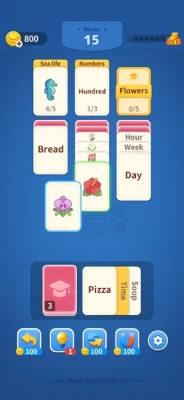
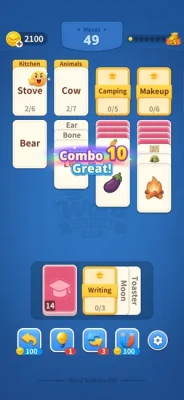
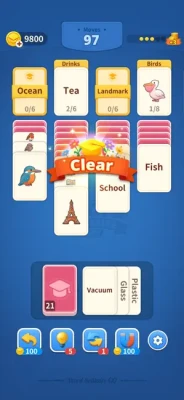
Each puzzle starts with a partially revealed arrangement. You establish the foundation using group cards, draw additional word cards, and place them into the appropriate sets. Every decision affects the remaining possibilities, so a move that appears useful at first might make a later part of the puzzle more difficult.
The result is a casual puzzle game that combines word recognition with planning. It is easy to understand the basic concept, but solving each board efficiently requires patience and attention to detail.
Main Features of Word Solitaire Go
Solitaire-Inspired Word Puzzles
The game combines card-based gameplay with word association. Familiar solitaire-style mechanics provide a recognizable structure, while the meaning of each word determines how the puzzle develops.
Meaning-Based Card Sorting
Players must recognize relationships between words and identify the groups that best fit them. Understanding the context of a word can be just as important as recognizing its general category.
Strategic Move Management
Every level provides a limited number of moves. Players must decide whether to place a word, draw another card, or wait until more information becomes available.
Gradually Developing Difficulty
The game is designed to introduce its puzzle mechanics in an approachable way while encouraging more thoughtful decisions as players progress.
Relaxed, Focused Gameplay
Word Solitaire Go emphasizes concentration and problem-solving rather than quick reactions. This makes it suitable for players who enjoy taking their time with a puzzle.
How to Play Word Solitaire Go
Learning the basics is straightforward, but completing levels efficiently takes practice.
Step 1: Examine the board. Start by looking at the revealed words and identifying possible relationships. Avoid making an immediate move simply because a word looks familiar.
Step 2: Establish the groups. Use the available group cards to create the foundation required by the puzzle.
Step 3: Draw additional words. Reveal new cards when doing so can help you understand the board or advance a group.
Step 4: Match words by meaning. Consider the context, category, and relationship between each word before placing it.
Step 5: Monitor your remaining moves. Think about how each placement affects your future options. Avoid unnecessary actions that do not bring you closer to completing the puzzle.
Step 6: Finish the level. Continue sorting the cards until the required groups are complete.
The most important lesson is to balance immediate progress with future flexibility.
Complete Word Solitaire Go Strategy Guide
1. Scan the Entire Board Before Moving
Before placing a card, examine all the words you can see. Look for clear relationships and potential groups.
For example, several words might relate to food, weather, animals, or everyday activities. These are illustrative examples of word categories rather than guaranteed combinations from a particular level.
Recognizing a strong pattern early can help you avoid placements that make the rest of the puzzle harder.
2. Identify the Category Before Committing
Some words can have several meanings or belong to more than one broad category. Consider the exact relationship required by the group rather than choosing the first association that comes to mind.
Ask yourself whether the word fits naturally with the other cards and whether the group has a consistent meaning.
3. Manage Your Moves Carefully
Move management is central to the game's strategy. An unnecessary placement can consume an opportunity that would have been more valuable later.
Prioritize actions that clearly advance a group or provide useful information. When a move is uncertain, take a moment to compare the alternatives before committing.
4. Draw Cards With a Purpose
Drawing additional cards can reveal helpful information, but it should be part of a considered plan.
First, check whether the current board already contains a strong match. If the existing cards offer a clear opportunity, it may be better to address it before introducing more possibilities.
The best timing depends on the arrangement of the current puzzle.
5. Use Process of Elimination
When several groups appear possible, rule out the weakest choices.
Compare the meanings of the available words, eliminate relationships that do not fit, and focus on the most consistent remaining option. This approach reduces random guessing and helps you make more confident placements.
6. Think Beyond Obvious Word Similarities
Words do not always need to look alike to be connected. Their relationships may involve purpose, function, context, or how they are used in everyday life.
For example, a word describing a sport might be related to a word representing equipment used to play it. Recognizing these broader connections can help when a puzzle becomes less obvious.
Always follow the actual group requirements shown in the game.
7. Avoid Rushing Difficult Puzzles
Word Solitaire Go rewards judgment more than speed. On challenging levels, slow down and evaluate the possible consequences of each action.
A useful routine is to scan the board, identify the strongest group, consider alternative placements, and make the move that best supports your overall progress.
8. Learn From Failed Attempts
If you cannot complete a level, think about the decision that caused the greatest difficulty.
Perhaps you placed a questionable word too early, drew cards without a clear purpose, or overlooked a more obvious connection. Identifying the problem gives you a specific strategy to improve on your next attempt.
9. Improve Your Word Recognition
Regular play can help you become more familiar with recurring categories and relationships. Pay attention to how words connect and why particular groupings make sense.
However, avoid relying entirely on memorization. Understanding the meanings of the words is more useful than assuming that a familiar word always belongs in the same place.
10. Develop a Consistent Solving Routine
Use a repeatable approach for each puzzle:
Review the visible cards.
Identify the strongest potential group.
Check whether each word fits.
Consider the impact on future moves.
Make a deliberate placement.
Reassess the board after drawing new cards.
This method helps you remain organized and reduces unnecessary decisions.
Common Word Solitaire Go Mistakes
Guessing too quickly: Check the meaning of each word and compare it with the entire group before placing it.
Ignoring the move limit: Every action should have a purpose. Think about whether it helps complete the puzzle or preserves useful options.
Drawing cards without considering the board: Look for opportunities among the existing cards before drawing more.
Choosing vague associations: A word may be loosely related to several topics, but the best group should have a clear and consistent relationship.
Repeating unsuccessful strategies: Review the decisions that caused difficulty and adjust your approach rather than making the same guesses again.
Rushing through unfamiliar words: Consider alternative meanings and contexts when a word does not immediately fit.
Is Word Solitaire Go Difficult?
Word Solitaire Go is easy to approach because its central idea is simple: organize words into appropriate groups. Its challenge comes from deciding how and when to place each card.
The limited-move format adds another layer of strategy. Players must consider not only whether a word fits but also whether placing it now is the best decision.
Beginners can focus on recognizing straightforward relationships, while experienced puzzle fans can work on reducing unnecessary moves and making more efficient decisions.
Graphics and Gameplay Experience
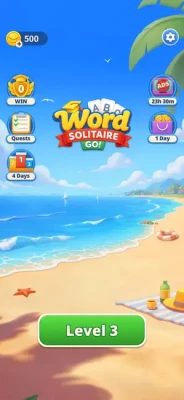
Word Solitaire Go uses a focused card-based presentation that keeps attention on the words and their relationships. Instead of relying on fast action or elaborate mechanics, it encourages players to study the board and solve the puzzle at their own pace.
This approach can be appealing during short breaks or quieter gaming sessions. However, players who prefer constantly changing mechanics may find repeated word-sorting puzzles less varied over time.
Word Solitaire Go Pros and Cons
Pros
Combines word association with solitaire-inspired card mechanics.
Encourages logical reasoning and careful planning.
Makes move management an important part of the challenge.
Offers a calm alternative to fast-paced mobile games.
Provides puzzles that can be approached in short sessions.
Cons
The English-language gameplay may be difficult for players unfamiliar with English vocabulary.
Limited moves can make uncertain decisions frustrating.
Repeated puzzle patterns may feel familiar to some players.
Advertising and optional in-app purchases may influence the overall experience.
Frequently Asked Questions
What is Word Solitaire Go?
Word Solitaire Go is a mobile word puzzle that combines solitaire-inspired card mechanics with word association. Players organize word cards into meaningful groups while managing a limited number of moves.
How do you play Word Solitaire Go?
Examine the revealed cards, establish the required groups, draw additional word cards, and place words according to their meanings. Plan ahead to avoid wasting moves.
Is Word Solitaire Go a traditional solitaire game?
No. It borrows the card-based structure of solitaire, but its main challenge is sorting words by meaning rather than arranging numbered cards by suit or rank.
Is Word Solitaire Go free to play?
The iOS version is free to download and offers optional in-app purchases. Check the current store listing for the latest purchase information.
Can you play Word Solitaire Go on iPhone and iPad?
Yes. The US App Store lists support for iPhone and iPad devices running iOS 15.0 or later.
Does Word Solitaire Go require fast reactions?
No. Its core challenge centers on word recognition, logical thinking, and strategic choices rather than rapid reflexes.
What is the best strategy for Word Solitaire Go?
Study the available words before moving, identify clear group relationships, avoid unnecessary placements, and think about how each decision affects the remaining moves.
Is Word Solitaire Go suitable for beginners?
Its basic mechanics are approachable for people who enjoy word games. More challenging puzzles may require additional practice and careful planning.
Does Word Solitaire Go support English?
Yes. English is listed as the language of the iOS version.
Is Word Solitaire Go worth playing?
It is worth considering if you enjoy word association, solitaire-style puzzles, and casual brain games. Players who prefer fast action or highly varied gameplay may prefer another genre.
Final Verdict
Word Solitaire Go offers a thoughtful combination of word association, card sorting, and strategic planning. Its limited-move structure makes each placement meaningful, while its relaxed pace encourages players to focus on the relationships between words.
The best way to improve is to study the board, recognize strong categories, avoid unnecessary actions, and learn from mistakes. For players who enjoy casual word puzzles and solitaire-inspired brain games, Word Solitaire Go is an appealing option to explore.
Rate the Game
User Reviews




Popular Games


















 Android
 iOS
iOS Windows
 Xbox
Xbox