

Latest Version
September 12, 2026
RoadRocks
Word
iOS
0
Report a Problem
More About :game
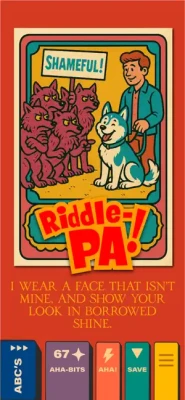
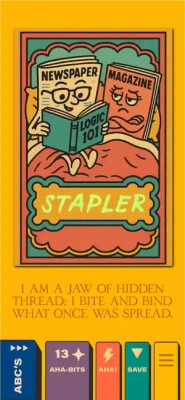
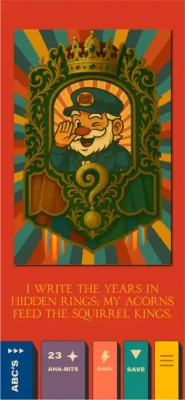
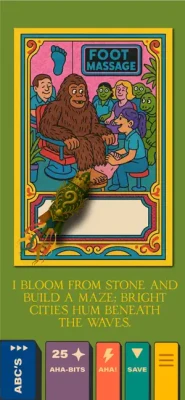
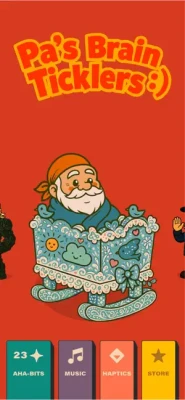
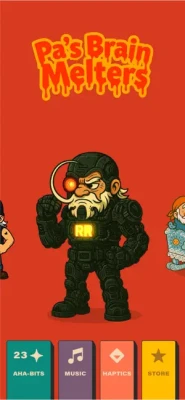
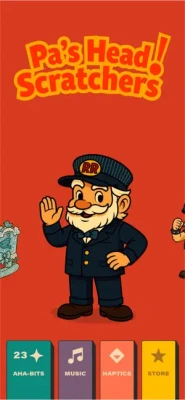
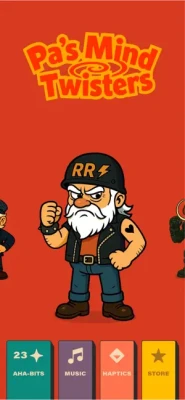
The game features more than 2,000 riddles divided into four difficulty groups: Brain Ticklers, Head Scratchers, Mind Twisters, and Brain Melters. Players type their answers directly into the game, while the hint system provides help when a puzzle becomes particularly stubborn.
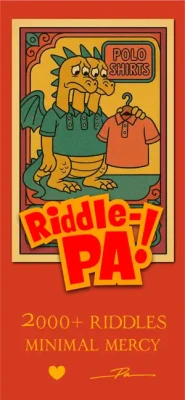
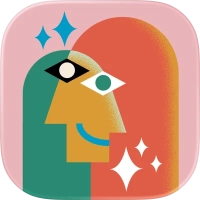
The presentation has a distinctive retro pop-art style, with the mysterious Pa acting as your guide through the collection of puzzles. One important rule is easy to miss: the artwork is primarily there for atmosphere and entertainment rather than clues. The wording of the riddle is where you should concentrate.
What Is RiddlePa?
RiddlePa is a casual puzzle game for players who enjoy riddles, word games, logic questions, and brain teasers.
Each challenge gives you a riddle and asks you to work out the intended answer. Some puzzles are straightforward warm-ups, while later challenges are designed to make you question your first interpretation.
The game is particularly good for short sessions because there is no complicated setup. You can simply pick up the device, solve a few riddles, and stop whenever you want.
How RiddlePa Works
The basic gameplay loop is simple:
- Read the riddle carefully.
- Identify the important words.
- Think about alternative meanings.
- Consider whether the question contains a trick.
- Type your answer.
- Use a hint if you are genuinely stuck.
- Move on and tackle the next challenge.
The simplicity is deceptive. RiddlePa often rewards the answer you almost dismissed rather than the elaborate explanation you initially imagined.
RiddlePa Difficulty Levels
Brain Ticklers
These are the warm-up challenges and a good place to learn how RiddlePa phrases its puzzles.
Don't rush through them. Early riddles teach you to recognize the game's style, including wordplay and unexpected interpretations.
Best approach: Read the complete question before thinking about the answer.
Head Scratchers
Head Scratchers introduce more deceptive wording.
A question may appear obvious at first, but a small phrase can completely change what the riddle is asking.
Best approach: Challenge your first answer before submitting it.
Mind Twisters
Mind Twisters require more flexible thinking.
You may need to interpret a word in an unusual way or stop treating the question as a normal real-world situation.
Best approach: Look for double meanings, assumptions, and hidden wordplay.
Brain Melters
Brain Melters are the toughest challenges and are designed to seriously test your patience.
When you reach this category, brute-force guessing becomes much less useful.
Best approach: Break the riddle into smaller statements and determine exactly what each sentence means.
Full RiddlePa Strategy Guide
1. Read the Question Twice
The first reading gives you the general idea.
The second reading is where you should search for unusual wording.
Ask yourself:
- Why was this particular word used?
- Is there another meaning?
- Is the question asking exactly what I think it is?
- Am I assuming something that was never stated?
This habit is one of the most useful skills for difficult riddles.
2. Don't Overthink Simple Questions
A common riddle mistake is searching for an incredibly complicated answer when the solution is simple.
If the wording supports a straightforward answer, test that possibility first.
The opposite is also true: if the obvious answer clearly doesn't fit, don't keep forcing it.
3. Look for Double Meanings
Many riddles depend on words that can be interpreted in more than one way.
For example, a word can describe:
- an object,
- an action,
- a location,
- a physical characteristic,
- or an abstract idea.
When an answer seems impossible, reconsider the important nouns and verbs in the question.
4. Question Your Assumptions
Riddles often work because the player unconsciously adds information that isn't actually there.
For example, you might assume:
- a person is involved when the riddle never says so,
- an object is being used normally,
- time is passing in the expected way,
- a word has only one meaning,
- or the situation follows normal physical rules.
Remove those assumptions and reread the puzzle.
5. Ignore the Artwork When Solving
The game's visual presentation is deliberately playful, but the developer specifically notes that the artwork isn't intended to provide clues. Concentrate on the written riddle instead of trying to decode the surrounding illustrations.
This can save a surprising amount of time.
6. Pay Attention to Every Word
Don't skim.
Words such as:
- only
- never
- always
- before
- after
- first
- last
- another
- without
can completely change the intended solution.
When a riddle feels unfair, reread it slowly and identify exactly what it does—and does not—say.
7. Try the Short Answer First
If you know the concept but aren't sure how to phrase it, start with the simplest reasonable answer.
RiddlePa allows some flexibility with creative spelling, so don't become unnecessarily worried about minor spelling differences.
8. Don't Guess Randomly
Random answers might occasionally work, but they don't help you understand the game's puzzle language.
Instead, use wrong answers as information.
Ask:
What did my wrong answer assume?
That question can point you toward the correct interpretation.
How to Use Aha Hints
RiddlePa includes an Aha hint system that can help when you're stuck. AhaBits are also available through in-app purchases.
The best strategy is not to use a hint immediately.
Try this order:
First attempt → reread → change interpretation → rethink assumptions → use Aha.
This gives you a chance to solve the puzzle yourself while still having a safety net for particularly difficult riddles.
Best Strategy for Difficult Riddles
When a Brain Melter refuses to cooperate, use this five-step process:
Step 1: Strip It Down
Ignore the personality and presentation. Reduce the puzzle to its essential question.
Step 2: Identify the Key Words
Look for unusual nouns, verbs, comparisons, numbers, locations, or time references.
Step 3: Search for Another Interpretation
Ask whether the key word has another meaning.
Step 4: Remove Assumptions
Only use information actually provided by the riddle.
Step 5: Test the Answer
The correct answer should explain the wording without requiring a long list of excuses.
Common Riddle Mistakes
Mistake 1: Taking Everything Literally
Sometimes a riddle uses ordinary language in an unusual way.
Mistake 2: Trusting the First Idea
Your first answer can feel obvious and still be wrong.
Mistake 3: Studying the Artwork
The visual design is part of RiddlePa's personality, not a reliable source of puzzle clues.
Mistake 4: Making the Answer Too Complicated
If a simple interpretation works, don't invent a complicated explanation.
Mistake 5: Giving Up Too Quickly
A difficult riddle often becomes obvious once you identify the assumption that is blocking you.
Solo Play or Sharing the Challenge
RiddlePa can be played alone, but its format also works well when passing the device to friends or family and seeing who can solve a tricky riddle first. The App Store listing specifically presents both solo play and sharing the challenge with someone else as part of the experience.
For group play, avoid revealing your reasoning immediately. Give everyone time to interpret the riddle independently.
Game Center and Achievements
RiddlePa supports Game Center achievements, giving players another reason to continue working through its collection of puzzles.
If you're interested in completing achievements, make steady progress rather than skipping every difficult puzzle. Developing your own solving technique is more useful than relying exclusively on hints.
RiddlePa Tips for Beginners
- Read every riddle twice.
- Don't assume the obvious answer is correct.
- Look for words with multiple meanings.
- Ignore visual distractions when solving.
- Pay attention to small details in the wording.
- Try a simple answer before inventing a complicated one.
- Use wrong answers to identify bad assumptions.
- Save Aha hints for genuinely difficult puzzles.
- Take a break when you become frustrated.
- Discuss difficult riddles with another player when possible.
RiddlePa Tips for Advanced Players
Once you've become comfortable with the easier riddles, start building a mental checklist.
When you see a difficult puzzle, immediately ask:
Is this wordplay?
Is there a second meaning?
Am I making an assumption?
Is the wording deliberately precise?
Does the question contain a misleading premise?
Could the answer be much simpler than I'm expecting?
This approach makes difficult riddles feel less random and more structured.
RiddlePa Game Information
Game: RiddlePa: Riddles & Teasers
Developer: RoadRocks DWC-LLC
Category: Word
Platforms: iPhone and iPad, with compatibility also listed for Mac and Apple Vision
Language: English
Age Rating: 4+
Size: About 287.7 MB
Business model: Free with in-app purchases
Game Center: Supported
Advertising: Included
Required iOS: iOS 18.6 or later
The current US App Store listing also includes AhaBits packs, an option to remove ads, and a FullPass purchase.
RiddlePa Pros and Cons
Pros
- More than 2,000 riddles
- Four difficulty categories
- Easy-to-learn gameplay
- Strong focus on wordplay and lateral thinking
- Distinctive visual style
- Hint system for difficult puzzles
- Suitable for short or longer sessions
- Supports Game Center achievements
Cons
- Requires a recent version of iOS
- Contains advertising
- Some players may find the hardest riddles frustrating
- The game is currently English-focused
- There aren't yet enough App Store ratings to provide a meaningful overall review score.
Is RiddlePa Worth Playing?
If you enjoy traditional riddles, word puzzles, lateral-thinking challenges, and games that make you stop and reconsider an obvious answer, RiddlePa is an appealing choice.
Its strongest feature is its simplicity. There are no complicated controls to learn and no elaborate combat or progression system distracting from the main attraction: solving the riddle.
The four difficulty levels also give the game a natural learning curve, starting with Brain Ticklers and eventually reaching the much harder Brain Melters.
Frequently Asked Questions
How many riddles are in RiddlePa?
The App Store description says the game contains just over 2,000 riddles.
Is RiddlePa free?
Yes. RiddlePa is listed as a free game with optional in-app purchases.
Does RiddlePa have hints?
Yes. The game uses Aha hints to help players who become stuck. AhaBits can also be purchased through the app.
What are Brain Ticklers?
Brain Ticklers are the introductory, easier group of RiddlePa puzzles.
What are Brain Melters?
Brain Melters are the most challenging category and are intended to provide the toughest riddles in the game.
Is the artwork part of the puzzle?
Not normally. The developer specifically says the artwork is there for entertainment rather than as a source of clues.
Does RiddlePa support achievements?
Yes. The App Store listing confirms Game Center achievement support.
What devices can run RiddlePa?
The current listing supports iPhone and iPad with iOS/iPadOS 18.6 or later. It also lists Mac compatibility beginning with macOS 15.6 on Apple M1 or later, as well as Apple Vision compatibility.
Final Verdict
RiddlePa: Riddles & Teasers is a straightforward brain-teaser game with a deliberately quirky personality. Its real challenge isn't learning complicated mechanics; it's learning how to read a riddle without making assumptions.
Start with the Brain Ticklers, pay close attention to wording, and gradually develop a habit of questioning the obvious answer. By the time you reach the Mind Twisters and Brain Melters, that habit becomes your most useful tool.
Rate the Game
User Reviews





Popular Games

















 Android
 iOS
iOS Windows
 Xbox
Xbox