
Latest Version
September 12, 2026
RoadRocks
Word
iOS
0
Report a Problem
More About :game
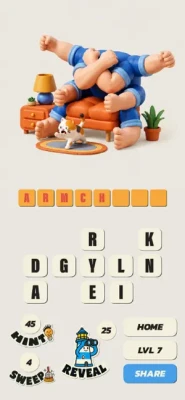
Your job is to study the scene, identify what the objects and characters are suggesting, and then work out the pun.
The game is developed by RoadRocks and is available for iPhone and iPad. The current App Store listing describes it as a word game containing thousands of handcrafted scenes, with no timers, no star ratings, and no pressure to solve puzzles quickly.
That relaxed structure is important because Punzzle Mania isn't really about racing against the clock.
It's about looking at a strange little scene, thinking sideways, and eventually having that satisfying "Oh, I get it!" moment.
What Is Punzzle Mania?
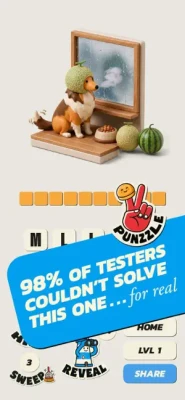
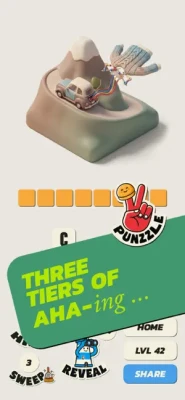
Punzzle Mania is a picture-based pun guessing game.
Every puzzle is presented as a miniature illustrated scene. The visual elements are clues, and you need to interpret them together rather than simply identifying individual objects.
For example, a picture might contain:
- An object
- An animal
- A person
- An unusual action
- A location
- A combination of visual details
The answer comes from connecting those clues to a familiar phrase or a wordplay concept.
The challenge isn't just vocabulary.
It is lateral thinking.
How to Play Punzzle Mania
The basic gameplay loop is simple:
Look → Observe → Interpret → Guess → Solve → Move to the next Punzzle
There is no complicated control system to learn.
Instead, your main tool is your ability to interpret visual clues.
The game is intentionally relaxed. The App Store specifically states that Punzzle Mania has no timers, no star ratings and no pressure, allowing players to work through puzzles at their own pace.
The Core Idea: Think Beyond the Picture
One of the biggest mistakes new players make is taking the picture too literally.
If you see a dog, for example, don't automatically assume the answer is simply "dog."
Ask yourself:
- What phrases contain "dog"?
- Could the dog represent an action?
- Is the dog doing something unusual?
- Is another object changing the meaning?
- Does the scene represent a familiar expression?
- Could two objects combine into a sound-alike phrase?
Punzzle Mania rewards this kind of thinking.
Punzzle Mania Beginner Strategy
1. Examine the Entire Scene
Don't immediately focus on the most obvious object.
Look at everything.
A tiny object in the corner may be more important than the large object in the center.
Ask:
Why is this particular object included?
That question can reveal the intended wordplay.
2. Identify the Main Subject
First determine what the scene is primarily showing.
Is it about:
- An animal?
- A person?
- Food?
- A place?
- An action?
- An object?
- A combination?
Once you've identified the main concept, start thinking of phrases associated with it.
3. Look for Something Strange
Pun puzzles often deliberately include something that doesn't seem normal.
If everything in the scene looks ordinary except one detail, that unusual detail may be the key.
Ask:
Why did the creator put that there?
4. Think in Sounds
Pun answers don't always depend on exact literal meanings.
A visual clue may suggest a word that sounds similar to another word.
Therefore, when you're stuck, say the obvious object names aloud mentally.
Then think of words that sound similar.
Look for Wordplay
Punzzle Mania is fundamentally about wordplay.
A scene can potentially point toward:
- Homophones
- Double meanings
- Familiar expressions
- Compound words
- Common sayings
- Idioms
- Rhyming concepts
- Literal interpretations of figurative phrases
You shouldn't restrict yourself to one type of clue.
The Best Way to Solve a Difficult Punzzle
When a puzzle doesn't immediately make sense, use this process.
Step 1: Name Everything
Identify every major object in the scene.
Step 2: Identify Actions
What are the characters or objects doing?
Step 3: Find the Odd Detail
What looks unusual?
Step 4: Generate Related Words
Think of synonyms and associated words.
Step 5: Try Sound-Alikes
Consider words that sound similar.
Step 6: Think of Expressions
Ask whether the scene represents a familiar phrase.
Step 7: Combine the Clues
Look for a phrase that explains several elements simultaneously.
This is usually much more effective than randomly guessing words.
Don't Solve the Picture Literally
Suppose the image contains an object that seems completely ordinary.
Don't assume the answer is the object's name.
Instead ask:
What phrase could this object be part of?
That shift from object recognition to phrase recognition is one of the most important skills in Punzzle Mania.
Pay Attention to Placement
Where something appears can matter.
An object might be:
- Above another object
- Inside something
- Under something
- Beside something
- Behind something
- Broken
- Enlarged
- Repeated
- Isolated
The relationship between objects can communicate part of the pun.
Don't just identify what is present.
Study how the scene is constructed.
Pay Attention to Actions
A character doing something unusual may provide the strongest clue.
Ask:
What is happening?
Then ask:
How would I describe that action in one or two words?
Finally:
Does that description sound like part of a common phrase?
Use Multiple Clues Together
A common mistake is trying to find one clue that explains the entire answer.
Instead, think of the scene as a collection of clues.
For example:
Object A + action B + object C
might produce a phrase that none of those elements suggests individually.
When several details point toward the same concept, you've probably found the intended direction.
What Makes Punzzle Mania Different?
Traditional word games usually test spelling or vocabulary.
Punzzle Mania tests interpretation.
You don't necessarily need an enormous vocabulary.
You need to be comfortable asking:
"What else could this mean?"
That makes the game accessible to casual players while still providing plenty of difficult moments.
No Timer Means You Can Think
Punzzle Mania doesn't force you to solve puzzles quickly.
The current App Store description specifically emphasizes the absence of timers, star ratings and pressure.
This changes the ideal strategy.
You don't need to guess immediately.
Take your time.
Study the illustration.
Look for relationships between objects.
Try different interpretations.
A puzzle that seems impossible after ten seconds may become obvious after another minute of observation.
Don't Guess Randomly
Random guessing is usually inefficient.
Instead of trying unrelated answers, narrow the possibilities.
For example:
Picture → subject → associated phrase → possible pun → answer
This gives your thinking a direction.
When You're Completely Stuck
If you've stared at a puzzle for several minutes without progress, stop trying to force the answer.
Take a short mental reset.
Then look at the image again.
Try describing it as if you were explaining the picture to someone who cannot see it.
This can reveal details you stopped noticing.
Change Your Perspective
A useful technique is to ask:
"What would make this picture funny?"
Punzzle Mania isn't asking you to describe the scene accurately.
It's asking you to discover the joke behind the scene.
That difference can completely change how you approach difficult puzzles.
Look for Common Expressions
Many visual puns are easier to solve if you think about everyday language.
Consider:
- Idioms
- Proverbs
- Familiar sayings
- Common expressions
- Everyday phrases
- Popular word combinations
If the image seems strange when interpreted literally, consider whether it could be illustrating a familiar expression in a deliberately literal way.
Think About Compound Words
Compound words are another useful category.
If a scene appears to contain two unrelated objects, consider whether their names can be joined to create a familiar word or phrase.
For example:
Object A + Object B → combined expression
Even when the exact answer isn't obvious, this approach can narrow the possibilities.
Think About Homophones
Sound-alike words are particularly useful in pun games.
If the scene contains an obvious object, say its name mentally.
Then ask:
What other words sound like this?
The answer may depend more on sound than spelling.
Think About Double Meanings
A word can have more than one meaning.
If the picture seems to make no sense under the obvious definition, consider another meaning.
This is especially useful when the image appears deliberately absurd.
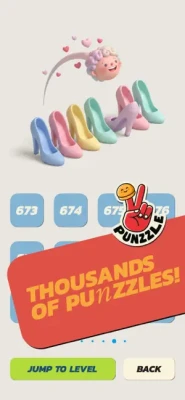
Thousands of Handcrafted Punzzles
One of Punzzle Mania's biggest features is its large collection of handcrafted puzzles.
The current App Store listing describes thousands of handcrafted little scenes, created by the RoadRocks team.
That means the game is designed around individual puzzle ideas rather than a repetitive algorithmic word grid.
The visual presentation is part of the entertainment.
Collectible-Art-Style Presentation
Punzzle Mania describes its scenes as being built like collectible art toys.
That gives the game a distinctive visual identity.
Instead of staring at a plain grid of letters, you're examining small illustrated scenes that have been deliberately constructed around each joke.
This is one of the game's strongest characteristics.
Difficulty Strategy
The most important thing to understand is that difficulty doesn't necessarily mean the answer is an obscure word.
A difficult puzzle may simply use a less obvious interpretation.
When stuck, don't immediately search for a more complicated word.
Try a different interpretation of the image.
Easy Puzzle Strategy
For an easy puzzle:
- Identify the main object.
- Identify the action.
- Look for an obvious phrase.
- Test the simplest pun first.
Don't overthink an image that may have a straightforward answer.
Medium Puzzle Strategy
For a medium puzzle:
- List the important objects.
- Identify the unusual detail.
- Consider synonyms.
- Try common phrases.
- Test sound-alike words.
- Combine two or more clues.
Hard Puzzle Strategy
For a difficult puzzle:
- Stop assuming the largest object is the key.
- Examine small details.
- Look at positioning.
- Consider multiple meanings.
- Think about idioms.
- Try homophones.
- Describe the scene in different words.
- Look for the joke rather than the literal description.
A Useful Mental Checklist
When facing any Punzzle, ask:
WHAT?
What objects are shown?
WHO?
Who is involved?
DOING WHAT?
What is happening?
WHERE?
Does the location matter?
WHY?
Why was this specific scene created?
SOUNDS LIKE WHAT?
Could one of the clues represent another word?
WHAT PHRASE?
Does everything point toward a familiar expression?
This checklist is useful for both easy and difficult puzzles.
How to Improve at Punzzle Mania
The more you play, the more quickly you'll recognize common forms of wordplay.
Try to develop these habits:
- Think in phrases rather than isolated words.
- Consider multiple meanings.
- Look for sound-alikes.
- Notice strange details.
- Study object relationships.
- Don't ignore tiny visual clues.
- Keep common idioms in mind.
- Don't rush your first interpretation.
The goal is to make lateral thinking automatic.
Offline Play
One particularly useful feature is that Punzzle Mania works offline.
That makes it suitable for situations where you don't have a reliable internet connection.
You can play during:
- Flights
- Train journeys
- Road trips
- Waiting rooms
- Travel
- Commutes
- Quiet breaks
The game doesn't need an online connection for its basic puzzle experience.
Game Center Support
Punzzle Mania supports Game Center achievements.
For players who enjoy completion goals, this adds another reason to work through the puzzle collection.
The core game remains relaxed, but achievements provide an additional layer of progression.
Punzzle Mania Tips for Families
Because the game is based on visual wordplay rather than reflexes, it can work well as a shared puzzle activity.
If you're stuck, don't immediately look for the answer.
Instead, describe what you see to another person.
Different people notice different details.
One player might recognize the object.
Another might recognize the phrase.
Together, the answer can become much easier.
Multiplayer-Style Thinking Without Multiplayer
Even though the game is fundamentally a solo puzzle experience, you can make it social.
Show someone a difficult Punzzle and ask:
"What do you think this picture is trying to say?"
Avoid giving them your interpretation first.
Their completely different perspective may reveal the answer immediately.
Best Strategy for Long Sessions
Because there are thousands of puzzles, don't try to solve everything in one sitting.
A better approach is:
Solve → enjoy → stop when you're tired → return later.
When your brain becomes fatigued, wordplay becomes harder.
Taking a break can make a previously difficult puzzle suddenly obvious.
How to Avoid Overthinking
There is a danger in pun games: once you start thinking too deeply, almost anything can seem possible.
If you generate ten complicated interpretations, return to the basics.
Ask:
Which answer explains the picture most naturally and humorously?
The intended pun is usually connected to the visual joke rather than requiring an extremely obscure interpretation.
How to Use Hints Efficiently
The App Store lists optional purchases for Hints, Reveals and Sweeps, including bundles of each.
If you use hints, try not to use them immediately.
First give yourself a genuine attempt.
A good rule is:
Think → reinterpret → reconsider → hint.
This preserves the satisfaction of solving the puzzle yourself.
When a Reveal Is Worth Using
A reveal is most useful when you've exhausted the major interpretations of the picture.
Don't use it simply because the first idea didn't work.
Try:
- Another object
- Another synonym
- Another phrase
- A sound-alike
- An idiom
- A different interpretation
Then use assistance if you're still completely stuck.
When to Use a Sweep
If the game provides a tool for clearing or sweeping away something, save it for a situation where it provides meaningful progress rather than using it automatically.
Powerful assistance is most valuable when your normal solving process has reached a dead end.
Punzzle Mania Progression
The game is less about traditional character progression and more about puzzle progression.
Your progress comes from:
- Solving Punzzles
- Discovering new visual jokes
- Learning the game's style
- Improving your wordplay instincts
- Earning achievements
- Working through the large puzzle collection
This makes the experience fundamentally different from an RPG or competitive puzzle game.
Punzzle Mania Difficulty Guide
| Situation | Best Approach |
|---|---|
| Obvious picture | Try the simplest phrase |
| Several objects | Combine their meanings |
| Strange object | Ask why it was included |
| Character doing something odd | Describe the action |
| Familiar object with unusual placement | Consider an expression |
| Nothing makes sense | Try sound-alikes |
| Several possible answers | Choose the phrase explaining most clues |
| Completely stuck | Reinterpret the entire scene |
| Still stuck | Use a hint or other assistance |
Common Mistakes
Taking Every Object Literally
The picture is usually a clue, not a literal description.
Ignoring Small Details
A tiny object may provide the missing part of the pun.
Looking Only for Nouns
Actions can be just as important as objects.
Forgetting Sound-Alikes
The answer may depend on how a word sounds.
Searching for Extremely Difficult Words
The answer is often clever rather than obscure.
Giving Up Too Quickly
Because there is no timer, take advantage of the game's relaxed pace.
Overthinking Simple Pictures
Sometimes the obvious interpretation is actually correct.
Advanced Pun-Solving Strategy
Experienced players can take the process further.
Instead of looking at the picture as one object, divide it into semantic components.
For example:
Subject + action + location + unusual detail
Then generate possible phrases for each component.
Next, look for a phrase that connects at least two of those components.
Finally, check whether the remaining details support the same answer.
This approach dramatically reduces random guessing.
The Three-Layer Method
A useful advanced technique is to solve every Punzzle in three layers.
Layer 1: Literal
What do I actually see?
Layer 2: Linguistic
What words, synonyms or sounds could represent those things?
Layer 3: Cultural
What phrase, idiom, saying or familiar expression connects those words?
The answer often appears at Layer 3.
Why Punzzle Mania Can Be Challenging
The game looks simple because there are no complicated controls.
But visual wordplay is inherently unpredictable.
You may know exactly what every object is and still have no idea what the puzzle means.
That's intentional.
The challenge is not recognizing the picture.
It's understanding why the picture was constructed that way.
Punzzle Mania Pros and Cons
Pros
- Thousands of handcrafted puzzles
- Creative visual presentation
- Strong emphasis on wordplay
- No timers
- No star-rating pressure
- Offline play
- Easy to understand
- Relaxing pace
- Suitable for short or long sessions
- Game Center achievements
- Optional hints and assistance
- Works on iPhone and iPad
Cons
- The game is entirely in English according to the current App Store listing.
- Players who dislike puns may not enjoy the core concept.
- Some answers may depend on familiarity with English expressions.
- There is currently a limited public review sample; the App Store says there are not yet enough ratings or reviews to display an overview.
- Players looking for action or competitive time-based gameplay may find it too relaxed.
Punzzle Mania Mobile Details
The current App Store listing categorizes Punzzle Mania as a Word game and lists RoadRocks as the developer. It is rated 4+ and is available for iPhone and iPad.
The listing currently specifies:
- Developer: RoadRocks
- Category: Word
- Language: English
- Age Rating: 4+
- Size: Approximately 276.9 MB
- iPhone: iOS 18.6 or later
- iPad: iPadOS 18.6 or later
- Mac: macOS 15.6 or later with Apple M1 or later
- Apple Vision: visionOS 2.6 or later
Punzzle Mania In-App Purchases
The game is free to download with optional purchases.
The current U.S. App Store listing includes:
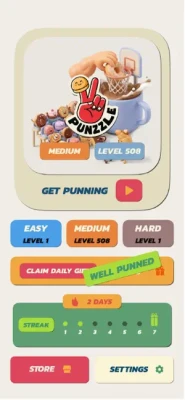
- Unlock Medium + Hard — $3.99
- Remove Ads — $2.99
- Explorer Bundle — $4.99
- Master Bundle — $7.99
The exact availability of individual hint and assistance bundles can vary by storefront. Other regional App Store listings show purchases for hints, reveals and sweeps.
Is Punzzle Mania Free?
Yes. Punzzle Mania is listed as a free download with optional in-app purchases.
The purchase structure allows players to try the experience before deciding whether they want additional content or convenience features.
Is Punzzle Mania Offline?
Yes.
The App Store description specifically says Punzzle works offline, making it convenient for travel and other situations without an internet connection.
Is Punzzle Mania Difficult?
The difficulty depends heavily on how quickly you recognize wordplay.
The game isn't difficult because of complicated controls or fast reactions.
It becomes difficult when the visual clue points toward an unexpected phrase.
The good news is that there is no timer forcing you to guess immediately.
Is Punzzle Mania Good for Kids?
The current App Store age rating is 4+.
However, because the game relies heavily on English puns and wordplay, younger players may need help understanding some of the intended phrases.
That can actually make the game more enjoyable as a shared puzzle activity.
Is Punzzle Mania Worth Playing?
If you enjoy:
- Word puzzles
- Visual riddles
- Puns
- Brain teasers
- Lateral thinking
- Casual puzzle games
- Relaxing gameplay
- Offline games
then Punzzle Mania is an interesting choice.
Its biggest strength is that it doesn't feel like another standard word grid.
The handcrafted scenes give every puzzle a visual personality.
Final Verdict
Punzzle Mania is a word puzzle game for people who enjoy thinking differently.
There are no falling blocks to manage, no countdown forcing a decision, and no complicated control scheme.
Instead, you're given a strange little picture and asked to figure out the joke hiding inside it.
The best players aren't necessarily those with the largest vocabulary.
They're the players who can look at a picture and think:
"What else could this mean?"
Take your time, examine every detail, think about sounds and phrases, and don't be afraid to reinterpret the entire scene.
That is the real strategy behind Punzzle Mania.
Punzzle Mania FAQ
What is Punzzle Mania?
Punzzle Mania is a picture-based word puzzle game where players identify puns hidden inside handcrafted illustrated scenes.
How does Punzzle Mania work?
Each puzzle presents a visual scene. You study the objects, characters and actions and work out the wordplay or phrase represented by the image.
Does Punzzle Mania have a timer?
No. The current App Store description specifically says there are no timers.
Does Punzzle Mania have star ratings?
No. The game does not use star ratings for its puzzles.
Can Punzzle Mania be played offline?
Yes. The game works offline.
How many puzzles are in Punzzle Mania?
The App Store describes the game as containing thousands of handcrafted scenes.
What type of puzzles are in Punzzle Mania?
The puzzles are visual puns. You interpret a small illustrated scene and identify the phrase or wordplay it represents.
Is Punzzle Mania a word game?
Yes. Apple categorizes it under the Word category.
Does Punzzle Mania have hints?
The game's in-app purchase listings include hint, reveal and sweep options in some storefronts.
Does Punzzle Mania support Game Center?
Yes. The App Store listing states that the game supports Game Center achievements.
Can I play Punzzle Mania on iPad?
Yes. It is available for both iPhone and iPad.
Is Punzzle Mania free?
Yes. It is free to download and offers optional in-app purchases.
Does Punzzle Mania require an internet connection?
No. Its puzzles can be played offline.
What is the best way to solve a difficult Punzzle?
Study the entire scene, identify unusual details, think of synonyms, consider sound-alike words, and look for common expressions that connect multiple visual clues.
Should I use hints immediately?
No. Try several interpretations first. Since there is no timer, you can take your time before using assistance.
What makes Punzzle Mania different from crossword games?
Instead of filling a grid with letters, you interpret handcrafted pictures and solve the pun represented by each scene.
Is Punzzle Mania relaxing?
Yes. Its no-timer, no-star-rating design and offline play make it particularly suited to relaxed puzzle sessions.
What is the most important Punzzle Mania tip?
Don't take the picture too literally. Identify what you see first, then think about what those objects, actions and sounds could represent as a phrase or pun.
Rate the Game
User Reviews




Popular Games












 Android
 iOS
iOS Windows
 Xbox
Xbox