
Latest Version
October 05, 2026
Gamehouse LLC
Word
iOS
0
Report a Problem
More About :game
Its bright vintage-inspired artwork and straightforward controls make Sweet Words suitable for short puzzle sessions or longer vocabulary challenges. The game focuses on finding words, learning from unexpected combinations, and gradually improving your ability to recognize possible answers.
Sweet Words: Brain Puzzle Game Overview
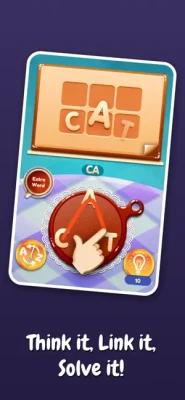
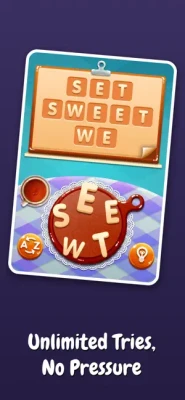
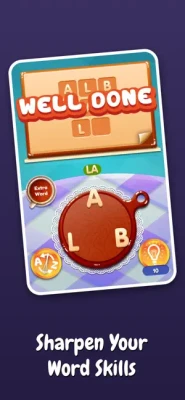
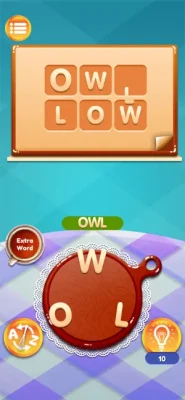
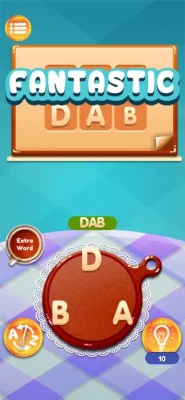
Sweet Words takes a familiar word-search concept and gives it a simple swipe-based format. Instead of worrying about timers or limited attempts, you can experiment with different letter combinations and keep trying until you find the solution.
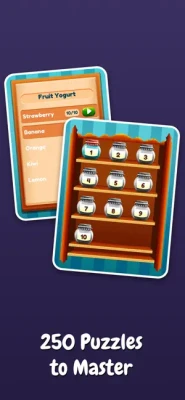
The game contains 250 handcrafted levels, giving players a substantial collection of vocabulary challenges to work through. Completed levels can also be replayed, making it possible to revisit earlier puzzles and look for words you may have missed.
Main Features
- 250 handcrafted word puzzle levels
- Swipe letters to create words
- Unlimited attempts
- Helpful hints
- Letter shuffle option
- Replay completed levels
- Vocabulary-focused challenges
- Vintage-inspired visual design
- Simple controls
- Relaxed, penalty-free gameplay
- Available on iPhone and iPad
How to Play Sweet Words
The basic idea is easy: look at the available letters and swipe across them to form valid words.
The challenge comes from recognizing which combinations are useful and determining the words the current puzzle is looking for. Rather than simply tapping random letters repeatedly, successful play comes from examining the available letters, spotting familiar prefixes and endings, and considering shorter words before attempting more complicated combinations.
Because the game allows unlimited guesses, experimentation is an important part of the experience.
Sweet Words Strategy Guide
1. Start With the Obvious Words
When a new puzzle appears, don't immediately search for unusual vocabulary.
Look for familiar words first. Common combinations are usually easier to recognize and can help you understand what kind of letters the puzzle is presenting.
Check for:
- Common prefixes
- Familiar suffixes
- Short everyday words
- Common vowel combinations
- Repeated consonants
Finding an easy word early can make the remaining letters much easier to interpret.
2. Look at the Vowels First
Vowels can provide useful clues when you're trying to identify possible words.
If you see several vowels together with a few consonants, mentally rearrange the possibilities and look for recognizable word structures.
For example, instead of focusing on individual letters, ask:
What words could realistically be formed from this group?
This approach is often faster than trying random combinations.
3. Don't Ignore Short Words
A common mistake in word puzzle games is searching only for long words.
Short words can be just as important.
Try looking for two-, three-, and four-letter possibilities before concentrating on longer answers. Small words can reveal useful letter relationships and may help you recognize more complicated combinations.
4. Think About Word Endings
When you're stuck, examine the final letters of potential words.
Common endings can provide strong clues. For example, combinations that resemble familiar English suffixes may immediately suggest several possible words.
Instead of asking:
"What word can I make?"
try asking:
"What words could end with these letters?"
Changing your approach can help break a difficult puzzle.
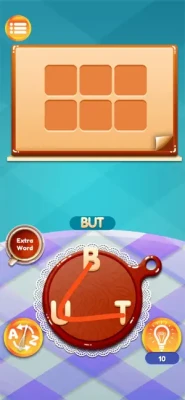
5. Use the Swipe Mechanic Carefully
Sweet Words is built around swiping between letters, so pay attention to the available paths rather than treating the board like a conventional static word search.
Move deliberately and look at the complete sequence of letters you're connecting.
The goal isn't to swipe as quickly as possible. It is to recognize useful combinations.
6. Experiment Freely
One of the most player-friendly aspects of Sweet Words is its unlimited-attempt system.
A wrong guess doesn't punish you, so don't be afraid to test an idea.
If you think a particular letter combination could produce a word, try it. Even when the answer is incorrect, the attempt may help you eliminate possibilities.
This makes experimentation one of the best strategies for difficult levels.
How to Use Hints Effectively
Hints are valuable when you've already exhausted the obvious possibilities.
Rather than immediately using a hint whenever you're uncertain, spend a little time examining:
- The available vowels.
- Common prefixes.
- Common suffixes.
- Short possible words.
- Longer combinations.
- Words you've already discovered.
If none of these approaches works, then use the hint.
This helps preserve your own problem-solving process while still giving you a way forward when a level becomes frustrating.
When to Use Shuffle
The shuffle feature is particularly useful when you've been staring at the same arrangement of letters for too long.
Sometimes the problem isn't your vocabulary—it's simply that your brain has become accustomed to seeing the letters in one particular arrangement.
Shuffling gives you a fresh visual perspective.
Good time to shuffle: when you've tried several combinations and are repeatedly seeing the same possibilities.
Replay Levels to Improve Your Word Skills
Replay isn't just useful for revisiting old puzzles.
Going back to completed levels can help you notice words that you overlooked the first time. Since the game encourages vocabulary discovery, replaying older puzzles can also reinforce unfamiliar words.
If you're using Sweet Words as a casual brain-training activity, replaying difficult levels can be more rewarding than simply rushing toward the final level.
Advanced Sweet Words Tips
Look Beyond the First Answer
Finding one word doesn't necessarily mean you've exhausted the useful possibilities. Continue examining the letters and consider whether another combination makes sense.
Build From Familiar Patterns
English words often follow recognizable structures. Train yourself to recognize common beginnings and endings rather than processing every letter individually.
Change Your Perspective
If you're stuck, stop looking for a particular answer. Instead, look at the letters differently. Start with a vowel, focus on a possible ending, or mentally group consonants.
Don't Overthink Easy Levels
Some puzzles are designed to be quick wins. If the answer looks obvious, take it and move forward instead of searching for something more complicated.
Use the Game's Relaxed Design
Sweet Words doesn't require you to rush. The unlimited-attempt system makes it possible to approach difficult puzzles patiently rather than treating every mistake as a failure.
Sweet Words Difficulty and Progression
Sweet Words uses a level-based progression built around 250 handcrafted puzzles. The main challenge comes from vocabulary recognition and identifying valid letter combinations rather than from combat, resource management, or complicated controls.
This makes the game particularly accessible to players who enjoy:
- Word games
- Brain puzzles
- Vocabulary challenges
- Casual mobile games
- Relaxing puzzle sessions
- Letter connection games
- Spelling games
Graphics and Atmosphere
The visual style is one of Sweet Words' more distinctive touches.
Rather than going for a futuristic or heavily animated presentation, the game uses a bright, vintage-inspired aesthetic designed to create a cozy and nostalgic atmosphere.
That presentation works well with the game's relaxed gameplay. There is no need for a dramatic setting or complicated interface because the central attraction is solving the word puzzles themselves.
Controls
The controls are intentionally simple.
Players primarily swipe between letters to connect them into words. The straightforward input makes the game easy to understand, while the actual challenge comes from vocabulary recognition and logical thinking.
This makes Sweet Words well suited to touchscreen play on iPhone and iPad.
Pros and Cons
Pros
- 250 handcrafted levels
- Easy-to-learn swipe controls
- Unlimited attempts
- Helpful hint system
- Shuffle option
- Replayable puzzles
- Relaxing presentation
- Vocabulary-focused gameplay
- Suitable for short or extended sessions
Cons
- Players looking for fast action may find it too relaxed
- The experience is heavily focused on word puzzles
- English vocabulary knowledge has a major influence on difficulty
- Advertising and optional subscription features are part of the current offering
Sweet Words Game Information
| Information | Details |
|---|---|
| Game | Sweet Words: Brain Puzzle Game |
| Developer | Gamehouse LLC |
| Genre | Puzzle / Word |
| Levels | 250 |
| Main Mechanic | Swipe letters to form words |
| Attempts | Unlimited |
| Hints | Yes |
| Shuffle | Yes |
| Replay | Yes |
| Platform | iPhone, iPad |
| Language | English |
| iOS Requirement | iOS 14.0 or later |
| iPad Requirement | iPadOS 14.0 or later |
| Mac Support | macOS 11.0+ with Apple M1 or later |
| Size | 158.6 MB |
| Category | Puzzle |
| In-App Purchases | Yes |
| Developer | Gamehouse LLC |
The current App Store listing specifies iOS 14 or later, English language support, a 158.6 MB size, and compatibility with iPhone and iPad, with Mac support on Apple-silicon systems meeting the listed requirements.
Is Sweet Words Worth Playing?
If you enjoy word puzzles but don't want a stressful timer or harsh penalty system, Sweet Words: Brain Puzzle Game is an appealing choice.
Its biggest strength is its relaxed approach. You can experiment with words, use hints when necessary, shuffle the letters when you need a fresh perspective, and replay levels to improve your vocabulary skills.
The 250 handcrafted levels also give the game a clear progression path, while the vintage-inspired design gives it a warmer personality than a basic letter puzzle.
Frequently Asked Questions
What is Sweet Words: Brain Puzzle Game?
Sweet Words is a word puzzle game where players swipe between letters to create words and solve vocabulary-focused puzzles.
How many levels are in Sweet Words?
The game currently features 250 handcrafted levels.
Can you replay levels in Sweet Words?
Yes. Completed levels can be replayed, allowing players to sharpen their skills and discover words they may have missed.
Does Sweet Words have unlimited attempts?
Yes. Players can make guesses without penalties, so there's no need to worry about losing a limited number of attempts.
Does Sweet Words have hints?
Yes. The game provides hints for players who become stuck, along with a shuffle option for rearranging the letters.
Is Sweet Words available on iPhone and iPad?
Yes. The App Store listing supports both iPhone and iPad.
Is Sweet Words a good game for word puzzle fans?
Yes. Its combination of letter-swiping puzzles, handcrafted levels, unlimited attempts, hints, replayability, and vocabulary challenges makes it particularly suitable for players who enjoy casual word games.
Rate the Game
User Reviews




Popular Games


















 Android
 iOS
iOS Windows
 Xbox
Xbox