





Latest Version
January 23, 2026
H2T GLOBAL PTE. LTD.
Puzzle
Android
0
Report a Problem
More About :game
Tile Match - Zen Master is a casual puzzle game developed by H2T GLOBAL PTE. LTD. It combines traditional triple-tile matching with relaxing visuals, collectible rewards, and a room-decoration system.
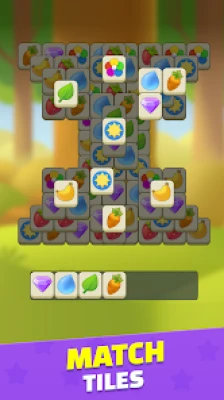
Instead of matching two tiles like a traditional match-two game, you need to collect three identical tiles. Once three matching pieces reach the groove, they disappear and make room for additional tiles.
The game gradually introduces more complicated layouts, so later boards require considerably more planning than the opening puzzles.
Main Features
Triple Tile Matching
The central mechanic is easy to understand:
Find three identical tiles → place them in the groove → complete the set → clear the tiles.
When all tiles on the board are removed, the level is completed.
1,000+ Puzzle Layouts
The game advertises more than 1,000 layouts, giving players a large collection of different board arrangements to solve.
The changing layouts are important because you cannot rely on exactly the same strategy for every board.
40+ Tile Styles
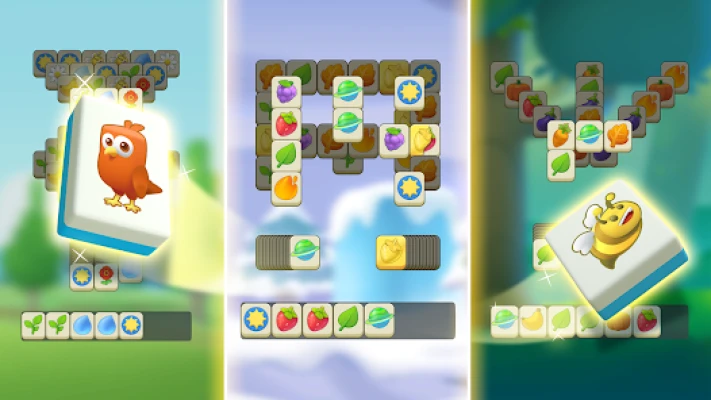
There are more than 40 styles of cute tiles, including themes such as fruit and animals.
This gives the matching boards visual variety while keeping the core rules consistent.
Seven-Tile Groove
The groove at the bottom can hold a maximum of seven tiles. If it becomes full before you can create the necessary matches, the level fails.
This seven-space limitation is one of the most important strategic elements in the entire game.
Three Main Boosters
The game provides three major boosters:
- Groove Expansion
- Shuffle
- Undo
These tools can help recover from difficult positions or create additional opportunities when the board becomes complicated.
Daily Puzzle Mode
Classic levels do not have a time limit, but the Daily Puzzle mode introduces time restrictions, adding another layer of pressure.
Room Decoration
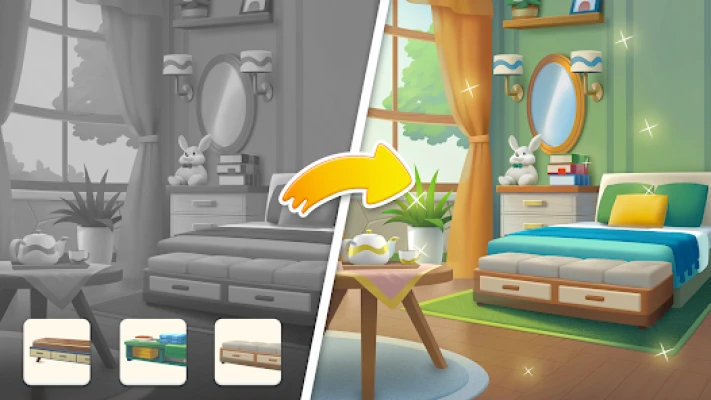
Completing levels rewards you with diamonds. These diamonds can be used to purchase furniture and decorate virtual rooms according to your preferences.
Offline Play
The game description states that it can be played offline, making it suitable for casual sessions without a constant internet connection.
How to Play
The basic gameplay process is:
- Look across the entire tile arrangement.
- Identify groups of three matching tiles.
- Select a tile and place it in the groove.
- Continue searching for its matching pieces.
- Complete groups of three to remove them.
- Keep the groove from reaching seven tiles.
- Clear every tile on the board.
- Collect your level reward.
The important part is that you should plan several moves ahead instead of simply matching the first three tiles you notice.
Full Strategy Guide
1. Always Check the Whole Board First
Before tapping anything, scan the board.
Look for:
- Obvious groups of three
- Pairs with a third tile nearby
- Covered or partially hidden tiles
- Tiles that block other pieces
- Potential future matches
This initial scan can prevent you from making a move that looks good but creates a difficult position later.
2. Prioritize Easy Triple Matches
If three identical tiles are immediately available, completing the set is usually valuable because it removes three spaces from the board and clears room in the groove.
However, don't automatically choose every obvious match.
First consider whether one of those tiles is blocking another important group.
3. Avoid Filling the Groove With Unmatched Tiles
The biggest mistake beginners make is collecting too many unrelated tiles.
Remember:
Seven spaces is the limit.
For example, if you put six unrelated tiles into the groove, you have very little room left to maneuver.
Try to build matches rather than simply collecting tiles.
4. Think in Pairs
If you see two identical tiles, remember their location.
A pair is potential progress—but only if you can safely find the third.
Before selecting a pair, ask:
Where is the third tile?
If you cannot identify it, another move may be safer.
5. Clear Blocking Tiles
Sometimes the three tiles you need are not immediately accessible.
In that situation, determine which tiles are preventing access.
Your goal isn't necessarily to make a match immediately. Sometimes you need to clear one layer of tiles first to expose the useful pieces underneath.
6. Create a Match Before the Groove Gets Crowded
A good rhythm is:
Collect → complete a triple → clear → collect again.
A bad rhythm is:
Collect → collect → collect → collect → hope a match appears.
The second approach can quickly fill all seven spaces.
7. Look for Cascading Opportunities
After clearing a triple, inspect the newly exposed board.
Removing three tiles can reveal additional matching pieces.
This means one successful match can sometimes lead naturally into another.
8. Don't Waste the Undo Booster
The Undo booster can be especially useful after a move that creates an unexpected problem.
Use it when:
- You accidentally select the wrong tile.
- A move fills an important groove space.
- You realize another match was available.
- Your previous move blocks a better solution.
Avoid using it automatically for every small mistake. Save it for positions where reversing the move significantly improves your options.
9. Use Shuffle When the Board Is Stalled
The Shuffle booster is useful when the visible arrangement does not offer a safe matching route.
Before using it, make sure the problem is genuinely the board arrangement rather than a missed match.
Scan the board one more time first.
10. Use Groove Expansion as an Emergency Tool
When the groove is nearly full and you cannot immediately form another triple, Groove Expansion can provide additional breathing room.
This is particularly valuable in complicated layouts where several unmatched tiles have already entered the groove.
11. Work From the Most Restricted Tiles
If some tiles have limited access while others are easy to reach, prioritize the restricted ones.
Why?
Because easily accessible tiles can often be matched later, while a tile trapped underneath several other pieces may require a specific sequence of moves.
12. Remember Tile Locations
Once you spot a useful tile, remember where it is.
This becomes increasingly important on larger layouts.
Instead of repeatedly scanning the whole board, build a mental list:
Three apples → two cats → one flower → two stars.
Then decide which group should be completed first.
13. Don't Play Every Move in Isolation
A common mistake is asking:
"Which tile should I tap now?"
A stronger question is:
"Which three or four moves will this tap create?"
Thinking several moves ahead is the key difference between random matching and controlled puzzle solving.
Advanced Seven-Slot Groove Strategy
The seven-tile groove is effectively your temporary storage area.
Think of it as a resource.
If the groove contains:
A A B C D E
you have only one free slot.
The two A tiles are useful because you only need one more A to remove them. But if the next available move adds another unrelated tile, you could lose the remaining space.
Therefore, when the groove becomes crowded, prioritize completing existing pairs.
Safe Groove
A A B B C
You have multiple potential matches.
Dangerous Groove
A B C D E F
Six unrelated tiles leave very little flexibility.
Critical Groove
A B C D E F G
The groove is full, so unless the game state allows an immediate solution, the level is in serious danger.
Daily Puzzle Strategy
Daily Puzzle mode adds time pressure, unlike the classic levels.
For timed puzzles:
- Scan quickly.
- Identify obvious triples.
- Prioritize blocked areas.
- Avoid unnecessary hesitation.
- Keep the groove organized.
- Save boosters for genuine emergencies.
Don't spend too much time trying to find a perfect sequence if a safe triple is already available.
How to Handle Difficult Boards
When you become stuck, stop selecting random tiles.
Instead:
Step 1
Count the tiles currently inside the groove.
Step 2
Identify every existing pair.
Step 3
Find the third tile for each pair.
Step 4
Determine which third tile is easiest to access.
Step 5
Complete that triple.
Step 6
Re-scan the newly exposed board.
This systematic approach is much safer than guessing.
Booster Guide
Groove Expansion
Best use: When the groove is nearly full.
Use it when additional space can turn a losing position into a solvable one.
Shuffle
Best use: When the board arrangement has become difficult to work with.
Before activating it, make sure there isn't a simple match you've overlooked.
Undo
Best use: Correcting a recent move that has made your position worse.
Undo is particularly useful when you accidentally select a tile that occupies a valuable groove position.
Room Decoration
Completing levels rewards players with diamonds that can be spent on furniture and room decoration.
This creates a second progression system alongside the puzzle levels.
You aren't simply clearing boards—you are also building a personalized virtual space.
A good approach is to treat puzzle completion as the primary source of decoration progress and spend diamonds on the furniture styles you actually prefer.
Tile Theme Strategy
The game includes more than 40 tile styles, with examples including fruits and cute animals.
When a board contains visually similar pieces, pay close attention to their actual symbols rather than relying on general shape or color.
For example, two fruit tiles may have similar colors but represent completely different matches.
Difficulty
Overall difficulty: Easy to Moderate, increasing with progression.
The rules are simple, but later layouts demand more careful planning.
The seven-tile groove creates the main strategic pressure because mistakes can accumulate quickly.
Classic levels provide a more relaxed experience because they do not impose a time limit, while Daily Puzzle mode adds a faster challenge.
Graphics and Atmosphere
Tile Match - Zen Master uses a colorful, playful visual style centered around cute tile designs.
The variety of tile themes and changing board layouts helps prevent the game from feeling visually repetitive.
Its relaxing presentation is also part of the game's identity, with the developer positioning it as a casual way to unwind while exercising memory and matching skills.
Game Modes
Classic Levels
The main puzzle mode provides a relaxed matching experience without a time limit.
Daily Puzzle
Daily puzzles add time restrictions, making them more demanding than standard levels.
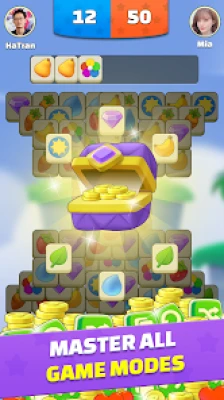
Multiplayer
The game description also mentions playing with friends and family, adding a social element to the puzzle experience.
Progression System
Progression has several layers:
Puzzle progression: Complete increasingly difficult layouts.
Diamond rewards: Earn diamonds after completing levels.
Room progression: Spend diamonds on furniture and room decoration.
Puzzle variety: Encounter different layouts and tile styles as you continue.
This combination gives players more than one reason to keep completing levels.
Game Information
Game: Tile Match - Zen Master
Developer: H2T GLOBAL PTE. LTD.
Genre: Puzzle
Platform: Android
Package Name: bounce.tile.matching.paint.master
Current tracked version: 1.202
Latest tracked update: June 11, 2026
Operating system: Android 7.1+
Puzzle layouts: 1,000+
Tile styles: 40+
Main matching rule: Match three identical tiles
Groove capacity: 7 tiles
Boosters: Groove Expansion, Shuffle, Undo
Content rating: Everyone
Pros and Cons
Pros
- Simple triple-match rules
- 1,000+ puzzle layouts
- 40+ cute tile styles
- Seven-slot groove creates strategic depth
- Three useful boosters
- Classic mode has no time limit
- Daily puzzles add extra challenge
- Diamond rewards
- Room decoration system
- Offline play
- Multiplayer support is advertised
- Suitable for short or extended puzzle sessions
Cons
- Later boards can become considerably more demanding.
- The seven-tile groove can make small mistakes costly.
- Players looking for fast action may find the pace too relaxed.
- Timed Daily Puzzles create more pressure than the standard mode.
Beginner Tips
If you're starting Tile Match - Zen Master, remember these rules:
Scan first. Don't immediately tap the first tile you see.
Think in threes. Every selected tile should ideally have a realistic path to a triple.
Protect the groove. Seven spaces disappear quickly.
Look for pairs. A pair with an accessible third tile is valuable.
Clear blocked areas. Removing upper or obstructing tiles can reveal useful matches.
Use boosters strategically. Don't waste them on positions you can solve naturally.
Think ahead. Try to predict your next several moves.
Stay calm. Classic mode has no time limit, so use it to practice your strategy.
Frequently Asked Questions
What is Tile Match - Zen Master?
Tile Match - Zen Master is a triple-match puzzle game where players collect and match three identical tiles to clear each board.
How do you play Tile Match - Zen Master?
Tap tiles and place them in the groove. When three identical tiles are collected, they disappear. Clear all tiles to complete the level.
How many tiles can the groove hold?
The groove can hold seven tiles. Filling all seven spaces without being able to create a match causes the level to fail.
Does Tile Match - Zen Master have a time limit?
Classic levels do not have a time limit. Daily Puzzle mode does include time restrictions.
How many levels are in Tile Match - Zen Master?
The game advertises more than 1,000 layouts, providing a large collection of puzzle boards.
What boosters are available?
The main boosters are Groove Expansion, Shuffle, and Undo.
Can you decorate rooms?
Yes. Completing levels rewards diamonds that can be spent on furniture and used to decorate virtual rooms.
Can Tile Match - Zen Master be played offline?
The game's description states that it can be played offline.
What is the Android package name?
The package name is bounce.tile.matching.paint.master.
What is the latest version?
Current third-party Play Store tracking lists version 1.202, with an update dated June 11, 2026.
Final Thoughts
Tile Match - Zen Master takes the familiar tile-matching formula and adds several layers around it. The core rule—match three identical tiles—is easy to learn, but the seven-tile groove forces players to think about the consequences of each move.
With more than 1,000 layouts, dozens of tile styles, boosters, daily challenges, diamond rewards, and room decoration, the game offers more than a simple matching loop.
The most important lesson is simple: don't just look for a match—look for the next match after it. Keeping the groove organized and planning several moves ahead is the key to consistently solving the harder boards.
Rate the Game
User Reviews








Popular Games



















 Android
 iOS
 Windows
 Xbox