





Latest Version
October 27, 2026
Rollic Games
Puzzle
iOS
0
Report a Problem
More About :game
Barbie Merge Mystery: A Complete Game Guide
Barbie Merge Mystery combines item-merging puzzles, character stories, and restoration tasks in a colorful adventure set in Barbie's world. After a mysterious pink fog disrupts a slumber party, Barbie and her friends are left with missing memories, changed surroundings, and plenty of unanswered questions. Players must help them investigate the strange event while rebuilding locations and discovering new items along the way.
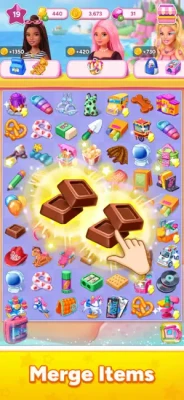
The main activity takes place on a merge board, where everyday objects can be combined to create more advanced items. These creations help complete orders, earn rewards, and gather the resources needed to improve buildings. Each upgrade can reveal new story moments, characters, and clues, giving players reasons to keep progressing.
The game is easy to understand at first, but efficient progress requires planning. Board space is limited, energy needs to be managed carefully, and some orders require several merging steps. Understanding how producers work, which items to keep, and when to complete an order can make the experience much smoother.
What Is Barbie Merge Mystery?
Barbie Merge Mystery is a casual merge-and-story game developed by Rollic Games. It brings together familiar Barbie-inspired accessories, puzzle-solving, resource collection, and a mystery that unfolds as the adventure progresses.
Players create items by combining matching pieces on a board. These items can then be used to satisfy requests from characters. Completing orders provides rewards that support further progression, including building restoration and story development.
The restoration system gives the merging gameplay a larger purpose. Instead of combining objects simply to create higher-level items, players use their progress to improve the surrounding world and discover what happened during the mysterious pink fog incident.
The experience is suitable for players who enjoy casual puzzles, collection mechanics, character-driven stories, and gradual progression. Although the game is free to download, it includes optional in-app purchases and requires an internet connection.
Main Features of Barbie Merge Mystery
Merge Items to Discover New Creations
Merging is the foundation of the game. Players combine matching objects to create new items, from familiar accessories to more advanced creations needed for character orders. Each successful combination can bring the board closer to completing a task or unlocking another discovery.
The challenge comes from choosing what to merge and when. Combining items without considering current orders can leave the board crowded with objects that are not immediately useful.
Complete Orders for Rewards
Characters request particular items created on the merge board. Fulfilling these orders provides rewards that help players continue their adventure.
Some requests are relatively simple, while others require multiple stages of merging. Checking the required items before spending energy helps reduce unnecessary actions and keeps progress focused.
Restore Buildings and Locations
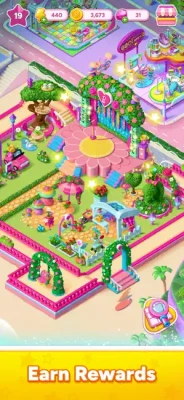
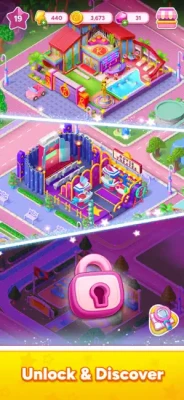
Resources earned through gameplay can be used to restore and upgrade buildings. These improvements develop the world around the characters and introduce additional story content.
Restoration is an important long-term objective because it connects everyday merging tasks with visible progress in the adventure.
Meet Barbie and Her Friends
Barbie, Teresa, and Renee are central to the mystery. As players advance, building improvements and story events introduce characters, conversations, and new details about the altered world.
These interactions provide context for the puzzles and make progression feel connected to the wider adventure.
Investigate the Mysterious Pink Fog
The pink fog is the central mystery of the game. It has affected memories and changed familiar places, leaving the characters searching for answers.
As new areas and story moments become available, players can piece together clues and follow the unfolding investigation.
Discover New Items and Collections
Merging items can reveal new creations and contribute to the game's collection system. Discovering unfamiliar objects adds another goal beyond completing immediate orders.
Players who enjoy collecting can use these discoveries as a reason to explore different item chains and make better use of available board space.
Enjoy Events and Additional Rewards
The game may feature special events, competitions, and limited-time activities. These offer alternative objectives and opportunities to earn rewards.
Event availability and rewards can change with updates, so it is worth checking the in-game event area before committing resources.
How to Play Barbie Merge Mystery
Understand the Merge Board
The merge board is the main area where items are produced, moved, combined, and stored. Each space matters because the board can become crowded when several item chains are active at once.
Begin by identifying matching pieces and looking at the orders currently displayed. This helps you decide which combinations will be useful immediately and which items should remain on the board for later.
Avoid filling every open space with unrelated objects. Keeping a small amount of free space makes it easier to collect new items and complete merges without constantly rearranging the board.
Merge Matching Items
Drag one item onto an identical item to combine them. A successful merge creates a higher-level item in the same chain.
Continue merging when the resulting item is needed for an order, unlocks a useful discovery, or helps reduce board clutter. Before combining anything, consider whether one of the pieces might be needed separately for another task.
If several matching items are available, plan the sequence instead of merging randomly. This reduces unnecessary movement and makes it easier to track the items you still need.
Use Producers to Generate Items
Producers are special board items that generate other objects. Their output helps build the item chains required for orders.
Tap a producer when you need more pieces, but pay attention to energy consumption and the space available on the board. Generating too many objects at once can create clutter and make it harder to locate useful combinations.
Learn which producers supply the item families you use most frequently. Keeping their outputs organized makes repeated orders easier to manage.
Complete Character Orders
Review each order and identify the exact item it requests. If you already have the required item, completing the order may be the quickest way to earn rewards and free space.
If you need to create it, work backward through its item chain. Determine the lower-level pieces required, identify the appropriate producer, and generate only what you need.
This approach is particularly useful for advanced orders, which can consume considerable energy if approached without a plan.
Collect Rewards and Restore Buildings
After completing orders, collect the available rewards and use the required resources for progression. Restoration tasks help unlock further story content and develop the game world.
Check which building or task is currently available before spending resources on secondary goals. Concentrating on the next meaningful upgrade can help you move through the story more efficiently.
Follow the Story
Read character conversations and pay attention to new discoveries. The narrative provides the context behind the pink fog and explains why the characters are investigating their changed surroundings.
Story progression also gives each restoration task a clear purpose, turning individual orders into part of a larger adventure.
Complete Strategy Guide for Barbie Merge Mystery
Plan Before You Merge
The most effective strategy is to decide what you want to accomplish before generating more items.
Start by checking active orders, available rewards, and any restoration task you are working toward. Identify the item that matters most, then follow its chain backward to determine what you need to produce.
This prevents unnecessary merging and reduces the number of items occupying the board.
For example, if an order requires an advanced accessory, focus on the producer and lower-level pieces associated with that item. Avoid spending energy on unrelated item chains unless they are needed for another important objective.
Work Backward From Difficult Orders
Higher-level items often require several combinations. Instead of tapping producers repeatedly and hoping for the right result, use a step-by-step approach.
First, identify the final requested item. Next, determine the lower-level items that lead to it. Then check which pieces you already have and which ones must still be generated.
This simple method turns a complicated order into smaller, manageable tasks. It also helps you recognize when an order is likely to require more energy than you currently have.
Keep the Board Organized
Board management is one of the most important skills in a merge game. Every unnecessary item reduces the space available for useful pieces.
Group similar objects together whenever possible. Keep frequently used items easy to reach and avoid spreading one item chain across several unrelated areas of the board.
When you have duplicate items, consider whether merging them will create something useful. If they are part of an important order, keep them accessible. If they are not currently needed, use available inventory storage when appropriate.
Do not discard items automatically just because the board is crowded. Some objects may be difficult to replace or may belong to an item chain you will need later.
Manage Energy Carefully
Energy determines how much activity you can perform when using producers. If you spend it all generating items for several unrelated tasks, you may have to wait before completing the order that matters most.
Before using a producer, ask yourself whether its output contributes to a current objective. If it does not, consider saving that action for later.
When energy is limited, prioritize orders that offer useful progression rewards or help complete an available restoration task. Avoid repeatedly generating items without a clear target.
If you reach an energy limit, use the break to review the board, organize your items, and decide which order to tackle next. This makes your next session more productive.
Understand Item Chains
An item chain is a series of related objects that develop through merging. Recognizing these chains helps you anticipate which pieces will be needed to create a more advanced item.
Pay attention to the results of new merges and use the collection system to track discoveries. Over time, you can become more familiar with the objects produced by different sources.
When an order requests an unfamiliar item, avoid filling the board with random objects. Focus on identifying the relevant chain and producing its components systematically.
Use Inventory Strategically
Inventory storage can help protect valuable items and reduce pressure on the merge board. It is especially useful when you want to keep an item for a future order without letting it occupy an active space.
Store objects that are important but not immediately needed, while leaving frequently used pieces within easy reach. If you are unsure whether an item will be useful again, consider its role in a known chain before moving or selling it.
Inventory is most effective when used selectively. Moving every object into storage can make it harder to remember what you have, so maintain a clear distinction between active items and saved pieces.
Make Smart Decisions About Bubbles
Some merges can produce bubbles containing an item. Depending on the bubble, the game may offer ways to obtain the item or allow it to disappear after a period of time.
Evaluate each bubble according to your current needs and available resources. If it contains an item that would save significant effort on an active order, it may be worth considering the available options.
However, do not spend premium currency simply because a bubble is about to expire. Compare the cost with the effort required to produce the item yourself. If the item is not important, letting the bubble disappear may be the better choice.
Learn How Special Tools Work
Special tools can help when the board becomes difficult to manage or when you need to adjust your progress. The game includes tools such as the Cutter and Joker, along with a Power Booster feature.
The Cutter can split an item into lower-level pieces, while the Joker can assist with merging in the way permitted by the game. These tools are particularly valuable when a specific item chain becomes difficult to complete.
The Power Booster changes producer output by allowing higher-level items to be generated. This can be useful when you need advanced pieces, but it may affect the availability of basic items.
Read the tool descriptions and understand their effects before using them. Since special tools can be limited, save them for situations where they provide a meaningful benefit.
Choose Orders Based on Their Value
Not every order deserves the same priority at every moment. Some are easier to complete, while others require more energy and several merging stages.
Compare the requested item with your current board and available resources. An order that can be completed immediately may free space and provide useful rewards. A demanding order may be better left for a later session if it requires extensive production.
Consider your broader goal as well. If an order helps unlock a building upgrade or advances the story, it may deserve priority over a less urgent task.
Focus on Building Restoration
Restoring buildings gives your merging activity a long-term objective. When deciding which orders to complete, consider the resources needed for your next available upgrade.
A focused approach reduces the temptation to pursue every optional activity at once. Work toward the next meaningful restoration milestone, then reassess your goals when new areas or tasks become available.
If a building upgrade introduces a new character or story sequence, take time to explore that content before shifting your attention to unrelated objectives.
Approach Events With a Plan
Events can provide additional rewards and introduce different challenges. Before participating heavily, check the event's requirements, duration, and rewards.
Use event tasks that fit naturally with your regular gameplay whenever possible. If an event demands a large amount of energy or creates extra board clutter, consider whether the rewards justify the effort.
Avoid spending premium resources simply to keep up with every event. Choose activities that match your current goals and available time.
Progress Without Spending Money
Barbie Merge Mystery is free to download, but optional purchases may offer additional resources, energy, or other benefits. Spending is not the only way to enjoy the game.
To progress without purchases, focus on useful orders, avoid unnecessary producer taps, keep your board organized, and collect available rewards. Use breaks to let your energy recover according to the game's mechanics.
Be patient with demanding item chains. A slower, organized approach can be more effective than repeatedly spending resources to speed up every task.
Advanced Tips and Tricks
Create a Priority List
Before starting a session, identify your main objective, the order closest to completion, and the item chain requiring the most preparation.
This short review helps prevent aimless merging and makes it easier to stop when your available energy is exhausted.
Merge With Future Needs in Mind
An item may be useful even when no current order requests it. If you recognize that it belongs to a frequently used chain, keeping it can save time later.
Balance this foresight with board space. Preserve useful pieces without allowing speculative items to crowd out current objectives.
Avoid Producing More Than You Can Manage
Generating a large batch of items can seem efficient, but it may create a board full of scattered pieces. Produce items in manageable amounts, merge what you can, and then decide whether another production cycle is necessary.
This approach makes it easier to spot matching objects and reduces the risk of overlooking important items.
Check the Collection for Discoveries
The collection can help you track objects discovered through merging. When you encounter an unfamiliar item, check whether it has been added to your collection and use that information to understand your progress.
Treat collection completion as a secondary objective when space and energy permit. Your immediate orders should usually take priority when resources are limited.
Use Boosters at the Right Time
Boosters are most helpful when they solve a specific problem. Before activating one, identify the item or producer output you need and consider whether the effect supports that goal.
Avoid using a booster simply because it is available. Saving a special tool for a difficult order can provide more value than using it during routine merging.
Make Breaks Productive
When you run low on energy, you do not need to keep tapping producers. Review the board, move important items into storage if appropriate, and identify the next items required for your target order.
When you return, you will have a clear plan rather than needing to work out your next move from scratch.
Common Mistakes to Avoid
Merging Without Checking Orders
Random merging can create advanced items that do not help with your current objectives. Always review active orders before spending energy, particularly when several item chains are available.
Filling the Board With Unnecessary Items
Too many unrelated objects make it difficult to merge efficiently. Keep the board organized and generate only the items that support a clear goal.
Spending Energy on the Wrong Producer
If a producer does not contribute to your current order, using it may delay meaningful progress. Identify the required item chain first and concentrate on the correct source.
Selling Items Too Quickly
An item that seems unimportant today may become useful later. Before selling or removing an object, consider whether it belongs to a known chain or could help with an upcoming task.
Use storage when available and appropriate, especially for valuable pieces that you do not need immediately.
Ignoring Energy Costs
Repeatedly tapping producers without a plan can leave you unable to finish an important order. Track what you need and stop producing when you have enough pieces for the next stage.
Using Premium Currency for Minor Benefits
Optional purchases and premium resources can speed up some activities, but using them on every small inconvenience can become expensive. Compare the benefit with the effort of waiting or producing the item normally.
Activating Special Features Without Understanding Them
Tools and boosters can change how items behave or how producers generate objects. Learn their effects before using them so that you do not create an avoidable problem while trying to solve another.
Overlooking Story and Restoration Tasks
The merge board is central to the game, but the wider goal is to restore locations and investigate the pink fog. Check your progression tasks regularly so that you do not lose sight of the story.
How to Make Progress When You Feel Stuck
If an order seems impossible to complete, begin by breaking it into smaller stages. Identify the final item, work backward through its chain, and determine which pieces are missing.
Next, check the board for useful objects that you may have overlooked. Review your inventory and collection before generating new items, as you may already have part of the required chain.
If you are short on energy, stop producing unrelated items and wait until you can continue. Use the downtime to organize the board and plan the next sequence of merges.
If a producer is not generating the expected items, check whether a special feature such as the Power Booster is active. If items disappear unexpectedly, merging behaves incorrectly, or progress appears broken, restart the game and consult its in-game support options if the problem continues.
Some progression differences between players can also occur because of updates, events, or staged content availability. Make sure the game is updated and check the tasks available in your own version.
Is Barbie Merge Mystery Free to Play?
Barbie Merge Mystery is free to download and includes optional in-app purchases. Players can enjoy the core merging, ordering, and story progression systems without necessarily purchasing additional resources.
However, some activities may require patience when energy is limited or when an order requires many merging steps. Optional purchases may speed up parts of the experience, but they should be considered carefully.
If children will be playing, reviewing purchase settings and using device-level controls can help prevent unintended spending. The App Store listing specifies an age requirement of at least 13, or a higher age where required by local rules.
Frequently Asked Questions
What Is Barbie Merge Mystery About?
Barbie Merge Mystery follows Barbie, Teresa, and Renee as they investigate a mysterious pink fog that has disrupted their slumber party, affected memories, and changed familiar places. Players merge items, complete orders, restore buildings, and uncover clues as the story develops.
How Do You Play Barbie Merge Mystery?
Drag matching items together on the merge board to create higher-level objects. Use these items to complete character orders, earn rewards, collect resources, and progress through restoration tasks and story events.
How Do You Get More Items?
Use the appropriate producers to generate the items required by your current orders. Manage energy carefully, merge matching pieces, and avoid producing large quantities of unrelated items that occupy valuable board space.
How Can You Complete Orders Faster?
Check the requested item first and work backward through its item chain. Look for pieces already available on the board or in your inventory, then use the correct producer to create only the missing items.
How Do You Keep the Merge Board From Filling Up?
Group related items together, merge useful duplicates, store important objects that are not immediately needed, and avoid producing items without a clear purpose. Review the board regularly to identify pieces that can help complete active orders.
What Is the Purpose of Building Upgrades?
Building upgrades use resources earned through gameplay to restore locations and advance the adventure. They can introduce new characters, conversations, and story content, making them an important part of long-term progression.
What Is the Pink Fog Mystery?
The pink fog is the central story problem. It has disrupted the characters' memories and altered familiar places. Players uncover more information through progression, conversations, and discoveries as the investigation continues.
What Are Producers?
Producers are special board items that generate other objects. Their outputs form the starting points of item chains used to complete orders. Choosing the correct producer helps save energy and reduce unnecessary board clutter.
What Do the Cutter and Joker Do?
The Cutter can split an item into lower-level pieces, while the Joker provides a special merging aid according to its in-game function. These tools can help with difficult item chains, so it is sensible to save them for situations where they offer meaningful value.
What Does the Power Booster Do?
The Power Booster allows producers to generate higher-level items instantly. It can help when advanced objects are needed, although its effect may change the availability of basic items. Check whether it is active if your producers behave differently than expected.
Can You Play Barbie Merge Mystery Without Spending Money?
Yes. The game is free to download and includes optional purchases. Players can focus on efficient merging, useful orders, resource management, and available rewards to progress without making purchases, although some tasks may take longer.
Does Barbie Merge Mystery Require an Internet Connection?
Yes. The game's store listing states that an internet connection is required to play. Network charges may apply depending on your connection and mobile plan.
What Should You Do if an Item Disappears or the Game Has a Bug?
First, check whether the item was moved, merged, stored, or affected by a special feature. Restart the game and check for available updates. If the problem remains, contact the game's support team through its in-game support options and explain what happened.
Final Thoughts on Barbie Merge Mystery
Barbie Merge Mystery offers a charming combination of merge puzzles, familiar characters, restoration goals, and an unfolding mystery. Its central gameplay is simple to learn, but careful resource management and board organization can make a noticeable difference as orders become more demanding.
The best approach is to merge with a purpose, prioritize useful orders, conserve energy, and keep track of important items. Producers should be used strategically, inventory should protect valuable pieces, and special tools should be saved for situations where they provide real benefits.
Beyond the puzzle board, building upgrades and character conversations keep the adventure moving forward. Each new discovery adds another piece to the pink fog mystery, giving players a reason to continue exploring.
For fans of casual merging games and Barbie-inspired adventures, Barbie Merge Mystery offers a colorful way to combine puzzle-solving with storytelling. With a little planning and patience, players can make steady progress, restore more of the world, and enjoy the mystery one merge at a time.
Rate the Game
User Reviews











Popular Games



















 Android
 iOS
 Windows
 Xbox