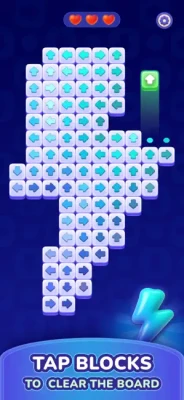
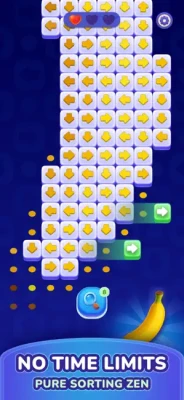

Latest Version
September 10, 2026
Tripledot Studios
Puzzle
iOS
0
Report a Problem
More About :game
The game combines familiar block-puzzle mechanics with an art-gallery progression system, giving you another reason to think carefully about every placement. It is easy to understand at first, but the limited board space makes later puzzles much more strategic.
What Is Tile Away - Art Gallery?
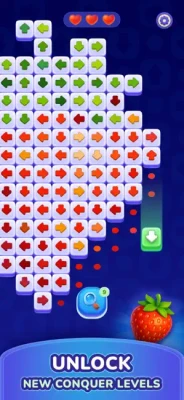
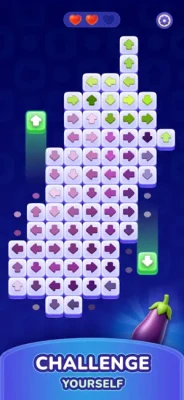
Tile Away - Art Gallery takes the basic idea of a classic block puzzle and gives it a gallery-themed progression system.
Instead of simply placing shapes until the board fills up, you are working toward clearing blocks and progressing through a collection of artwork. The core challenge is deciding where each piece should go and when it is worth rotating a piece to create a better fit.
The App Store describes the game as a 2D block puzzle focused on strategic placement and rotation, with rows and columns cleared as you fit pieces together.
The difficulty gradually increases, so the strategy that works on an early board may not be enough once the available space becomes harder to manage.
How to Play Tile Away - Art Gallery
The basic gameplay is simple:
- Examine the available pieces.
- Rotate a piece when a different orientation gives you a better fit.
- Place the piece on the board.
- Complete an entire row or column.
- Clear the completed line.
- Use the newly created space to continue building.
- Repeat the process while trying to avoid filling the board.
The important part is that every placement affects your future options.
A piece that fits perfectly into an empty area might still be a poor choice if it blocks the space you need for a larger piece later.
The Best Tile Away Strategy
The strongest approach is to stop thinking only about the current move.
Instead, think about what your board will look like after the next two or three pieces.
1. Look at Every Available Piece
Before placing anything, inspect all of the pieces currently available.
Do not automatically use the first piece that appears convenient.
Ask:
- Which piece is hardest to fit?
- Which piece has the fewest possible locations?
- Which piece can complete a line?
- Which piece will create useful empty space?
- Which piece could cause a blockage?
The most restrictive piece should usually influence your decision first.
2. Prioritize Difficult Pieces
A large or awkwardly shaped piece may have far fewer placement options than a simple square or short bar.
If you fill the board with easy pieces first, you can accidentally leave no suitable location for the difficult one.
A useful rule is:
Place the least flexible piece before the most flexible piece whenever possible.
3. Keep the Board Open
Open space is your most valuable resource.
Do not build a dense wall of blocks just because the individual placements look good.
Try to maintain several areas where future pieces can fit.
A board with slightly fewer cleared lines but plenty of open space can be much safer than a board with a high score and almost no room remaining.
4. Think About Both Rows and Columns
Tile Away is not only about completing horizontal lines.
A placement can simultaneously contribute to:
- A horizontal row
- A vertical column
- Multiple future clears
- A setup for a difficult piece
Before placing a shape, check both directions.
Sometimes a piece that appears useless horizontally is exactly what you need to complete a vertical line.
How to Clear More Lines
Build Toward Multiple Clears
Try not to think of every line as an isolated objective.
Instead, build positions where one placement can contribute to several future clears.
For example, if a piece fills the final missing spaces of a row while also preparing a column for completion, it has much greater value than a placement that only helps one line.
Avoid Filling Gaps Randomly
A small empty gap may look like a problem, but filling it immediately is not always the best decision.
The gap might be useful for a future piece.
Before filling an awkward space, ask:
“What shape would fit here later?”
If the answer is a large or unusual piece, keep the space available.
The Importance of Piece Rotation
Rotation is one of the most important tools in Tile Away.
The same piece can have completely different value depending on its orientation.
Before placing a shape, mentally test several orientations:
- Horizontal
- Vertical
- Wide
- Tall
- Rotated around an existing structure
Do not rotate simply because you can.
Rotate when the new orientation:
- Creates a line-clearing opportunity
- Preserves more open space
- Fits around existing blocks
- Makes a difficult piece easier to place later
The App Store specifically identifies strategic placement and piece rotation as core parts of the game.
How to Handle Difficult Boards
When the board becomes crowded, slow down.
Do not make several quick placements simply because they fit.
Instead, use this process.
Step 1: Find the Most Dangerous Area
Look for the section of the board with the fewest empty spaces.
This is usually where a future placement problem will develop.
Step 2: Identify Your Largest Piece
Determine where the largest or most awkward available shape could realistically fit.
Step 3: Look for a Line Clear
See whether one placement can immediately remove a row or column.
Step 4: Create Space
If no line can be cleared immediately, choose the placement that gives you the greatest amount of future flexibility.
Step 5: Reassess
After every clear, look at the entire board again.
A cleared line can completely change the best move.
Advanced Tile Away Tips
Leave Useful Corners Open
Corners can be deceptively valuable.
Some pieces fit naturally into corners, while others require open space around them.
Do not automatically fill every corner.
Keep at least some corners available for shapes that cannot comfortably fit in the center.
Avoid Creating Narrow Channels
Long, narrow gaps can become difficult to use.
If you repeatedly build around one area, you may create a thin channel that only a very specific shape can occupy.
Whenever possible, maintain larger connected areas of empty space.
Build From the Outside In
A controlled approach is to establish a stable structure around the edges while preserving central space for more complicated pieces.
This is not a rule for every board, but it can work well when the available pieces include larger shapes.
Do Not Chase Immediate Clears
A line clear is useful, but clearing one line is not automatically the best move.
Sometimes keeping a partially completed line is better because it preserves a valuable arrangement for the next piece.
Think about board health, not just immediate progress.
How to Avoid Getting Stuck
Most difficult situations happen because the board gradually loses flexibility.
Watch for these warning signs:
- Only tiny gaps remain.
- Large pieces have nowhere to go.
- Several rows are almost full but cannot be completed.
- The remaining open areas are separated from each other.
- A useful corner has been blocked.
- You are relying on one specific shape to save the board.
When you see these signs, stop placing pieces automatically.
Look for the move that creates the largest useful open area.
That is often more valuable than the move that gives you the quickest line clear.
Beginner Strategy
If you are just starting Tile Away, follow these simple rules:
Rule 1: Do Not Rush
Take a moment to inspect the board before each placement.
Rule 2: Use Rotation
If a piece does not fit well, check another orientation before giving up on the space.
Rule 3: Protect Open Space
Never fill the board unnecessarily.
Rule 4: Watch Both Directions
Always check whether your placement contributes to a row or column.
Rule 5: Plan for the Next Piece
A good placement should not make the next move impossible.
Rule 6: Clear Lines When It Helps
Line clears are valuable because they remove blocks and restore space.
Advanced Strategy for High-Level Puzzles
Once the boards become more complicated, use a more deliberate system.
Identify the Constraint
Find the piece or area that is most difficult to accommodate.
Protect Its Future Position
Do not fill the space that piece needs unless you have another solution.
Search for a Double-Purpose Move
The ideal placement does more than one thing.
It might:
- Complete a row
- Advance a column
- Open a corner
- Create room for another piece
Preserve Flexibility
If two moves appear equally good, choose the one that leaves more possible placements afterward.
This is one of the most important principles in block puzzle games.
Common Mistakes in Tile Away
Filling the Board Too Evenly
A perfectly dense board may look organized, but it can leave no room for unusual shapes.
Ignoring Rotation
A piece that appears impossible to place may become extremely useful after rotation.
Focusing Only on Rows
Always check vertical opportunities as well.
Using Small Pieces Too Quickly
Small pieces are often flexible. Saving them can give you a way out of awkward situations later.
Blocking Large Open Areas
Large pieces need room. If you fill every open area with small shapes, you may eventually have nowhere to put them.
Playing Only for Immediate Progress
Clearing one line feels good, but preserving a healthy board is often more important.
Best Way to Think About Tile Away
A useful mental model is:
Space → Options → Lines → Progress
First protect your space.
That space gives you options.
Those options let you complete lines.
The cleared lines then create more space and allow you to progress.
If you reverse the order and focus only on clearing lines, you can quickly run out of useful options.
Tile Away Art Gallery Progression
One of the game's distinctive features is the artwork progression.
The objective is not simply to survive a block board. Clearing blocks and progressing through the puzzle experience is connected to unlocking artwork, giving the game an additional sense of advancement. The official store descriptions promote the combination of clearing blocks and revealing or unlocking art.
This makes the game appealing to two types of players:
- Players who enjoy traditional block puzzles
- Players who like having a visual collection or progression goal
Tile Away - Art Gallery Features
Strategic Block Placement
Every piece affects the available space around it, so thoughtful placement is essential.
Piece Rotation
Rotating shapes can turn an awkward piece into the perfect fit.
Row and Column Clearing
Complete lines disappear, opening new space for additional pieces.
Progressive Difficulty
The puzzles become more demanding as you advance.
Art Collection
Progress through the puzzle experience while unlocking artwork.
Relaxing Puzzle Format
The game combines logical thinking with a relatively calm presentation rather than relying entirely on fast action.
Tile Away Tips for Better Scores and Longer Runs
- Inspect all available pieces before committing.
- Deal with the most restrictive shape first.
- Keep large areas of open space.
- Do not fill useful corners without a reason.
- Look for vertical and horizontal clears.
- Rotate pieces before deciding they do not fit.
- Avoid creating tiny isolated gaps.
- Save flexible pieces when possible.
- Use line clears to restore board space.
- Think about where the next difficult piece could go.
- Choose flexibility over a small immediate advantage.
- Reassess the board after every major clear.
Is Tile Away - Art Gallery Difficult?
The basic mechanics are easy to learn, but the strategic challenge increases as the puzzles become more demanding. The App Store describes the game as progressively more challenging, while the Google Play listing similarly emphasizes increasingly difficult puzzles.
That makes it suitable for players who want something that starts casually but requires more spatial awareness and planning later.
Is Tile Away - Art Gallery Worth Playing?
If you enjoy block puzzle games, logic puzzles, spatial reasoning games, and relaxing casual games, Tile Away - Art Gallery has a straightforward appeal.
The combination of block placement, rotation, line clearing, progressive challenges, and artwork progression gives the familiar formula an additional layer of motivation.
The App Store currently lists the game at 4.7 stars from around 1,000 ratings, while the Android version has passed 1 million downloads and carries a 4.7 rating on Google Play.
There are also some negative player comments concerning advertisements, lives, and occasional technical issues, so the experience is not perfect for everyone. Those criticisms are worth mentioning alongside the game's strong overall ratings.
Pros and Cons
Pros
- Simple controls
- Easy-to-understand block puzzle mechanics
- Strategic piece placement
- Rotatable pieces
- Row and column clearing
- Increasing puzzle difficulty
- Artwork progression
- Relaxing casual gameplay
- Good fit for short or longer puzzle sessions
Cons
- Later puzzles can become significantly more demanding
- Limited space can make mistakes costly
- Some players dislike the advertising experience
- Some players have reported freezes or progress-related frustrations on certain versions.
Frequently Asked Questions
What is Tile Away - Art Gallery?
Tile Away - Art Gallery is a 2D block puzzle game by Tripledot Studios. Players place and rotate pieces to complete and clear rows and columns while progressing through increasingly challenging puzzles and unlocking artwork.
How do you play Tile Away?
Place the available shapes on the board and rotate them when necessary. Complete entire rows or columns to clear them and create additional space for future pieces.
What is the best strategy in Tile Away?
Protect your open space, identify difficult pieces before placing easy ones, use rotation intelligently, and look several moves ahead. Avoid making placements that leave only tiny or unusable gaps.
How do you clear more lines?
Look for placements that contribute to both horizontal and vertical lines. A strong move can set up one clear immediately while preparing another for the following piece.
Why is rotation important?
Different orientations allow the same piece to fit into completely different spaces. Rotation is particularly useful when the board becomes crowded or when a large piece has limited placement options.
How do you avoid getting stuck?
Keep large areas of open space, avoid isolated gaps, and think about where your most difficult available piece could go before filling the board.
Does Tile Away get harder?
Yes. Both the App Store and Google Play descriptions state that the puzzles become progressively more challenging.
Is Tile Away - Art Gallery free?
The game is listed as free on the App Store and is ad-supported on Google Play.
What makes Tile Away different from other block puzzles?
Its main distinction is the combination of traditional 2D block placement and an art-gallery progression system. Clearing blocks and progressing through puzzles is tied to revealing or unlocking artwork.
Can beginners play Tile Away?
Yes. The basic rules are easy to understand, but the increasingly difficult puzzles provide additional depth for players who enjoy spatial reasoning and logical challenges.
Final Verdict
Tile Away - Art Gallery takes a familiar block-puzzle formula and adds a satisfying artwork progression system. The controls are straightforward, but the game rewards players who think carefully about space, rotation, line clearing, and future moves.
The biggest strategic lesson is simple: do not ask only where a piece fits; ask where it will leave you afterward.
Keep the board flexible, protect space for difficult shapes, and look for placements that solve more than one problem at once. With those habits, the increasingly challenging levels become much easier to manage.
For fans of block puzzle games, tile puzzles, brain games, logic challenges, spatial reasoning, and relaxing casual games, Tile Away - Art Gallery is a solid choice.
Rate the Game
User Reviews









Popular Games



















 Android
 iOS
iOS Windows
 Xbox
Xbox