
Latest Version
October 25, 2026
MOBIRIX
Puzzle
iOS
0
Report a Problem
More About :game
What Is Jigsaw Card Solitaire Sort?
Jigsaw Card Solitaire Sort brings together two familiar puzzle concepts in one game. It combines the strategic movement of solitaire-style cards with the visual recognition and arrangement of traditional jigsaw puzzles.
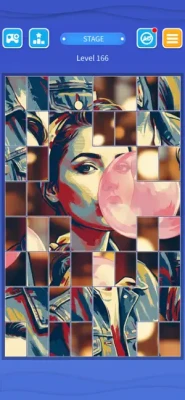
Instead of assembling loose cardboard pieces, you work with picture fragments presented as movable cards. The objective is to slide the cards into suitable positions, recognize matching image sections, and connect fragments until the complete picture is revealed.
The challenge comes from balancing accurate matching with efficient board management. A card may belong to a particular part of the picture, but moving it without considering the surrounding cards can make subsequent placements more difficult. Successful players pay attention to visual details, preserve useful spaces, and look for opportunities to connect several pieces in succession.
Developed by MOBIRIX, Jigsaw Card Solitaire Sort features a large selection of stages, daily missions, Time Mode, a collection system, chain combinations, and ranking support. Its combination of relaxing picture puzzles and more demanding timed challenges makes it suitable for both casual play and players who enjoy improving their puzzle-solving speed.
Jigsaw Card Solitaire Sort Gameplay Overview
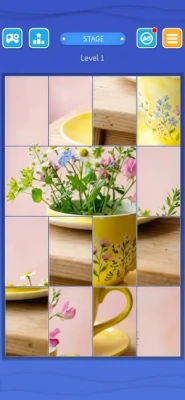
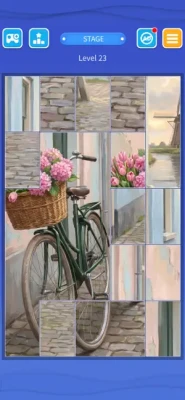
The main objective is to connect scattered picture cards and complete the image shown in each stage. Players use intuitive swipe controls to move card pieces into positions where their visual fragments align correctly.
When matching pieces connect, they snap together and contribute to completing the picture. Some moves may create multiple connections, producing satisfying chain combinations and allowing several pieces to fit together at once.
Board management is an important part of the experience. You must decide where to move cards, which fragments to connect first, and how to maintain enough flexibility for the remaining pieces.
The game offers both relaxed puzzle-solving and a faster Time Mode. This gives players the freedom to concentrate on accuracy during casual sessions or test their speed when they want a greater challenge.
As you progress, the growing variety of stages encourages you to recognize image patterns more quickly and develop a consistent approach to arranging cards.
How to Play Jigsaw Card Solitaire Sort
Learn the Basic Controls
The game uses swipe-based card movement. Slide the available cards into suitable positions and observe how the image fragments align.
Before making a move, inspect the card's picture and compare it with nearby fragments. Look for matching colors, shapes, edges, and visual details that indicate how the pieces belong together.
The controls are straightforward, but careful placement is essential for completing puzzles efficiently.
Recognize Matching Image Fragments
The most important skill is identifying which picture fragments belong together. Pay attention to visual continuity, such as matching colors, repeated patterns, object outlines, and scenery.
For example, a section of blue sky may connect with another fragment showing the same sky, while a landscape card may align with pieces containing a continuous horizon or recognizable object.
Do not rely on color alone. Similar colors may appear in different parts of the same picture, so examine the finer details before deciding where a card belongs.
Connect Cards in the Correct Positions
When two fragments match, move them into the appropriate positions so they connect. Correctly aligned cards snap together and help complete the overall image.
Look for pieces that have obvious visual relationships first. Once these connections are established, the remaining fragments may become easier to identify.
Keep the Board Organized
Efficient board management makes difficult stages easier. Avoid moving cards without a clear reason, especially when the resulting arrangement could restrict your access to other useful pieces.
Try to maintain a layout that allows you to inspect and move the remaining cards comfortably. Organized play reduces confusion and helps you recognize new matching opportunities.
Complete the Picture
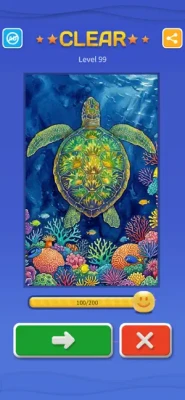
Continue connecting fragments until the image is complete. Each finished puzzle contributes to the game's collection system, allowing you to discover additional scenery and card sets as you progress.
Focus on accurate matches rather than rushing through the final placements. A carefully completed picture is more satisfying than a sequence of unnecessary moves.
Complete Jigsaw Card Solitaire Sort Strategy Guide
Start With the Most Recognizable Details
When a new puzzle begins, scan the available cards for distinctive visual elements. Look for recognizable objects, strong color contrasts, unusual shapes, and clear boundaries between different parts of the picture.
These details are usually easier to identify than fragments containing large areas of similar colors.
Start with the cards you can recognize confidently. Establishing a few reliable connections can make the remaining image easier to understand.
Pay Attention to Edges and Boundaries
Picture boundaries provide valuable clues about where fragments belong. A card showing a clear transition between sky and mountains, for example, may connect with another card containing the continuation of that boundary.
Examine the direction of lines, the position of objects, and the relationship between light and dark areas.
Even when two cards share similar colors, their boundaries may reveal that they belong to different sections of the picture.
Look for Patterns Across Multiple Cards
Do not examine every card as an isolated piece. Compare several fragments together and look for repeated shapes, textures, and visual elements.
A road, building, branch, or shoreline may continue across multiple cards. Identifying that pattern can help you determine which fragments should connect and in what order.
Thinking about the complete picture rather than individual cards makes matching more accurate.
Prioritize Easy Connections
When several possible moves are available, begin with the most obvious matches. These connections establish a clearer visual structure and reduce the number of uncertain cards.
Avoid spending too much time trying to solve a difficult fragment when another card has an obvious match. Completing straightforward connections first can reveal additional clues and make the harder sections easier to solve.
Think Before Moving Cards
Every move should have a purpose. Before sliding a card, consider whether the placement creates a connection, reveals a useful relationship, or improves the organization of the board.
Random movements can make the layout harder to read and may waste valuable time in timed stages.
Developing a habit of checking the destination before moving a card helps maintain a clear and efficient solving process.
Take Advantage of Chain Combinations
Chain combinations occur when multiple picture fragments connect successfully in succession. These combinations provide a particularly satisfying part of the gameplay and can help you complete puzzles more efficiently.
To encourage chains, look for groups of fragments that appear to form a continuous section of the image. Instead of making unrelated placements, focus on connections that may naturally lead to additional matches.
However, do not force a chain when the picture does not support it. A correct individual connection is more useful than several uncertain moves.
Keep Difficult Fragments for Later
Some cards are harder to identify because they contain repetitive textures or large areas of similar colors. Examples might include water, grass, clouds, or plain backgrounds.
Rather than guessing, set these fragments aside mentally and work on more distinctive areas first.
As the surrounding picture develops, previously confusing fragments may become easier to place. This approach helps reduce mistakes and keeps the puzzle manageable.
Reassess the Picture After Every Connection
Every successful connection provides additional information about the overall image. After a few cards snap together, review the newly formed section and compare it with the remaining fragments.
A completed area may reveal the direction of a road, the outline of an object, or the transition between two colors.
Use these new clues to update your understanding of the picture rather than continuing with assumptions that may no longer be correct.
How to Get Better at Jigsaw Card Solitaire Sort
Improve Visual Recognition
Spend time comparing small differences between similar fragments. Look for changes in texture, object orientation, lighting, and the continuation of lines.
The more frequently you practice, the easier it becomes to recognize the visual relationships that indicate correct connections.
Develop a Consistent Scanning Routine
Examine the available cards systematically rather than jumping randomly between pieces. Start with distinctive objects, then inspect clear boundaries and repeated patterns, and finally consider the more uniform sections.
A consistent approach reduces overlooked matches and makes each puzzle easier to manage.
Avoid Unnecessary Movements
Moving cards repeatedly without gaining useful information can slow your progress. Before every swipe, identify the reason for the move.
If the card does not appear to fit anywhere, continue examining other fragments rather than placing it in an uncertain position simply to stay busy.
Practice With Untimed Puzzles
The relaxed gameplay option is useful for learning the mechanics without the pressure of a countdown. Use it to improve your matching accuracy and understand how cards connect.
Once you can solve puzzles confidently, transition to Time Mode and work on completing the same types of tasks more quickly.
Learn From Every Completed Stage
After finishing a puzzle, consider which visual clues helped you solve it most efficiently. Perhaps you recognized a distinctive object early or found several connections by following a continuous boundary.
Remembering these patterns can improve your performance on future stages.
Jigsaw Card Solitaire Sort Time Mode Guide
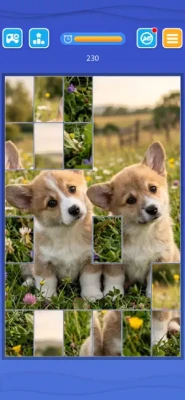
Time Mode adds urgency by requiring players to complete puzzles within a set time. It tests visual recognition, decision-making, and the ability to avoid unnecessary card movements.
Begin With a Quick Board Scan
At the start of a timed puzzle, take a brief moment to examine the available fragments. Identify the most obvious matches before beginning a sequence of movements.
A short initial scan can prevent wasted time caused by choosing cards without a clear plan.
Prioritize High-Confidence Matches
During Time Mode, focus first on connections that are easy to verify. These moves provide reliable progress and help establish the structure of the picture.
Avoid spending too long debating between two uncertain placements when several clear matches remain available.
Reduce Hesitation Through Practice
Speed improves when you become familiar with the game's visual patterns. Practice recognizing distinctive objects and matching boundaries until these decisions require less effort.
The goal is to make accurate decisions more quickly, not simply to swipe faster.
Maintain Accuracy Under Pressure
A rushed move that does not create a useful connection may waste more time than careful observation would have taken.
When a fragment is unclear, compare it with the completed sections and surrounding cards. Make the move once you have enough evidence that the match is correct.
Build Speed Gradually
Do not expect to achieve your best time immediately. Start by completing puzzles consistently, then gradually reduce the time spent scanning and reconsidering placements.
As your confidence grows, you will be able to move through familiar patterns more efficiently.
Daily Missions and Progression Tips
Jigsaw Card Solitaire Sort includes daily missions that provide additional goals beyond completing ordinary stages.
Check the Mission Objective
Before starting a session, review the available daily mission. Understanding the requirement allows you to focus on the appropriate activity instead of completing stages without considering the extra objective.
Make Daily Progress Consistently
Regular play helps you become more familiar with the game's mechanics and provides opportunities to complete changing daily tasks.
Even a short session can be useful if it contributes to a mission or helps you finish another stage.
Balance Missions With Main Progression
Daily missions are an additional activity, so avoid becoming frustrated if a particular objective takes longer than expected.
Continue enjoying the main puzzles while making steady progress toward mission completion.
Use Missions to Practice Specific Skills
If a mission encourages faster completion, focus on improving visual recognition. If it requires completing stages, prioritize accuracy and consistent board management.
Treat these objectives as opportunities to strengthen your general puzzle-solving abilities.
Collection Mode and Unlockable Themes
One of the game's main rewards is its collection system. Every time you complete a puzzle, the resulting scenery and associated card set are saved to your collection.
Complete More Puzzles to Expand Your Collection
Work through the available stages to discover additional pictures and themes. The collection system gives you a reason to keep playing beyond the satisfaction of solving an individual puzzle.
Appreciate the Artwork
Take a moment to examine the completed image after each stage. Recognizing how the fragments fit together can help reinforce the visual patterns you will encounter in later puzzles.
Explore Different Themes
The game features a collection of high-definition scenery and card designs. Exploring different pictures keeps the experience visually varied and encourages you to adapt your matching strategy to new kinds of images.
Keep Progress Steady
Rather than rushing through stages, aim to complete puzzles accurately and consistently. A reliable approach will help you progress through the collection while improving your skills.
Common Mistakes to Avoid
Matching Cards by Color Alone
Two fragments may share similar colors without belonging next to each other. Check object outlines, textures, boundaries, and the direction of visual patterns before making a connection.
Moving Cards Without a Plan
Unnecessary movements can make the board harder to understand. Choose placements that establish useful connections or improve the layout.
Ignoring the Overall Picture
Focusing on isolated fragments may cause you to miss a larger visual pattern. Compare several cards and consider how their details contribute to the complete image.
Forcing Difficult Matches
If a card does not clearly fit, avoid guessing. Work on other fragments and return when more of the picture has been revealed.
Rushing Through Time Mode
Fast movements do not guarantee a faster completion time. Prioritize clear matches and develop a steady rhythm rather than making uncertain placements.
Forgetting Daily Missions
Players who want to complete daily objectives should review the mission requirements before beginning. This helps ensure that their time contributes to both puzzle progress and mission completion.
Best Tips for Beginners
New players should begin with the relaxed gameplay option and learn how the card movement and image-matching mechanics work.
Start with obvious visual features such as recognizable objects, strong color boundaries, and distinctive shapes. Use these cards to establish the first connections before working on fragments with repetitive textures.
Keep the board organized and avoid unnecessary movements. If a card seems difficult to place, move your attention to another part of the picture rather than guessing.
Once you become comfortable with the mechanics, begin experimenting with chain combinations. Learning how several pieces can connect together will help you complete puzzles more efficiently.
When you feel confident, try Time Mode to develop your speed and challenge yourself to improve your completion times.
Advanced Strategies for Experienced Players
Experienced players should concentrate on identifying groups of related fragments rather than treating every card as an independent problem.
Look for visual sequences that can connect several pieces, such as a continuous landscape boundary or a recognizable object extending across multiple cards. Establishing these larger sections can reveal where the remaining fragments belong.
Minimize unnecessary movements by checking both the visual match and the destination before sliding a card. This is especially important in Time Mode, where repeated adjustments can quickly reduce the time available.
Advanced players should also learn to distinguish between high-confidence matches and uncertain possibilities. Complete reliable connections first and use the resulting image structure to resolve the more difficult fragments.
Finally, balance speed with accuracy. A consistent strategy that produces dependable connections is generally more effective than hurried movements that require repeated corrections.
Is Jigsaw Card Solitaire Sort Free to Play?
Jigsaw Card Solitaire Sort is available as a free download with advertisements and optional in-app purchases. The store listing includes an option to remove advertisements, although pricing can vary by storefront and region.
You can begin playing without necessarily purchasing additional items. If you prefer an uninterrupted experience, review the available purchase options before deciding whether an advertisement-removal purchase is worthwhile.
Can You Play Jigsaw Card Solitaire Sort Offline?
The published store description emphasizes the game's puzzle modes and ranking features but does not clearly establish offline availability for every feature.
If you want to play without an internet connection, check the current app version on your device to confirm which modes remain available offline. Online rankings and other connected services may require internet access.
Jigsaw Card Solitaire Sort Compatibility and Game Information
Jigsaw Card Solitaire Sort is developed by MOBIRIX and is available for iPhone and iPad. The US App Store listing specifies iOS 15.6 or later for iPhone and iPadOS 15.6 or later for iPad.
The game is listed in the Puzzle category and carries a 4+ age rating on the US App Store. It supports multiple languages and includes endless stages, daily missions, Time Mode, collection progression, chain combinations, and ranking features.
The game is also available through the Samsung Galaxy Store. Device compatibility and the availability of individual features may vary depending on the platform and region.
Frequently Asked Questions
What is Jigsaw Card Solitaire Sort?
Jigsaw Card Solitaire Sort is a puzzle game that combines solitaire-style card movement with picture matching. Players slide fragmented image cards into suitable positions to connect the pieces and complete beautiful pictures.
How do you play Jigsaw Card Solitaire Sort?
Use swipe controls to move cards, compare the visual details of image fragments, and connect matching pieces. Continue arranging the cards until the picture is complete.
How do chain combinations work?
Chain combinations occur when multiple picture fragments connect successfully in succession. Looking for groups of related pieces can help you create these satisfying connections.
Does Jigsaw Card Solitaire Sort have a Time Mode?
Yes. Time Mode challenges players to complete puzzles within a set time. It rewards accurate visual recognition, efficient movement, and quick decision-making.
What are daily missions?
Daily missions provide additional objectives that change the focus of your gameplay. Completing them offers another way to engage with the game beyond ordinary stage progression.
How does Collection Mode work?
Completed puzzles contribute scenery and card sets to your collection. As you progress, you can discover more pictures and themes.
How can I complete puzzles faster?
Start with distinctive image fragments, look for continuous boundaries, prioritize obvious connections, and avoid unnecessary movements. Practice in relaxed mode before focusing on Time Mode.
Is Jigsaw Card Solitaire Sort suitable for beginners?
Yes. Its swipe controls and visual matching mechanics are easy to understand. Beginners can learn the basics at their own pace, while more difficult stages and timed challenges provide additional depth.
Is Jigsaw Card Solitaire Sort free?
The game is free to download and includes advertisements and optional in-app purchases. An advertisement-removal option is available in the store listing.
Does the game support rankings?
Yes. The published game description includes ranking support, allowing players to compare their performance through the game's available ranking features.
Can I play on an iPad?
Yes. The game supports iPad, subject to the operating system requirements listed by the app store.
Does the game include many levels?
The developer describes the game as offering extensive, effectively endless stage progression, with challenges ranging from casual puzzles to more difficult arrangements.
Final Thoughts on Jigsaw Card Solitaire Sort
Jigsaw Card Solitaire Sort offers a refreshing combination of picture puzzles and solitaire-style card movement. Its main appeal lies in recognizing visual patterns, connecting matching fragments, and watching scattered cards come together to reveal a complete image.
The best approach is to begin with recognizable details, pay attention to visual boundaries, and avoid moving cards without a clear purpose. Once you become comfortable with the basic mechanics, you can develop more efficient matching strategies and explore the faster challenges in Time Mode.
Daily missions, collectible scenery, chain combinations, and ranking features provide additional reasons to keep playing. Whether you prefer relaxed puzzle-solving or a timed challenge, Jigsaw Card Solitaire Sort offers a rewarding way to test your observation skills and enjoy completing beautiful pictures.
Rate the Game
User Reviews






Popular Games



















 Android
 iOS
 Windows
 Xbox