



Latest Version
September 09, 2026
Tripledot Studios
Puzzle
iOS
0
Report a Problem
More About :game
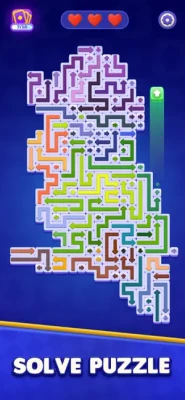
With hundreds of handcrafted levels that progress from easy to expert, Snake Tile combines path planning, spatial reasoning, sequence puzzles, and strategic thinking in a clean and easy-to-understand format.
What Is Snake Tile?
Snake Tile is a logic and tile-moving puzzle game from Tripledot Studios.
The objective is straightforward: clear every tile from the board.
The challenge comes from figuring out which tile should move first.
Every board contains tiles with arrow paths that indicate their possible direction of movement. Moving one tile can open a new route for another tile—or accidentally trap it.
This creates a puzzle where every move matters.
The game takes only a few seconds to understand, but finding the perfect solution can require considerably more thought.
How to Play Snake Tile
The basic gameplay is easy to learn.
You are presented with a board containing multiple tiles. Each tile has an arrow indicating its movement path.
Your goal is to:
- Examine the entire board.
- Identify which tiles can move safely.
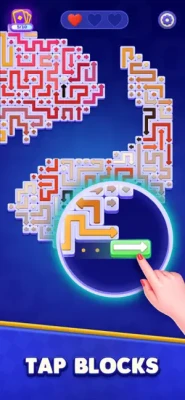
- Tap a tile to move it along its indicated path.
- Use the newly opened space to free another tile.
- Continue planning the sequence.
- Clear every tile without creating an unavoidable blockage.
The key is not simply finding a tile that can move.
You need to determine which tile should move first.
The Importance of Move Order
Move order is the heart of Snake Tile.
A tile may appear ready to move, but removing it too early can prevent another tile from reaching its destination.
For example, moving one tile could:
- Open a useful space.
- Reveal a route for another tile.
- Remove an obstacle.
- Trap another tile.
- Create a chain reaction.
- Make the remaining board easier—or impossible.
This makes Snake Tile a sequence puzzle as much as a tile puzzle.
The best solution is often the one that creates the most useful space for your next move.
Arrow Path Mechanics
The directional arrows are the most important visual clue on the board.
Before tapping, look at the direction of each tile and examine the space around its path.
Ask yourself:
Where will this tile go?
What will it pass through?
Which tile is currently blocking it?
What happens after it leaves?
Understanding these relationships allows you to solve increasingly complicated boards without relying on random moves.
Don't Get Blocked
Snake Tile's central danger is getting stuck.
A wrong move can leave another tile without a usable route. Once the board becomes blocked, you may have to reconsider the sequence and approach the puzzle from an earlier point.
This creates a satisfying risk-and-reward system.
Moving a tile may look like progress, but progress is only useful if it helps you solve the remaining board.
Snake Tile Puzzle Strategy Guide
1. Study the Board Before Tapping
Don't immediately start moving tiles.
Take a few seconds to examine the entire board. Look for tiles with clear paths and identify which pieces appear to be dependent on others.
A little planning at the beginning can prevent several mistakes.
2. Find the Most Obvious First Move
Some tiles have a completely open path.
These are often useful starting points because removing them can create additional space.
However, don't assume every easy move is automatically the correct move.
3. Look for Dependencies
One tile may be preventing another tile from moving.
Try to identify these relationships before making your move.
If Tile A blocks Tile B, moving A may be necessary before B can escape.
4. Think Two or Three Moves Ahead
The strongest Snake Tile players don't only ask, "Can I move this?"
They ask:
"What will this move allow me to do next?"
Planning a short sequence can make difficult levels much easier.
5. Watch for Dead Ends
A move that clears one tile can sometimes make the remaining board more difficult.
Before committing, check whether the move will leave another tile surrounded or blocked.
6. Prioritize Space
Open space is extremely valuable.
When choosing between two possible moves, consider which one gives you more room to work with afterward.
7. Don't Rush
Snake Tile is a logic game rather than a reaction test.
There is usually more value in studying the board carefully than tapping quickly.
Why Snake Tile Becomes More Difficult
The early levels introduce the core mechanic without overwhelming the player.
As you progress, boards become:
- Longer
- Tighter
- More layered
- More interconnected
- More dependent on exact move sequences
The result is a gradual increase in difficulty rather than a sudden jump.
A level that looks almost identical to an earlier puzzle can become much harder simply because one additional tile changes the required sequence.
Hundreds of Handcrafted Levels
Snake Tile features hundreds of handcrafted levels, ranging from easy puzzles to expert-level challenges.
This gives the game a substantial progression system for players who enjoy solving puzzles one board at a time.
The increasing complexity also means that learning the basic mechanic is only the beginning.
As the boards become more crowded and layered, understanding the relationships between tiles becomes increasingly important.
Clean Visual Design
Snake Tile uses a clean visual presentation designed to keep attention on the puzzle itself.
The directional arrows provide immediate information about how the tiles are intended to move, while the uncluttered boards make it easier to concentrate on possible sequences.
This is particularly helpful for a logic puzzle because unnecessary visual elements could make it harder to identify the important relationships between tiles.
Quick Sessions or Longer Puzzle Marathons
Snake Tile works well for different playing styles.
You can solve a few levels during a short break or continue through a longer puzzle session when you want a more substantial mental challenge.
The straightforward controls make it easy to start playing immediately, while the progressively harder boards provide enough depth to keep experienced puzzle players interested.
Main Features
- Hundreds of handcrafted puzzle levels
- Easy-to-expert difficulty progression
- Directional arrow tiles
- Sequence-based puzzle solving
- Path planning
- Spatial reasoning challenges
- Increasingly tight boards
- Layered puzzle layouts
- Clean visuals
- Smooth controls
- Short-session gameplay
- Longer puzzle sessions
- Simple rules with increasingly complex solutions
These features are based on the current App Store description, which specifically highlights hundreds of handcrafted levels, arrow paths, progressively longer and tighter boards, clean visuals, and smooth controls.
What Makes Snake Tile Different?
Snake Tile takes a familiar tile puzzle concept and makes the order of movement the main challenge.
Instead of simply matching colors or arranging objects, you need to understand how one move affects everything around it.
That makes each level feel like a small logic problem.
The satisfaction comes from discovering the sequence that makes the entire board fall into place.
Is Snake Tile Difficult?
Snake Tile is easy to learn but increasingly difficult to solve.
The basic controls can be understood almost immediately. The challenge comes from later boards where several tiles depend on one another.
Beginners can learn the mechanics through the early stages, while experienced puzzle players can work toward the more demanding expert-level challenges.
Is Snake Tile a Brain Game?
Yes. The game heavily relies on logical thinking, spatial awareness, planning, and understanding sequences.
Rather than testing reaction speed, Snake Tile asks you to examine a board and determine the most effective order of actions.
It can therefore appeal to players who enjoy brain teasers, logic puzzles, strategy puzzles, tile games, and spatial reasoning challenges.
Best Tips for Hard Snake Tile Levels
When a level starts becoming difficult, don't simply try random moves.
Instead:
Step 1: Find all tiles with immediately available paths.
Step 2: Identify which tiles are blocking others.
Step 3: Look for a tile whose removal creates the most space.
Step 4: Predict what the board will look like after that move.
Step 5: Work backward from tiles that appear difficult to free.
Step 6: Avoid making a move simply because it is available.
Step 7: If your sequence creates a blockage, reconsider the move that caused the problem rather than continuing blindly.
This approach turns Snake Tile from a trial-and-error game into a more deliberate logic challenge.
Pros and Cons
Pros
- Very easy to understand
- Strong emphasis on logical thinking
- Hundreds of levels
- Gradual difficulty progression
- Clean and focused presentation
- Short or extended play sessions
- Simple controls
- Increasingly challenging board layouts
Cons
- Players looking for action may find the gameplay too slow
- Some later puzzles require significant concentration
- The concept is simple, so the appeal depends heavily on enjoying logic puzzles
- Advertising is listed on the App Store
The App Store currently lists Snake Tile as free and indicates that it contains advertising.
Snake Tile Game Information
| Information | Details |
|---|---|
| Game Title | Snake Tile |
| Developer | Tripledot Studios Limited |
| Genre | Puzzle |
| Game Type | Logic / Tile Puzzle |
| Core Mechanic | Move tiles in the correct sequence |
| Main Challenge | Clear the board without getting blocked |
| Levels | Hundreds of handcrafted levels |
| Difficulty | Easy to Expert |
| Platforms | iPhone, iPad |
| Age Rating | 13+ |
| Languages | English plus 9 more |
| App Size | About 565 MB |
| Business Model | Free with advertising |
The current U.S. App Store listing gives the size as approximately 565.1 MB and requires iOS 15.0 or later for iPhone and iPad. It also lists Mac compatibility for Apple Silicon Macs running macOS 12 or later and visionOS compatibility.
Platforms and Compatibility
Snake Tile is available for iPhone and iPad.
The current App Store listing requires:
- iOS 15.0 or later on iPhone
- iPadOS 15.0 or later on iPad
- macOS 12.0 or later on Apple Silicon Macs
- visionOS 1.0 or later on Apple Vision
The listing also supports English, French, German, Japanese, Korean, Portuguese, Russian, Simplified Chinese, Spanish, and Traditional Chinese.
Latest Update
The current App Store version is 1.0.1. The version history notes that the developers polished the game and fixed bugs. The original version 1.0 was released on April 24, 2026, followed by version 1.0.1 on May 14.
Ratings
The U.S. App Store currently shows a 4.6 out of 5 rating from 5 ratings. Because the number of ratings is still small, this score may change significantly as more players review the game.
Who Should Play Snake Tile?
Snake Tile is a strong choice for players who enjoy:
- Logic puzzle games
- Tile puzzles
- Brain games
- Spatial reasoning games
- Sequence puzzles
- Strategy puzzles
- Casual puzzle games
- Challenging mobile puzzles
- Short puzzle sessions
- Games that gradually increase in difficulty
If you enjoy puzzles where one wrong move can change the entire board, Snake Tile is particularly well suited to you.
Final Verdict
Snake Tile succeeds by keeping its rules simple while making the solutions increasingly difficult.
The concept can be understood almost immediately: move tiles along their arrow paths and clear the board.
But once the levels become tighter and more interconnected, the game demands careful planning. The challenge is not moving a tile; it is discovering the correct order in which every tile needs to move.
That makes Snake Tile a good option for anyone looking for a clean, focused logic puzzle game with hundreds of progressively challenging levels.
If you enjoy brain teasers, tile puzzles, spatial reasoning, and games that reward careful planning rather than fast reactions, Snake Tile is worth checking out.
Frequently Asked Questions
What is Snake Tile?
Snake Tile is a logic puzzle game where players move directional tiles in the correct order to clear an entire board without becoming blocked.
How do you play Snake Tile?
Study the arrows on each tile, determine the safest sequence, and move the tiles one at a time. The objective is to clear the entire board.
What happens if you move a tile in the wrong order?
A poor move can block another tile or make the remaining puzzle much harder to solve. The game is therefore heavily based on planning the correct sequence.
Does Snake Tile have many levels?
Yes. The game features hundreds of handcrafted levels ranging from easy to expert difficulty.
Is Snake Tile a strategy game?
It is officially categorized as a Puzzle game, but it requires strategic planning because every tile movement can affect the options available afterward.
Is Snake Tile easy to learn?
Yes. The core mechanics are simple and can be understood quickly. The difficulty comes from finding the correct solution on increasingly complicated boards.
Is Snake Tile good for brain training?
Snake Tile can provide useful mental challenges involving spatial reasoning, sequencing, planning, and problem solving. It is best described as a logic puzzle rather than a formal cognitive-training program.
Can I play Snake Tile on iPhone?
Yes. Snake Tile is available for iPhone and requires iOS 15.0 or later according to the current App Store listing.
Can I play Snake Tile on iPad?
Yes. The game supports iPad and requires iPadOS 15.0 or later.
Who developed Snake Tile?
Snake Tile was developed by Tripledot Studios Limited.
Is Snake Tile free?
The App Store lists Snake Tile as free and indicates that the game contains advertising.
Rate the Game
User Reviews














Popular Games




















 Android
 iOS
iOS Windows
 Xbox
Xbox