


Latest Version
September 07, 2026
Easybrain Ltd
Puzzle
iOS
0
Report a Problem
More About :game
Nonogram.com Color: Logic Game is a multicolor take on the classic nonogram, also known as a picture-cross or Japanese crossword puzzle.
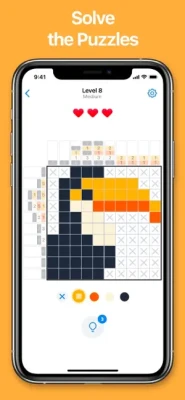
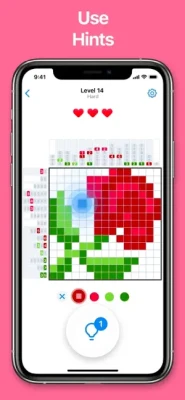
Instead of guessing what the finished picture should look like, you use the numerical clues surrounding the grid to determine which squares must be colored and which should remain empty. As the puzzle develops, the individual colored groups combine to reveal a hidden image.
The color system adds another layer of deduction compared with traditional black-and-white nonograms. Players need to consider both the size and order of colored groups while deciding where each group can fit.
Game Theme and Atmosphere
Nonogram.com Color does not rely on a traditional story or adventure setting. Its appeal comes from the satisfying process of solving a puzzle and watching a hidden picture gradually appear.
The colorful presentation gives the classic paper-and-pencil format a more modern mobile-game feel. The result is particularly suitable for short relaxing sessions, although harder puzzles can require considerably more concentration.
How the Nonogram Puzzle Works
Each puzzle consists of a grid surrounded by numerical clues.
- Numbers above a column are read from top to bottom.
- Numbers beside a row are read from left to right.
- The numbers indicate the groups of squares that need to be colored.
- Color groups must be placed in their correct order.
- Different-colored groups can be positioned directly next to each other.
- Two groups of the same color must have at least one empty square between them.
- Squares that cannot contain a colored tile can be marked with an X.
- Correctly solving the grid gradually reveals the hidden picture.
The important thing is that you are not simply coloring randomly. Every move should be supported by the clues and the logical relationships between rows and columns.
Gameplay Overview
A typical puzzle begins with a relatively simple grid. You examine the clues, identify groups that have limited possible positions, and start filling in the squares that can be proven correct.
Every new colored square can provide additional information for another row or column. This creates a chain reaction: solving one part of the puzzle makes another part easier to understand.
The multicolor format makes the process more interesting because you must track both the numerical size and the color sequence of each group.
Main Features
Colorful Nonogram Puzzles
The defining feature is the use of multiple colors instead of a single black-and-white grid. This creates more visual variety and introduces additional logical possibilities.
Hidden Pixel-Art Pictures
Completing a puzzle reveals a hidden image. The gradual transformation from an empty grid into recognizable pixel art gives each solved puzzle a satisfying finish.
Logic-Based Gameplay
The puzzles are based on deduction rather than reflexes. You need to interpret numerical clues, eliminate impossible positions, and use information from intersecting rows and columns.
Helpful Hints
If you become stuck, the game provides hints to help you continue solving the current puzzle.
Extra Lives
Mistakes do not necessarily mean the immediate end of a puzzle. The game provides extra lives as part of its mistake-management system.
X Marking
When you know that a particular square should remain empty, you can mark it with an X. This helps keep the board organized and prevents unnecessary guesses.
How to Play Nonogram.com Color
Step 1: Read the clues
Start by examining the numbers around the grid. Look for large groups or sequences that have only a few possible positions.
Step 2: Find guaranteed squares
If a group can only fit in one location, fill the corresponding squares first.
Step 3: Mark impossible spaces
Use X marks to indicate squares that cannot belong to a particular group.
Step 4: Check the colors
In multicolor puzzles, pay close attention to the order of different-colored groups. A red group followed by a blue group must respect that sequence.
Step 5: Separate identical colors
Remember that two groups of the same color need at least one empty square between them. Different colors, however, can be adjacent.
Step 6: Cross-check rows and columns
Never solve a row in isolation. Every decision affects the corresponding column, so use both directions to confirm your deductions.
Step 7: Reveal the picture
Continue filling the grid until the complete hidden image becomes visible.
Beginner's Guide
If you are new to nonograms, avoid trying to solve the entire picture at once.
Instead, concentrate on the clues that provide the most information. Large numerical groups are often easier to reason about because they have fewer possible placements.
For example, if a row has a large group that nearly fills the available space, there may be only a small number of positions where it can fit. Work from those certain squares rather than making speculative guesses.
Also remember that an X is just as valuable as a colored square. Marking an impossible position reduces the number of possibilities and can make the next deduction much easier.
Advanced Strategy Tips
Look for overlapping placements
When a group can occupy several possible positions, compare those positions. Any square shared by every valid placement must be part of the solution.
Use both dimensions
A difficult row can often be solved indirectly through its columns. If a column confirms that a particular square cannot be used, that information can completely change the possibilities in its row.
Track color order carefully
Multicolor nonograms require more than counting squares. Keep the order of the color groups in mind when deciding where they can begin and end.
Avoid unnecessary guessing
Guessing can create a chain of incorrect moves. Whenever possible, use the clues to prove a square rather than relying on visual intuition.
Recheck difficult sections
When a puzzle appears stuck, go back through completed rows and columns. A previously overlooked X or color relationship can unlock several new deductions.
Game Progression
The game is built around a continuing collection of nonogram puzzles rather than a conventional character-level progression system.
As players solve puzzles, the challenge comes from interpreting increasingly complicated combinations of numbers, colors, and grid relationships. Player reviews also show that some users have progressed through hundreds or even thousands of puzzles, illustrating the game's long-term appeal for dedicated puzzle fans.
Difficulty
Beginner: Easy to understand and suitable for learning the basic rules.
Intermediate: Requires more careful use of row and column deductions.
Advanced: Multicolor relationships and tightly constrained placements demand more attention and logical planning.
The game is particularly well suited to players who enjoy gradually increasing mental challenges rather than fast-paced action.
Controls and Interface
The controls are designed around selecting squares, choosing the appropriate color or marking option, and identifying cells that should remain empty.
The color-based interface makes it easier to distinguish the selected puzzle elements, which can be especially useful when working through more complicated multicolor grids.
Tips for Solving Puzzles Faster
- Start with the largest and most restrictive clues.
- Mark empty spaces instead of leaving them undecided.
- Look for overlapping placements.
- Check every deduction against the corresponding column.
- Keep the order of colors in mind.
- Separate identical color groups correctly.
- Avoid guessing unless you have exhausted logical deductions.
- Use hints when you genuinely cannot find the next guaranteed move.
- Revisit earlier rows after solving a difficult column.
- Keep the grid organized to avoid accidental mistakes.
Is Nonogram.com Color Relaxing?
For many players, the combination of slow-paced puzzle solving and gradual picture revelation makes Nonogram.com Color a relaxing alternative to action-oriented mobile games.
One App Store reviewer described using the game as a way to unwind after a stressful day, while also mentioning frustration with advertisements and occasional lag. This is an individual player experience rather than a universal assessment, but it illustrates why the game can appeal to people looking for a calm logic puzzle.
Ads and In-App Purchases
The game is free to download and contains in-app purchases. The current U.S. App Store listing also identifies advertising and offers a Remove Ads purchase for $14.99.
Advertising is one of the recurring criticisms visible in player reviews, particularly when players restart puzzles or run out of lives.
Player Experience
The strongest appeal is the combination of:
- Simple rules
- Colorful visual puzzles
- Logical deduction
- Hidden picture discovery
- Short play sessions
- A large amount of replayable puzzle content
However, player feedback has also raised concerns about advertising, performance on some devices, and interface decisions. These comments come from individual reviews and should be considered alongside the game's overall 4.7/5 rating from about 25,000 U.S. App Store ratings.
Pros and Cons
Pros
- Easy-to-understand nonogram rules
- Colorful multicolor puzzle format
- Hidden pictures provide a satisfying goal
- Strong emphasis on logic rather than reflexes
- Hints available when you are stuck
- X marking helps with deduction
- Suitable for short or extended puzzle sessions
- High App Store rating
Cons
- Advertising can interrupt the experience
- Mistakes can consume lives
- Some players have reported performance or lag issues
- The interface may not satisfy players looking for highly advanced nonogram tools
- Players seeking extremely large custom grids may find the standard experience limiting
Technical Details
| Detail | Information |
|---|---|
| Game | Nonogram.com Color: Logic Game |
| Developer | Easybrain Ltd |
| Category | Board |
| Price | Free with in-app purchases |
| Age Rating | 13+ |
| Rating | 4.7/5 |
| Ratings | Approximately 25K |
| Size | 217.1 MB |
| Platforms | iPhone, iPad |
| Minimum OS | iOS 15.0 / iPadOS 15.0 or later |
| Languages | English plus 16 additional languages |
| Advertising | Yes |
| Remove Ads | $14.99 |
These details reflect the current U.S. App Store listing.
Latest Updates
The current App Store version history lists version 3.22.0, released approximately six days before the current listing was crawled. The update notes focus on performance and stability improvements. Previous versions have followed the same general pattern of performance and stability updates.
Nonogram.com Color vs Traditional Nonograms
Traditional nonograms are often presented as monochrome paper puzzles. Nonogram.com Color adds a more visually expressive approach by introducing multiple colors and allowing different-colored groups to touch.
That changes the solving process. You still rely on numerical clues, but color order becomes an additional source of information.
This makes the game a good choice for players who already understand basic nonograms and want a more colorful mobile interpretation of the format.
Who Should Play Nonogram.com Color?
Nonogram.com Color is a strong choice for:
- Nonogram and Picross fans
- Japanese crossword puzzle enthusiasts
- Players who enjoy logic games
- People looking for relaxing brain teasers
- Fans of pixel-art puzzles
- Casual mobile gamers
- Players who prefer thoughtful gameplay over fast reactions
- Anyone who enjoys revealing hidden pictures through deduction
It may be less suitable for players who want real-time multiplayer, action gameplay, or highly customizable giant puzzle grids.
Expert Rating
Gameplay: 8.5/10
Puzzle Design: 8.5/10
Visual Presentation: 8/10
Accessibility: 8/10
Replay Value: 8.5/10
Overall: 8.4/10
Final Verdict
Nonogram.com Color: Logic Game gives the classic picture-cross puzzle a colorful mobile makeover without losing the logical foundation that makes nonograms so satisfying.
Its biggest strength is the way each puzzle combines numbers, colors, deduction, and visual discovery. A seemingly empty grid gradually becomes a recognizable image, giving every successful solve a clear sense of progress.
The presence of hints and extra lives makes the game approachable for newcomers, while the multicolor rules provide enough additional complexity to keep experienced puzzle players engaged.
The main drawbacks are the advertising experience and some player-reported performance or interface frustrations. Even so, its strong App Store rating and substantial collection of puzzle content make it a worthwhile choice for fans of nonogram, Picross, and logic-based mobile games.
Frequently Asked Questions
Is Nonogram.com Color free?
Yes. The game is free to download, with advertising and optional in-app purchases.
What is a nonogram puzzle?
A nonogram is a logic puzzle where numerical clues indicate groups of filled squares in rows and columns. Solving the clues reveals a hidden picture.
What makes Nonogram.com Color different?
It uses multiple colors instead of relying only on black-and-white cells. Different colors can touch, while groups of the same color must be separated by at least one empty square.
Can beginners play Nonogram.com Color?
Yes. The core rules are straightforward, and the game provides hints when players become stuck.
Does the game have hints?
Yes. Hints are available to help players progress when they cannot determine the next logical move.
Can mistakes be made?
Yes. The game provides extra lives that can help players recover after mistakes.
Is Nonogram.com Color available on iPhone and iPad?
Yes. The current U.S. App Store listing supports iPhone and iPad devices running iOS/iPadOS 15 or later.
Does Nonogram.com Color contain ads?
Yes. The App Store identifies the game as containing advertising, and an optional Remove Ads purchase is available.
What is the best strategy for solving a nonogram?
Begin with the most restrictive clues, mark confirmed empty cells, compare possible placements, and continuously cross-check your deductions between rows and columns.
Game Summary
Nonogram.com Color: Logic Game is a colorful logic puzzle experience built around numerical clues, color sequences, and hidden pixel-art pictures. With straightforward rules, helpful hints, extra lives, and a large collection of puzzles, it offers a relaxing but mentally engaging experience for fans of nonograms and picture-cross games.
Rate the Game
User Reviews






Popular Games



















 Android
 iOS
iOS Windows
 Xbox
Xbox