


Latest Version
January 23, 2026
Tripledot Studios Limited
Puzzle
0
com.tripledot.colorjamgame
Report a Problem
More About :game
The game features thousands of progressively challenging sorting puzzles, smooth animations, no countdown timer, helpful tools, and offline play.
What Is Marble Match - Sort Puzzle?
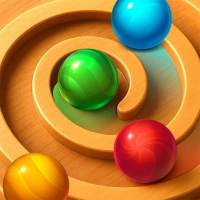
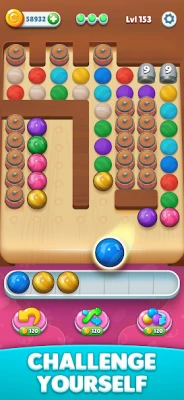
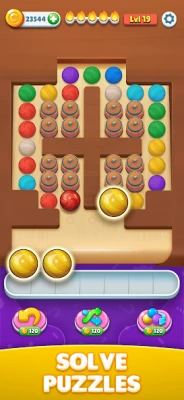
Marble Match turns the familiar color-sorting puzzle concept into a marble-themed brain game. Each level presents a collection of mixed-colored marbles that need to be separated and placed into their correct tubes.
The main challenge is not simply identifying matching colors. You must decide which marble to move first, where to temporarily place another color, and how to preserve enough space for the moves that come later.
As the puzzles become more complicated, a careless move can block the color you actually need. That makes planning more important than simply moving marbles as quickly as possible.
The current Google Play listing describes the game as containing thousands of levels with increasing difficulty and emphasizes relaxing, pressure-free gameplay.
Marble Match Gameplay
The basic objective is straightforward:
- Examine all of the tubes before making a move.
- Identify marbles that can immediately be grouped together.
- Move marbles between available spaces.
- Keep temporary spaces open for colors that are currently blocking other pieces.
- Continue grouping matching colors until every tube is correctly sorted.
The difficulty comes from limited space. A move that looks useful in the short term can create a problem several moves later.
That is why Marble Match rewards players who pause and analyze the entire board instead of immediately moving the first available marble.
Main Features
Thousands of Sorting Puzzles
Marble Match offers a large collection of color-sorting levels that gradually become more challenging.
Relaxed Gameplay
There is no countdown timer forcing you to rush. You can take time to study a board before committing to a move.
Color-Based Logic
The central challenge revolves around recognizing colors, organizing groups, and managing limited space.
Helpful Tools
The game provides tools such as undo and hints to help when a puzzle becomes difficult.
Offline Support
Marble Match can be played offline, making it convenient for short sessions while traveling or when you do not have an internet connection.
Progressive Difficulty
Early puzzles introduce the mechanics gradually, while later boards require considerably more planning.
How to Play Marble Match
Before touching anything, look across the entire board.
Find:
- Colors that are already close to being completed
- Marbles blocking another color
- Empty or partially empty tubes
- Groups that can be combined safely
- Marbles that have to be moved temporarily
- Colors that will become accessible after one or two moves
A good opening move is not necessarily the move that completes the largest group.
Sometimes the best move is the one that creates space.
The Best Marble Match Strategy
1. Study the Entire Board First
Do not start moving immediately.
Spend a few seconds identifying the major problem areas. Look for colors buried underneath other marbles and determine which pieces must be moved to expose them.
This simple habit prevents many unnecessary mistakes.
2. Protect Your Empty Space
Empty tubes are extremely valuable.
Think of an empty tube as a parking space that gives you flexibility. If you fill every available space too quickly, you can leave yourself with no room to perform the moves needed to finish the puzzle.
Rule: Never waste an empty space without knowing what you gain from using it.
3. Complete Safe Color Groups
When several marbles of the same color can be combined without damaging your future options, completing that group is usually a strong move.
A completed tube removes clutter from the board and gives you more room to work.
However, do not automatically complete a color if doing so consumes a space that you urgently need for another color.
4. Think Two or Three Moves Ahead
The biggest difference between a beginner and an experienced player is planning.
Before moving a marble, ask:
“What will this move allow me to do next?”
Then ask:
“Where will the marble underneath it go?”
And finally:
“Will I still have enough space after that?”
This turns Marble Match from trial-and-error into a logical puzzle.
5. Expose Buried Colors Carefully
Sometimes the color you need is hidden beneath several other marbles.
You may need to move the upper marbles temporarily before reaching it.
Do not move them randomly.
Try to place temporary marbles where they can eventually be combined with their own colors. A temporary move should ideally solve two problems rather than create another one.
6. Use Empty Tubes as Temporary Storage
An empty tube can be used to temporarily separate colors.
For example, if a red marble is blocking a blue marble you need, moving the red marble into an empty space can expose the blue one.
But always consider what happens afterward.
Temporary storage becomes dangerous when the tube gets filled with unrelated colors.
7. Avoid Creating Mixed Dead Ends
One of the easiest ways to make a level harder is to place unrelated colors together without a clear plan.
Before making a move, check whether the destination tube will remain useful.
A good move should improve your position, not simply relocate the problem.
Advanced Marble Match Tips
Look for Forced Moves
Some boards contain positions where only one practical move makes sense.
Instead of trying every possible combination, identify the marble that is preventing progress.
If one color is completely trapped, determine what has to move before it can become accessible.
Work From the Most Restricted Area
Not every color has the same number of options.
A marble with only one possible destination is more important than a marble that can move into several locations.
Deal with restricted pieces first whenever possible.
Keep Flexible Colors Flexible
If a color can currently move into several tubes, you may want to leave it alone.
Flexible pieces give you options later.
Instead, concentrate on colors with fewer available destinations.
Do Not Chase Immediate Matches
Completing a color feels satisfying, but the best move is not always the most obvious match.
Sometimes leaving two matching marbles separated is strategically better because they are occupying useful positions.
The goal is not to make the prettiest move.
The goal is to solve the entire board.
Use Undo as a Learning Tool
The undo function is particularly useful when testing an uncertain move.
Instead of repeatedly restarting a puzzle, try a move and observe how it changes the board.
If it creates a dead end, undo it and try another route.
The Google Play listing specifically mentions undo and hints as tools for getting unstuck.
How to Solve Difficult Marble Match Levels
When a level seems impossible, stop making random moves.
Use this process:
Step 1: Count the colors.
Identify how many different marble colors are present.
Step 2: Find completed or nearly completed groups.
These are your easiest opportunities.
Step 3: Identify blocked colors.
Look for marbles buried underneath other colors.
Step 4: Locate your safest temporary space.
Choose an empty tube or the least restrictive destination.
Step 5: Free the blocked color.
Move only the pieces necessary to expose it.
Step 6: Consolidate matching colors.
Once a color becomes accessible, bring its matching marbles together.
Step 7: Reassess the board.
Do not blindly follow the original plan. Every successful move changes the available options.
Step 8: Finish the most constrained groups first.
This method is much more reliable than simply matching whatever color is currently visible.
Common Mistakes to Avoid
Filling Every Empty Tube
Empty space is a resource. Filling it without a plan can make a solvable puzzle extremely difficult.
Moving Without Looking Ahead
A move can look correct while creating a problem three moves later.
Splitting Useful Groups
If two or more matching marbles are already positioned well, avoid separating them unless doing so creates a clear advantage.
Blocking Your Only Route
Always check whether a move prevents access to another color.
Using Hints Too Early
Try to understand the board first. Hints are more valuable when you have genuinely reached a difficult position.
Restarting Too Quickly
Sometimes a puzzle only looks broken because you need to reconsider the move order.
Before restarting, use undo and examine the previous few moves.
Marble Match Strategy for Beginners
If you are new to sorting puzzle games, use this simple approach:
First: Match obvious colors.
Second: Keep at least one flexible space available.
Third: Move blocking marbles only when necessary.
Fourth: Avoid mixing several unrelated colors in the same temporary space.
Fifth: Before every important move, think about the next two moves.
After a few levels, you will start recognizing common board patterns and solving them much faster.
Marble Match Strategy for Advanced Players
Experienced players should focus less on individual matches and more on board structure.
Ask yourself:
- Which color is the hardest to access?
- Which tube is most useful as temporary storage?
- Which move increases my future options?
- Which color should be completed first?
- Which move could create a deadlock?
- Can I expose a buried marble without sacrificing valuable space?
The strongest strategy is usually the one that keeps the largest number of future moves available.
What to Do When You Get Stuck
If a level stops making sense, do not immediately assume that you need a power-up.
Try this sequence:
- Undo your most recent move.
- Look for another temporary destination.
- Identify the most restricted color.
- Work backward from the desired completed tube.
- Try to free one blocking marble at a time.
- Preserve empty space whenever possible.
- Use a hint if you have exhausted your logical options.
The game includes hints and undo functionality specifically to help players recover from difficult situations.
Are There Timers in Marble Match?
The current Google Play description says Marble Match has no timers or pressure, allowing players to work through puzzles at their own pace.
That changes the ideal strategy considerably.
You do not need to prioritize speed. Instead, prioritize accuracy and planning.
Is Marble Match Difficult?
The early levels are designed to be accessible, but the difficulty increases as the game progresses.
Player feedback is mixed on the later stages. Some players praise the relaxing format and lack of timers, while some recent reviews report frustration with particular later levels and reliance on power-ups or ads.
For that reason, the best approach is to treat each difficult level as a planning puzzle rather than trying to solve it through repeated fast moves.
Is Marble Match Good for Casual Players?
Yes. The straightforward controls make it easy to start, while the progressively more complicated sorting boards provide a deeper challenge for players who enjoy logic puzzles.
It also works well for short sessions because there is no countdown forcing you to finish quickly. The game supports offline play as well.
Marble Match Tips for Faster Progress
- Plan before moving.
- Keep an empty tube available whenever possible.
- Prioritize blocked colors.
- Build complete groups when it is safe.
- Avoid unnecessary color mixing.
- Think several moves ahead.
- Use undo instead of immediately restarting.
- Save hints for genuinely difficult positions.
- Do not sacrifice useful space just to make a quick match.
- When a level looks impossible, work backward from the desired final arrangement.
Pros and Cons
Pros
- Easy-to-understand sorting gameplay
- Thousands of puzzle levels
- Increasing challenge
- No countdown timer
- Relaxing presentation
- Smooth marble-based gameplay
- Helpful hints and undo tools
- Offline support
- Suitable for casual puzzle sessions
Cons
- Later puzzles can become considerably more demanding
- Some players report difficulty spikes
- Some players have raised concerns about needing assistance on certain later levels
- Repeated sorting mechanics may feel familiar to players who frequently play color-sort games
The Google Play listing currently shows a 4.8-star rating from roughly 2,000 reviews, while recent reviews also show that opinions about later-level difficulty can vary.
Marble Match Frequently Asked Questions
What is Marble Match - Sort Puzzle?
Marble Match - Sort Puzzle is a color-sorting puzzle game by Tripledot Studios. Players organize mixed-colored marbles into matching tubes across progressively more difficult levels.
How do you win in Marble Match?
You win by correctly sorting the marbles so that the colors are organized into their appropriate tubes. Careful move order and space management are the keys to solving difficult boards.
Does Marble Match have a timer?
The current Google Play description says the game has no timers, allowing players to solve puzzles at their own pace.
Can Marble Match be played offline?
Yes. The Google Play listing states that Marble Match supports offline play.
Does Marble Match have hints?
Yes. The game provides helpful tools including hints and undo functionality for difficult puzzles.
How can I get better at Marble Match?
The most important skill is planning ahead. Keep temporary space available, identify blocked colors, avoid creating mixed dead ends, and consider several moves before committing to an important move.
What is the best strategy for hard Marble Match levels?
Start by identifying the most restricted color and the pieces blocking it. Preserve empty space, move blocking marbles strategically, and complete groups only when doing so does not remove an important future option.
Is Marble Match suitable for beginners?
Yes. Its basic sorting concept is easy to understand, while later levels provide additional depth for players who enjoy logic and brain-training puzzles.
Final Verdict
Marble Match - Sort Puzzle is a relaxing color-sorting game that becomes much more strategic as the boards grow complicated. Its biggest strength is the simple idea: organize colorful marbles into matching groups. The challenge comes from deciding when and where to move each marble.
The best players do not simply look for the next matching color. They manage space, identify blocked pieces, preserve future options, and plan several moves ahead.
If you enjoy marble sorting games, color puzzles, logic games, brain teasers, and relaxing casual games, Marble Match is worth trying. The combination of simple controls, thousands of puzzles, no countdown pressure, hints, undo tools, and offline support gives it plenty of room for both casual and more thoughtful play.
Rate the Game
User Reviews








Popular Games



















 Android
 iOS
 Windows
 Xbox