


Latest Version
September 15, 2026
Etermax
Puzzle
iOS
0
Report a Problem
More About :game
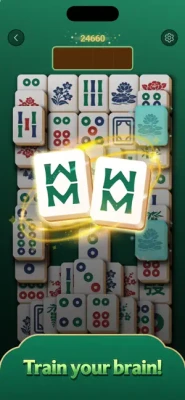
Developed by Etermax, Mahjong Ming is designed for both experienced Mahjong players and beginners. Its extra-large, high-contrast tiles make symbols easier to recognize, while the clean interface keeps the focus on the puzzle rather than complicated menus or controls.
The game also adds modern features to the traditional Shanghai solitaire formula, including daily challenges, competitive leagues, legendary tiles, helpful tools, offline gameplay, and a relaxing Garden of Wisdom setting.
What Is Mahjong Ming?
Mahjong Ming is a single-player Mahjong solitaire puzzle game based on the classic Shanghai style of tile matching.
The basic objective is simple: find two matching tiles that are currently available, remove them from the board, and continue opening the layout until all tiles have been cleared.
The challenge comes from choosing the right order.
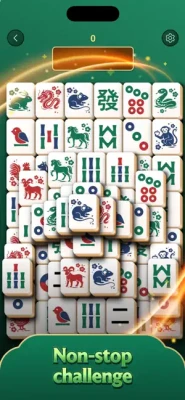
A pair that looks useful at first may not be the best move if removing it prevents access to another important tile. Successful players therefore need to think ahead, recognize patterns, and keep as many options available as possible.
Mahjong Ming combines this traditional puzzle structure with a calmer presentation designed around readability and relaxation.
Mahjong Ming Features
Classic Shanghai Tile Solitaire
Mahjong Ming uses familiar Shanghai Mahjong solitaire mechanics. Match identical available tiles and gradually dismantle the board.
The rules are easy enough for beginners to understand within a few minutes, but good board management becomes increasingly important on more challenging layouts.
Extra-Large Mahjong Tiles
One of the defining features of Mahjong Ming is its large tile presentation.
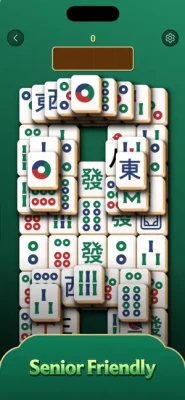
The game emphasizes high-contrast, easy-to-read tiles, making it more comfortable for players who find smaller Mahjong symbols difficult to distinguish.
This design also makes the game particularly appealing to older players and anyone looking for a more accessible Mahjong experience.
Daily Brain Puzzles
Mahjong Ming offers a fresh daily puzzle for players who want a regular Mahjong routine.
Daily challenges add variety to the normal puzzle progression and encourage players to return each day to test their matching and planning skills.
Mahjong Leagues
The game goes beyond traditional solo Mahjong with leagues.
Players can compete within the community, discover legendary tiles, climb rankings, and work toward exclusive rewards. This adds a competitive layer without changing the core tile-matching experience.
Garden of Wisdom
The Garden of Wisdom provides the game's relaxing visual setting.
Soothing backgrounds and calming audio complement the slow-paced puzzle design, creating an atmosphere that feels more like a quiet break than a conventional competitive mobile game.
No Timer Pressure
Mahjong Ming is designed around playing at your own rhythm.
There is no need to rush through a board simply because a countdown is running. You can examine the available tiles, compare possible moves, and make decisions carefully.
Offline Mahjong Gameplay
Mahjong Ming supports offline play, making it useful when traveling, waiting for an appointment, or playing somewhere without Wi-Fi.
Helpful Puzzle Tools
The game provides hints and undo options for difficult situations.
These tools can help beginners learn the game while also giving experienced players a way to recover when a layout becomes complicated.
iPhone and iPad Support
Mahjong Ming is available for iPhone and iPad, with a tablet-optimized presentation designed to take advantage of larger screens. The current App Store listing requires iOS 15.6 or later and iPadOS 15.6 or later.
How to Play Mahjong Ming
The basic Mahjong Ming gameplay loop is straightforward:
- Examine the entire tile layout.
- Find two identical tiles that are available to select.
- Match the pair.
- Remove the matched tiles.
- Look for newly exposed tiles.
- Continue matching pairs.
- Clear the complete board to finish the puzzle.
The important word is available.
Not every identical tile can necessarily be selected at the same time. The position of the tile matters, which is why the order of your moves can determine whether you solve a board successfully.
Full Mahjong Ming Strategy Guide
1. Scan the Board Before Making a Move
Do not immediately tap the first matching pair you notice.
Take a moment to examine the complete layout.
Look for:
- Exposed tiles
- Tiles covering other tiles
- Pairs with limited access
- Large stacks
- Matching tiles near the edges
- Moves that could reveal several new tiles
Your first move can influence many later moves, so a short scan is often worthwhile.
2. Prioritize Moves That Open the Board
The strongest move is not always the easiest pair to spot.
If one matching pair removes tiles that are blocking several others, it may be much more valuable than a pair sitting harmlessly on the outside.
Whenever possible, ask:
"What will this match reveal?"
That question is often more useful than simply asking which pair can be removed immediately.
3. Protect Your Future Options
Try not to create a position where very few matches remain available.
When two moves appear equally useful, consider which one leaves more possibilities for your next turn.
A healthy board gives you choices.
A dangerous board forces you into one narrow sequence.
4. Look for Pairs With Limited Availability
Some matching tiles may be easy to access now but difficult to reach later.
If you notice a pair that could become blocked, consider dealing with it before removing unrelated tiles.
This is particularly important when the board contains multiple layers.
5. Clear Blocking Layers Carefully
Shanghai Mahjong layouts often become easier once the upper or central layers are reduced.
However, avoid automatically removing every top tile you see.
Instead, determine whether removing that tile actually improves access to the rest of the board.
The goal is not simply to remove tiles quickly. The goal is to make the remaining board easier to solve.
6. Think Two or Three Moves Ahead
Experienced Mahjong players do not only consider the current pair.
Before matching two tiles, think:
Move 1: What disappears?
Move 2: What becomes available?
Move 3: What new pair might that create?
You do not need to calculate the entire puzzle. Looking a few moves ahead is often enough to avoid obvious mistakes.
7. Do Not Waste Good Matches
If a matching pair gives you access to an important area of the board, that can be more valuable than a simple pair that changes nothing.
Think of matches as tools for opening the board.
The best match is often the one that creates the most useful next move.
8. Use Hints Wisely
Mahjong Ming provides hints, but you do not have to use them immediately.
Try this sequence:
Scan → Think → Search → Hint
Give yourself a chance to find the solution first.
Hints are particularly useful when you have checked the board carefully and still cannot identify a useful move.
9. Use Undo to Test Decisions
Undo can be more than a recovery button.
If you are unsure between two possible moves, consider trying one and examining the resulting board.
If it produces an unfavorable position, undo the move and try the alternative.
This can help you learn which types of moves create better board states.
10. Slow Down Near the End
The final few pairs can be surprisingly difficult.
When the board is almost empty, do not assume the remaining matches are automatically safe.
Study every remaining tile and consider the order carefully.
One careless match can make the final section harder than necessary.
11. Use a Consistent Visual Scan
Large boards can become confusing if you search randomly.
Develop a simple scanning pattern:
Top → Left → Center → Right → Bottom
After every important move, repeat the scan.
This makes it easier to notice newly exposed tiles and reduces the chance of overlooking a matching pair.
12. Take Advantage of the No-Pressure Design
Mahjong Ming is specifically designed as a relaxing experience rather than a race.
Use that advantage.
There is no reason to make a move just because you have found a legal pair. Spend a few seconds comparing the available options.
Careful decisions are usually more valuable than fast decisions.
13. Practice Pattern Recognition
The more Mahjong solitaire you play, the faster your brain becomes at recognizing tile patterns.
Eventually, you will begin spotting matching symbols without consciously checking every tile.
Daily puzzles are useful for building this recognition because they encourage regular practice.
14. Plan Around Blocked Tiles
If an important tile is buried beneath other tiles, look for the moves that can expose it.
Do not focus exclusively on matching what is already visible.
A good Mahjong player is constantly thinking about what will become visible next.
15. Keep Difficult Pairs in Mind
If you see a tile that currently has only one obvious matching partner, remember where it is.
You may need to preserve access to that tile until its partner becomes playable.
This is especially helpful on complicated layouts with several layers.
Mahjong Ming Daily Challenge Strategy
Daily puzzles are a good opportunity to improve your skills rather than simply chase completion.
Before starting:
- Scan the layout.
- Identify the most restricted tiles.
- Find pairs that open large sections.
- Avoid unnecessary early matches.
- Keep track of difficult symbols.
- Think several moves ahead.
- Use hints only when genuinely necessary.
The daily challenge is also useful for building a consistent Mahjong habit.
How to Improve at Mahjong Ming
Improvement comes mostly from learning to recognize good moves, not from tapping faster.
Focus on three skills:
Board Awareness
Know what is currently available and what is blocked.
Move Planning
Think about what your current match will expose.
Pattern Recognition
Become familiar with the different tile symbols so you can identify pairs quickly.
Together, these skills make difficult boards much easier to read.
Mahjong Ming Leagues Guide
Mahjong Ming adds competitive leagues to the traditional solitaire format.
Players can compete with the wider community, discover legendary tiles, climb rankings, and pursue rewards.
If you want to approach leagues seriously, avoid sacrificing good board decisions simply to play faster.
A better approach is to develop a consistent solving method and reduce unnecessary mistakes.
The game's competitive features were introduced through updates that added leagues, legendary tiles, community competition, rankings, and rewards.
Mahjong Ming for Seniors
Mahjong Ming is particularly well suited to players who want readable tiles and simple controls.
Its extra-large, high-contrast tile design reduces the visual difficulty of identifying symbols, while the lack of timer pressure allows players to solve boards at their own pace.
The game's straightforward interface also makes it approachable for people who have never played Mahjong solitaire before.
Is Mahjong Ming Good for Relaxation?
Yes.
Relaxation is one of the game's central design ideas.
The combination of calm backgrounds, soothing audio, large tiles, offline play, and no timer creates a slower experience than many competitive puzzle games.
The Garden of Wisdom setting reinforces that atmosphere, making Mahjong Ming suitable for a quiet evening, a short break, or a daily puzzle routine.
Is Mahjong Ming Offline?
Yes. The App Store description specifically states that Mahjong Ming works without an internet connection.
This makes it convenient for flights, travel, waiting rooms, or other situations where Wi-Fi is unavailable.
Mahjong Ming Pros and Cons
Pros
- Extra-large Mahjong tiles
- High-contrast visual design
- Classic Shanghai solitaire rules
- Daily puzzles
- Competitive leagues
- Legendary tiles
- Offline gameplay
- Hints and undo
- Relaxing audio and backgrounds
- No timer pressure
- iPhone and iPad support
- Designed with senior-friendly comfort in mind
Cons
- Contains advertising
- Includes optional in-app purchases
- Some players have reported occasional touch-response issues
- Some players dislike the way hints can appear before they have finished searching the board
- Competitive features may not appeal to players who want purely traditional Mahjong solitaire
The current App Store listing confirms advertising and optional purchases, including separate purchases for hints, undo and shuffle.
Player feedback is generally positive, with a current 4.8/5 rating from about 3.2K ratings, although some recent reviews mention touch responsiveness and the presentation of hints.
Mahjong Ming Updates
Mahjong Ming has received frequent updates since its initial release.
Recent updates have focused on smoother performance and bug fixes, while earlier updates introduced major features such as leagues and daily challenges. The version history also records new daily Shanghai layouts, improved tile contrast, smoother animations, and additional board mechanics.
This steady update history suggests that the game is actively being developed rather than left as a static Mahjong app.
Mahjong Ming Gameplay Experience
The overall experience can be summarized in three stages:
Observe: Study the board and identify useful pairs.
Plan: Decide which match will create the strongest next position.
Relax: Clear the board without worrying about a countdown.
That combination gives Mahjong Ming a different personality from fast-paced puzzle games. It is a Mahjong game designed as much around comfort as challenge.
Mahjong Ming vs Traditional Mahjong Solitaire
Traditional Mahjong solitaire focuses primarily on matching tiles and clearing a layout.
Mahjong Ming keeps that foundation but adds modern features such as:
- Daily challenges
- Community leagues
- Rankings
- Legendary tiles
- Large high-contrast tiles
- Offline play
- Relaxing audio
- Garden of Wisdom
- Hints and undo
This makes it suitable for players who want familiar Mahjong mechanics with a more modern mobile presentation.
Who Should Play Mahjong Ming?
Mahjong Ming is a good fit for:
- Mahjong solitaire fans
- Casual puzzle players
- Seniors looking for readable tiles
- Players who enjoy daily brain puzzles
- People who prefer relaxing games
- Offline mobile gamers
- Players who enjoy pattern recognition
- Beginners learning Shanghai Mahjong solitaire
- Experienced players who want daily challenges and leagues
Final Verdict
Mahjong Ming succeeds because it keeps the core Mahjong solitaire experience easy to understand while paying unusual attention to comfort and readability.
The extra-large tiles are particularly useful, while daily puzzles give regular players a reason to return. Leagues add competition for players who want it, but the underlying game remains calm and accessible.
Its offline support and lack of timer pressure make it especially suitable for relaxed sessions.
If you enjoy tile matching, classic Shanghai solitaire, daily brain puzzles, or peaceful puzzle games, Mahjong Ming is worth trying.
Frequently Asked Questions
What is Mahjong Ming?
Mahjong Ming is a Shanghai-style Mahjong solitaire puzzle game focused on tile matching, daily challenges, relaxation, and comfortable gameplay.
Is Mahjong Ming free?
Yes. Mahjong Ming is listed as a free app with optional in-app purchases and advertising.
Can Mahjong Ming be played offline?
Yes. The game is designed to work offline, so players can enjoy Mahjong puzzles without an internet connection.
Does Mahjong Ming have daily challenges?
Yes. Daily challenges provide a fresh Shanghai tile puzzle each day.
Does Mahjong Ming have multiplayer?
The core Mahjong experience is solitaire, but the game includes community leagues where players can compete through rankings and rewards.
Does Mahjong Ming have hints?
Yes. Mahjong Ming provides hints and undo tools to help players deal with difficult layouts.
Is Mahjong Ming good for seniors?
The game is specifically designed with senior-friendly comfort in mind, including extra-large and high-contrast tiles and a simple interface.
Does Mahjong Ming have a timer?
The game's description emphasizes a no-timer, no-pressure approach, allowing players to solve puzzles at their own pace.
Is Mahjong Ming available on iPad?
Yes. Mahjong Ming supports both iPhone and iPad, with the App Store listing describing the game as tablet optimized.
What is the Garden of Wisdom?
Garden of Wisdom is the game's relaxing setting, featuring soothing backgrounds and calming audio designed to complement the Mahjong puzzles.
What are Mahjong Ming leagues?
Leagues are a competitive feature where players can compete with the community, collect legendary tiles, climb rankings, and pursue rewards.
How do you win at Mahjong Ming?
Match available pairs of identical tiles and continue opening the layout until all tiles are removed. Good planning is important because the order of your matches can determine which tiles become accessible.
Mahjong Ming Game Details
Game Name: Mahjong Ming
Subtitle: Relax: Shanghai Tile Solitaire
Developer: Etermax
Genre: Puzzle
Game Type: Mahjong Solitaire / Tile Matching
Style: Shanghai Mahjong
Players: Single-player with competitive league features
Offline: Yes
Daily Challenges: Yes
Leagues: Yes
Hints: Yes
Undo: Yes
Large Tiles: Yes
Platforms: iPhone, iPad
Minimum iOS: iOS 15.6 or later
Minimum iPadOS: iPadOS 15.6 or later
Age Rating: 4+
Languages: English
App Size: About 158 MB on the current US App Store listing
Rating: 4.8/5 from approximately 3.2K ratings
Business Model: Free with advertising and optional in-app purchases
Rate the Game
User Reviews














Popular Games



















 Android
 iOS
iOS Windows
 Xbox
Xbox