




Latest Version
October 25, 2024
Snapbreak
Adventure
0
com.snapbreak.lip
Report a Problem
More About :game
Lost in Play is an adventure game built around exploration, puzzles and childhood imagination.
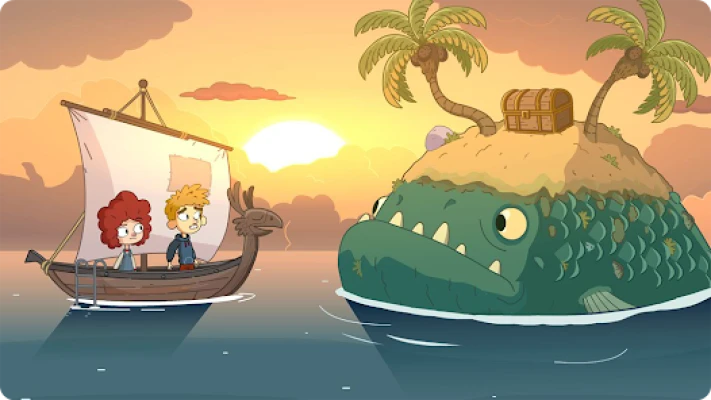
The game follows a brother and sister through a strange world where the boundaries between reality and fantasy begin to disappear. What starts as an ordinary day gradually turns into an extraordinary journey involving goblins, magical creatures, mysterious forests, ancient ruins and bizarre mini-games.
Rather than relying on combat or complicated controls, the game asks you to observe your surroundings, interact with objects and figure out how different elements fit together.
The result is a gentle but surprisingly inventive puzzle adventure.
The Story of Toto and Gal
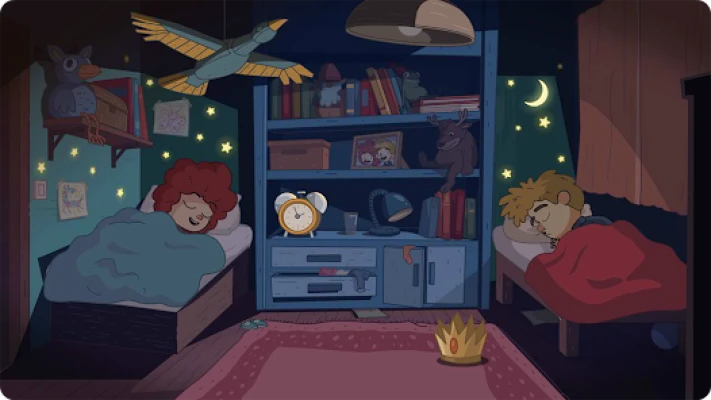
At the heart of Lost in Play are siblings Toto and Gal.
The two children become separated from the familiar world and find themselves traveling through a series of imaginative environments.
Their ultimate goal is simple:
Find a way home.
Getting there, however, is anything but simple.
Along the way, they encounter magical creatures, strange characters and increasingly unusual situations. Their adventure takes them from familiar surroundings into a fantasy world filled with goblins, frogs, giant birds and mysterious creatures.
A Journey Through Childhood Imagination
One of the game's most appealing qualities is the way it captures the logic of childhood imagination.
Ordinary objects can become part of a fantastic adventure.
A familiar location can suddenly lead somewhere completely unexpected.
The game intentionally blurs the distinction between everyday life and fantasy, creating a journey that feels like stepping inside an animated children's show.
Point-and-Click Puzzle Gameplay
The core gameplay revolves around point-and-click-style exploration.
You explore an environment, examine objects and figure out what needs to happen next.
Some puzzles are straightforward, while others require you to combine clues, experiment with objects or understand how different characters behave.
The game encourages curiosity rather than punishing mistakes.
More Than 30 Puzzles and Mini-Games
Lost in Play includes 30+ unique puzzles and mini-games, giving the adventure plenty of variety.
These activities can involve:
- Finding objects
- Solving environmental puzzles
- Interacting with characters
- Collecting items
- Completing small challenges
- Understanding visual clues
- Playing mini-games
- Manipulating objects
- Exploring unusual environments
The variety prevents the game from becoming a simple sequence of identical puzzles.
A Dialogue-Free Adventure
One of the most distinctive features of Lost in Play is that it contains no traditional dialogue.
Instead, the story and puzzles are communicated visually.
Characters express themselves through animations, gestures and actions, allowing players to understand what is happening without lengthy conversations or text-heavy scenes.
This also makes the adventure feel accessible to a wider international audience.
The Enchanted Forest
One of the fantasy locations players encounter is an enchanted forest populated by strange creatures.
The forest captures the game's ability to turn familiar environments into mysterious places filled with unusual events.
Exploration here is less about fighting enemies and more about figuring out how the environment works.
Goblin Village
The siblings eventually become involved with a goblin village, where they find themselves caught up in a rebellion.
This section demonstrates the game's playful storytelling style.
Rather than presenting a traditional fantasy war, Lost in Play transforms the situation into a humorous and puzzle-focused adventure.
Players interact with goblins, complete challenges and discover unusual ways to move the story forward.
The Frog Adventure
Another memorable sequence involves a group of frogs and a sword stuck in stone.
The scene plays with familiar fantasy ideas while presenting them through the game's quirky cartoon style.
You'll need to understand the situation and figure out how to help the frogs progress.
Strange Creatures and Magical Characters
The world of Lost in Play is packed with unusual creatures.
You may encounter:
- Goblins
- Frogs
- Magical beasts
- Birds
- Strange villagers
- Fantasy creatures
- Other eccentric characters
Many of these characters aren't simply decoration. They can become part of the puzzles and provide clues about what you need to do next.
The Pirate Seagull
One of the game's stranger encounters involves a pirate seagull.
Instead of simply passing through the area, players can become involved in a mini-game involving clicking crabs.
Moments like this demonstrate how Lost in Play constantly changes the type of challenge you're facing.
Magical Tea and Royal Toads
Another unusual puzzle involves serving magical tea to a royal toad.
The situation is intentionally whimsical, but it also demonstrates the game's central design philosophy:
Look around, understand the environment and experiment with the objects available to you.
Building a Flying Machine
Players can also collect components and use them to construct a flying machine.
This is another example of how exploration and puzzle solving work together.
Instead of simply following a linear path, you're encouraged to discover objects and understand how they contribute to your progress.
A Hand-Crafted Cartoon Style
Visually, Lost in Play resembles an animated television show.
Its environments are colorful, expressive and deliberately stylized.
The developers have described the game as being inspired by nostalgic TV shows from childhood, and that influence is immediately visible in its character designs and animation.
The result is a game that feels more like an interactive cartoon than a conventional adventure title.
Exploration and Discovery
Exploration is an important part of the experience.
Players should look carefully at their surroundings because seemingly unimportant objects can become essential to solving a puzzle.
The game rewards observation and experimentation rather than speed.
You don't need lightning-fast reactions.
You need curiosity.
How to Play Lost in Play
1. Explore the Environment
Look around each area before interacting with anything.
2. Examine Objects
Pay attention to unusual items and objects that seem out of place.
3. Interact With Characters
Characters often provide visual clues about what should happen next.
4. Experiment
Try different interactions when you're unsure what to do.
5. Solve the Puzzle
Connect the available clues and objects.
6. Progress Through the Story
Completing puzzles opens the way to new locations and situations.
7. Enjoy the Journey
The game is designed around discovery rather than rushing toward the ending.
Beginner's Guide
New players should approach Lost in Play with patience.
Look at Everything
The solution to a puzzle may be hidden in plain sight.
Watch Character Animations
Since there is no traditional dialogue, animations can communicate important information.
Try Different Interactions
If something looks unusual, investigate it.
Don't Expect Traditional Adventure Logic
The game often uses playful, imaginative solutions rather than realistic ones.
Remember What You See
An object encountered earlier may become important later.
Puzzle-Solving Tips
When you're stuck, don't immediately assume that you've missed an item.
Instead, examine the entire environment again.
Ask yourself:
- What objects can I interact with?
- What characters are nearby?
- Has anything changed?
- Is there something I haven't examined?
- Does one object appear to belong somewhere else?
- Is a character visually asking for something?
Because the game communicates without traditional dialogue, visual observation is especially important.
Mini-Games
Mini-games add variety to the puzzle adventure.
Instead of repeatedly solving conventional environmental puzzles, players may suddenly find themselves participating in an entirely different activity.
Examples include:
- Clicking games
- Collection challenges
- Character interactions
- Construction activities
- Fantasy-themed challenges
This unpredictable structure is part of what makes Lost in Play so charming.
Game Progression
Progression is primarily story-based.
There is no traditional RPG leveling system.
Instead, you progress by:
- Exploring new environments
- Completing puzzles
- Solving mini-games
- Helping characters
- Discovering new locations
- Advancing Toto and Gal's journey
The story itself provides the main sense of progression.
Game Difficulty
Lost in Play is designed to be accessible.
Its challenges can occasionally require creative thinking, but the game isn't built around punishing players for mistakes.
There are no complicated combat mechanics or demanding reflex challenges.
The primary challenge is understanding what the game wants you to do.
That makes it a good choice for casual players and families who enjoy solving puzzles together.
Family-Friendly Adventure
The developers created Lost in Play with families in mind.
The absence of traditional dialogue and the colorful cartoon presentation make it particularly easy for children and adults to experience together.
It can work especially well as a game where an adult and child cooperate to figure out puzzles.
Graphics and Animation
The game's artwork is one of its strongest qualities.
Rather than aiming for photorealistic graphics, Lost in Play uses expressive characters and colorful environments to create the feeling of an animated series.
The visual design supports the game's central theme of childhood imagination.
Sound and Atmosphere
The game's atmosphere is cheerful, mysterious and playful.
Because the story doesn't depend on spoken dialogue, visual expressions and environmental sounds become particularly important.
The presentation helps create a relaxed adventure that can be enjoyed without the pressure found in action-oriented games.
Android Controls
The mobile version is designed around touchscreen interaction.
Players tap objects, characters and locations to investigate the environment and solve puzzles.
The control system is intentionally simple, making it easy to pick up on Android phones and tablets.
Replay Value
Lost in Play is primarily a story-driven adventure, so its replay value comes from revisiting puzzles and enjoying the world rather than endlessly leveling a character.
Players who particularly enjoy puzzle games may want to replay sections to remember how individual challenges were constructed.
The colorful characters and unusual situations also make the game enjoyable to revisit with friends or family.
Awards and Recognition
Lost in Play received significant recognition before its mobile release and was nominated for Family Game of the Year at the DICE Awards. The mobile launch announcement also highlighted the game's awards and critical recognition on Steam and Nintendo Switch.
That recognition helps explain why the game attracted attention beyond the mobile puzzle-game audience.
Android Technical Details
| Detail | Information |
|---|---|
| Game | Lost in Play |
| Package ID | com.snapbreak.lip |
| Genre | Adventure / Puzzle |
| Developer / Publisher | Snapbreak |
| Original Developer | HappyJuice Games |
| Platform | Android |
| Release | July 11, 2023 |
| Content Rating | 7+ |
| Game Style | Point-and-click puzzle adventure |
| Multiplayer | Single-player |
| Dialogue | No traditional dialogue |
| Puzzles | 30+ puzzles and mini-games |
| Latest Listed Version | 1.0.2061 |
| Latest Listed Update | October 22, 2025 |
The Android package com.snapbreak.lip corresponds to Lost in Play, and available current listing data identifies Snapbreak as the developer and version 1.0.2061 as the version updated October 22, 2025.
Free Trial and Full Game
The mobile release was launched as a freemium experience, allowing players to try part of the game before purchasing the full adventure. The original mobile launch announcement specifically described the game as giving players an opportunity to try it for free before purchasing the complete version.
This model makes Lost in Play easy to sample before committing to the complete story.
Pros and Cons
Pros
- Beautiful hand-crafted cartoon presentation
- Creative puzzle design
- 30+ puzzles and mini-games
- Charming sibling protagonists
- No dialogue barrier
- Family-friendly presentation
- Colorful fantasy worlds
- Lots of unusual creatures
- Strong visual storytelling
- Relaxing gameplay
- Easy touchscreen controls
- Excellent atmosphere
- Award-nominated adventure
Cons
- Some puzzles can be difficult without hints
- Players looking for action may find the gameplay slow
- Replay value is lower after completing the story
- The full mobile experience requires purchasing beyond the initial free trial
Who Should Play Lost in Play?
Lost in Play is a great choice for players who enjoy:
- Puzzle adventure games
- Point-and-click games
- Story-driven games
- Family-friendly games
- Cartoon adventure games
- Fantasy puzzle games
- Mystery games
- Casual Android games
- Offline-style adventure experiences
- Games with visual storytelling
- Creative mini-games
- Relaxing puzzle experiences
It is especially appealing if you prefer exploration and clever puzzles over combat and competition.
Similar Games
If you enjoy Lost in Play, consider these games:
- Machinarium
- Samorost 3
- Monument Valley
- The Room
- Gorogoa
- Tiny Bang Story
- Tangle Tower
- Pikuniku
- Alba: A Wildlife Adventure
Among these, Machinarium, Samorost and Gorogoa are particularly good alternatives for players who appreciate artistic puzzle adventures.
Frequently Asked Questions
What is Lost in Play?
Lost in Play is a point-and-click puzzle adventure about siblings Toto and Gal, who travel through imaginative fantasy worlds while trying to find their way home.
Is Lost in Play available on Android?
Yes. The game is available for Android under the package ID com.snapbreak.lip.
Is Lost in Play free?
The mobile release uses a try-before-you-buy model, allowing players to experience part of the game before purchasing the complete adventure.
Does Lost in Play have combat?
No. Combat isn't the focus. The game centers on exploration, puzzles, character interactions and mini-games.
How many puzzles are in Lost in Play?
The game includes more than 30 unique puzzles and mini-games.
Does Lost in Play have dialogue?
The game doesn't use traditional dialogue. Its story is communicated visually through character actions, animations and environmental storytelling.
Who are the main characters?
The main characters are the siblings Toto and Gal.
What kind of game is Lost in Play?
It is primarily an adventure and puzzle game with point-and-click-style interaction and mini-games.
Is Lost in Play suitable for children?
The game's colorful presentation and family-oriented design make it suitable for family play. Current Android listing data gives it a 7+ content rating.
Does Lost in Play have multiplayer?
No. It is designed as a single-player adventure.
Who developed Lost in Play?
The game was developed by HappyJuice Games and published on mobile by Snapbreak Games.
When was Lost in Play released on Android?
The Android version was released on July 11, 2023.
What is the latest Android version?
Available current listing data identifies version 1.0.2061, with an update date of October 22, 2025.
Final Verdict
Lost in Play is one of those adventure games that doesn't need combat, complicated progression systems or huge open worlds to remain memorable.
Its strength comes from imagination.
The journey of Toto and Gal constantly moves between reality and fantasy, creating situations that are funny, mysterious and sometimes completely unexpected. The game's hand-crafted cartoon visuals make every location feel like a scene from an animated series, while the 30+ puzzles and mini-games keep the gameplay moving.
The decision to remove traditional dialogue is particularly effective. Players understand the story through visual clues, character expressions and actions, making the experience accessible regardless of language.
The biggest limitation is that this is a relatively gentle puzzle adventure. Players looking for combat, competitive multiplayer or deep RPG progression should look elsewhere.
For fans of point-and-click adventures, puzzle games, fantasy worlds and family-friendly storytelling, however, Lost in Play is an excellent choice.
Our Rating: 9.1/10
Story: 9.2/10
Puzzle Design: 9.3/10
Visual Style: 9.6/10
Gameplay: 9.0/10
Family Appeal: 9.5/10
Replay Value: 8.3/10
Overall: 9.1/10
Rate the Game
User Reviews











Popular Games

















 Android
 iOS
iOS Windows
 Xbox
Xbox