





Latest Version
September 15, 2026
Etermax
Puzzle
iOS
0
Report a Problem
More About :game
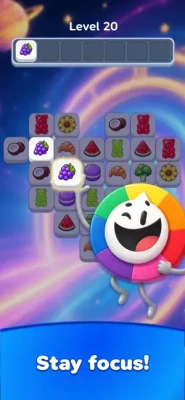
The game adds a collecting system to the familiar triple-match formula. As you progress, you can discover themed characters, collect postcards from different worlds and build a growing travel album. Familiar Trivia Crack characters, including Willy and his friends, also appear throughout the adventure.
With hundreds of levels, daily challenges, seasonal events, power-ups and offline play, Tile Crack is designed to be easy to pick up while still rewarding careful planning.
What Is Tile Crack: Match & Collect?
Tile Crack: Match & Collect is a casual puzzle game developed by Etermax.
The basic objective is simple: find three identical tiles and match them before your tray becomes full.
However, the limited tray turns the game into a strategic puzzle. A tile that looks useful may actually create a problem if you place it too early and block the spaces needed for another match.
The game combines:
- Triple-tile matching
- Tile sorting
- Tile connecting
- Jigsaw-style boards
- Collectible characters
- Collectible postcards
- Themed worlds
- Daily challenges
- Seasonal events
- Power-ups
- Offline gameplay
How to Play Tile Crack: Match & Collect
The controls are easy to learn.
Step 1: Examine the Board
Before tapping anything, look for groups of identical tiles.
Don't automatically select the first tile you recognize.
Try to understand which tiles are currently accessible.
Step 2: Tap a Tile
When you tap a tile, it moves into your tray.
The tray can only hold a limited number of tiles, so every selection matters.
Step 3: Match Three Identical Tiles
When three identical tiles reach the tray, they are matched and cleared.
This creates empty tray space for additional tiles.
Step 4: Plan the Next Match
After clearing a group, look at the board again.
A good move should ideally help create another triple without filling your tray unnecessarily.
Step 5: Clear the Board
Continue matching groups until all required tiles are removed.
Completing the level allows you to continue your journey and unlock additional content.
Full Tile Crack: Match & Collect Strategy Guide
1. Never Fill the Tray Without a Plan
The tray is the most important strategic element in Tile Crack.
You can have several matching tiles available, but if you collect too many unrelated pieces, you may run out of room before completing a triple.
Before selecting a tile, ask:
"Where are the other two?"
If you can't see a realistic path toward the other two matching tiles, consider choosing something else.
2. Look for Immediate Triples
The safest move is usually an obvious three-of-a-kind that can be completed quickly.
If three matching tiles are accessible, clearing them can immediately create more space and expose additional tiles.
A useful priority system is:
Immediate triple → nearly complete triple → useful exposing move → risky move
3. Think About What Is Hidden
Tile Crack isn't only about the tiles you can currently see.
Some boards can contain tiles that become accessible only after other pieces are removed.
Therefore, clearing one group can be valuable because it may reveal the tiles underneath or behind it.
Think of every match as both:
a score-producing move and an information-producing move.
4. Don't Chase Every Available Match
Just because you can select a tile doesn't mean you should.
Suppose you have:
- Two blue tiles
- Two red tiles
- One green tile
- One yellow tile
Adding another unrelated tile could fill the tray without helping you complete a group.
Instead, look for the move that brings one of your existing pairs closer to three.
5. Build Pairs Carefully
Pairs can be useful, but too many incomplete pairs can become dangerous.
For example:
Blue + Blue is promising if the third blue tile is accessible.
But if you collect:
Blue + Blue + Red + Red + Green + Yellow
you may have created several incomplete groups with no immediate way to clear them.
Try to complete groups rather than simply accumulating pairs.
6. Protect Your Empty Tray Spaces
Empty spaces are a resource.
When the tray has several open positions, you have flexibility.
When only one or two spaces remain, every move becomes more important.
If your tray is getting crowded, stop and search for the fastest available triple.
7. Use the Board as a Puzzle, Not a Shopping List
Don't scan the board and simply collect everything that looks interesting.
Instead, think in sequences:
Choose → Match → Clear → Reveal → Choose again
This keeps the tray under control and helps you maintain momentum.
8. Look for the Most Accessible Tiles
Sometimes the same symbol appears several times, but only one or two copies are currently easy to reach.
Prioritize tiles that can be selected without creating unnecessary tray congestion.
Accessibility matters just as much as matching.
9. Clear Blocking Tiles
If one tile is preventing access to several useful pieces, removing it may be more valuable than completing a less important match.
This is particularly important on more complicated layouts.
Ask:
"Which tile is preventing me from reaching the useful tiles underneath?"
If you can identify that blocker, removing it may open the entire board.
10. Reassess After Every Triple
Once three tiles disappear, the board has changed.
New tiles may become visible.
A previously useless tile may now have a matching partner.
Don't continue following the same plan automatically.
Pause and scan again.
Advanced Tile Crack Strategy
The Three-Tile Rule
Before selecting a tile, try to identify:
- The tile you're selecting
- The other matching tile you can reach
- The third tile needed to complete the group
If you can identify all three, the move is generally safer than selecting a tile without knowing where its partners are.
The Pair Rule
If you already have two identical tiles in your tray, prioritize finding the third when possible.
A completed triple frees tray space.
An additional unrelated tile does the opposite.
The Exposure Rule
When no immediate triple exists, prioritize moves that reveal useful new tiles.
This can be more valuable than collecting another random tile.
The Space Rule
When the tray is nearly full, your strategy should change.
Don't continue collecting pairs.
Look for a way to create an immediate triple or use an appropriate power-up.
How to Avoid Losing a Level
Most failed attempts can be traced to poor tray management.
Avoid These Situations:
- Too many unmatched tiles
- Multiple incomplete pairs
- Selecting tiles without seeing their partners
- Ignoring blocked tiles
- Using power-ups too late
- Filling the final tray spaces with low-value tiles
The key is to preserve flexibility.
Power-Ups in Tile Crack
Tile Crack provides power-ups that can help when a puzzle becomes difficult.
The current store descriptions specifically mention tools for:
- Undoing moves
- Shuffling tiles
- Removing tiles
These abilities should be treated as strategic resources rather than emergency buttons.
When to Use Undo
Undo is most useful when you realize that a recent selection has created a bad tray position.
For example, if your latest move gives you several unrelated tiles and you immediately recognize that it blocks your planned sequence, undoing early can preserve the level.
Don't wait until the tray is completely full.
When to Use Shuffle
Shuffle can be useful when the board has become difficult to read or when useful matching tiles are poorly positioned.
A shuffle is particularly valuable when your current arrangement offers few safe moves.
Use it to create new possibilities rather than simply because the board looks complicated.
When to Remove a Tile
A tile-removal power-up can be valuable when one particular piece is blocking your next sequence.
Before using it, identify the problem tile.
Don't waste the power-up simply to remove a random piece.
Best Power-Up Strategy
A good rule is:
Normal matching first → strategic power-up second.
If a level can be solved naturally, save the power-up.
If the board is genuinely becoming dangerous, using a power-up early enough to recover is usually better than waiting until the tray is completely full.
Tile Crack World Progression
Tile Crack turns level completion into a travel adventure.
As you match tiles, you move from world to world and unlock new scenery, characters and collectible postcards.
The worlds include both recognizable locations and imaginative destinations, giving progression a visual purpose beyond simply increasing the level number.
Collecting Characters
One of the game's major progression systems is its collection of themed characters.
The Trivia Crack cast appears throughout the game, with Willy and his friends becoming part of the collection.
Completing character sets gives players an additional reason to keep playing beyond simply clearing puzzle boards.
Collecting Postcards
Postcards are another collectible tied to the game's travel theme.
Each world provides opportunities to discover postcards and gradually build a travel album.
This creates a second layer of progression:
Puzzle progress → World discovery → Postcard collection → Album completion
Willy and the Trivia Crack Characters
Players familiar with Trivia Crack will recognize characters appearing in Tile Crack.
Willy and his friends aren't simply background decorations; they are incorporated into the collecting experience.
This connection gives Tile Crack an identity that separates it from generic triple-match games.
Daily Challenges
Tile Crack includes daily challenges.
These provide a reason to return regularly and offer an alternative objective alongside normal level progression.
A good daily routine is:
- Complete the daily challenge.
- Collect available rewards.
- Continue normal levels.
- Work toward character and postcard collections.
Seasonal Events
The game also features limited-time events with exclusive collectibles.
The current listings mention seasonal events and limited-time collections, including Willy's World Tour and a Summer Escape Collection event.
Because these events change over time, players interested in completing collections should check the event area regularly.
Tile Crack Board Types
Tile Crack isn't limited to one exact board layout.
The current store description mentions:
- Tile sort boards
- Tile connect boards
- Jigsaw-style boards
- Triple-match puzzles
This variety can change how you approach individual levels.
The same basic principle remains useful:
Match efficiently while preserving tray space.
Strategy for Tile Sort Boards
When the board emphasizes sorting, focus on identifying groups before making moves.
Look for:
- Easily accessible triples
- Pairs that can quickly become triples
- Tiles blocking larger groups
Avoid creating a tray full of unrelated symbols.
Strategy for Tile Connect Boards
For connect-style layouts, pay more attention to the relationship between tiles and their accessibility.
Don't focus only on matching symbols.
Consider which move opens the path toward the next match.
Strategy for Jigsaw-Style Boards
Jigsaw-style layouts can make the board less immediately readable.
Start with the most obvious groups and use completed triples to simplify the remaining layout.
Once the board becomes less crowded, reassess before making the next move.
How to Get Better at Tile Crack
Practice Recognition
The faster you identify matching groups, the easier the game becomes.
Practice Patience
Don't tap simply because a tile is available.
Practice Planning
Try to predict your next two or three moves.
Practice Tray Management
Think of tray spaces as limited resources.
Practice Recovery
Learn when to use power-ups before the situation becomes impossible.
Common Tile Crack Mistakes
Mistake 1: Selecting Random Tiles
Random selections often create incomplete groups.
Mistake 2: Ignoring the Tray
The board may look safe while your tray is already becoming dangerous.
Mistake 3: Collecting Too Many Pairs
Pairs are useful only if you can eventually complete them.
Mistake 4: Using Power-Ups Immediately
Save them when the normal board is still manageable.
Mistake 5: Using Power-Ups Too Late
Waiting until there is no room left can make recovery impossible.
Mistake 6: Forgetting About Hidden Tiles
Some of the best moves are those that expose what is underneath.
Beginner Strategy for Tile Crack
If you're new to triple-match games, follow this simple routine:
1. Find an obvious triple.
Clear it immediately when practical.
2. Find a useful pair.
Only collect it if the third tile is reasonably accessible.
3. Avoid unrelated tiles.
Keep tray space available.
4. Clear blockers.
Expose more of the board.
5. Reassess.
Every successful match changes the puzzle.
6. Use power-ups when they solve a real problem.
This approach will make the early levels much more manageable.
Advanced Tray Management
Think of the tray as having three states.
Safe
Several empty spaces remain.
You have plenty of flexibility.
Caution
The tray contains several unmatched tiles.
Start planning your next triple.
Danger
Only a few spaces remain and no obvious triple is ready.
Stop collecting random tiles and look for an immediate solution or appropriate power-up.
This simple mental system helps prevent many avoidable failures.
Best Way to Collect More Postcards
Postcards are tied to the game's world progression, so consistent level completion is the foundation of collection progress.
To maximize your progress:
- Complete levels consistently
- Participate in available events
- Complete daily challenges
- Continue unlocking new worlds
- Pay attention to limited-time collections
Because event rewards can change, check the current event rather than assuming every collection works the same way.
Is Tile Crack Relaxing?
Yes.
The developer specifically describes Tile Crack as a calm, no-pressure puzzle experience.
The current listings state that there are no forced timers and no energy gates, allowing players to take their time with individual puzzles.
That makes the game different from many mobile puzzle games that pressure players to complete levels within strict time limits.
You can play a few matches during a short break or spend longer sessions working through the collection.
Offline Gameplay
Tile Crack supports offline play according to its current store listings.
This means players can continue matching and collecting without an internet connection.
That makes it suitable for:
- Flights
- Travel
- Commuting
- Waiting rooms
- Breaks
- Areas with unreliable internet
Progress Sync
The game also supports progress synchronization across devices according to the current store description.
This is particularly useful if you play on more than one compatible device and want your puzzle and collection progress to remain consistent.
Tile Crack: Match & Collect Features
- Triple-match puzzle gameplay
- Limited tile tray
- Hundreds of levels
- Dozens of real and imaginary worlds
- Collectible characters
- Trivia Crack characters
- Willy and friends
- Collectible postcards
- Travel album
- Daily challenges
- Seasonal events
- Limited-time collectibles
- Undo power-up
- Shuffle power-up
- Tile-removal power-up
- Tile sort boards
- Tile connect boards
- Jigsaw-style boards
- Offline play
- Cross-device progress synchronization
- No forced timers
- No energy gates
Tile Crack Pros and Cons
Pros
- Simple triple-match controls
- Easy to learn
- Strategic tray management
- Hundreds of levels
- Collectible characters
- Postcard collection
- Travel-themed progression
- Multiple board styles
- Daily challenges
- Seasonal events
- Useful power-ups
- Offline play
- No forced timers
- No energy gates
- Relaxing presentation
Cons
- Players who prefer fast-paced puzzle games may find it slow
- Triple-match mechanics can become familiar quickly
- Limited tray space can create frustrating mistakes
- Some players may prefer traditional match-3 gameplay
- Advertising is present on the current store listings
Is Tile Crack Good for Beginners?
Yes.
The basic mechanic can be explained in seconds:
Tap → collect → match three → clear → repeat.
The strategic depth comes from learning how to manage the limited tray.
Beginners should concentrate on avoiding unnecessary unmatched tiles rather than trying to complete every possible pair.
Is Tile Crack Difficult?
The basic gameplay is accessible, but later puzzles can require more planning.
The difficulty comes primarily from:
- Limited tray space
- Blocked tiles
- Multiple incomplete groups
- More complicated board arrangements
- Choosing when to use power-ups
The game is therefore easy to start but can demand careful planning as you progress.
Tile Crack: Match & Collect vs. Traditional Match-3
Tile Crack is different from a conventional match-3 game.
In many match-3 games, you swap pieces directly on a grid.
In Tile Crack, you tap individual tiles into a tray and create groups of three identical pieces.
That makes tray management one of the game's defining strategic elements.
| Feature | Tile Crack | Traditional Match-3 |
|---|---|---|
| Main action | Select tiles | Swap tiles |
| Matching | Three identical tiles | Usually three or more |
| Main resource | Tray space | Board moves |
| Progression | Worlds & collections | Levels & objectives |
| Collectibles | Characters & postcards | Varies |
| Power-ups | Undo, shuffle, remove | Varies |
| Pace | Relaxed | Often faster |
Tile Crack: Match & Collect FAQ
What is Tile Crack: Match & Collect?
Tile Crack is a casual triple-match puzzle game where players match three identical tiles, travel through themed worlds and collect characters and postcards.
How do you play Tile Crack?
Tap tiles to place them in the tray, then match three identical tiles to clear them. The main challenge is managing the limited tray space while planning future matches.
How many tiles do you need to match?
You need three identical tiles to create a match and clear them.
Does Tile Crack have power-ups?
Yes. The current listings mention power-ups for undoing moves, shuffling the board and removing tiles.
Does Tile Crack have different worlds?
Yes. Players travel through dozens of real and imaginary worlds, with different scenery and collectibles.
Can you collect characters?
Yes. The game includes themed collectible characters, including familiar Trivia Crack characters such as Willy and his friends.
What are the postcards for?
Postcards are collectibles associated with the game's worlds and can be gathered to build a travel album.
Does Tile Crack have daily challenges?
Yes. Daily challenges are part of the game's progression and replay system.
Does Tile Crack have events?
Yes. The game features seasonal and limited-time events with special collectibles. Current store listings show events such as Willy's World Tour and the Summer Escape Collection.
Can Tile Crack be played offline?
Yes. The current store descriptions state that the game supports offline play.
Does Tile Crack have a timer?
The developer describes the game as having no forced timers, allowing players to solve puzzles without a strict countdown.
Does Tile Crack have energy limits?
The current App Store description specifically says there are no energy gates.
Who developed Tile Crack?
Tile Crack: Match & Collect was developed by Etermax.
What devices support Tile Crack?
The current iOS listing supports iPhone and iPad and requires iOS/iPadOS 15.6 or later. It also lists compatible Apple Silicon Macs and Apple Vision devices.
Is Tile Crack free?
The game is listed as a free download. The current listings also indicate advertising, with the store experience potentially including purchases depending on platform and configuration.
Final Verdict
Tile Crack: Match & Collect takes the familiar triple-tile puzzle formula and gives it a stronger sense of progression through travel and collecting.
The matching itself is easy to understand, but the limited tray gives every tap a purpose. Good players don't simply find three matching tiles—they think about what their current move will do to the next several moves.
The collectible characters, postcards, themed worlds, daily challenges and seasonal events provide reasons to keep progressing after the basic matching mechanic becomes familiar. The lack of forced timers and energy gates also makes the game particularly suitable for relaxed sessions.
If you enjoy triple-match games, tile-matching puzzles, relaxing casual games, collection games, travel adventures and brain-training puzzles, Tile Crack: Match & Collect is worth trying.
Match three. Clear the tray. Travel the world. Complete your collection.
Rate the Game
User Reviews















Popular Games



















 Android
 iOS
iOS Windows
 Xbox
Xbox