
Latest Version
September 14, 2026
Al Games FZ
Puzzle
iOS
0
Report a Problem
More About :game
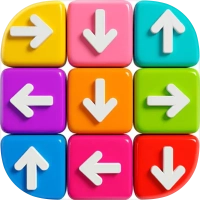
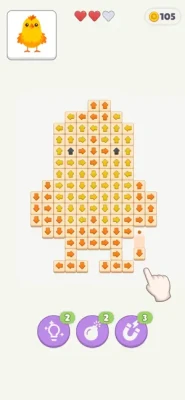
Each puzzle presents a group of blocks marked with arrows. Your job is to determine which blocks can move first and which ones are trapped behind others. A careless tap can cost a life, so successful players need to look at the entire arrangement before making a move.
As the puzzles become more complicated, the game shifts from quick tapping into a genuine test of logic, spatial awareness, planning, and pattern recognition.
The App Store describes the game as a brain-training puzzle experience where players clear arrow blocks to reveal images, with boosters available to help when a puzzle becomes difficult.
What Is Tap Gallery?
Tap Gallery combines an unblock puzzle, a tap-away game, and a hidden-picture reveal into one experience.
Instead of simply removing blocks whenever you see them, you need to understand their direction and determine whether another block is preventing them from moving.
A successful solution usually follows this pattern:
Observe → Find a free block → Tap → Reassess → Open new paths → Continue clearing → Reveal the picture
That makes the game easy to learn but progressively harder to master.
Main Features
Arrow Block Puzzles
The central mechanic revolves around blocks containing directional arrows. Tapping the correct block allows it to move away when its path is clear.
The challenge comes from recognizing which blocks are currently free and which ones must wait.
Hidden Picture Reveals
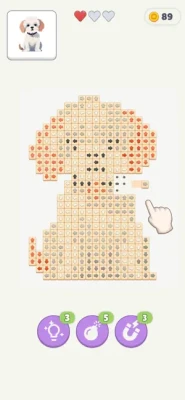
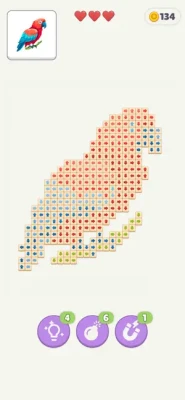
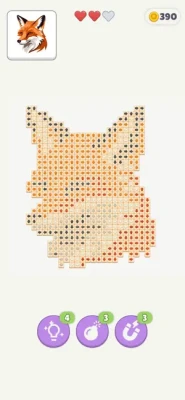
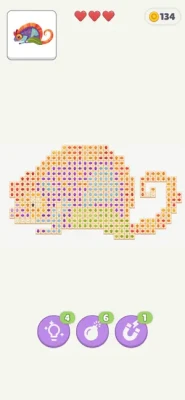
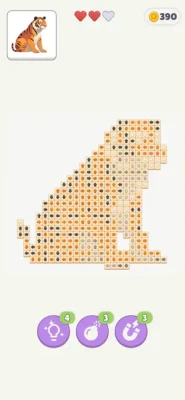
Clearing the board gradually reveals the artwork underneath the blocks. This gives each puzzle a satisfying visual payoff and makes completing a level feel more rewarding than simply emptying a grid.
Increasing Difficulty
Early levels teach the basic mechanics, while later puzzles introduce more complicated arrangements that require you to plan several moves ahead.
Boosters and Power-Ups
Boosters can help remove multiple blocks or overcome difficult situations. They are particularly useful when the board reaches a point where normal deductions are no longer obvious.
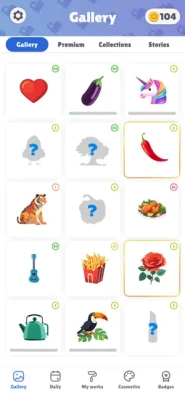
Themed Events
Tap Gallery has featured special events with themed levels, rewards, coins, boosters, and collectible badges. Recent examples in the version history include Easter Morning, Day of Luck, Discovering China, Love Tales, Manor Ball, and Magic School.
Rewards and Badges
Special events can provide additional objectives beyond simply completing puzzles. Some events allow players to progress through themed stages and earn exclusive badges.
Regular New Levels
The game continues to receive new puzzle content. The current App Store version history shows repeated updates adding or expanding levels and challenges.
How to Play Tap Gallery: Block Tap Away
The basic controls are simple.
- Examine the entire puzzle.
- Identify blocks whose arrows point toward an open path.
- Tap a block that can move.
- Watch how removing it changes the surrounding blocks.
- Recalculate the available moves.
- Continue until every block has been cleared.
- Reveal the completed picture.
The key is not to tap randomly.
The game rewards players who think about the next few moves before touching the screen.
Full Strategy Guide
1. Don't Start Tapping Immediately
The biggest beginner mistake is immediately tapping the first block that looks available.
Instead, spend a few seconds studying the entire board.
Look for:
- Blocks with completely open paths
- Blocks pointing toward the outside
- Clusters that appear to depend on one another
- Blocks that are blocking several others
- Potential chain reactions
A short pause at the beginning can prevent several mistakes later.
2. Look at the Arrow Direction
The arrow tells you the direction in which the block needs to move.
Before tapping, ask:
Is there anything directly blocking this block's path?
If the answer is yes, look for the block that must be removed first.
3. Find the Obvious First Move
Most puzzles have at least one relatively safe starting move.
Look around the edges and corners first. Blocks positioned near an open boundary often have fewer restrictions than blocks buried in the middle.
Removing one outer block can expose several new possibilities.
4. Think About the Block Behind the Block
Sometimes the correct move is not the most obvious block.
Imagine a group of blocks where one piece cannot move because another block occupies its path.
Instead of repeatedly trying the blocked piece, identify the piece that must disappear first.
This is the basic logic behind many difficult Tap Gallery puzzles.
5. Work From the Outside In
A useful general strategy is to clear accessible outer blocks before attacking complicated central groups.
Outer blocks often have fewer possible obstructions.
Once the perimeter becomes clearer, the central section is easier to solve.
6. Look for Chain Reactions
Some moves can unlock several other blocks.
For example:
Block A moves → Block B becomes free → Block C becomes free → Block D opens
When you see this kind of sequence, prioritize it.
A single well-planned move can sometimes solve a large portion of the board.
7. Don't Waste Lives on Guessing
If the game gives you a limited number of mistakes or lives, random tapping is expensive.
The App Store reviews specifically mention frustration with the three-life system and accidental taps, so careful movement is especially important for players trying to complete puzzles without mistakes.
Before every important tap, verify that the block actually has a clear route.
8. Slow Down on Large Boards
Large puzzles can tempt you to tap quickly once you recognize a sequence.
That is when mistakes happen.
After each significant removal, pause briefly and reassess the board.
The arrangement may have changed enough to make a previously blocked block available.
9. Use the Edges as Reference Points
When a puzzle becomes visually confusing, stop looking at the entire board at once.
Break it into sections:
- Top
- Bottom
- Left
- Right
- Center
Solve one section at a time whenever possible.
This reduces visual clutter and makes blocked paths easier to recognize.
10. Identify the Bottleneck
A bottleneck is a block or small group of blocks that prevents many other pieces from moving.
Finding the bottleneck can be more valuable than clearing several easy blocks.
Ask:
Which block is preventing the most other blocks from moving?
Once you identify it, work backward to determine what must be removed first.
11. Plan Two or Three Moves Ahead
On simple puzzles, one move at a time may be enough.
On difficult boards, think ahead.
Before tapping a block, consider:
- What will become available?
- Will another block become blocked?
- Does this create a useful path?
- Is there another block that should be moved first?
You don't need to predict the entire solution. A few moves of planning can make a major difference.
12. Don't Rush Because a Picture Is Almost Complete
Seeing most of the hidden picture can make you want to finish quickly.
This is a common point for mistakes.
The final blocks may be more constrained than the earlier ones.
Treat the last section as carefully as the first.
Advanced Tap Gallery Strategies
Use Reverse Thinking
Instead of asking:
Which block can I tap?
ask:
Which block do I need to remove eventually, and what is preventing it?
Then work backward.
This is especially effective when a particular block appears to be surrounded by obstacles.
Prioritize Freedom
A good move increases the number of available moves.
A poor move may remove one block but leave the rest of the board just as restricted.
When two moves appear possible, favor the move that opens more space.
Avoid Creating Visual Confusion
On dense boards, moving blocks randomly can make it harder to understand the remaining structure.
Clear sections systematically whenever possible.
Protect Your Mistake Count
If you're trying to achieve a perfect completion, treat every uncertain move as a warning.
Don't press simply because a block looks clickable.
Confirm its path first.
Learn From Failed Attempts
If you make a mistake, remember what caused it.
Was the block blocked?
Did another block need to move first?
Did you overlook the arrow direction?
Learning the reason behind a failed move is more useful than simply restarting.
How to Use Boosters Effectively
Boosters are most valuable when they solve a problem that cannot be easily resolved through normal deduction.
Avoid spending them immediately on an easy board.
Save them for situations such as:
- A difficult central cluster
- A board with very few legal moves
- A long puzzle where one mistake would end the attempt
- A sequence where several blocks are preventing progress
- A particularly challenging event level
The game's description specifically highlights boosters as tools for clearing multiple blocks and helping players finish difficult puzzles.
How to Solve Difficult Tap Away Levels
When you are stuck, use this checklist:
Step 1: Stop tapping.
Step 2: Find every block with a potentially clear path.
Step 3: Check the direction of each arrow.
Step 4: Identify which blocks are blocking those paths.
Step 5: Search for the easiest blocking piece to remove.
Step 6: Look for a move that opens multiple blocks.
Step 7: Reassess the board after each important move.
Step 8: Use a booster only if normal deduction has stopped working.
This approach is much safer than repeatedly tapping different blocks and hoping one works.
Tips for Perfect Puzzle Runs
If your goal is to clear a picture without mistakes, precision matters more than speed.
Tip 1: Use deliberate taps
Make sure your finger is clearly positioned over the intended block.
Tip 2: Avoid rapid-fire tapping
On crowded boards, tapping too quickly can result in an unintended selection.
Tip 3: Wait for the movement to register
If a block is still moving, give the game a moment before making the next input.
Tip 4: Check the path
An arrow pointing toward another block is a warning that the piece may not be ready.
Tip 5: Recalculate after major changes
A cleared area can completely change the solution.
Special Events and Limited-Time Challenges
Tap Gallery's event system adds themed content beyond the standard puzzle progression.
Recent examples include:
- Magic School – magical school-themed levels and rewards
- Manor Ball – elegant manor and ballroom-themed puzzles
- Love Tales – romantic story-driven stages
- Discovering China – Lunar New Year-inspired levels
- Day of Luck – St. Patrick's Day-themed puzzles
- Easter Morning – a seasonal event with a connected story
These events can include coins, boosters, collectible badges, and special themed levels.
Tap Gallery Rewards
Rewards give players additional reasons to keep progressing.
Depending on the event or progression system, rewards can include:
- Coins
- Boosters
- Skippits
- Badges
- Progress toward special collections
- Access to additional themed content
The event structure has been expanded through multiple updates, giving the game a stronger sense of progression than a simple collection of standalone puzzles.
Difficulty: Is Tap Gallery Hard?
The first puzzles are easy to understand, but the difficulty increases as boards become more complicated.
The real challenge isn't learning the controls. It is understanding the dependency between blocks.
A simple board might have several obvious moves.
A difficult board may have only one correct sequence, with one mistake causing a chain of problems.
That makes Tap Gallery a good choice for players who enjoy logic puzzles, brain teasers, unblock games, tap-away puzzles, and spatial challenges.
Common Mistakes to Avoid
Random Tapping
Never assume that a block can move simply because its arrow is visible.
Ignoring the Direction
Always follow the arrow and inspect the complete route.
Clearing Easy Blocks Without a Plan
Removing easy blocks is useful, but sometimes the important objective is to open a bottleneck.
Using Boosters Too Early
Save powerful assistance for genuinely difficult positions.
Playing Too Quickly
Fast fingers are not necessarily an advantage in a logic puzzle.
Forgetting About New Openings
Every cleared block changes the board. Recheck newly exposed paths.
Tap Gallery Review
Tap Gallery: Block Tap Away has a clever premise that makes ordinary tapping feel more strategic. The controls are simple, but the player has to understand movement order, blocked paths, and spatial relationships to clear more difficult puzzles.
The hidden-picture mechanic is a nice reward for solving each board because the player gets to see the artwork emerge as the puzzle disappears.
The game's strongest qualities are its accessible controls, increasing challenge, visual rewards, boosters, and themed events. Its App Store rating currently sits at 4.7 out of 5 from approximately 16,000 ratings, showing strong overall player reception.
However, the player reviews also highlight some drawbacks. Several reviewers have complained about frequent advertising, the limited-life system, accidental taps, and occasional input responsiveness. These are worth considering if you prefer uninterrupted puzzle sessions.
Overall, the underlying puzzle design is enjoyable for players who like block puzzles and tap-away games, especially those who enjoy gradually revealing an image as they solve a board.
Pros and Cons
Pros
- Simple controls
- Easy to understand
- Increasingly challenging puzzles
- Hidden-picture reveal mechanic
- Arrow-based block movement
- Boosters and power-ups
- Themed events
- Collectible badges
- Regular new levels
- Strong player rating
Cons
- Limited lives can make mistakes frustrating
- Some players report accidental taps
- Player reviews criticize the frequency of advertisements
- Large puzzles can become demanding
- Some boards require very careful sequencing
Game Information
Game Name: Tap Gallery: Block Tap Away
Developer: AI Games FZ
Genre: Puzzle
Platforms: iPhone and iPad
Age Rating: 13+
Price: Free with in-app purchases
Languages: English plus 31 additional languages
Game Size: About 344.8 MB on the current App Store listing
Core Gameplay: Tap arrow blocks, clear the board, and reveal hidden images
Game Style: Block puzzle / Tap Away / Brain teaser
Boosters: Yes
Special Events: Yes
Badges: Yes
Latest Listed Version: 0.26.1
Latest Version Update: September 2026
Who Should Play Tap Gallery?
Tap Gallery is a good fit if you enjoy:
- Tap-away puzzles
- Block puzzles
- Unblock games
- Brain teasers
- Logic games
- Spatial puzzles
- Hidden-picture games
- Casual puzzle games
- Short puzzle sessions
- Progressive difficulty
It is particularly appealing to players who like games that are easy to start but require more thought as the levels become harder.
Frequently Asked Questions
What is Tap Gallery: Block Tap Away?
Tap Gallery is a puzzle game where you tap directional blocks in the correct order to clear the board and uncover hidden pictures.
How do you play Tap Gallery?
Look at the arrows on the blocks and determine which pieces have a clear path. Tap those blocks first, then use the newly opened spaces to solve the remaining board.
Is Tap Gallery a puzzle game?
Yes. The App Store categorizes Tap Gallery as a Puzzle game.
Does Tap Gallery have boosters?
Yes. Boosters can help clear multiple blocks or assist when you become stuck.
Does Tap Gallery have events?
Yes. The game has featured multiple themed events containing special levels, rewards, and collectible badges.
Is Tap Gallery difficult?
The basic mechanics are easy to learn, but later puzzles require careful planning and spatial reasoning.
What is the best strategy for Tap Gallery?
Study the whole board before tapping, identify blocks with clear paths, remove bottlenecks, and plan several moves ahead rather than tapping randomly.
Can I make fewer mistakes?
Yes. Slow down, verify the arrow direction, check the entire movement path, and reassess the board after every major move.
Final Strategy Tips
The secret to Tap Gallery isn't tapping faster. It is seeing the solution before you make the move.
Start with blocks that have clear paths, work around the edges, identify bottlenecks, and look for moves that unlock several pieces at once. When the board becomes difficult, stop and analyze rather than guessing.
For perfect runs, patience is especially important. One unnecessary tap can turn an easy puzzle into a much harder recovery.
Once you start recognizing how the blocks depend on one another, Tap Gallery becomes much more than a simple tap game—it becomes a satisfying test of planning, spatial awareness, and logical thinking.
Rate the Game
User Reviews





Popular Games















 Android
 iOS
iOS Windows
 Xbox
Xbox