


Latest Version
September 12, 2026
Runyou Game
Puzzle
iOS
0
Report a Problem
More About :game
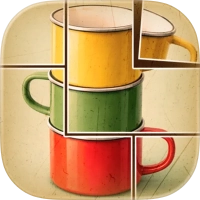
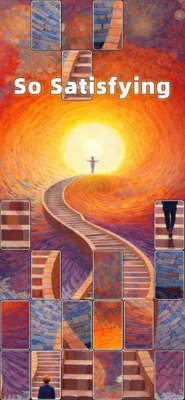
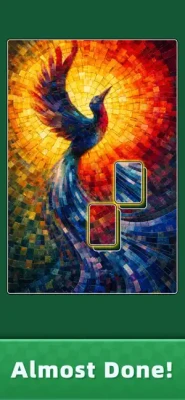
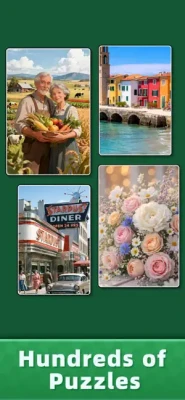
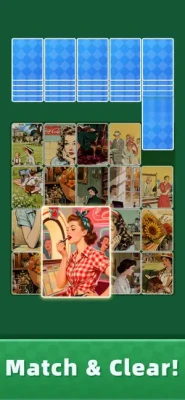
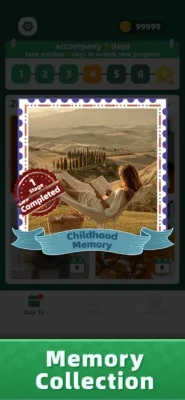
The game features artwork inspired by nature, animals, cozy interiors, and abstract scenes, along with smooth drag-and-drop controls and relaxing sounds. It can also be played offline, making it suitable for quiet moments at home or short puzzle sessions while traveling.
With its combination of traditional jigsaw mechanics and a calm presentation, Jigsaw Puzzle Art: Relax Book is aimed at players who enjoy jigsaw puzzles, relaxing games, picture puzzles, brain games, and casual offline games.
What Is Jigsaw Puzzle Art: Relax Book?
Jigsaw Puzzle Art: Relax Book is a casual puzzle game that turns completed pictures into the main reward.
The basic concept is familiar: pieces of an image are separated, and your task is to find the correct relationships between them. As more pieces are connected, the original artwork becomes easier to recognize.
What makes this game different from a traditional physical jigsaw puzzle is the convenience of playing digitally. Pieces can be dragged and placed directly on the screen, while the game provides a calm environment without a timer forcing you to rush.
The App Store currently lists it for iPhone and iPad, with support also listed for compatible Mac and Apple Vision devices. The game requires iOS 15 or later on iPhone and iPadOS 15 or later on iPad.
How to Play Jigsaw Puzzle Art: Relax Book
The basic gameplay is easy to learn.
Step 1: Choose a Puzzle
Select a picture that you want to complete.
Artwork includes themes such as:
- Nature
- Animals
- Cozy interiors
- Abstract scenes
- Other decorative images
Step 2: Study the Complete Image
Before placing pieces, look at the overall picture.
Try to identify:
- Major colors
- Large objects
- Distinctive patterns
- Borders
- Faces or animals
- Buildings
- Sky or water
- Furniture
- Textures
This gives you a mental map of the finished puzzle.
Step 3: Sort the Pieces
Separate pieces mentally into groups based on their appearance.
For example:
Blue pieces → sky or water
Green pieces → plants or grass
Brown pieces → wood, furniture, or earth
Bright pieces → flowers or decorations
Step 4: Build the Puzzle
Drag pieces into position and connect the sections that clearly belong together.
Step 5: Complete the Artwork
As more pieces are connected, the image becomes increasingly recognizable.
The game's drag-and-drop controls are designed to make this process straightforward.
Main Features
Relaxing Jigsaw Puzzles
The core experience is designed around taking your time rather than racing toward a score.
The App Store specifically describes the game as having no timers and no pressure, allowing players to work through puzzles at their own pace.
Beautiful Picture Collections
The artwork spans several visual categories, including nature, animals, cozy interiors, and abstract scenes.
Smooth Drag-and-Drop Controls
Puzzle pieces can be moved directly with simple touch controls.
This keeps the focus on solving the picture instead of learning complicated mechanics.
Relaxing Sounds
The game includes relaxing sounds designed to complement the quiet puzzle atmosphere.
Offline Gameplay
Jigsaw Puzzle Art: Relax Book supports offline play, which makes it useful when an internet connection isn't available.
Gentle Brain Challenge
The developer positions the puzzles as a way to stay engaged while working on focus and memory through picture completion.
Complete Jigsaw Puzzle Art Strategy Guide
1. Look at the Whole Picture First
Don't immediately start moving random pieces.
Spend a few moments studying the finished image.
Ask yourself:
- Where is the sky?
- Where are the darkest areas?
- Where are the brightest colors?
- Are there animals?
- Are there people?
- Are there buildings?
- Which objects have recognizable shapes?
The more information you collect before starting, the easier the puzzle becomes.
2. Start With the Corners
One of the most reliable jigsaw techniques is building the outer frame first.
Look for pieces with:
- Two straight edges
- One straight edge
- Distinctive border colors
Corner pieces are especially valuable because they immediately reveal where two sides of the puzzle meet.
Once the corners are connected, work along the edges to establish the puzzle's framework.
3. Build the Border
After finding the four corners, connect the remaining edge pieces.
This creates a completed frame around the image.
The border provides several advantages:
- Defines the puzzle's size
- Gives you fixed reference points
- Makes interior pieces easier to organize
- Reduces the number of possible locations for remaining pieces
For difficult puzzles, completing the frame early can save considerable time.
4. Sort Pieces by Color
Color is one of the strongest clues available.
Create mental groups such as:
Blue
Possible sky, ocean, water, or blue objects.
Green
Potential grass, leaves, forests, or plants.
Brown
Possible furniture, wood, animals, buildings, or earth.
White
Clouds, walls, snow, clothing, or bright objects.
Red and Orange
Flowers, decorations, buildings, clothing, or distinctive objects.
Color sorting becomes especially useful when the puzzle contains many pieces.
5. Use Texture as a Second Clue
Color alone isn't always enough.
Two pieces may both be green, but one could belong to grass while another belongs to leaves.
Look for texture.
Examples:
- Smooth blue → sky or water
- Repeated green shapes → leaves
- Fine lines → grass
- Wood grain → furniture
- Fur patterns → animals
- Geometric shapes → buildings or artwork
Combining color + texture is much more effective than relying on color alone.
6. Find Distinctive Objects
Some parts of a picture are much easier to recognize than others.
Prioritize:
- Faces
- Animal eyes
- Flowers
- Signs
- Windows
- Buildings
- Furniture
- Bright decorations
- Strong outlines
A distinctive object can become an anchor point for assembling an entire section.
7. Build Small Sections
Don't always try to connect the entire puzzle at once.
Instead, create small completed groups.
For example:
Flower section
→ connect flower pieces
→ add surrounding leaves
→ connect the background
Eventually, join that completed area to another section.
This is particularly effective with large puzzles.
8. Look at Piece Shapes
When two pieces have similar colors, their shapes can help determine which one belongs where.
Examine:
- Tabs
- Indentations
- Straight edges
- Curves
- Narrow connections
- Wide connections
A piece's shape can eliminate many incorrect possibilities.
9. Match Lines Across Pieces
Lines are excellent clues.
Look for:
- Tree branches
- Building edges
- Horizon lines
- Furniture edges
- Clothing patterns
- Road markings
- Decorative lines
If a line continues naturally from one piece to another, you may have found the correct connection.
10. Work From Easy Areas to Difficult Areas
Don't spend too long on a large section of nearly identical color.
Instead, complete distinctive areas first.
Once those areas are finished, the remaining pieces become easier because there are fewer possibilities.
Advanced Jigsaw Puzzle Techniques
The Four-Clue Rule
When deciding where a difficult piece belongs, try to identify at least four clues:
- Color
- Texture
- Shape
- Image detail
If all four point toward the same location, the placement is much more likely to be correct.
The Edge Filter
If you're unsure where a piece belongs, first determine whether it is an edge piece.
A piece with a straight side has fewer possible locations than an interior piece.
Use that information to narrow your search.
The Pattern Continuation Method
Look for visual patterns that continue across pieces.
For example:
leaf → leaf → leaf
or
wall line → wall line → window
or
fur pattern → fur pattern
Patterns can sometimes reveal the correct arrangement faster than individual colors.
How to Solve Difficult Puzzles Faster
When you feel stuck, don't randomly try pieces.
Instead:
1. Stop
Take a moment to look at the unfinished image.
2. Identify the Largest Missing Area
Find the section that is easiest to understand.
3. Search for Its Dominant Color
Look through your available pieces for that color.
4. Check Texture
Determine which pieces actually belong to that area.
5. Compare Shapes
Use tabs and indentations to narrow down the options.
6. Follow Lines
Look for image details that continue between pieces.
7. Complete a Small Section
Build several connected pieces rather than searching for one isolated piece.
8. Return to the Remaining Pieces
The correct location often becomes obvious once surrounding pieces are placed.
Best Strategy for Nature Puzzles
Nature scenes can contain large areas of similar colors, making them tricky.
Forests
Separate leaves, tree trunks, branches, and background areas.
Beaches
Look for differences between:
- Sky
- Clouds
- Ocean
- Sand
Mountains
Use changes in:
- Rock texture
- Snow
- Sky
- Vegetation
Flowers
Start with strongly colored petals before working on leaves and background.
Best Strategy for Animal Puzzles
Animals usually provide some of the easiest anchor points.
Start with distinctive features:
- Eyes
- Nose
- Ears
- Fur patterns
- Whiskers
- Beaks
- Stripes
- Spots
Once the animal is assembled, work outward into the surrounding environment.
Best Strategy for Cozy Interior Pictures
Interior scenes often contain strong straight lines.
Look for:
- Tables
- Shelves
- Windows
- Doors
- Furniture
- Lamps
- Picture frames
- Walls
Straight architectural lines are especially useful for connecting pieces.
Best Strategy for Abstract Puzzles
Abstract artwork can be more difficult because there may not be recognizable objects.
Focus on:
- Color transitions
- Repeated patterns
- Curves
- Geometric shapes
- Gradients
- Lines
- Texture
Instead of asking "What object is this?", ask:
"What visual pattern continues across these pieces?"
How to Use the No-Timer Design
One of the game's strengths is that it doesn't require players to rush through puzzles.
The App Store specifically describes the experience as having no timers and no pressure.
Use that to your advantage.
Instead of guessing quickly:
- Study the image
- Sort your pieces
- Build sections
- Take breaks
- Return with fresh eyes
This makes the game feel more like a relaxing activity than a competition.
Tips for a More Relaxing Puzzle Session
Choose an image you enjoy
The artwork is part of the experience, so select themes that appeal to you.
Keep the sound comfortable
The game includes relaxing sounds, which can complement the calm atmosphere.
Don't force difficult pieces
If a piece isn't obvious, leave it and continue elsewhere.
Complete recognizable areas
Finishing a section gives you a useful visual anchor.
Take breaks
There is no need to finish every puzzle in one sitting.
Is Jigsaw Puzzle Art: Relax Book Difficult?
The basic gameplay is easy to understand, but the difficulty can vary depending on the artwork and how similar the colors and textures are.
Some players praise the mixture of easier and harder puzzles. One recent reviewer reported completing more than 1,000 puzzles and specifically praised the interface, image selection, and cozy feel, while noting that the available challenge puzzles eventually ran out.
Other reviews mention repeated pictures after extensive play, showing that the long-term variety can be an important consideration for highly active players.
Challenges and Puzzle Variety
Beyond standard puzzle solving, player reviews mention a challenge mode involving larger puzzles made from smaller puzzle sections. One reviewer said they had completed 1,050 puzzles and reached the end of the available challenge puzzles at that time.
Because the game is updated frequently, available content can change over time. The App Store currently shows version 1.1.26, released two days ago in the current listing, with recent updates primarily focused on performance optimization and bug fixes.
Offline Gameplay
One of the practical advantages of Jigsaw Puzzle Art: Relax Book is offline support.
The App Store specifically promotes playing puzzles without an internet connection.
That makes it suitable for:
- Airplane trips
- Road trips
- Waiting rooms
- Breaks
- Quiet evenings
- Travel
- Places with unreliable connectivity
Jigsaw Puzzle Art: Relax Book on iPhone and iPad
The current App Store listing identifies the game as a free Casual game from Runyou Game. It supports iPhone and iPad and requires iOS 15.0 or later on iPhone and iPadOS 15.0 or later on iPad. The listed size is approximately 265.4 MB.
The listing currently shows support for English, French, German, Japanese, Korean, Simplified Chinese, Spanish, and Traditional Chinese.
Apple currently lists the game with a 16+ age rating and indicates that it contains advertising.
Ratings and Player Feedback
The game currently has a strong App Store rating, with the U.S. listing showing approximately 4.8 out of 5 from 21K ratings.
Positive feedback commonly highlights:
- Attractive artwork
- Cozy atmosphere
- Smooth interface
- Enjoyable puzzle selection
- Large amount of puzzle content
Some criticism is also worth mentioning. Recent reviews complain about repeated puzzles and the frequency of advertisements during extended play.
That gives a more balanced picture: the core jigsaw experience is well received, while long-term content variety and advertising are areas some players would like improved.
Pros and Cons
Pros
- Relaxing puzzle experience
- No timer pressure
- Attractive artwork
- Nature, animal, interior, and abstract themes
- Simple drag-and-drop controls
- Offline gameplay
- Relaxing sounds
- Easy to learn
- Suitable for short or long sessions
- Strong current App Store rating
Cons
- Advertising can become noticeable during extended play
- Some players report repeated puzzles
- Highly experienced players may eventually want more challenge content
- The app is relatively large at around 265 MB
- The 16+ rating may make it less suitable for younger players
The comments about advertising and repeated puzzles come directly from player reviews rather than being assumptions about every player's experience.
Who Should Play Jigsaw Puzzle Art: Relax Book?
This game is a good match for players who enjoy:
- Jigsaw puzzles
- Picture puzzles
- Relaxing games
- Brain games
- Casual games
- Offline games
- Art puzzles
- Animal puzzles
- Nature puzzles
- Cozy games
- Mindful puzzle experiences
- Digital jigsaw games
It is especially suitable for people who prefer slow, thoughtful gameplay rather than fast action or competitive scoring.
Jigsaw Puzzle Art: Relax Book Tips at a Glance
If you want the quickest possible strategy:
- Study the finished picture.
- Find the four corner pieces.
- Build the outside border.
- Sort pieces by color.
- Separate pieces by texture.
- Find distinctive objects.
- Build small groups.
- Follow lines and patterns across pieces.
- Use piece shapes to confirm matches.
- Leave difficult pieces until more of the image is complete.
- Don't rush—the game has no timer.
- Take a break if your eyes start missing obvious patterns.
Frequently Asked Questions
What is Jigsaw Puzzle Art: Relax Book?
Jigsaw Puzzle Art: Relax Book is a casual digital jigsaw puzzle game centered around completing relaxing artwork. It includes nature, animal, interior, and abstract images.
Is Jigsaw Puzzle Art: Relax Book free?
Yes. The App Store currently lists the game as free, although it contains advertising.
Does Jigsaw Puzzle Art have a timer?
No. The developer specifically describes the game as having no timers and no pressure.
Can I play Jigsaw Puzzle Art offline?
Yes. The App Store listing specifically states that puzzles can be played offline.
What types of pictures are included?
The game features artwork involving nature, animals, cozy interiors, and abstract scenes.
Is Jigsaw Puzzle Art available on iPhone?
Yes. It supports iPhone devices running iOS 15 or later.
Is Jigsaw Puzzle Art available on iPad?
Yes. The game supports iPad and requires iPadOS 15 or later.
What is the best way to solve a difficult jigsaw puzzle?
Start with the corners and border, then sort pieces by color and texture. Build recognizable sections and use image lines, patterns, and piece shapes to confirm where difficult pieces belong.
Does the game have challenge puzzles?
Player reviews reference a challenge mode involving larger puzzles constructed from smaller puzzle sections. Availability and the amount of challenge content can change as the game is updated.
Does Jigsaw Puzzle Art have relaxing music or sounds?
Yes. The App Store lists relaxing sounds among the game's features.
Final Verdict
Jigsaw Puzzle Art: Relax Book focuses on one of the most satisfying parts of traditional jigsaw puzzles: watching a scattered collection of pieces gradually become a complete picture.
Its strongest feature is its relaxed approach. There is no timer pushing you to finish quickly, while the artwork, simple controls, relaxing sounds, and offline support make it well suited to quiet puzzle sessions.
The game also appears to have a strong player base, with the current U.S. App Store listing showing a 4.8/5 rating from around 21K ratings. However, players who spend a very large amount of time with the game should be aware of reviews mentioning repeated images and advertising.
For fans of jigsaw puzzle games, relaxing picture puzzles, brain games, art puzzles, offline games, and casual games, Jigsaw Puzzle Art: Relax Book is a natural choice.
Rate the Game
User Reviews







Popular Games















 Android
 iOS
iOS Windows
 Xbox
Xbox