


Latest Version
September 09, 2026
Tripledot Studios
Puzzle
iOS
0
Report a Problem
More About :game
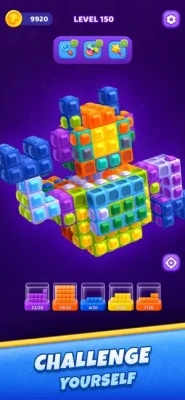
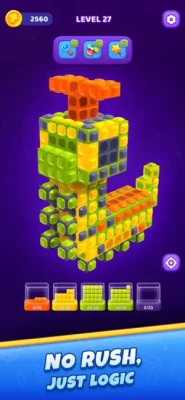
Each puzzle begins as a 3D shape made from shiny gem cubes. Your goal is to organize the colors correctly and gradually rebuild the complete design. As the pieces move into place, the structure transforms from a scattered collection of gems into recognizable shapes such as animals, fruit, houses, and playful characters.
The simple controls make Gem Mosaic easy to understand, while later puzzles introduce more colors, layers, and tray-management challenges that require greater planning.
What Is Gem Mosaic: 3D Sort Puzzle?
Gem Mosaic is a casual logic puzzle game developed by Tripledot Studios. It is designed around a straightforward idea: sort colorful gem cubes and use them to complete a 3D mosaic.
The game is especially appealing if you enjoy color sorting games, relaxing brain puzzles, jewel-themed games, or casual challenges that can be played without pressure.
There is no countdown timer forcing you to make quick decisions. Instead, the challenge comes from choosing the right pieces and avoiding situations where the available trays become too crowded.
How to Play Gem Mosaic
The basic gameplay is easy to pick up.
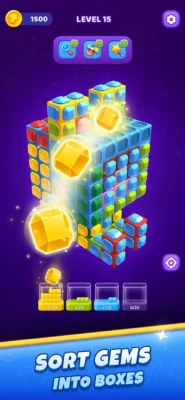
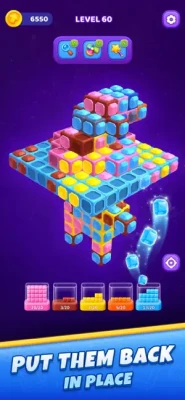
When you tap a gem cube, it and matching neighboring pieces can lift away and move into the appropriate tray. You can then tap an empty position to send the correct color back into the developing shape.
The important part is deciding which move to make first.
Each tray is associated with a particular color, so careless moves can make the available space harder to manage. As the puzzles become more detailed, looking ahead becomes increasingly important.
Basic Gameplay Steps
- Examine the 3D shape and identify the available colors.
- Tap a gem cube to move it and its matching neighbors.
- Organize the pieces in their color-specific trays.
- Watch the available tray space so you do not create a blockage.
- Return gems to empty positions when the correct color is needed.
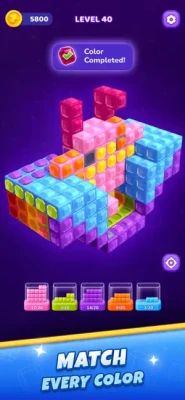
- Complete every color to rebuild the entire 3D design.
- Move on to the next shape and tackle a more involved puzzle.
The controls are intentionally simple, but the decisions become more interesting as the number of colors and layers increases.
Key Features of Gem Mosaic
Colorful 3D Gem Puzzles
The centerpiece of the game is its collection of colorful 3D structures made from sparkling gem cubes. Rotating and rebuilding these shapes gives the sorting mechanic a more visual feel than a traditional flat color puzzle.
Hundreds of Handcrafted Puzzles
Gem Mosaic includes hundreds of 3D puzzles, giving players plenty of shapes to work through. Each completed level adds another design to the collection.
Cute Shapes to Build
The puzzles are not simply abstract arrangements. The game includes recognizable designs featuring animals, fruit, houses, and other playful characters. Watching these objects emerge piece by piece is an important part of the game's appeal.
Relaxing Puzzle Gameplay
Gem Mosaic is designed for a calm experience. There is no timer pushing you to finish a level quickly, allowing you to think about each move at your own pace.
Simple One-Tap Controls
The controls are straightforward enough to understand within seconds. The real challenge is not learning complicated controls but working out the best order for moving the gems.
Increasing Puzzle Difficulty
The early levels provide an easy introduction to the sorting system. Later puzzles add more colors, additional layers, and tighter tray-management situations, requiring players to think several moves ahead.
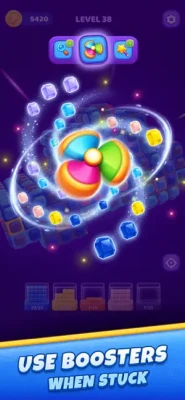
Helpful Boosters
When a particularly difficult puzzle creates a problem, boosters can provide assistance and help you continue through the level.
Gem Mosaic Gameplay Experience
What makes Gem Mosaic different from many conventional sorting puzzles is the combination of color organization and 3D construction.
You are not simply matching colors on a screen. Every successful move contributes to rebuilding a physical-looking object. A partially completed animal, fruit, or house gradually becomes recognizable as the correct gems return to their positions.
The animations also add to the satisfying nature of the experience. Gems lift from the structure, move into their trays, and return to the appropriate spaces as the puzzle develops.
This creates a pleasant rhythm:
Tap → Sort → Plan → Rebuild → Complete
Difficulty and Progression
Gem Mosaic starts gently, allowing new players to understand how the sorting system works without overwhelming them.
As you progress, puzzles become more complicated. Additional colors and layers mean that there are more possible moves to consider, while limited tray space makes planning increasingly important.
The difficulty therefore comes from decision-making rather than complicated controls.
A good player learns to think about the next few moves instead of simply choosing the most obvious gem on the screen.
Gem Mosaic Tips and Tricks
Look Before You Move
Do not immediately tap the first gem you see. Take a moment to examine the structure and identify which colors can be safely moved.
Protect Your Tray Space
The trays are an important part of the puzzle. Filling them carelessly can leave you with fewer options later, so consider the amount of space available before committing to a move.
Think Several Moves Ahead
A move that looks useful now may make the next part of the puzzle more difficult. Try to anticipate which colors you will need afterward.
Complete Colors When Possible
Finishing a color can simplify the remaining puzzle and reduce the number of pieces you need to manage.
Rotate Your View Carefully
Because the puzzles are three-dimensional, looking at the structure from different angles can help reveal pieces that are hidden from your current perspective.
Use Boosters Wisely
Boosters can be particularly useful when you have reached a difficult arrangement and cannot find a clean sequence of moves.
Why Gem Mosaic Is So Satisfying
The appeal of Gem Mosaic comes from the combination of visual feedback, simple interaction, and gradual completion.
Every correct move changes the appearance of the structure. Colors become organized, empty spaces disappear, and the final shape slowly takes form.
There is also no pressure to rush. The absence of a countdown makes the game suitable for short breaks, relaxing sessions, or anyone who enjoys casual brain teasers at their own pace.
Who Should Play Gem Mosaic?
Gem Mosaic is a good choice for players who enjoy:
- 3D sorting puzzles
- Color matching games
- Gem and jewel puzzles
- Relaxing brain teasers
- Casual logic games
- Block-based puzzles
- Satisfying puzzle mechanics
- Cute 3D shapes
- Short, relaxing gaming sessions
- Games without time pressure
If you enjoy games where organization and planning gradually reveal a finished picture or object, Gem Mosaic is particularly easy to pick up.
Graphics and Atmosphere
The visual style centers on glossy, colorful gems arranged into compact 3D structures. The sparkling pieces and smooth animations give the game a polished, tactile quality.
Rather than creating an intense or competitive atmosphere, Gem Mosaic focuses on a quiet and visually satisfying experience. The colorful designs make the puzzles feel playful, while the slow construction of each object provides a clear sense of progress.
Controls
Gem Mosaic uses simple tap-based controls.
- Tap a cube: Move the selected gem and matching neighbors into a tray.
- Tap an empty position: Return the appropriate color from the tray.
- Manage trays: Keep enough room available for future moves.
- Complete the colors: Continue sorting until the entire shape is rebuilt.
The simplicity of the controls makes the game accessible, while the increasingly complex puzzles provide the actual challenge.
Game Modes
Gem Mosaic primarily focuses on its collection of individual 3D sorting puzzles rather than traditional competitive multiplayer modes.
Each level presents a new shape and a new sorting challenge. The progression is centered on completing these designs and expanding your collection of finished objects.
Gem Mosaic on iPhone and iPad
The App Store version is available for iPhone and iPad and requires iOS 15.0 or later. The listing also indicates compatibility with Apple platforms including Mac with an Apple M1 chip or later and Apple Vision, subject to the listed requirements.
The game is listed as a free download with advertising and optional in-app purchases. The App Store currently lists a permanent No Ads purchase as well as several optional coin and bundle purchases.
Gem Mosaic Game Details
| Information | Details |
|---|---|
| Game Title | Gem Mosaic: 3D Sort Puzzle |
| Developer | Tripledot Studios Limited |
| Genre | Puzzle |
| Gameplay Style | 3D Color Sorting / Logic Puzzle |
| Platform | iPhone, iPad |
| Age Rating | 13+ on the App Store |
| Business Model | Free with ads and optional in-app purchases |
| Controls | Touch / Tap |
| Timer | No |
| Puzzle Style | 3D Gem Sorting |
| Release | June 25, 2026 |
| Latest App Store Version Listed | 1.1.0 |
| App Size | About 573 MB on the U.S. App Store listing |
| Languages | English plus 8 additional languages |
The App Store lists version 1.1.0 and the game's original release as June 25, 2026.
Gem Mosaic Review
Gem Mosaic: 3D Sort Puzzle succeeds by keeping its central idea simple. You sort colorful gems, manage trays, and watch a 3D object take shape.
The best part is the balance between relaxation and decision-making. The game does not need a countdown or complicated controls to create a challenge. Instead, the player has to think about the order of moves and manage limited space.
Its colorful 3D presentation also gives successful moves a satisfying visual payoff. For fans of relaxing sorting games and casual logic puzzles, Gem Mosaic offers an approachable experience that can be enjoyed in short sessions or longer puzzle runs.
Pros
- Easy-to-learn controls
- Colorful 3D gem presentation
- Hundreds of puzzles
- Recognizable shapes to build
- No countdown timer
- Increasing puzzle complexity
- Relaxing gameplay style
- Helpful boosters
Cons
- Contains advertising
- Optional in-app purchases are available
- Later puzzles require careful planning
- The large app size may matter on devices with limited storage
Final Verdict
Gem Mosaic: 3D Sort Puzzle is a colorful and relaxing puzzle game built around an enjoyable combination of sorting, planning, and 3D construction.
Its strongest feature is the feeling of watching a scattered collection of gems gradually become a complete object. The rules are simple enough for almost anyone to understand, while the growing number of colors, layers, and tray-management decisions keeps the puzzles from becoming completely mindless.
If you are looking for a 3D color sort game, relaxing gem puzzle, brain teaser, or satisfying casual puzzle, Gem Mosaic is worth checking out.
Frequently Asked Questions
What is Gem Mosaic: 3D Sort Puzzle?
Gem Mosaic is a casual 3D puzzle game where players sort colorful gem cubes into matching trays and use them to complete different 3D shapes.
Is Gem Mosaic a color sorting game?
Yes. Color sorting is the central mechanic. Players organize gems by color while managing tray space and deciding the best sequence of moves.
Does Gem Mosaic have a timer?
No. The game is designed without a countdown timer, allowing players to solve puzzles at their own pace.
How many puzzles are in Gem Mosaic?
The game advertises hundreds of handcrafted 3D gem puzzles, with a variety of shapes including animals, fruit, houses, and playful characters.
Does Gem Mosaic have boosters?
Yes. Boosters are available to help when players become stuck on challenging puzzles.
Is Gem Mosaic free to play?
Yes. The game is available as a free download, although it contains advertising and optional in-app purchases.
What devices support Gem Mosaic?
The App Store lists Gem Mosaic for iPhone and iPad, requiring iOS 15.0 or later. It also lists compatibility with Mac systems using Apple M1 or later and Apple Vision under the stated platform requirements.
Who developed Gem Mosaic?
Gem Mosaic: 3D Sort Puzzle was developed by Tripledot Studios Limited.
Is Gem Mosaic difficult?
The early puzzles are designed to be easy to understand, while later levels introduce more colors, layers, and tray-management decisions. The difficulty comes mainly from planning the correct sequence of moves.
What makes Gem Mosaic different from ordinary color sort puzzles?
Instead of simply arranging colors in containers, Gem Mosaic uses the sorted pieces to construct three-dimensional objects. This gives every completed puzzle a visible sense of progression and reward.
Rate the Game
User Reviews













Popular Games




















 Android
 iOS
iOS Windows
 Xbox
Xbox