
Latest Version
September 12, 2026
Laniaj Jakaib
Puzzle
iOS
0
Report a Problem
More About :game
The challenge is not about speed alone. Success depends on patience, careful observation, and knowing how to examine an image systematically. Scenes can include landscapes, artistic compositions, and busy city environments, giving each puzzle a different visual challenge.
If you enjoy hidden object games, find-the-letter puzzles, brain games, visual puzzles, and observation challenges, this game offers a straightforward way to test your attention to detail.
What Is Find the Hidden Letter?
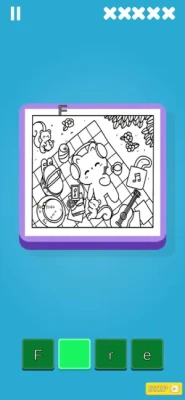
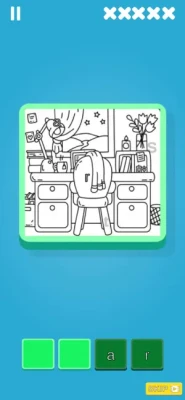
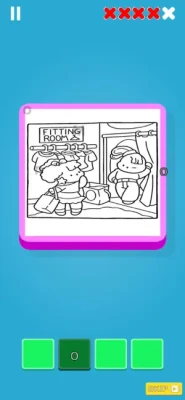
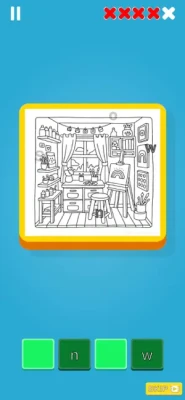
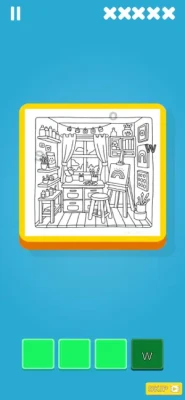
Find the Hidden Letter is a casual puzzle game centered on visual discovery. Instead of searching for a list of conventional objects, your main objective is to locate a letter that has been cleverly incorporated into the artwork.
The game's store description emphasizes detailed images in which letters are camouflaged within different environments. The concept is easy to understand, but finding a letter that has been carefully blended into its surroundings can require considerably more concentration than expected.
The game is listed in the Puzzle category and is available for iPhone and iPad. Apple currently lists compatibility with iOS 13.0 or later and iPadOS 13.0 or later.
How the Hidden Letter Puzzles Work
The basic objective is simple:
- Open a puzzle scene.
- Examine the entire image carefully.
- Look for the hidden letter.
- Compare unusual shapes and patterns with the letter you are searching for.
- Tap the suspected location when you find it.
- Continue searching if the first area you inspect is not the answer.
The difficulty comes from visual camouflage. A letter may not appear as a conventional printed character. Instead, its shape can become part of an object, background, decoration, architectural detail, or pattern.
That means simply scanning the image from left to right is not always enough.
Main Gameplay Features
Hidden Letter Searching
The central mechanic is finding letters concealed inside illustrated scenes. The game turns a familiar alphabet into a visual observation challenge.
Detailed Puzzle Images
The puzzles are designed around visually busy artwork. This creates plenty of places where a letter can disappear into the surrounding environment.
Different Visual Environments
The App Store description specifically mentions landscapes, abstract artwork, and cityscapes. This variety prevents every puzzle from feeling exactly the same.
Casual Puzzle Gameplay
There is no complicated control system to learn. The attraction comes from studying the picture and recognizing something that initially looks like part of the artwork.
Observation Challenge
The game rewards concentration and attention to detail rather than reflexes. A player who learns to divide an image into sections can often search much more efficiently.
Complete Find the Hidden Letter Strategy Guide
1. Don't Look at the Whole Picture at Once
One of the biggest mistakes is trying to process the entire image simultaneously.
Instead, divide the scene into sections:
- Top-left
- Top-center
- Top-right
- Middle-left
- Center
- Middle-right
- Bottom-left
- Bottom-center
- Bottom-right
Search each section before moving to the next.
This creates a repeatable system and dramatically reduces the chance of accidentally skipping an area.
2. Search for Shapes, Not Just Letters
A hidden letter may not immediately look like a letter.
For example, instead of asking:
"Where is the letter?"
ask:
"Where is there a shape that resembles the letter?"
Look for:
- Straight lines
- Curves
- Angles
- Crosses
- Loops
- Parallel lines
- Unusual corners
- Repeated patterns
Your brain can recognize familiar shapes faster than it can identify a fully camouflaged character.
3. Study Objects That Look Slightly Unusual
When searching a detailed image, ordinary objects usually deserve less attention than elements that look strangely shaped.
Look closely at:
- Buildings
- Signs
- Trees
- Furniture
- Windows
- Roads
- Shadows
- Decorative patterns
- Objects with unusual outlines
A hidden letter can become part of the object's natural geometry.
4. Pay Attention to Negative Space
This is one of the most useful techniques for hidden-letter puzzles.
Don't only inspect the objects themselves. Look at the empty spaces between them.
A letter can sometimes be created by:
- The gap between two objects
- An opening in a structure
- The shape of a shadow
- Empty space around decorations
- The outline of several nearby objects
If you cannot find the letter inside the artwork, inspect the spaces around it.
5. Look for Repeated Patterns
Busy images often contain repeated visual elements.
When you notice several similar objects, compare them.
For example, if an image contains:
- Several windows
- Multiple trees
- Repeated decorations
- Rows of buildings
- Similar shapes
look for the one element that does not quite match the others.
A hidden letter can be disguised by making it look like another repeated object.
6. Examine the Edges
Players often concentrate on the center of an image and forget the borders.
Search carefully around:
- The four corners
- Image borders
- Object edges
- Horizon lines
- Building outlines
- Tree branches
- Large foreground objects
When stuck, deliberately switch your attention to the outer edges.
7. Use a Consistent Scanning Direction
Don't randomly jump around the picture.
A better method is to scan in a predictable direction.
For example:
Top → Middle → Bottom
Within each section:
Left → Right
This prevents your eyes from repeatedly returning to the same areas while completely ignoring another section.
8. Search High-Contrast Areas First
A hidden letter may be easier to recognize where there is a strong difference between light and dark areas.
Pay attention to:
- Dark objects against bright backgrounds
- Bright objects against dark backgrounds
- Strong shadows
- Color transitions
- Clearly defined outlines
After checking those areas, move toward more subtle sections.
9. Look at Unnatural Geometry
The hidden character has to exist somewhere in the image, so occasionally something may have an unusual geometric shape.
Ask yourself:
"Why does this object have this particular shape?"
An oddly positioned line, curve, or angle may be the clue you need.
10. Take a Short Break When You're Stuck
Continuously staring at the same image can make your eyes stop noticing details.
If you have searched the scene several times without success:
- Stop for a moment.
- Look away.
- Return to the image.
- Start scanning from a different section.
A fresh look can make an obvious shape suddenly become visible.
Advanced Hidden Letter Techniques
The Shape Rotation Technique
Don't assume the letter will be positioned normally.
Look for the target shape:
- Horizontally
- Vertically
- Diagonally
- Upside down
- Integrated into another object
A familiar character can become much harder to recognize when its orientation changes.
The Outline Technique
Sometimes the important shape is not the filled object but its outline.
Instead of looking for a solid letter, trace the edges of objects visually.
Follow:
line → curve → corner → line
If those elements form a familiar character, you may have found the hidden letter.
The Texture Technique
Some areas contain repeated textures that can disguise a letter.
Examples include:
- Brickwork
- Foliage
- Decorative patterns
- Fabric
- Architectural details
- Repeated shapes
Don't dismiss busy areas. They may be exactly where the puzzle hides its answer.
The Comparison Technique
When you notice several similar objects, compare them rather than examining them independently.
Ask:
"Which one is different?"
A single altered object may contain the hidden character.
Best Strategy for Difficult Levels
When a puzzle becomes difficult, use this sequence:
Step 1: Identify the target
Clearly remember the letter you are searching for.
Step 2: Divide the image
Break the picture into approximately nine visual zones.
Step 3: Search obvious shapes
Look for strong lines, curves, angles, and recognizable structures.
Step 4: Inspect objects
Examine buildings, plants, signs, decorations, and other prominent elements.
Step 5: Search negative space
Check the gaps and spaces surrounding objects.
Step 6: Inspect patterns
Look for repeated elements and unusual shapes.
Step 7: Check the borders
Search the corners and edges.
Step 8: Restart with a different perspective
If necessary, repeat the scan in reverse order.
This method is much more reliable than randomly tapping around the screen.
Common Mistakes to Avoid
Searching Too Quickly
Fast scanning can cause your eyes to skip subtle details.
Staring Only at the Center
The hidden character can be anywhere within the scene, so the corners and edges should not be ignored.
Looking Only for Printed Letters
A hidden character may be formed by objects or scenery rather than appearing as conventional text.
Ignoring Background Details
The background can contain just as much information as the foreground.
Rechecking the Same Area
Random searching often causes players to revisit familiar areas while missing untouched sections.
Giving Up Too Early
The challenge comes from visual camouflage. Sometimes the answer becomes obvious only after you change your search method.
Tips for Faster Solutions
If your goal is to improve your completion speed, develop a consistent routine.
First pass: Search major objects.
Second pass: Search edges and corners.
Third pass: Examine patterns and textures.
Fourth pass: Check negative space.
Final pass: Look for the letter's shape from different orientations.
With practice, your eyes become better at detecting unusual patterns without consciously analyzing every part of the image.
Is Find the Hidden Letter Easy or Difficult?
The basic rules are very easy to understand, but the actual challenge depends on how effectively the target letter has been blended into the scene.
That makes the game suitable for casual puzzle players as well as people who enjoy observation and hidden-object challenges.
The App Store currently gives the game a 4.1/5 rating from 53 ratings, although individual experiences can vary. One App Store review specifically complained about the lack of zoom and small picture size, which is useful to keep in mind when playing on a smaller display.
Who Should Play Find the Hidden Letter?
This game is a good fit for players who enjoy:
- Hidden object puzzles
- Find-the-difference games
- Visual brain games
- Letter puzzles
- Observation challenges
- Casual puzzle games
- Picture-search games
- Relaxing visual challenges
- Games based on attention to detail
It is especially appealing if you prefer puzzles that require careful thinking rather than fast reactions.
Find the Hidden Letter on iPhone and iPad
The App Store lists Find the Hidden Letter as a free Puzzle game for iPhone and iPad. It requires iOS 13.0 or later, while the iPad version requires iPadOS 13.0 or later. The listed app size is approximately 102 MB and the age rating is 4+.
The game is available in English.
Pros and Cons
Pros
- Simple concept that is easy to understand
- Focuses on observation rather than complicated controls
- Detailed visual scenes
- Different types of environments
- Suitable for casual puzzle sessions
- Good choice for hidden-object fans
- Available on iPhone and iPad
Cons
- Finding heavily camouflaged letters can become challenging
- Small visual details may require extra concentration
- One App Store reviewer specifically noted the lack of zoom and small pictures
- The experience depends heavily on the quality and clarity of the puzzle artwork
Find the Hidden Letter vs. Traditional Hidden Object Games
Traditional hidden-object games usually provide a list of objects that you must locate.
Find the Hidden Letter takes a narrower approach.
Instead of searching for many unrelated objects, the central challenge is recognizing a hidden alphabet character inside the artwork.
That makes the experience closer to a combination of:
hidden-object puzzle + visual brain teaser + letter recognition challenge.
If you enjoy games where the answer is right in front of you but difficult to notice, this style can be particularly satisfying.
Frequently Asked Questions
What is Find the Hidden Letter?
Find the Hidden Letter is a puzzle game where players search detailed images for letters that have been cleverly hidden within the artwork.
Is Find the Hidden Letter free?
Yes. The App Store currently lists the game as Free.
Is Find the Hidden Letter available for iPhone?
Yes. It is listed for iPhone and requires iOS 13.0 or later.
Can I play Find the Hidden Letter on iPad?
Yes. The game is available for iPad and requires iPadOS 13.0 or later.
What do you have to find in the game?
The objective is to locate a hidden letter within a detailed image. The letter can be camouflaged into the surrounding scene.
What kinds of pictures are used?
The App Store description mentions scenes such as landscapes, abstract artwork, and cityscapes.
Is Find the Hidden Letter suitable for children?
Apple currently gives the game an age rating of 4+, although parents should always consider whether a particular puzzle experience is appropriate for their child.
What is the best strategy for finding hidden letters?
The most reliable approach is to divide the image into sections, scan systematically, inspect object outlines and patterns, check negative space, and examine the corners and edges.
Is this a hidden-object game?
It has a hidden-object style mechanic, but its primary focus is finding camouflaged letters rather than locating a large list of different objects.
Final Verdict
Find the Hidden Letter takes a very straightforward idea and turns it into a focused observation challenge. Rather than overwhelming players with complicated mechanics, the game asks a simple question: Can you spot the letter hidden in the picture?
Its biggest strength is the simplicity of the concept. The real challenge comes from learning how to look at an image differently. By systematically checking sections, studying shapes, examining negative space, comparing repeated objects, and paying attention to edges and unusual details, players can become much more effective at solving the puzzles.
For fans of hidden letter games, visual puzzles, hidden-object challenges, brain games, and observation games, it is a natural game to try on iPhone or iPad.
Rate the Game
User Reviews











Popular Games

















 Android
 iOS
iOS Windows
 Xbox
Xbox