


Latest Version
September 07, 2026
Easybrain Ltd
Puzzle
iOS
0
Report a Problem
More About :game
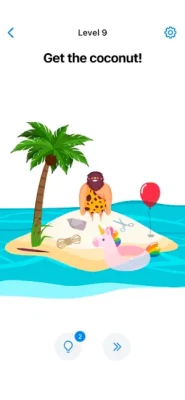
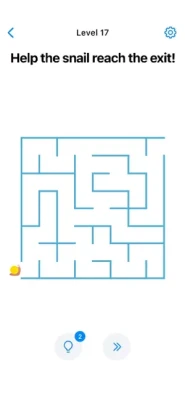
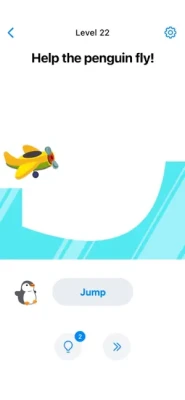
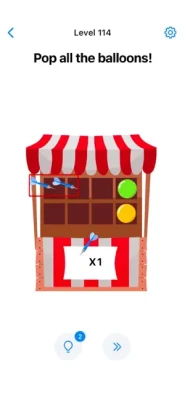
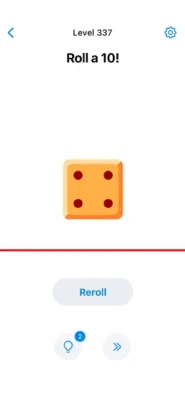
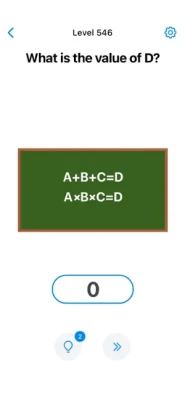
Easy Game - Brain Puzzles takes a playful approach to the traditional brain teaser. Its puzzles are designed to encourage players to look beyond the most obvious answer and experiment with different ways of interacting with the screen.
Some challenges can be solved through ordinary logic, while others require you to inspect details, manipulate objects, understand everyday situations, or think outside the box.
The App Store describes the game as a collection of funny puzzles and unexpected solutions that test creative thinking, logic, memory, imagination, attention to detail, and common sense.
This makes it a good choice for players who enjoy short puzzle challenges rather than long story-driven adventures.
What Makes Easy Game Different?
The biggest attraction is its emphasis on unexpected solutions.
A puzzle may appear to have a straightforward answer, but the correct solution can involve looking at the situation from another perspective. You might need to interact with an object, examine a small detail, rearrange something, or apply real-world reasoning.
This creates a trial-and-discovery style of gameplay where solving the puzzle is only part of the fun. Discovering how the game expects you to think is often the real challenge.
Gameplay
Easy Game uses simple touch-based interaction, but the puzzles themselves can require surprisingly different approaches.
Depending on the challenge, players may need to:
- Tap objects
- Drag objects around the screen
- Move items into specific positions
- Examine visual details
- Combine logical clues
- Apply everyday knowledge
- Think about cause and effect
- Experiment with unusual solutions
- Remember information
- Look beyond the obvious answer
The App Store specifically highlights different mechanics and encourages players to think bigger rather than solve every brain teaser in the ordinary way.
Brain Teasers & Tricky Riddles
The heart of the game is its collection of brain teasers.
Unlike a traditional crossword or Sudoku game, there is not always a single familiar formula for solving a level. One puzzle may test logic, another may require visual observation, while another may depend on understanding a simple real-life situation.
This variety keeps the gameplay from feeling completely predictable.
Creative Thinking Challenges
Many of the puzzles are designed to make players question their first assumption.
Instead of asking only, "What answer makes sense?", Easy Game encourages you to consider:
- What am I missing?
- Is there another interpretation?
- Can I interact with something differently?
- Is the obvious answer actually a trick?
- Does the image contain an important detail?
- Can I solve this using common sense?
That approach gives the game its distinctive brain-teaser identity.
Logic & Reasoning
Logic plays an important role throughout Easy Game.
Players often need to identify relationships between objects, recognize patterns, understand cause and effect, or eliminate incorrect possibilities.
The puzzles are particularly appealing to people who enjoy logic games, riddle games, IQ-style challenges, and problem-solving puzzles.
Memory Challenges
Not every challenge depends purely on logic. Some puzzles also encourage players to remember information and use it later.
This adds another dimension to the experience and prevents the game from becoming a simple collection of visual riddles.
Attention to Detail
Small details can make a major difference.
An object that appears decorative may actually be important to the solution. A seemingly insignificant element can change how a puzzle should be approached.
For this reason, carefully examining the entire screen is often more useful than immediately searching for an obvious answer.
Daily Challenges
Easy Game includes Daily Challenges that give regular players additional objectives and the opportunity to earn unique trophies.
Daily challenges can be useful for players who enjoy having a reason to return to a puzzle game regularly rather than completing levels once and moving on.
Hints
When a puzzle becomes difficult, players can use hints for assistance.
Hints are particularly useful when you understand the general objective but cannot identify the specific interaction required to complete a level.
However, players who want the full brain-training experience may prefer to experiment first and use hints only after exhausting their own ideas.
Level Variety
One of Easy Game's strengths is the variety of puzzle mechanics.
The game does not restrict itself to one type of brain teaser. Different challenges can ask players to interact with objects, recognize details, apply real-life logic, or discover an unexpected interpretation.
This variety helps maintain the game's casual pick-up-and-play character.
Controls & Interface
The interface is designed around straightforward touchscreen interaction.
Most puzzles can be approached through familiar gestures such as:
- Tapping
- Swiping
- Dragging
- Moving objects
- Selecting items
- Interacting with visual elements
The controls are intentionally simple. The difficulty comes from figuring out what to do, rather than learning complicated controls.
How to Play Easy Game - Brain Puzzles
Step 1: Read the Puzzle Carefully
Do not immediately start tapping everything on the screen. First understand what the puzzle appears to be asking.
Step 2: Examine Every Detail
Look at objects, characters, numbers, text, backgrounds, and unusual elements.
Step 3: Try the Obvious Solution
If the puzzle appears straightforward, test the most logical approach first.
Step 4: Think Differently
If the obvious answer fails, question the assumptions behind the puzzle.
Step 5: Experiment
Try moving objects, tapping different areas, or interacting with elements in unexpected ways.
Step 6: Use a Hint When Necessary
If you are genuinely stuck, a hint can point you toward the correct approach.
Beginner's Guide
New players should resist the temptation to overthink every puzzle.
Start by asking three simple questions:
What is the goal?
Understand exactly what the puzzle wants you to accomplish.
What can I interact with?
Look for objects that respond to tapping, dragging, or other gestures.
What looks unusual?
Unusual details are often there for a reason.
The most important beginner skill is learning to distinguish between a normal puzzle and a trick puzzle.
Advanced Puzzle-Solving Tips
Don't Assume the Obvious Answer Is Correct
The game is specifically designed around unexpected solutions, so a seemingly obvious answer may be a distraction.
Inspect the Whole Screen
Do not focus only on the central object. Background elements and small details can sometimes matter.
Try Different Interactions
If tapping does nothing, consider dragging. If dragging fails, examine whether another object needs to be moved first.
Use Real-Life Logic
Some challenges are easier when approached as everyday problems rather than conventional game puzzles.
Question the Wording
The exact wording of a puzzle can sometimes provide an important clue.
Don't Repeat the Same Failed Action
If the same interaction fails repeatedly, stop and reconsider the puzzle instead of simply trying it again.
Game Progression
Progression in Easy Game is based primarily on completing individual brain-teaser levels and moving through its collection of challenges.
Daily Challenges and trophies add another layer of progression for returning players.
Rather than building a character or upgrading equipment, the game focuses on puzzle completion and improving your ability to recognize unusual solutions.
Difficulty
Easy Game can feel deceptively simple.
The controls are easy to understand, but some puzzles become challenging because the intended solution is not immediately obvious.
The difficulty generally comes from:
- Unusual puzzle logic
- Hidden details
- Unexpected interactions
- Misleading assumptions
- Specific object placement
- Creative thinking requirements
This makes the game suitable for casual players while still giving experienced puzzle fans opportunities to get stuck.
What Players Say
The App Store currently shows an overall rating of 4.6 out of 5 from around 204,000 ratings, indicating a large and generally positive player response.
Player feedback also highlights both sides of the experience. Some users enjoy the variety and challenge, while others have criticized advertising frequency, certain overly specific solutions, and occasional difficulty with touch interactions.
This is useful context for potential players: the puzzles are generally well received, but the experience is not completely free from frustration.
Pros & Cons
Pros
- Creative brain teasers
- Unexpected puzzle solutions
- Simple touchscreen controls
- Variety of puzzle mechanics
- Logic and reasoning challenges
- Memory and observation elements
- Daily Challenges
- Unique trophies
- Hints available
- Good casual gameplay
- Suitable for short play sessions
- Available for iPhone and iPad
Cons
- Some solutions can feel unintuitive
- Certain puzzles may require very specific interactions
- Advertising can interrupt gameplay
- Some hints may not immediately reveal the intended solution
- Players may eventually run out of existing levels
The developer has previously stated in an App Store response that development of new Easy Game levels had been paused at that point, while new features could still be added.
Game Modes & Activities
Main Puzzle Levels
The primary experience consists of individual brain teasers that challenge players to find the intended solution.
Daily Challenges
Daily challenges provide additional puzzles and trophy-oriented objectives.
Hint-Assisted Solving
Players can request help when they cannot identify the correct solution.
Visual Style
Easy Game uses a bright, accessible visual presentation designed to keep the focus on the puzzle itself.
Objects are generally easy to recognize, while individual scenes provide the information needed to solve the challenge.
The visual simplicity is useful because it allows players to concentrate on logic, interaction, and observation rather than complex menus or controls.
Sound & Casual Experience
The game is designed primarily around its puzzles rather than a cinematic presentation.
That makes it suitable for casual sessions when you want a quick mental challenge without committing to a lengthy campaign.
Replay Value
The main replay value comes from the variety of puzzle mechanics and daily activities.
Once you know a puzzle's solution, it naturally loses some of its challenge, but players who enjoy brain teasers can continue through the available levels and return for daily challenges.
Who Should Play Easy Game?
Easy Game - Brain Puzzles is a good fit for players who enjoy:
- Brain teaser games
- Tricky riddles
- Logic puzzles
- IQ-style games
- Creative thinking games
- Memory puzzles
- Observation games
- Problem-solving challenges
- Casual puzzle apps
- Short mobile games
It is particularly appealing if you enjoy games where the solution is not always what you initially expect.
Easy Game vs Traditional Puzzle Games
Traditional puzzle games often teach players a specific set of rules and ask them to apply those rules repeatedly.
Easy Game takes a broader approach.
One level might depend on logic, another on visual observation, and another on an unexpected interaction. That variety is what separates it from more specialized puzzle games such as Sudoku, crossword puzzles, or match-three games.
Easy Game vs Brain Test Games
Easy Game shares the same general appeal as other trick-question and brain-test games: the player is encouraged to challenge assumptions and discover unusual solutions.
The focus, however, is on a collection of standalone puzzles rather than a single continuous story.
Updates & Current Version
The current App Store listing shows version 2.27.0, with the listed release notes describing performance and stability improvements. The listing also shows an earlier version 2.26.1 from September 26, 2024.
The current listing identifies the app as 230.9 MB, requiring iOS 15.0 or later, with support for iPhone and iPad.
Technical Details
| Detail | Information |
|---|---|
| Game | Easy Game - Brain Puzzles |
| Developer | Easybrain Ltd |
| Genre | Puzzle |
| Platform | iPhone, iPad |
| Price | Free with in-app purchases |
| Age Rating | 13+ |
| Current Listed Version | 2.27.0 |
| App Size | 230.9 MB |
| Minimum iOS | iOS 15.0 or later |
| Languages | English + 16 more |
| Main Gameplay | Brain teasers, riddles, logic and creative puzzles |
| In-App Purchase | Remove Ads listed at $4.99 |
These details come from the current US App Store listing.
Languages
The App Store currently lists English plus 16 additional languages, including Arabic, French, German, Hindi, Italian, Japanese, Korean, Polish, Portuguese, Russian, Simplified Chinese, Spanish, Thai, Traditional Chinese, Turkish, and Vietnamese.
Accessibility & Ease of Use
Easy Game is easy to understand from a control perspective because its interaction model is based largely on standard touchscreen gestures.
The challenge is deliberately placed in the reasoning, not the controls.
This makes it accessible to casual puzzle players who want to start playing without learning complicated mechanics.
Ads & In-App Purchases
The game is free to download but contains advertising and optional in-app purchases. The App Store currently lists a Remove Ads purchase for $4.99.
Some player reviews have criticized the frequency of advertisements, while others have considered the overall puzzle experience worthwhile.
Expert Rating
Puzzle Variety: 9/10
Creative Thinking: 9/10
Controls: 9/10
Difficulty: 8/10
Replay Value: 8/10
Casual Fun: 9/10
Overall: 8.7/10
Final Verdict
Easy Game - Brain Puzzles is a fun collection of unconventional riddles that rewards curiosity rather than simply memorizing rules.
Its greatest strength is the way it encourages players to question the obvious. A puzzle that appears extremely easy can become surprisingly tricky once you realize that the expected approach is not necessarily the correct one.
With creative challenges, different mechanics, daily challenges, trophies, hints, and simple touch controls, it offers an approachable puzzle experience for fans of brain teasers, logic games, tricky riddles, and creative problem-solving.
If you enjoy games that make you say "Why didn't I think of that?", Easy Game is worth a look.
Frequently Asked Questions
What is Easy Game - Brain Puzzles?
Easy Game - Brain Puzzles is a mobile puzzle game from Easybrain that features tricky riddles, brain teasers, logic challenges, and puzzles with unexpected solutions.
Is Easy Game free?
Yes. Easy Game is free to download, but it contains advertising and optional in-app purchases.
Who developed Easy Game?
Easy Game - Brain Puzzles was developed by Easybrain Ltd.
Is Easy Game available on iPhone?
Yes. The current App Store listing supports iPhone and iPad.
What type of puzzles are in Easy Game?
The game includes tricky riddles, logic puzzles, observation challenges, creative-thinking puzzles, memory challenges, and situations requiring real-life reasoning.
Does Easy Game have hints?
Yes. Players can use hints when they need help solving a difficult puzzle.
Does Easy Game have Daily Challenges?
Yes. Daily Challenges are included and can reward players with unique trophies.
Is Easy Game difficult?
The controls are simple, but some puzzles can be surprisingly difficult because they require an unexpected approach rather than a straightforward answer.
Does Easy Game require creative thinking?
Yes. Creative thinking is one of the central elements of the game, alongside logic, memory, imagination, common sense, and attention to detail.
Can children play Easy Game?
The US App Store currently gives the game a 13+ age rating, so parents should check the current rating and content information before allowing younger children to play.
Does Easy Game have ads?
Yes. The App Store indicates that the game contains advertising. A separate Remove Ads in-app purchase is also listed.
Official App Store
Rate the Game
User Reviews







Popular Games

















 Android
 iOS
iOS Windows
 Xbox
Xbox