
Latest Version
September 07, 2026
Easybrain Ltd
Puzzle
iOS
0
Report a Problem
More About :game
Color Sort puts a competitive twist on the familiar color-sorting puzzle genre.
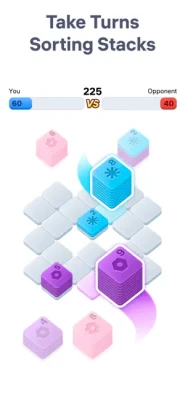
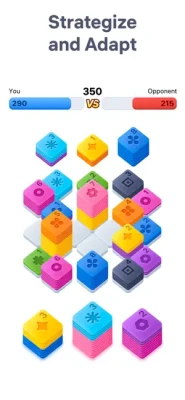
Instead of simply arranging colored liquids or objects on your own, you share the board with an opponent and take turns placing stacks. Every move can help you build your own score while potentially making the board more difficult for your rival.
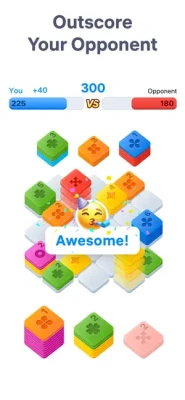
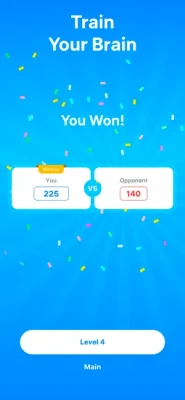
The goal is straightforward: be the first player to reach the target score.
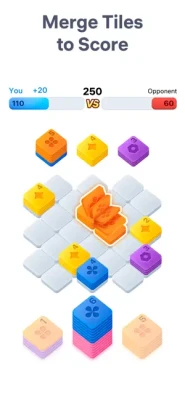
To get there, you need to match stacks of the same color, merge them into larger groups, and eventually create a stack containing 10 tiles of the same color. Once that stack reaches the required size, it disappears and awards points.
The strategic element comes from the shared board. You aren't only planning your next scoring move—you also need to think about what opportunities you're leaving for the opponent.
How Color Sort Works
Each turn gives you three stacks to place on the board. A stack may contain one color or multiple colors.
Once placed, neighboring stacks of the same color can be combined.
As matching groups become larger, they can eventually reach the 10-tile threshold and disappear, awarding points.
After your turn, your opponent gets to make their move.
This creates a repeating strategic cycle:
Place → Match → Merge → Score → Block → Reposition → Repeat
The player who reaches the target score first wins the battle.
How to Play Color Sort
1. Examine the Board
Before placing your stacks, look at the existing colors and identify potential matches.
Don't immediately place the first available stack. Consider how its position could affect future combinations.
2. Place Three Stacks
During your turn, place the three stacks provided to you.
Each stack can contain a single color or a combination of colors.
3. Match Similar Colors
Place stacks of the same color beside one another to create larger matching groups.
4. Build Toward 10 Tiles
Your objective is to create stacks containing 10 tiles of one color.
When the stack reaches 10 matching tiles, it disappears and awards points.
5. Watch Your Opponent
The board is shared, so your opponent can take advantage of spaces and colors that you leave available.
Try to make moves that improve your own scoring opportunities while reducing theirs.
6. Reach the Target First
Continue making efficient combinations until you reach the target score before your opponent.
Main Gameplay Features
Turn-Based Color Battles
Color Sort transforms color matching into a head-to-head strategic battle. Players take turns placing stacks and trying to outscore their opponent.
Stack Matching and Merging
Matching adjacent stacks of the same color allows them to merge into larger groups.
10-Tile Clearing System
When a stack reaches 10 tiles of the same color, it disappears and awards points.
Strategic Board Control
Because both players interact with the same board, positioning matters. A move that creates a scoring opportunity for you can also affect the options available to your opponent.
Simple Touch Controls
The controls are intentionally straightforward. Tap and place stacks without complicated gestures or difficult controls.
No Stressful Time Limits
The App Store describes the game as having no stressful time limits, allowing players to think through their moves.
Relaxing Puzzle Experience
Although Color Sort is competitive, its turn-based format gives players time to consider their options rather than requiring rapid reactions.
Color Matching Strategy
Color Sort isn't simply about making the biggest possible combination immediately.
A strong strategy balances short-term scoring with long-term board control.
For example, you might have an opportunity to create a small match now, but using that space differently could set up a much larger combination on your next turn.
Always ask:
Will this move help me score now, or create an even better scoring opportunity later?
Beginner's Guide
If you're new to Color Sort, focus on understanding the board before trying complicated strategies.
Start by identifying colors that already have matching neighbors. These are often your easiest opportunities for creating merges.
Then pay attention to empty spaces.
Keeping some open room can be just as important as scoring because crowded boards can make it harder to place future stacks effectively.
Beginner Rules to Remember
- Look before placing.
- Prioritize useful color matches.
- Don't fill every available space unnecessarily.
- Watch what your opponent is building.
- Think about your next turn.
- Avoid giving your opponent easy combinations.
Advanced Strategy Guide
Think Beyond Your Current Turn
Your move should ideally prepare your next move.
If you can place a stack in a position that creates multiple future matching possibilities, it may be more valuable than an immediate small score.
Control Important Spaces
Because both players use the board, strategic spaces can become valuable.
If your opponent needs a particular area to complete a large color stack, placing your own pieces there can reduce their options.
Keep the Board Manageable
A crowded board can limit your future choices.
Try to create combinations that remove large groups and maintain useful open spaces.
Deny Easy Scores
Sometimes the best move isn't the one that gives you the most points.
Blocking a powerful opportunity for your opponent can be equally valuable.
Build Large Combinations
When possible, arrange matching colors so that several stacks can eventually merge into a larger group.
The bigger the matching structure, the greater your opportunity to reach the 10-tile clearing threshold.
Scoring System
The main scoring objective is to create same-color stacks.
When a stack reaches 10 tiles of the same color, it disappears and gives you points.
This creates an important strategic choice: should you score smaller combinations quickly, or spend several turns building toward a larger clearing?
Good players learn to balance both approaches.
Board Management
Board management is one of the most important skills in Color Sort.
A move doesn't exist in isolation. Every stack occupies space and changes the possibilities for future turns.
A strong board-management strategy includes:
- Maintaining open spaces.
- Combining matching colors efficiently.
- Avoiding unnecessary clutter.
- Preventing easy combinations for the opponent.
- Preparing positions for future turns.
Turn-Based Battles
Unlike many casual color games, Color Sort gives both players alternating turns.
This changes the way you approach the puzzle.
You don't have unlimited time to build your own perfect arrangement. After your move, the opponent gets an opportunity to alter the board.
That means every turn involves two questions:
What can I gain?
and
What can my opponent gain because of my move?
Difficulty
Color Sort is easy to understand but can become increasingly strategic as you learn to anticipate the opponent.
Beginner Difficulty
New players can learn the basic matching and merging system within a few turns.
Intermediate Difficulty
More advanced play requires planning multiple moves ahead and maintaining control of the board.
Advanced Difficulty
Experienced players need to anticipate the opponent's strategy, manage available spaces, and choose between immediate scoring and long-term setups.
Events
The game features special events in addition to its core turn-based battles.
The current App Store listing includes a Fall Festival event in which players compete in battles of varying difficulty, outscore rivals, and collect postcard fragments to complete a set.
The Saudi App Store listing also currently displays the Fall Festival event and its postcard collection objective.
Relaxing Yet Competitive Gameplay
One of Color Sort's strongest characteristics is its balance between relaxation and competition.
There is no need for frantic tapping or rapid reactions. You can study the board and consider your options.
At the same time, playing against an opponent adds enough pressure to make every placement meaningful.
This makes Color Sort suitable for players who enjoy puzzle games but want something more interactive than a traditional single-player sorting game.
Tips for Winning Color Sort
Tip 1: Look for Existing Matches
Before placing anything, identify colors that are already close together.
Tip 2: Think About Space
Don't use every available position simply because it is open.
Keep useful spaces available for future turns.
Tip 3: Watch the Opponent
Your opponent's board position can tell you what they are trying to build.
Tip 4: Don't Always Chase Immediate Points
A small score now may be less valuable than setting up a large combination later.
Tip 5: Block Strategically
If your opponent is close to creating a valuable stack, consider whether you can limit their opportunity.
Tip 6: Clear Large Groups
When possible, work toward the 10-tile threshold to remove large stacks and create additional board space.
Tip 7: Think One Turn Ahead
Try to imagine what your next three stacks could do before committing to your current placement.
Common Mistakes
Filling the Board Too Quickly
Placing stacks without considering future space can make later turns much harder.
Ignoring the Opponent
Focusing exclusively on your own score can allow the opponent to build an easy winning combination.
Chasing Every Small Match
Not every available match is worth taking immediately.
Forgetting the 10-Tile Goal
Small merges are useful, but the ultimate clearing mechanic depends on reaching 10 tiles of the same color.
Playing Only for Points
Sometimes controlling the board is more valuable than maximizing your immediate score.
Controls and Interface
Color Sort uses a simple touch interface.
Tap: Select or place a stack.
Placement: Put stacks into available positions on the board.
The game does not require complex controls, allowing players to focus almost entirely on color recognition, spatial planning, and strategy.
Visual Design
The game's visual design centers around colored tile stacks and a clean puzzle board.
The colors serve an important gameplay purpose because identifying matching groups is central to both scoring and strategy.
The straightforward presentation also helps keep attention on the board rather than distracting players with unnecessary mechanics.
Player Experience
Color Sort currently has a 4.7/5 rating from approximately 2.6K ratings on the U.S. App Store.
Players have praised the simple concept and strategic nature of the game. One reviewer described it as fun and challenging while appreciating that it doesn't rely on combat or stressful gameplay.
Some players have also raised concerns. Feedback includes complaints about advertisements, difficulty in seeing the exact contents of placed stacks, and situations where the opponent appears to receive favorable color combinations. The developer has responded that the color distribution is not manipulated to favor the AI and that outcomes are based on the game's mechanics and randomness.
Progress Saving
One player reported losing game progress after reinstalling the app and suggested adding account-based or cloud-based progress saving. The developer responded that this functionality was not yet available but that they understood the request and hoped to add it in the future.
This is worth mentioning for players who frequently reinstall games or switch devices.
Pros and Cons
Pros
- Easy-to-learn color matching mechanics
- Turn-based competitive gameplay
- Strategic board management
- Simple touch controls
- No stressful time limits
- Relaxing presentation
- 10-tile clearing mechanic
- Requires planning rather than fast reflexes
- Special events
- Suitable for short or extended sessions
- Strong App Store rating
Cons
- Advertising may be intrusive for some players
- Some players find stack contents difficult to inspect
- AI matches can sometimes feel frustrating
- Progress-saving functionality has been requested by players
- The core gameplay may feel repetitive to players seeking more variety
Who Should Play Color Sort?
Color Sort is a good choice for players who enjoy:
- Color sorting games
- Matching puzzle games
- Strategy puzzles
- Turn-based games
- Brain games
- Logic puzzles
- Casual mobile games
- Relaxing puzzle games
- Competitive puzzle games
- Board-management games
It's particularly appealing if you like games where every move changes the options available on the next turn.
Who Might Not Enjoy It?
The game may not be ideal for players who prefer:
- Fast action
- Real-time multiplayer
- Story-driven games
- Complex character progression
- High-intensity gameplay
- Minimal advertising
- Large amounts of visual variety
Technical Details
Game: Color Sort: Stack Sorting Game
Developer: Easybrain Ltd
Genre: Puzzle
Platforms: iPhone and iPad
Price: Free
In-App Purchases: Yes
Advertising: Yes
Age Rating: 13+
Current Version: 1.5.0
Latest Listed Update: August 20, 2026
App Size: 233.9 MB
Required iOS: iOS 15.0 or later
Required iPadOS: iPadOS 15.0 or later
Languages: English plus 16 additional languages
Category: Puzzle
In-App Purchases
The App Store currently lists a Color Sort No Ads purchase for $14.99. The game itself is free to download.
Latest Updates
The current App Store listing shows version 1.5.0, released on August 20, 2026.
The recent version history primarily lists performance and stability improvements. Previous updates include versions 1.4.0, 1.3.0, 1.2.2, 1.2.1, 1.2.0, and 1.1.0, with the developer repeatedly highlighting performance and stability improvements.
Accessibility and Compatibility
Color Sort supports iPhone and iPad and requires iOS 15.0 or later on iPhone and iPadOS 15.0 or later on iPad.
The App Store lists support for English, Arabic, French, German, Hindi, Italian, Japanese, Korean, Polish, Portuguese, Russian, Simplified Chinese, Spanish, Thai, Traditional Chinese, Turkish, and Vietnamese.
Color Sort vs Traditional Sorting Games
Traditional color sorting games usually ask you to organize colors into matching containers.
Color Sort takes a different approach by introducing an opponent and a shared board.
Instead of simply asking:
"Can you sort all the colors?"
the game asks:
"Can you build your combinations faster and smarter than your opponent?"
This competitive layer makes the game feel closer to a turn-based strategy puzzle than a conventional sorting game.
Color Sort vs Match-3 Games
Color Sort shares some characteristics with match-3 games, especially the satisfaction of creating matching groups and clearing pieces.
However, its turn-based system makes it considerably more strategic.
You aren't simply looking for any available match. You need to decide where to place incoming stacks, preserve board space, anticipate the opponent, and build toward the 10-tile clearing mechanic.
Expert Rating
Gameplay: 8.7/10
Puzzle Design: 8.8/10
Strategy: 9.0/10
Controls: 9.0/10
Visual Presentation: 8.3/10
Replay Value: 8.6/10
Overall: 8.7/10
Final Verdict
Color Sort: Stack Sorting Game takes the familiar idea of matching colors and gives it a clever competitive twist.
The turn-based system is the game's biggest strength. Every stack you place affects not only your own future moves but also the opportunities available to your opponent. That makes board control, space management, and forward planning just as important as scoring.
The 10-tile clearing system gives players a clear objective, while special events add additional reasons to return.
There are some drawbacks, particularly around advertising and the visibility of stack contents, and some players have found the AI matches frustrating.
Overall, if you're looking for a color sorting game with strategy, turn-based battles, relaxing gameplay, and competitive puzzle mechanics, Color Sort is an interesting option.
Frequently Asked Questions
What is Color Sort: Stack Sorting Game?
Color Sort is a turn-based puzzle game where players place and merge colored stacks while competing against an opponent to reach a target score.
How do you play Color Sort?
On each turn, you place three stacks on the board. Match stacks of the same color, merge them into larger groups, and create 10-tile stacks to clear them and earn points.
What happens when a stack reaches 10 tiles?
A stack containing 10 tiles of the same color disappears and awards points.
Is Color Sort a multiplayer game?
The game uses turn-based head-to-head battles against an opponent. The App Store describes the experience as competing in turn-based battles and trying to outscore your rival.
Does Color Sort have a time limit?
The game is designed without stressful time limits, allowing players to think through their moves.
Does Color Sort have special events?
Yes. The current listing includes special events such as the Fall Festival, where players compete and collect postcard fragments.
Is Color Sort free?
Yes. Color Sort is free to download and includes advertising and optional in-app purchases.
Can I remove ads?
Yes. The App Store currently lists a Color Sort No Ads purchase for $14.99.
Can I play Color Sort on iPhone?
Yes. Color Sort supports iPhone and requires iOS 15.0 or later.
Can I play Color Sort on iPad?
Yes. The game supports iPad and requires iPadOS 15.0 or later.
Is Color Sort a good brain game?
Yes. The game requires color recognition, spatial planning, board management, and anticipation of an opponent's moves, making it a strong casual strategy puzzle.
Is Color Sort relaxing?
The turn-based design and lack of stressful time limits make it suitable for relaxed puzzle sessions, while the competitive opponent adds strategic tension.
Rate the Game
User Reviews









Popular Games



















 Android
 iOS
iOS Windows
 Xbox
Xbox