
Latest Version
September 09, 2026
Tripledot Studios
Puzzle
iOS
0
Report a Problem
More About :game
The game combines the familiar mechanics of a classic bubble shooter with power-ups, rewards, events, and a large collection of levels. Its simple controls make it easy to start, while later puzzles require more careful shots and better planning.
BubbleGo is developed by Tripledot Studios and is available for iPhone and iPad. The App Store currently lists it as a free game with optional in-app purchases.
How to Play BubbleGo - Pop Shooter
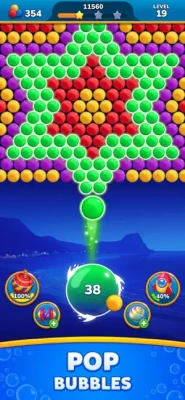
The basic objective is straightforward: aim and launch a colored bubble toward the playfield, then match it with bubbles of the same color.
When three or more matching bubbles are connected, they can be popped and removed. Clearing the right groups can expose bubbles above them, create larger reactions, and open new shooting opportunities.
A typical level involves:
- Looking over the board before shooting.
- Identifying the most useful color group.
- Aiming carefully at the desired location.
- Matching three or more bubbles.
- Clearing hanging or obstructing sections.
- Creating larger combinations when possible.
- Using boosters when a normal shot is unlikely to solve the problem.
- Finishing the level while managing the available shots and board space.
BubbleGo Gameplay Features
Classic Bubble Shooting
BubbleGo keeps the central bubble-shooter mechanic easy to understand. You aim, shoot, match colors, and clear bubbles from the board.
Thousands of Levels
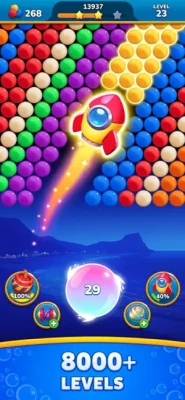
The game is designed around a large collection of puzzle levels, giving players plenty of stages to work through. The developer also describes new puzzles and challenges as part of the ongoing experience.
Boosters and Power-Ups
Special tools can help when ordinary shots are not enough. The App Store description specifically mentions bombs, lightning strikes, and rainbow bubbles.
These power-ups are most useful when they solve a particular board problem rather than simply being activated whenever they become available.
Events and Challenges
BubbleGo also includes limited-time events and challenges that give the standard bubble-shooting format additional objectives and rewards.
Offline Play
The game supports offline play, making it suitable for short sessions when an internet connection is unavailable.
Colorful Visual Style
Bright bubbles, clear board layouts, popping effects, and smooth animations give BubbleGo a light and accessible casual-game atmosphere.
BubbleGo - Pop Shooter Strategy Guide
Bubble shooters look simple, but blindly firing at the largest visible group can quickly make a difficult board even harder. The strongest approach is to think about what your shot will reveal or create next.
1. Don't Always Pop the Largest Group
A large match is not automatically the best move.
Before shooting, ask:
What happens after these bubbles disappear?
If removing a small group exposes a large cluster underneath it, that shot can be considerably more valuable than immediately clearing a larger group somewhere else.
2. Look for Bubbles Holding Up Other Bubbles
One of the most useful targets is a group that supports bubbles above it.
Instead of slowly clearing the visible surface, look for a strategically important connection. Breaking that connection can remove a much larger section of the board.
This is particularly useful when several bubbles are attached to the same supporting structure.
3. Plan the Shot After Your Shot
Don't stop planning once you've found a match.
Try to identify your next target before firing.
For example:
- Current bubble: red
- Best red match: clears an obstacle
- Next likely target: blue cluster
- Result: you preserve a useful shooting angle
This prevents you from making a good move that leaves yourself with a terrible follow-up.
4. Use the Walls for Difficult Angles
Bank shots can be extremely useful.
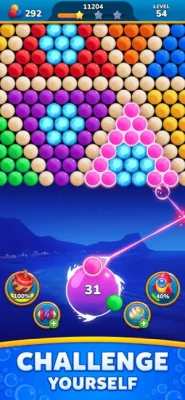
If a direct line is blocked, use the side of the board to redirect the bubble toward an otherwise inaccessible group.
Before firing a bank shot, check where the bubble will actually land rather than relying only on the apparent direction of the aiming line.
5. Don't Build Unnecessary Bubble Layers
Adding bubbles to the board without a clear purpose can make future shots more difficult.
If you can either attach a bubble safely to an existing matching group or create a new isolated cluster, the first option is often preferable.
The goal is to keep the board organized rather than gradually filling it with disconnected colors.
6. Target Difficult Colors Early
If one color has only a few useful positions, consider dealing with it before the board becomes crowded.
A color that is easy to reach now can become extremely difficult after several unrelated shots change the available angles.
7. Think About the Next Bubble
When the upcoming bubble color is visible, use that information.
You may have two possible shots:
- A small immediate match
- A setup shot that prepares a much larger combination with the next bubble
The second option can be better when the board is not under immediate pressure.
8. Save Powerful Boosters for Real Problems
Bombs, lightning effects, and rainbow bubbles can change a difficult board, but using them on an easy section wastes their value.
A good time to use a booster is when it:
- Opens an important path
- Removes a difficult cluster
- Creates a major chain reaction
- Prevents the board from becoming blocked
- Completes a difficult objective
Don't use a powerful item simply because it is available.
9. Create Chain Reactions
Before making a shot, look beyond the bubbles you are directly matching.
Ask whether the resulting removal will cause another group to fall or become disconnected.
A carefully chosen shot can therefore accomplish much more than its initial three-bubble match suggests.
10. Use Failed Shots as Information
Not every shot will produce a perfect result.
If a shot does not work as expected, don't immediately repeat the same approach. Look at how the bubble landed and reconsider the angle.
This is especially important on compact boards where a small change in trajectory can completely alter the result.
Advanced BubbleGo Tips
Protect Useful Shooting Lanes
Some areas of the board provide much better angles than others. Avoid filling these routes with unnecessary bubbles when you can.
Keeping a clear shooting lane gives you more options later.
Work From the Board's Structure
Instead of treating every bubble as an individual target, identify groups:
- Support groups
- Hanging groups
- Difficult colors
- Large clusters
- Isolated bubbles
- Potential chain-reaction areas
This makes complicated boards much easier to understand.
Clear Obstacles Before Chasing Bonuses
A flashy combination can be tempting, but if another group is blocking the route to the main objective, deal with the obstruction first.
A smaller tactical move can often lead to a much larger payoff.
Don't Rush Easy Levels
Early stages are a good opportunity to understand BubbleGo's shooting behavior, angles, boosters, and level structure.
Learning how bubbles behave now can save failed attempts on more complicated boards later.
Common BubbleGo Mistakes
Shooting without checking the board:
A quick match can create a bad position for the next several moves.
Using boosters immediately:
Power-ups are much more valuable when they solve a specific problem.
Ignoring supporting groups:
The most valuable target may be underneath a large group rather than in the largest visible cluster.
Making too many setup shots:
Planning is useful, but eventually you need to make progress. Avoid endlessly preparing a combination that may never become available.
Forgetting bank shots:
Blocked direct paths don't necessarily mean a target is unreachable.
Difficulty
BubbleGo starts with accessible bubble-shooting mechanics, making the basic gameplay easy to understand. The challenge comes from increasingly complicated boards, restricted angles, color combinations, and the need to decide which groups should be removed first.
Difficulty: Easy to learn, progressively challenging
Best suited for: Casual players, puzzle fans, bubble shooter enthusiasts, and players who enjoy short relaxing sessions.
Graphics and Atmosphere
BubbleGo uses a bright, colorful presentation designed around the satisfying visual feedback of popping bubbles. The overall atmosphere is casual and upbeat rather than competitive or story-heavy.
The simple visual language also helps keep the important gameplay information clear: bubble colors, available targets, shooting angles, and board structure.
Player Feedback
The App Store currently shows a 3.7/5 rating from 10 ratings, although this is a relatively small sample. Some players have praised the gameplay's potential while reporting technical problems such as freezing or interruptions during play.
The developer's version history shows repeated performance improvements and bug fixes, including updates aimed at stability and gameplay issues.
That makes the game's technical performance something prospective players may want to keep in mind alongside its core bubble-shooting gameplay.
Pros and Cons
Pros
- Simple and accessible bubble-shooter mechanics
- Large selection of levels
- Colorful and satisfying gameplay
- Bomb, lightning, and rainbow-style power-ups
- Limited-time events and challenges
- Offline play
- Easy to pick up for short sessions
- Strategic shooting becomes more important as boards become harder
Cons
- Small current App Store rating sample
- Some player reports mention freezing and gameplay interruptions
- Optional purchases are available
- Later stages can require considerably more careful planning
BubbleGo - Pop Shooter Game Information
Game: BubbleGo - Pop Shooter
Developer: Tripledot Studios
Genre: Casual / Puzzle
Platform: iPhone and iPad
Price: Free with optional in-app purchases
Language: English
Age Rating: 13+
Current App Store Size: About 285 MB
Compatibility: iOS 13.0 or later; iPadOS 13.0 or later
In-App Purchases: Yes
The App Store also lists support for Apple silicon Macs and Apple Vision, subject to the stated compatibility requirements.
Recent Updates
BubbleGo has received a series of updates focused on improving stability, performance, loading, early-game experience, and general gameplay reliability.
The App Store currently lists version 0.04.90, with the latest update described as improving the game's stability. Earlier releases also included performance improvements, bug fixes, loading optimizations, and level-related fixes.
Frequently Asked Questions
What is BubbleGo - Pop Shooter?
BubbleGo - Pop Shooter is a casual bubble-shooting puzzle game where players aim colored bubbles, match groups of three or more, clear the board, and use special power-ups.
Is BubbleGo free to play?
Yes. BubbleGo is listed as a free game on the App Store, with optional in-app purchases.
Does BubbleGo have power-ups?
Yes. The game features several types of boosters, including bombs, lightning effects, and rainbow bubbles.
Can you play BubbleGo offline?
Yes. The game's App Store description states that it supports offline play.
Does BubbleGo have many levels?
Yes. The developer describes the game as having thousands of challenging levels.
What is the best strategy for BubbleGo?
Don't focus only on making the biggest immediate match. Look for groups supporting larger sections of the board, protect useful shooting lanes, plan your next move, use bank shots when necessary, and save powerful boosters for difficult situations.
Is BubbleGo difficult?
The basic controls are easy to learn, but the puzzle challenge increases as boards become more complicated and require better shot selection.
Final Verdict
BubbleGo - Pop Shooter delivers a familiar bubble-matching formula with a large level collection, colorful presentation, power-ups, events, and offline play. Its controls are easy to understand, but successful play becomes more strategic when the board starts limiting your shooting options.
The biggest difference between simply playing and playing well is planning. Instead of firing at the easiest available match, look for shots that remove supporting groups, create chain reactions, preserve useful angles, and prepare the next move.
For fans of casual bubble shooter and color-matching puzzle games, BubbleGo offers a straightforward experience with enough level variety and power-ups to keep the basic formula engaging.
Rate the Game
User Reviews





Popular Games
















 Android
 iOS
iOS Windows
 Xbox
Xbox