


Latest Version
September 08, 2026
Easybrain Ltd
Puzzle
iOS
0
Report a Problem
More About :game
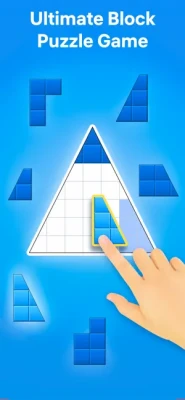
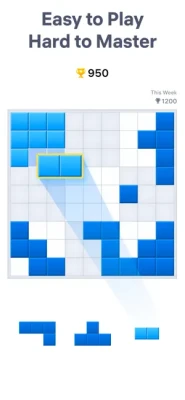
Blockudoku is a mobile puzzle game developed by Easybrain that blends two familiar puzzle concepts: block placement and Sudoku. Instead of matching numbers, players arrange differently shaped blocks on a 9×9 board and clear completed lines or 3×3 squares.
The rules are easy to understand, but getting a high score requires considerably more thought. You need to think several moves ahead, preserve useful spaces, and avoid filling the board with shapes that leave you without a possible placement.
The game is available for iPhone and iPad and is free to play with optional in-app purchases. The U.S. App Store currently lists a 4.7/5 rating from around 660K ratings.
Blockudoku Gameplay Overview
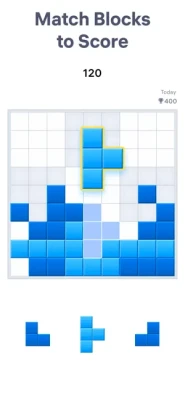
At the center of every game is a 9×9 puzzle grid. Players receive blocks in different shapes and must decide where each one should go.
The objective is to:
- Place blocks strategically on the grid
- Complete horizontal and vertical lines
- Complete 3×3 squares
- Clear multiple elements with one move
- Maintain enough open space for future blocks
- Create combos and streaks
- Keep the board from becoming completely blocked
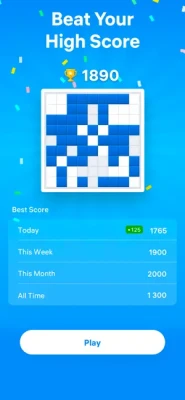
- Chase a new high score
Unlike many fast-paced mobile games, Blockudoku does not require you to rush. The App Store description specifically notes that there is no time limit, allowing players to think carefully before committing to a move.
How to Play Blockudoku
1. Study the Available Blocks
Before placing anything, look at the shapes currently available. Don't automatically use the first available space.
2. Look for Multiple Clears
A strong move can complete a row, column, or 3×3 square at the same time. These moves can create more efficient board-clearing opportunities.
3. Protect Open Space
One of the biggest mistakes beginners make is filling the board too quickly. Keep flexible areas available for larger or awkwardly shaped blocks.
4. Plan Your Next Move
Think beyond the current block. A placement that looks good immediately can make the following pieces impossible to place.
5. Build Combos and Streaks
Clearing several elements at once can create combos, while successful consecutive moves can contribute to streaks and improve your score.
Key Features of Blockudoku
9×9 Block Puzzle Grid
The main board uses a 9×9 layout inspired by the familiar structure of Sudoku. This creates a distinctive playing field for traditional block puzzle mechanics.
Sudoku Meets Block Puzzle
The game's biggest attraction is its hybrid design. You don't solve Sudoku with numbers; instead, you use block placement to complete lines and 3×3 sections.
Daily Challenges
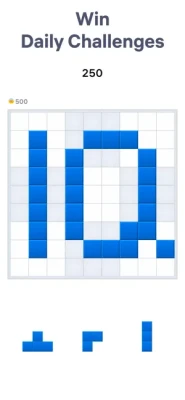
Daily Challenges provide additional objectives for players who want something beyond the standard high-score experience. The game also awards unique trophies through its challenge system.
Seasonal Events
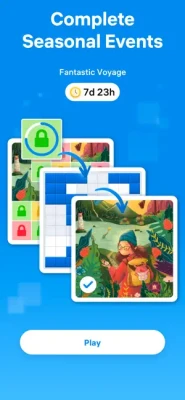
Seasonal content introduces themed challenges and collectible rewards such as animated postcards. The current App Store listing also shows special events as part of the game's ongoing content.
Tournaments
Players can participate in tournaments, compete for higher scores, and work their way up leaderboards.
Combos
Clearing multiple elements through an efficient placement can produce satisfying combo opportunities.
Streaks
Making several successful moves consecutively allows players to build streaks and pursue higher scores.
High-Score Competition
The endless pursuit of a better score gives the core puzzle mode strong replay value.
Game Modes and Activities
Blockudoku offers more than its basic block-placement gameplay.
Classic Puzzle Gameplay:
Play on the 9×9 board and attempt to survive as long as possible while increasing your score.
Daily Challenges:
Take on regularly available challenges and work toward unique trophies.
Seasonal Events:
Complete themed puzzle activities and collect event rewards.
Tournaments:
Compete against other players and attempt to climb the leaderboard.
These activities give the game a mixture of relaxing solo play and competitive goals.
Blockudoku Strategy Tips
Don't Fill the Center Too Quickly
Central spaces can be valuable because many block shapes may need room around them. Keep your board flexible whenever possible.
Think About the Largest Shape First
If one of your available blocks is difficult to place, consider its destination before placing easier shapes.
Clear Lines Regularly
Leaving completed rows or columns sitting on the board reduces your available space. Clearing them keeps the grid manageable.
Search for 3×3 Opportunities
Because the board incorporates Sudoku-style sections, completing a 3×3 square can be just as important as clearing a line.
Avoid Greedy Moves
A move that clears one line isn't necessarily better than a move that prepares two future clears.
Maintain Flexible Spaces
Try to avoid creating isolated gaps that only accept very specific block shapes.
Beginner's Guide
If you're new to Blockudoku, start by focusing on survival rather than score.
Don't worry about creating impressive combos immediately. Instead, learn how the different block shapes interact with the 9×9 grid.
A good beginner routine is:
- Examine all available pieces.
- Identify possible line or square clears.
- Place the most restrictive shape first.
- Keep several areas of the board open.
- Clear completed sections whenever practical.
- Think at least one move ahead.
- Gradually experiment with combo and streak strategies.
Once you become comfortable with the board, you can begin optimizing placements for much higher scores.
Advanced Blockudoku Strategy
Experienced players should think about board management, not simply immediate clears.
A strong strategy involves predicting which areas will remain usable after each placement. You should also consider how one clearance changes the available space and whether a move creates useful room for future shapes.
The best players don't simply ask:
"Can I clear something?"
They ask:
"What will this move allow me to do next?"
That difference becomes increasingly important during longer runs.
Why Blockudoku Is So Addictive
The appeal of Blockudoku comes from its combination of simplicity and strategic depth.
The basic rules can be understood almost immediately, yet achieving a strong score takes practice. Every new group of blocks creates a small decision-making puzzle, while a single poor placement can eventually make the board impossible to manage.
The lack of a time limit also makes it suitable for relaxed sessions. Players can take their time, analyze the board, and decide where each piece belongs.
Graphics and Presentation
Blockudoku uses a clean, board-focused presentation designed to keep attention on the puzzle itself. Its visual identity centers around colorful blocks, grid placement, and satisfying clearing animations.
The game also offers themed visual experiences through its events and collectible postcard system.
Difficulty
Easy to learn: ★★★★★
Strategic depth: ★★★★☆
Long-term challenge: ★★★★★
Competitive potential: ★★★★☆
Relaxing gameplay: ★★★★★
The basic mechanics are accessible, but maintaining a long run and achieving high scores can become considerably more challenging.
Controls and Interface
Blockudoku uses simple touch-and-drag controls designed for mobile devices.
The basic interaction is straightforward:
Select a block → Drag it onto the grid → Release it into a valid position.
There are no complicated button combinations or character controls. The challenge comes almost entirely from deciding where each block should be placed.
Blockudoku Game Progression
There isn't a traditional character-leveling or story progression system. Instead, progression is based around:
- Improving your personal high score
- Completing Daily Challenges
- Earning trophies
- Participating in Seasonal Events
- Collecting event rewards
- Building longer streaks
- Creating larger combos
- Competing in tournaments
- Improving leaderboard performance
This makes Blockudoku particularly suitable for players who enjoy skill-based progression rather than RPG-style upgrades.
Characters, Weapons and Inventory
Blockudoku does not use traditional playable characters, weapons, armor, or inventory systems.
The primary focus is the puzzle board and block shapes. Progression comes through puzzle performance, challenges, trophies, events, and competitive scoring rather than equipment upgrades.
Game Modes at a Glance
| Mode | Main Objective |
|---|---|
| Classic Puzzle | Keep the board clear and achieve a high score |
| Daily Challenges | Complete special daily objectives |
| Seasonal Events | Solve themed puzzles and collect rewards |
| Tournaments | Compete for leaderboard positions |
| Combo Play | Clear multiple elements efficiently |
| Streak Play | Maintain successful consecutive moves |
The current App Store listing confirms Daily Challenges, Seasonal Events, Tournaments, combos and streak mechanics.
Pros and Cons
Pros
- Easy-to-understand mechanics
- Unique Sudoku and block-puzzle combination
- 9×9 strategic grid
- No time limit in the core gameplay
- Daily Challenges
- Seasonal Events
- Tournaments and leaderboards
- Combos and streaks
- Strong replay value
- Suitable for short or longer sessions
Cons
- Random block combinations can create difficult situations
- Long sessions can become repetitive for some players
- Competitive high-score play requires patience
- The game contains advertising and optional in-app purchases on the App Store.
Technical Details
Game: Blockudoku - Block Puzzle Game
Developer: Easybrain Ltd
Genre: Puzzle / Board
Platform: iPhone and iPad
Price: Free with in-app purchases
Age Rating: 13+ on the U.S. App Store
App Size: Approximately 250 MB on the current U.S. App Store listing
Languages: English plus 19 additional languages
Core Board: 9×9 grid
App Store Release: 2019
These details are based on the current App Store listing.
Blockudoku Updates and Events
Blockudoku continues to receive new content and event-based activities. The current App Store page displays special events, including themed puzzle activities and collectible postcards.
Third-party App Store tracking currently lists version 3.24.0, updated August 13, 2026, although the App Store listing itself is the better source for the game's current availability and feature information.
Blockudoku vs Traditional Sudoku
Traditional Sudoku asks players to place numbers according to strict numerical rules.
Blockudoku takes a different approach.
Instead of numbers, you manipulate geometric blocks. Instead of simply completing a numerical puzzle, you must balance space management, shape placement, line clearing, 3×3 sections, and future possibilities.
This makes Blockudoku appealing to people who enjoy Sudoku but want a more visual and flexible puzzle format.
Blockudoku vs Traditional Block Puzzle Games
Traditional block puzzle games usually focus primarily on completing rows.
Blockudoku adds another layer by incorporating 3×3 Sudoku-style sections. This means players have more than one way to clear the board and must think about both immediate space and future placements.
That combination gives the game a distinctive identity within the mobile puzzle genre.
Who Should Play Blockudoku?
Blockudoku is a good choice for players who enjoy:
- Block puzzle games
- Sudoku-inspired games
- Brain teasers
- Logic puzzles
- Casual strategy games
- High-score challenges
- Relaxing mobile games
- Daily challenges
- Competitive leaderboards
- Short puzzle sessions
If you enjoy games where one carefully considered move can completely change the board, Blockudoku is particularly easy to recommend.
Player Experience
The game's strongest quality is its balance between casual accessibility and strategic depth. You can understand the basic concept quickly, but improving your score requires learning how to manage space and anticipate future blocks.
The App Store currently shows a 4.7/5 rating from approximately 660,000 ratings in the U.S. listing, demonstrating substantial player engagement.
Player feedback also shows that some long-time users have strong opinions about changes to Daily Challenges and event mechanics, which is worth mentioning for readers interested in how the game has evolved over time.
Expert Rating
Gameplay: 9/10
Puzzle Design: 9/10
Replay Value: 9/10
Controls: 9/10
Visual Presentation: 8/10
Challenge: 9/10
Overall: 8.8/10
Final Verdict
Blockudoku successfully combines the familiar satisfaction of block puzzles with the strategic structure of Sudoku. Its 9×9 board is simple enough for newcomers but offers plenty of room for advanced planning, particularly when chasing high scores, combos, streaks, and tournament rankings.
Daily Challenges, Seasonal Events and competitive features give players additional reasons to return, while the absence of a time limit makes the core experience comfortable for relaxed puzzle sessions.
If you're looking for a free block puzzle game with Sudoku-inspired mechanics, Blockudoku is one of the more distinctive choices in the genre.
Frequently Asked Questions
What is Blockudoku?
Blockudoku is a puzzle game that combines block placement with a Sudoku-style 9×9 grid. Players place different-shaped blocks and clear completed lines and 3×3 squares.
Is Blockudoku free?
Yes. Blockudoku is free to download, with optional in-app purchases. The App Store also lists advertising.
Can I play Blockudoku offline?
The core puzzle mechanics are designed around single-player board play, but specific events, tournaments, advertisements, and other connected features may require an internet connection.
Does Blockudoku have a time limit?
The game's App Store description states that there is no time limit, allowing players to consider their moves carefully.
Is Blockudoku Sudoku?
It is not traditional Sudoku. It combines Sudoku-style 3×3 sections with block-puzzle mechanics.
What is the Blockudoku board size?
The main puzzle uses a 9×9 grid.
Does Blockudoku have tournaments?
Yes. The game includes tournaments where players can compete for high scores and leaderboard positions.
Does Blockudoku have Daily Challenges?
Yes. Daily Challenges are part of the game's ongoing puzzle activities and can provide unique trophies.
Can I play Blockudoku on iPad?
Yes. The current App Store listing supports both iPhone and iPad.
Rate the Game
User Reviews





Popular Games



















 Android
 iOS
iOS Windows
 Xbox
Xbox