
Latest Version
September 09, 2026
Tripledot Studios
Puzzle
iOS
0
Report a Problem
More About :game
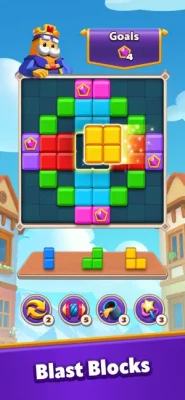
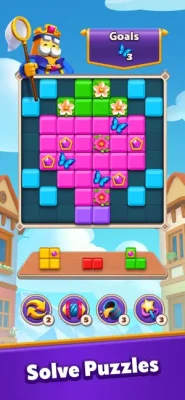
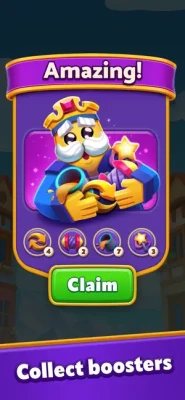
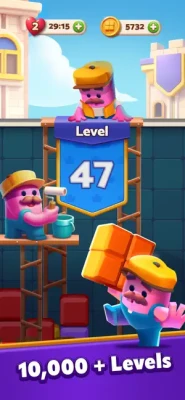
There are thousands of handcrafted puzzles, no time limits, kingdom environments to unlock, boosters and rewards, special events, and offline play. The game is designed to be relaxing when you want a quick puzzle session while still becoming increasingly challenging as you progress.
What Is Block Kingdom?
Block Kingdom combines traditional block-puzzle mechanics with a light kingdom-adventure progression system.
Instead of racing against a clock, you can examine the board and decide where each piece should go. The central challenge is simple: fit the available blocks onto the grid and clear completed lines.
That simplicity is deceptive. A placement that looks good immediately can create an awkward gap that makes your next pieces difficult to use. The further you progress, the more important it becomes to think about several moves ahead instead of simply looking for the first available space.
The game features thousands of handcrafted levels, offline play, unlockable environments, boosters, rewards, and limited-time challenges.
Block Kingdom Gameplay
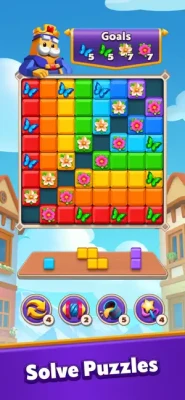
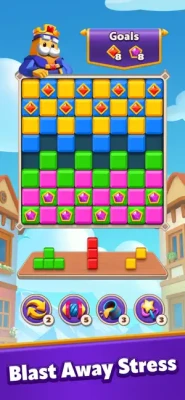
Each puzzle gives you a selection of block shapes that must be placed on the board.
Your basic objectives are:
- Find suitable positions for the available blocks.
- Complete rows or columns whenever possible.
- Clear space before the board becomes overcrowded.
- Avoid creating isolated holes.
- Think about the shapes that may need to be placed next.
- Use boosters when a position becomes difficult to recover.
- Continue solving puzzles to progress through the kingdom.
There is no timer, which is one of the game's biggest advantages. You can stop and study the board before committing to a move.
The Most Important Block Kingdom Strategy
The biggest mistake beginners make is treating every empty space as equally valuable.
It isn't.
A large open area is usually more useful than several small disconnected spaces. Your goal should therefore be to maintain a board that gives you multiple placement possibilities.
Before placing a block, ask yourself:
- Does this placement complete a row or column?
- What spaces will remain afterward?
- Could another available block still fit?
- Am I creating a one-cell or awkward-shaped hole?
- Will this placement make the board easier or harder to solve?
This five-second assessment can prevent many unnecessary mistakes.
1. Keep the Board Flexible
Try not to fill the center of the board randomly.
A flexible board gives you more options for future pieces. When several different shapes can still fit comfortably, you have more opportunities to recover from an unfavorable piece combination.
Avoid building a complicated wall of blocks unless it helps you complete a line.
Better approach: maintain several open areas rather than concentrating all your blocks into one crowded section.
2. Clear Lines Before the Board Gets Crowded
Completing a row or column is more valuable than simply finding somewhere to put a block.
If you have a choice between:
- placing a piece in a convenient empty area, or
- using it to complete a line,
the line-clearing move is usually the stronger option.
Clearing space gives you additional room for future pieces and reduces the risk of getting trapped.
3. Do Not Chase Immediate Clears
Not every possible line clear is worth taking immediately.
Sometimes placing a block to complete one row can divide your remaining space into awkward sections.
Before making an obvious clear, look at the other pieces available.
A good move should accomplish two things:
clear space + preserve future options.
That is much stronger than simply clearing the most obvious line.
4. Watch for Large Pieces
Large blocks can become difficult to place when the board is nearly full.
If you have a large or unusual shape available, consider where it could realistically fit before filling the surrounding area.
This is especially important when the board contains narrow gaps.
A useful rule is:
Protect the space required by difficult pieces before filling easy spaces.
Small blocks can normally fit into many locations. Large or awkward shapes have fewer options.
5. Avoid Isolated Holes
One of the most dangerous board patterns is a tiny empty space surrounded by blocks.
If none of your remaining pieces can fit into that gap, it becomes wasted space.
Whenever possible, avoid creating:
- single-square holes,
- narrow pockets,
- enclosed spaces,
- dead-end corners,
- irregular gaps that only one specific shape could fill.
Keeping empty areas connected gives you much greater flexibility.
6. Think About the Next Move
Because Block Kingdom does not use a timer, take advantage of that freedom.
Don't ask only:
"Where can I put this block?"
Ask:
"Where can I put this block while keeping my next move safe?"
That small change in thinking makes a major difference on harder puzzles.
7. Use Corners Carefully
Corners can be useful because some shapes fit naturally into them.
However, filling a corner with the wrong piece can also permanently reduce your options.
Use corners for pieces that fit naturally rather than forcing a shape into a corner simply because the space is available.
8. Build Toward Multiple Clears
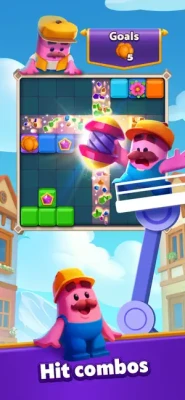
When possible, position pieces so that one placement helps prepare more than one future line.
For example, if a block can contribute toward completing both a horizontal and vertical line, it may be more valuable than a placement that only helps one row.
This creates a chain-clearing mindset:
place → prepare → clear → reopen space.
9. Save Versatile Pieces
Small and simple pieces are extremely useful when the board starts becoming crowded.
Don't automatically use them just because they fit.
Sometimes keeping a flexible piece available gives you an emergency solution later.
Think of your pieces as resources rather than obstacles.
10. Use Boosters Strategically
Block Kingdom includes boosters and rewards designed to help with difficult situations.
The best time to use a booster is generally when it solves a problem that normal placement cannot easily fix.
Avoid using valuable assistance simply because a puzzle looks slightly inconvenient.
Save stronger help for situations such as:
- the board becoming dangerously crowded,
- a difficult piece having almost no placement options,
- a critical line being just out of reach,
- recovering from a poor sequence of placements,
- challenging event stages where failure is more costly.
The goal is not to avoid using boosters. The goal is to make every booster count.
How to Beat Difficult Block Kingdom Levels
When a level becomes difficult, stop trying random placements.
Use this process:
Step 1: Examine Every Available Piece
Identify the largest, most awkward, and most restrictive shapes first.
Step 2: Find Their Potential Locations
Before placing anything, determine where those pieces could fit.
Step 3: Identify Immediate Clears
Look for rows or columns that can be completed without damaging the rest of the board.
Step 4: Protect Future Space
Don't fill the only area where your difficult piece can fit.
Step 5: Make the Safest Placement
Choose the move that leaves the greatest number of future possibilities.
Step 6: Reassess the Board
After every clear, stop and examine the new layout instead of immediately placing the next piece.
This method is slower than random placement, but it is much more reliable.
Block Kingdom Advanced Strategy
The Space-Value Principle
Not all empty squares have the same strategic value.
An isolated empty square may be practically useless, while a large connected area can accommodate many different shapes.
Therefore:
Connected space > fragmented space.
When choosing between two otherwise similar moves, favor the move that preserves larger connected regions.
The Shape-Restriction Principle
Different pieces have different levels of flexibility.
A small square or simple shape can usually fit into many places.
A large irregular shape may only have a few viable locations.
Therefore, evaluate the most restrictive piece first.
This prevents the classic mistake of filling the exact space needed by a difficult piece.
The Recovery Principle
A strong placement should leave you with a way out if the next piece is inconvenient.
If one move creates only one possible continuation while another move gives you three or four possible placements, the second option is usually safer.
Think of every move as creating your future options.
How to Approach Special Challenges and Events
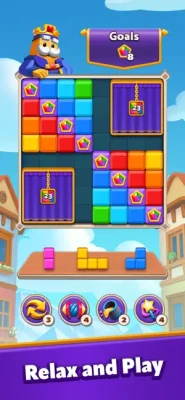
Block Kingdom also includes limited-time challenges and special events that introduce additional goals and rewards.
For event gameplay:
- Read the objective before playing.
- Don't assume ordinary level strategy will always produce the best event result.
- Prioritize the goal of the current challenge.
- Avoid wasting boosters early.
- Track your progress toward the event objective.
- Use safe placements rather than chasing risky high-value moves.
- If an event has a leaderboard or competitive element, focus on consistency rather than one spectacular attempt.
Some players have also reported issues involving challenge progress and event rankings, so if an event appears not to update correctly, checking that the game is running the latest version is sensible.
Block Kingdom Tips for Beginners
Tip 1: Don't rush
There is no time limit, so inspect the board before moving.
Tip 2: Think beyond one move
The best placement is often the one that prepares your next move.
Tip 3: Protect large open areas
Open space gives you more choices.
Tip 4: Avoid tiny holes
Small unusable gaps can eventually block the entire board.
Tip 5: Clear lines regularly
Clearing space prevents the board from becoming increasingly restrictive.
Tip 6: Save useful pieces
A flexible piece can rescue you later.
Tip 7: Don't waste boosters
Use assistance when it actually changes the outcome.
Tip 8: Learn from failed boards
When a puzzle goes wrong, identify the placement that caused your options to disappear.
Common Mistakes in Block Kingdom
Filling the Board Randomly
Putting pieces wherever they fit may work during easy levels, but it quickly becomes unreliable.
Ignoring Future Pieces
A placement can look perfect until you realize the next shape has nowhere to go.
Creating Small Gaps
Tiny enclosed spaces are among the most dangerous positions on a block-puzzle board.
Clearing Lines Without Planning
A clear is useful, but not if it destroys your remaining placement options.
Using Boosters Too Early
Keep assistance available for situations where normal moves cannot easily solve the problem.
Playing Too Quickly
Since there is no timer, speed provides little benefit. Accuracy is more important.
Best Strategy for Long Puzzle Sessions
If you are playing many levels in one sitting, avoid switching into an automatic placement pattern.
Every board is different.
Instead, use a repeating decision cycle:
Inspect → identify restrictions → plan → place → clear → reassess.
This keeps you from making moves simply because they appear obvious.
Taking a short pause after a major line clear can also help because the board may become completely different after several blocks disappear.
Progression and Kingdom Adventure
Block Kingdom is not simply a collection of isolated block puzzles. Successful puzzle solving is tied to progression through the game's kingdom environments.
The game combines puzzle completion with rewards and environments that unlock as you advance.
That gives the basic block-placement system a longer-term progression loop:
Solve puzzles → earn rewards → progress → unlock more content → tackle harder puzzles.
Offline Play
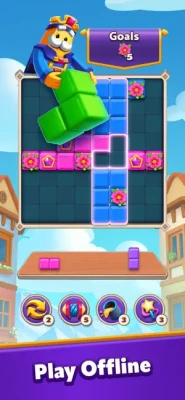
One of Block Kingdom's useful features is offline gameplay. The App Store description specifically states that the puzzle adventure can be played without an internet connection.
That makes it particularly suitable for:
- Travel
- Commuting
- Waiting rooms
- Flights
- Short breaks
- Places with unreliable internet
Keep in mind that online or time-limited features may behave differently from the core offline puzzle experience.
Block Kingdom Difficulty
The game is designed to be easy to understand but progressively more challenging.
Early puzzles teach the basic relationship between pieces, empty spaces, and completed lines. Later stages demand more deliberate placement because shapes become trickier and available space becomes more restrictive.
The difficulty therefore comes less from fast reactions and more from:
- Spatial reasoning
- Planning
- Pattern recognition
- Efficient space management
- Risk assessment
- Understanding future placements
Is Block Kingdom Good for Puzzle Fans?
Block Kingdom is a good choice if you enjoy relaxing block puzzles but want more progression than a purely endless puzzle board.
Its strongest features include:
- Easy-to-understand gameplay
- No time pressure
- Large number of puzzle levels
- Kingdom progression
- Offline play
- Boosters and rewards
- Special challenges and events
- Increasing puzzle complexity
The App Store currently lists Block Kingdom as a Casual game from Tripledot Studios, with support for iPhone and iPad and a minimum requirement of iOS 13.0.
Block Kingdom Pros and Cons
Pros
- Simple controls
- Easy to learn
- Challenging without relying on a timer
- Thousands of handcrafted puzzles
- Offline gameplay
- Kingdom progression
- Boosters and rewards
- Special events and challenges
Cons
- Later puzzles require significantly more planning
- Boosters can become tempting when a board gets difficult
- Advertising and in-app purchases are present
- Some player reviews have reported technical or event-related problems
The App Store listing confirms advertising and in-app purchases, while the store's version history shows several stability and bug-fix updates over time.
Block Kingdom Controls
The controls are straightforward: select a block and place it onto the available grid area.
There are no complicated combinations or reflex-based controls. The challenge comes almost entirely from deciding where and when to place each piece.
That makes Block Kingdom accessible to casual players while leaving plenty of room for advanced puzzle planning.
Block Kingdom System Requirements
For Apple devices, the App Store currently lists:
- Platform: iPhone and iPad
- Minimum OS: iOS 13.0 or later
- iPad: iPadOS 13.0 or later
- Category: Casual
- Developer: Tripledot Studios
- Age rating: 13+
- Languages: English, Simplified Chinese and Spanish
The listed app size is approximately 408 MB on the current U.S. App Store listing.
Block Kingdom Update History
The game's recent version history shows continued development, including stability improvements, performance improvements, new features, and bug fixes. The App Store currently lists version 0.07.07, dated June 8, with earlier updates also addressing stability and gameplay issues.
One notable issue previously reported by players involved a blank board around Level 29. The developer's version history later stated that an update fixed the empty-board issue.
If a level appears broken, updating the game should be one of the first troubleshooting steps.
Frequently Asked Questions
What is Block Kingdom?
Block Kingdom is a casual block puzzle adventure from Tripledot Studios. Players fit differently shaped blocks into a grid, clear lines, earn rewards, and progress through kingdom environments.
Does Block Kingdom have a time limit?
No. The game is designed without time limits, allowing you to think about your moves before placing blocks.
Can you play Block Kingdom offline?
Yes. The official game description advertises offline puzzle gameplay, allowing the core puzzle experience to be played without an internet connection.
How do you get better at Block Kingdom?
Focus on keeping the board open, avoiding isolated gaps, planning around difficult shapes, clearing lines efficiently, and thinking at least one move ahead.
What should I do when the board gets crowded?
Stop making random placements. Identify the pieces with the fewest possible locations, look for a safe line clear, and prioritize moves that reopen connected space.
Should I use boosters immediately?
Usually, no. Save boosters for situations where they solve a genuine placement problem or help recover a board that has become difficult to manage.
Does Block Kingdom have special events?
Yes. The game includes limited-time challenges and special events with additional objectives and rewards.
Is Block Kingdom free?
The game is free to download but includes advertising and optional in-app purchases.
Is Block Kingdom available on Android?
Yes. Block Kingdom is also listed on Google Play, where it is published by Tripledot Studios.
Final Block Kingdom Strategy
The most reliable way to play Block Kingdom is to stop thinking about individual blocks and start thinking about space.
A strong player doesn't simply ask whether a block fits.
They ask:
What will the board look like after I place it?
Keep large areas open, protect spaces needed by difficult shapes, avoid isolated holes, clear lines when doing so improves the board, and preserve flexible pieces whenever possible.
Because there is no time pressure, patience is one of your strongest tools. Study the board, consider several possible placements, and choose the move that gives you the greatest number of options afterward.
That approach will carry you much further than simply placing every block in the first space that looks convenient.
Rate the Game
User Reviews





Popular Games














 Android
 iOS
iOS Windows
 Xbox
Xbox