
Latest Version
September 15, 2026
Etermax
Puzzle
iOS
0
Report a Problem
More About :game
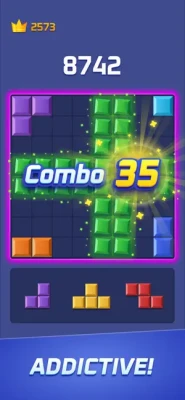
The game is designed to be easy to pick up while gradually introducing more demanding puzzles. According to the current store listing, it features 100+ levels, progressively harder brain-training challenges, combo-based gameplay, and regular new challenges.
It is developed by Etermax and is available for iPhone and iPad. The current App Store listing requires iOS/iPadOS 15.6 or later.
What Is Block Crack?
Block Crack is a puzzle game centered on one simple idea: make every move count.
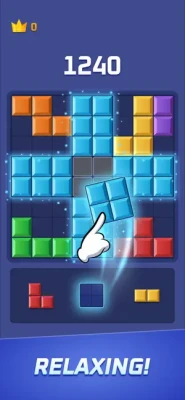
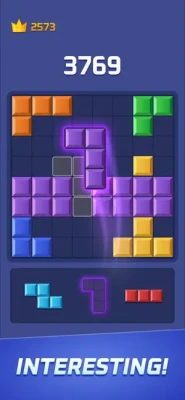
Players match blocks and cubes, clear rows and shapes, create chain reactions, and use carefully planned moves to produce larger combos.
Although the controls are simple, the later challenges require considerably more thought. Instead of tapping randomly, successful play depends on recognizing patterns, preserving useful spaces, and deciding when to make a small clear versus waiting for a much larger combination.
The game can be played without an internet connection and does not use timers, making it suitable for short casual sessions as well as longer puzzle sessions.
Main Features
Block Matching
The core gameplay revolves around matching blocks and cubes on the board.
Successful matches can clear sections of the puzzle and create opportunities for additional combinations.
Powerful Combos
Combos are one of the most important mechanics in Block Crack.
Instead of treating every match as an isolated move, look for opportunities where one action can trigger another. Chain reactions can clear much larger sections of the board and increase your score.
100+ Puzzle Levels
The App Store listing currently promotes more than 100 levels, providing a substantial progression path for players who enjoy increasingly difficult block puzzles.
Adventure Mode
Later updates introduced Adventure Mode, featuring unique figures, collectible objectives, and progressively challenging levels. Players can work toward completing different figures while solving puzzles.
Brain-Training Challenges
The game presents its puzzles as exercises involving logical thinking, pattern recognition, spatial awareness, planning, focus, and decision making.
Offline Play
Block Crack can be played offline, so an internet connection is not required for the core puzzle experience.
No Timers
There is no pressure to complete a puzzle before a countdown expires. This allows you to stop and think about your next move before committing to it.
How to Play Block Crack
The basic gameplay loop is straightforward:
- Examine the current board.
- Look for possible block matches.
- Consider what the board will look like after the match.
- Make the move that creates the most useful result.
- Look for a follow-up combo.
- Clear obstacles, rows, or shapes when necessary.
- Preserve useful spaces for future pieces.
- Repeat until the objective is completed.
The important part is the fourth step.
The best move is not always the one that produces the biggest immediate clear. Sometimes a smaller move creates a better board for the next several moves.
Full Block Crack Strategy Guide
1. Look at the Entire Board Before Moving
One of the easiest mistakes is focusing only on the most obvious match.
Before tapping, scan the complete board.
Look for:
- Existing combinations
- Potential chain reactions
- Crowded areas
- Empty spaces
- Difficult corners
- Rows that can be cleared
- Opportunities to connect several moves
A few seconds of planning can save several moves later.
2. Think One Move Ahead
Try not to ask only:
"What can I clear now?"
Instead ask:
"What will the board look like after I clear it?"
A move that leaves a useful opening can be more valuable than a move that simply removes the largest number of blocks.
3. Build Combos Whenever Possible
Combos are central to Block Crack's scoring and board-clearing mechanics. The game specifically encourages players to create chains and trigger cascading effects.
When you see two possible moves, consider whether one can create a second match immediately afterward.
For example:
Match → clear → new opening → second match → larger clear
That is generally more valuable than making two unrelated small matches.
4. Do Not Waste a Good Board Position
A common puzzle-game mistake is clearing blocks simply because they can be cleared.
Sometimes you should leave a group untouched.
If a group is positioned perfectly for a future chain, clearing it immediately may eliminate a better opportunity.
Think about future potential, not just immediate satisfaction.
5. Keep the Board Open
Try to avoid creating isolated areas where future moves become difficult.
When several moves are available, consider which one keeps the greatest number of future possibilities open.
An open board gives you more ways to react to the next arrangement.
6. Watch the Corners
Corners can become difficult areas because they often have fewer ways to connect with surrounding blocks.
If you notice a corner becoming crowded, deal with it before it turns into a major problem.
Do not allow one difficult section of the board to determine the outcome of the entire puzzle.
7. Prioritize Difficult Obstacles
When a level contains rows, shapes, or obstacles that need to be cleared, do not focus exclusively on easy matches.
Ask yourself which part of the board is most likely to cause trouble later.
Removing a difficult obstacle early can make the rest of the puzzle much easier.
8. Avoid Random Taps
Block Crack is designed around planning, so random moves can quickly create inefficient boards.
Before every move, identify its purpose.
A move should ideally:
- Create a combo
- Open useful space
- Clear an obstacle
- Improve your next move
- Progress the level objective
If it does none of these things, another move may be better.
How to Get Bigger Combos
Step 1: Find the Initial Match
Start with a match that opens a useful area.
Step 2: Check the New Board
Do not immediately tap again.
Look at the spaces created by the first clear.
Step 3: Search for Secondary Matches
A newly opened area may reveal another combination.
Step 4: Preserve the Chain
If a move can create another reaction, consider using it before making an unrelated match.
Step 5: Finish With a Large Clear
When several blocks are positioned for a chain, try to trigger the sequence in an order that maximizes the number of connected clears.
High Score Strategy
If you are trying to improve your score rather than simply complete a level, prioritize combinations over isolated clears.
A useful scoring mindset is:
Small match < useful setup < chain combo < major board clear
The exact value of each move depends on the board, but the general principle is consistent: look for moves that produce more than one result.
Do not sacrifice a powerful combination just to remove a few extra blocks immediately.
Block Crack Tips for Beginners
If you are new to block puzzle games, use these simple rules:
- Never rush a move.
- Scan the entire board.
- Look for combinations before tapping.
- Keep open spaces available.
- Avoid filling difficult corners.
- Think about the next move.
- Learn from failed attempts.
- Look for chain reactions.
- Do not clear blocks simply because you can.
- Use Adventure Mode as an additional progression challenge.
The game does not use timers, so there is usually little reason to make a decision before you understand its consequences.
Advanced Block Crack Strategy
Once the basic mechanics become familiar, start thinking about board control.
Preserve Flexible Spaces
An empty area can be more valuable than an immediate match.
Try to maintain spaces where future blocks can be placed or connected.
Create Setup Moves
Sometimes your current move should prepare the board for the next move.
For example:
Setup → opening → combo → large clear
This is more deliberate than simply matching whatever is currently available.
Plan Around Multiple Possibilities
Do not build a strategy around only one expected outcome.
Consider what you will do if the next move gives you:
- A matching block
- An awkward shape
- A useful opening
- A difficult placement
Keeping several possibilities available makes the board easier to manage.
Adventure Mode Strategy
Adventure Mode adds collectible objectives and progressively challenging levels centered around completing unique figures.
When playing Adventure Mode, avoid treating every level like a simple high-score challenge.
Instead:
- Identify the objective.
- Determine which areas of the board matter most.
- Preserve moves that help complete the objective.
- Use combos to clear difficult sections.
- Avoid wasting useful spaces.
- Check your progress before making unnecessary clears.
The objective should determine your strategy.
How to Handle Difficult Levels
When a level seems unusually difficult, resist the temptation to play faster.
Slow down and identify why the board is difficult.
Is the problem:
- Too many blocked spaces?
- Poor positioning?
- A difficult corner?
- Lack of matching opportunities?
- A missed combo?
- An inefficient first move?
Finding the actual problem is usually more useful than simply trying the same approach repeatedly.
Common Mistakes
Clearing the Biggest Group First
The largest available match is not automatically the best move.
Ignoring Future Moves
A move can look excellent immediately but leave a terrible board afterward.
Filling Open Spaces Too Quickly
Keeping some flexibility can be more valuable than immediately using every available position.
Forgetting the Objective
In objective-based challenges, a high score may not be enough. Always remember what the level actually asks you to accomplish.
Chasing Every Combo
Combos are powerful, but not every possible combo is worth taking. Sometimes a smaller move creates a much better position.
Is Block Crack Difficult?
The game starts with accessible mechanics, but the challenges become progressively harder. Its store description specifically presents it as easy to learn while becoming more demanding as players advance.
The difficulty comes less from complicated controls and more from planning.
You have to understand how one move changes the board and how to prepare for what comes next.
Is Block Crack an Offline Game?
Yes. The current listings state that Block Crack supports offline play and does not require an internet connection for gameplay.
That makes it convenient for travel, waiting rooms, commuting, or other situations where connectivity may be limited.
Does Block Crack Have Timers?
The current store description says there are no timers, allowing players to approach puzzles at their own pace.
This is particularly useful for players who prefer thoughtful puzzle solving instead of fast-paced arcade gameplay.
Block Crack Game Information
Game: Block Crack Smart Puzzle Game
Developer: Etermax
Genre: Puzzle / Casual / Block Puzzle
Core gameplay: Match, blast, crush, and clear blocks
Levels: 100+ advertised on the current App Store listing
Modes: Classic puzzle gameplay and Adventure Mode
Adventure Mode: Collectible figures and objective-based challenges
Offline: Yes
Timers: No
Platform: iPhone and iPad, with Android availability
App Store age rating: 4+
App Store language: English
iOS requirement: iOS 15.6 or later
Block Crack Updates
The game has received frequent updates since its launch. Recent updates include performance improvements, smoother animations, enhanced combo effects, visual improvements, bug fixes, and collectible figures. Adventure Mode was also introduced with unique figures and collectible objectives.
The current App Store version shown is 1.28.0, dated May 12, 2026.
Pros and Cons
Pros
- Simple controls
- Easy to learn
- Increasingly challenging puzzles
- Strong combo system
- 100+ levels advertised
- Adventure Mode
- Collectible figures
- Offline gameplay
- No timers
- Suitable for short sessions
- Relaxing presentation with more demanding challenges later
Cons
- Players looking for fast-paced action may find the deliberate pace slow.
- Later puzzles require more planning than the introductory levels.
- The current iOS listing contains advertising.
Frequently Asked Questions
What is Block Crack Smart Puzzle Game?
Block Crack is a block puzzle game from Etermax that combines matching, cube blasting, board clearing, and combo-based gameplay.
How do you play Block Crack?
You match blocks and cubes, create combinations, clear rows and shapes, and plan your moves to complete each puzzle.
Does Block Crack have more than 100 levels?
Yes. The current App Store description advertises 100+ levels.
Does Block Crack have Adventure Mode?
Yes. Adventure Mode includes unique figures, collectible objectives, and progressively challenging levels.
Can Block Crack be played offline?
Yes. The store listing states that the game supports offline play.
Does Block Crack have a timer?
No. The current description says there are no timers, allowing players to solve puzzles without time pressure.
What is the best strategy for Block Crack?
The most useful general strategy is to think beyond the current move. Look for chain reactions, preserve open spaces, avoid creating difficult corners, and choose moves that improve the board for your next turn.
Is Block Crack suitable for beginners?
Yes. Its basic mechanics are simple to learn, while the progressively harder puzzles provide additional challenge as players advance.
Is Block Crack available on Android?
Yes. Google Play lists Block Crack Smart Puzzle Game from Etermax under the package com.etermax.blockcrackgame.
Final Thoughts
Block Crack Smart Puzzle Game takes familiar block-puzzle ideas and adds a stronger emphasis on combos, board clearing, and strategic planning.
Its simple controls make the first levels easy to understand, but the progressively harder challenges encourage players to think several moves ahead. The absence of timers also gives the game a more relaxed pace, while Adventure Mode adds collectible objectives for players who want another form of progression.
The key lesson is simple: do not make a move just because you can. Make it because it improves the board.
Look for chain reactions, protect useful spaces, plan around difficult areas, and think about what your next move will look like before committing to the current one. That approach becomes increasingly valuable as the puzzles become more complex.
Rate the Game
User Reviews






Popular Games

















 Android
 iOS
iOS Windows
 Xbox
Xbox