



Latest Version
September 28, 2026
UNICO STUDIO
Puzzle
iOS
0
Report a Problem
More About :game
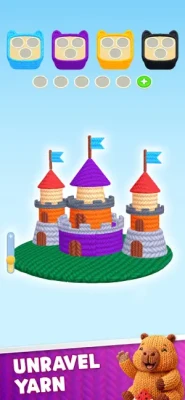
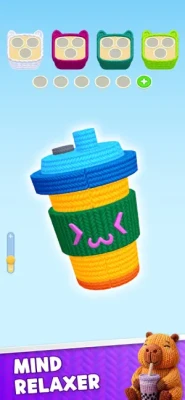
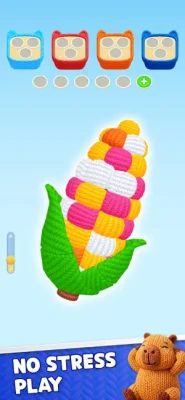
The game combines the relaxing visual appeal of yarn and wool with the planning required by a logic puzzle. There is no need to rush through every stage; instead, successful players need to examine the board, understand which thread is blocking another, and decide which piece should be removed first.
Yarn Out 3D is available for iPhone and iPad and requires iOS 15 or later. It is free to play with advertising and optional in-app purchases.
How to Play Yarn Out 3D
The basic controls are straightforward.
You tap the appropriate yarn or thread piece and unravel it from the board. The challenge comes from deciding which piece should move first.
A typical puzzle can involve:
- Tangled yarn loops
- Overlapping threads
- Blocked paths
- Hidden thread sections
- Bobbin-style layouts
- Multiple layers
- Misleading moves
- Increasingly complex arrangements
The game specifically emphasizes solving each loop in the correct order. Pulling the wrong piece can prevent another thread from moving, so observation is just as important as the actual tap.
Main Gameplay Features
Colorful Yarn and Wool Puzzles
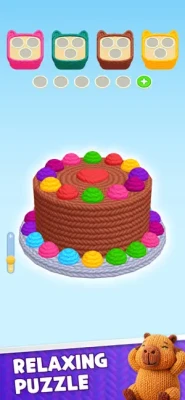
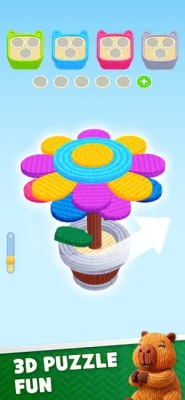
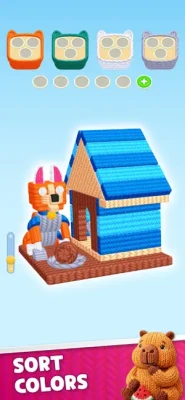
The visual identity of Yarn Out 3D revolves around bright yarn, wool, and thread pieces. The colorful presentation makes it easier to distinguish different parts of the puzzle while giving the game a cozy appearance.
3D Unravel Mechanics
The board uses a 3D presentation rather than a completely flat puzzle layout. Threads can overlap and form complicated visual relationships, making it important to look carefully before choosing the next move.
Yarn Loops
Loops are the heart of the gameplay. You need to determine which loop can be released first and which ones are still being blocked.
Bobbin-Style Structures
Some levels use bobbin-like arrangements that create additional blocking patterns. These structures can make an apparently simple group of threads considerably more difficult to unravel.
Increasing Challenge
Early puzzles introduce the basic concept, while later stages add more loops, layers, crossing threads, and complicated arrangements.
The Most Important Rule: Think Before You Pull
The biggest mistake in Yarn Out 3D is assuming that the first available thread is automatically the correct choice.
It isn't.
A thread may be visually accessible but still be the wrong move because removing it can:
- Block another route
- Prevent a different loop from being released
- Reveal an inconvenient layer
- Leave another thread trapped
- Force you into a less efficient sequence
Before every important move, ask:
“What will become available after I remove this thread?”
That question is more useful than simply asking which piece can move.
Full Yarn Out 3D Strategy Guide
1. Study the Entire Puzzle First
Don't start tapping immediately.
Spend a few seconds examining:
- All visible yarn pieces
- The loops crossing each other
- Which threads are on top
- Which pieces appear blocked
- The likely final pieces
- Areas hidden underneath other yarn
- The available paths
This initial scan often reveals the intended sequence.
2. Identify the Outer or Most Accessible Loops
Look for yarn pieces that have a clear route away from the board.
These are often the safest starting points because they can be removed without disturbing several other pieces.
However, don't assume every outer loop should be removed immediately. Check what is underneath it first.
3. Work From Blockers to Open Paths
Instead of asking:
“Which yarn looks easiest?”
ask:
“Which yarn is preventing the next important piece from moving?”
This changes the way you approach difficult levels.
If Thread A is blocking Thread B, and Thread B is needed to open another section, Thread A becomes your priority.
4. Look for the Dependency Chain
Many difficult puzzles can be understood as a chain:
Thread A → unlocks Thread B → reveals Thread C → opens Thread D → final loop
Once you recognize this pattern, the puzzle becomes much easier.
Your objective is to find the first link in that chain.
5. Watch for Red-Herring Moves
The game specifically warns that some moves can look useful but are actually misleading.
A red-herring move usually has one of these characteristics:
- It gives you immediate space but blocks the next move.
- It removes a visible thread without helping the main route.
- It changes the board in a way that makes the remaining pieces harder to access.
- It encourages you to solve one small section while ignoring the rest.
When a move looks too obvious, take a second look.
6. Don't Chase the First Open Space
An open area isn't necessarily progress.
A good solution is not about creating the largest empty space possible. It's about creating the right empty space at the right time.
Sometimes leaving a thread in place is better because it maintains the correct structure for the next move.
7. Check Hidden Layers
Some threads can be hidden underneath other layers.
If you only analyze the visible top layer, you may misunderstand the entire puzzle.
Whenever you remove a major piece, immediately inspect the newly exposed area before making your next move.
8. Solve Small Groups Together
If several loops are tightly connected, treat them as a single puzzle section.
Determine:
- Which loop is on top.
- Which loop is blocking another.
- Which one opens the most useful route.
- Which piece should be saved until later.
This is much more effective than treating every yarn piece independently.
9. Use the Fewest Unnecessary Moves
Yarn Out 3D is primarily about solving the puzzle rather than rushing.
A clean solution generally comes from recognizing the correct order rather than repeatedly moving pieces until something works.
Try to avoid exploratory moves once you understand the board.
10. Reassess After Every Major Move
After removing an important yarn piece, don't automatically continue with your original plan.
The board has changed.
Look again and ask:
- What was revealed?
- Which thread is now accessible?
- Did another path become blocked?
- Did the priority change?
This habit is particularly important on complicated levels.
Advanced Yarn Out 3D Tips
Use Reverse Planning
If you are stuck, start from the end.
Ask:
Which yarn must be removed last?
Then determine what has to happen immediately before that.
Continue working backward until you find the first required move.
This reverse-planning technique is especially useful when many loops appear equally accessible.
Separate Visual Complexity From Actual Complexity
A board can look extremely tangled without actually having many possible solutions.
Look for the few pieces that control the rest of the board.
Usually, only a handful of yarn pieces determine the correct sequence.
Don't Assume Similar Colors Have Similar Roles
The colorful presentation helps distinguish pieces, but color alone should not determine your strategy.
Pay attention to:
- Position
- Overlap
- Direction
- Blocking relationships
- Layering
- Available space
Look for the Bottleneck
Every difficult puzzle usually has one or more bottlenecks.
A bottleneck is a thread or loop that prevents access to an important section.
Once you identify it, the puzzle often becomes much easier.
Keep the Final Route in Mind
Don't solve the puzzle one corner at a time without considering the final state.
Your objective is to clear the entire arrangement.
A move that helps one corner but makes the final sequence impossible isn't useful progress.
How to Beat Difficult Yarn Levels
When a level seems unusually complicated, use this method:
Step 1 – Stop Tapping
Take a moment to inspect the complete board.
Step 2 – Find the Most Restricted Thread
Identify the piece with the fewest possible movement options.
Step 3 – Find What Blocks It
Look for the loop or yarn sitting above or across it.
Step 4 – Trace the Dependency
Determine which piece must be removed before the blocker can move.
Step 5 – Start the Sequence
Remove only the pieces that contribute to that route.
Step 6 – Inspect the New Layer
Once something important is removed, reassess the board.
Step 7 – Continue Until the Final Loops
The solution should gradually become more obvious as the board opens.
Common Mistakes in Yarn Out 3D
Removing the Wrong Top Thread
A visible thread may not be the correct first move.
Ignoring What Is Underneath
A piece can hide an important section of the puzzle.
Making Random Moves
Random tapping can make the board harder to understand.
Solving Only One Section
A locally solved area doesn't necessarily mean the entire puzzle is progressing.
Forgetting the Final Sequence
Always think about what the board needs to look like near the end.
Moving Too Quickly
Yarn Out 3D is designed around logic and observation. Speed is not the main skill.
Is Yarn Out 3D Relaxing?
One of the game's strongest characteristics is the contrast between its calm presentation and its increasingly challenging logic puzzles.
The App Store description emphasizes a relaxing and satisfying experience, while player feedback also includes reviews describing the game as relaxing and suitable for casual play. One reviewer specifically praised the absence of a time limit.
This makes Yarn Out 3D suitable for players who enjoy puzzle games that don't require fast reflexes.
At the same time, later puzzles can become substantially more demanding, so the game can shift from casual untangling to careful planning.
Yarn Out 3D Difficulty
The difficulty comes primarily from sequence management.
The game doesn't require complicated controls. Instead, it tests whether you can recognize:
- Which thread moves first
- Which loop is blocking another
- Which piece should remain untouched
- What becomes available after each move
- Which apparent solution is actually a red herring
As more layers and crossing threads appear, the number of possible mistakes increases.
Events and Updates
Yarn Out 3D has received ongoing updates and events.
The App Store currently lists seasonal events, including a Summer Finale event featuring special levels, rewards, and a limited challenge.
The version history also shows multiple updates adding levels and events, followed by releases focused on bug fixes and performance improvements. Version 1.6 is listed with a September 18 release date and bug-fix/performance improvements.
Ratings and Player Feedback
The current US App Store listing shows 4.8 out of 5 from about 7.4K ratings.
Google Play currently shows 4.8 stars, 16K reviews, and 100K+ downloads.
Player feedback is mixed in some areas. Positive reviews mention the relaxing nature and satisfying puzzle format, while some users have criticized the frequency of advertising and expressed concerns about puzzle repetition. The developer has responded publicly to those concerns, including saying it is reviewing ad pacing and level variety.
This is useful context for players who are considering the game primarily as a relaxing puzzle experience.
Pros and Cons
Pros
- Simple controls
- Easy-to-understand objective
- Colorful yarn and wool presentation
- Satisfying 3D unraveling
- Logic-based gameplay
- No need for fast reflexes
- Increasing puzzle complexity
- Regular levels and events
- Good fit for short casual sessions
- Available on iPhone and iPad
Cons
- Advertising is part of the free experience
- Optional in-app purchases are available
- Some players report frequent advertisements
- Some players feel certain puzzle patterns can become repetitive
- Later levels can require considerably more planning
The advertising and repetition concerns above reflect player reviews rather than an independent judgment. The developer has publicly responded to both types of feedback.
Who Should Play Yarn Out 3D?
Yarn Out 3D is a natural fit for players who enjoy:
- Yarn puzzle games
- Wool puzzles
- Untangling games
- 3D logic puzzles
- Brain teasers
- Casual puzzle games
- Sorting and organization puzzles
- Relaxing mobile games
- Short puzzle sessions
- Visual logic challenges
It is especially appealing if you enjoy puzzles where the order of your moves matters more than reaction speed.
Platform and Requirements
Developer: UNICO STUDIO
Genre: Puzzle
Platforms: iPhone, iPad
Minimum iOS: iOS 15.0
Minimum iPadOS: iPadOS 15.0
Age Rating: 4+
Business Model: Free with advertising and in-app purchases
App Size: Approximately 332 MB on the current US App Store listing.
The App Store also lists compatibility with Apple Silicon Macs and Apple Vision devices under their respective operating-system requirements.
Frequently Asked Questions
What is Yarn Out 3D?
Yarn Out 3D is a 3D logic puzzle game where players unravel tangled yarn loops and threads in the correct order.
How do you play Yarn Out 3D?
Tap the appropriate yarn or thread piece and release it while planning the order needed to clear the entire puzzle.
Is Yarn Out 3D difficult?
The basic mechanics are easy to learn, but later puzzles become more challenging as additional loops, layers, crossing threads, and blocked paths are introduced.
Does Yarn Out 3D have a time limit?
Player feedback on the App Store specifically mentions enjoying levels without a time limit, making the game suitable for a slower puzzle-solving style.
Is Yarn Out 3D free?
Yes. It is free to download and play, with advertising and optional in-app purchases.
Is Yarn Out 3D available on Android?
Yes. The Google Play version is available and currently lists 100K+ downloads.
Is Yarn Out 3D available on iPhone?
Yes. The App Store lists it for iPhone and iPad and requires iOS 15 or later.
What is the best strategy for difficult Yarn Out 3D puzzles?
Study the complete board first, identify the blocking threads, determine the dependency sequence, and avoid removing pieces simply because they are immediately accessible.
How do I solve tangled yarn puzzles faster?
Don't focus on speed. Focus on identifying the correct order. Look for the thread that is preventing the next important move and work backward from the final loops when necessary.
Why do some Yarn Out 3D moves seem like traps?
Some moves can look helpful but create a worse arrangement or block another thread. The game itself describes these as misleading or red-herring moves, which is why planning several moves ahead is important.
Final Yarn Out 3D Strategy Tip
The key to Yarn Out 3D is simple:
Don't pull the yarn that looks easiest. Pull the yarn that makes the next correct move possible.
Once you begin looking at each puzzle as a chain of dependencies rather than a collection of tangled threads, even complicated boards become easier to read. Find the bottleneck, remove the correct blocker, inspect what is revealed, and continue until the final loop comes free.
Rate the Game
User Reviews








Popular Games



















 Android
 iOS
iOS Windows
 Xbox
Xbox