








Latest Version
September 29, 2026
UNICO STUDIO
Puzzle
iOS
0
Report a Problem
More About :game
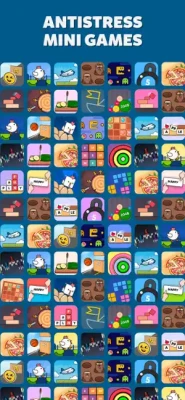
The collection includes simple tap and swipe challenges, logic puzzles, memory-based activities, fidget-style games, ASMR-inspired interactions, reflex tests, and games influenced by viral social-media challenges. The App Store listing currently describes the collection as containing 50+ mini games, with Calm, Relaxed, and Energized styles of play.
Some challenges are deliberately relaxing, while others require more concentration, timing, precision, or quick reactions. That variety makes Mini Games: Calm & Relax useful for short gaming sessions when you want something different without committing to a long level or story.
What Is Mini Games: Calm & Relax?
Mini Games: Calm & Relax is essentially a portable collection of quick games. You can move between different challenges instead of playing through one continuous campaign.
The game combines several styles, including:
- Relaxing mini games
- Fidget and sensory activities
- Simple puzzle games
- Logic challenges
- Memory challenges
- Reaction and timing tests
- ASMR-style interactions
- Voice-controlled challenges
- Viral-inspired mini games
- Short arcade activities
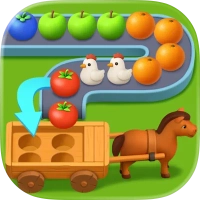
- Fruit and merging puzzles
- Color and sorting challenges
The official listing also mentions activities such as Do Re Mi, Emoji Faces, Pizza Cuts, Chop't, Pop It, squishy-style games, and other quick challenges.
Gameplay and Main Features
50+ Mini Games in One Place
One of the biggest attractions is variety. Rather than installing a separate application for every type of casual puzzle, Mini Games: Calm & Relax puts a large collection into one game.
The current store description promotes more than 50 mini games, giving players plenty of different mechanics to try.
Calm and Relaxing Gameplay
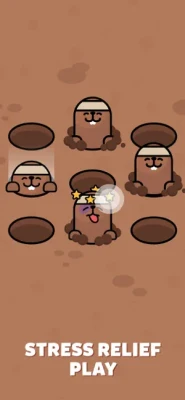
The calmer activities use simple interactions such as tapping, dragging, popping, and moving objects around the screen. Sounds, haptic feedback, and minimalist visuals are designed to make many of these activities feel satisfying and easy to pick up.
Puzzle and Brain Challenges
Not every activity is purely relaxing. Some require logical thinking, memory, planning, or accurate timing.
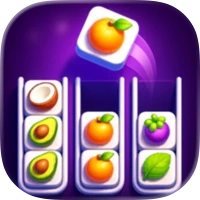
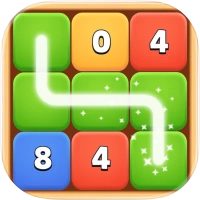
Examples mentioned by the game's store information include Merge Fruit, Water Sort, and Draw Single Line.
Viral-Style Challenges
The collection also includes games inspired by popular online challenges and trends. Voice and sound-based activities can make the gameplay feel quite different from traditional puzzle games.
Simple Controls
Most challenges rely on familiar mobile controls such as:
- Tap
- Swipe
- Drag
- Hold
- Trace
- Match
- Sort
- Move
- Use your voice when required
Because each mini game has its own objective, learning the basic interaction is usually quick.
One-Hand Gaming
The game is designed around short, vertical mobile sessions, making many of its activities comfortable to play with one hand.
Auto-Save
Progress is automatically saved, allowing you to leave the game and return later without having to complete a long session at once.
Calm, Relaxed and Energized Play Styles
One useful way to approach the collection is to choose a game based on your current mood.
Calm Mode
Calm activities are best suited to slow, satisfying interactions. Look for games involving tapping, dragging, popping, or simple object manipulation.
Don't rush these challenges. The objective is often more about completing the interaction accurately than finishing as quickly as possible.
Relaxed Mode
Relaxed games usually involve puzzles, logic, sorting, memory, or simple problem-solving.
These games are a good choice when you want something that occupies your attention without requiring constant fast reactions.
Energized Mode
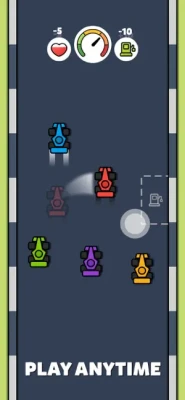
When you want something more active, choose challenges involving timing, reflexes, movement, or quick decisions.
These games reward concentration and fast reactions more than slow puzzle solving.
Mini Games: Calm & Relax Strategy Guide
There is no single strategy that works for every mini game because the collection uses many different mechanics. Instead, the best approach is to identify what each challenge is testing.
1. Read the Objective Before Acting
Don't immediately start tapping.
Take a second to understand what the game wants you to accomplish. A few seconds of observation can prevent unnecessary mistakes, particularly in sorting, drawing, and timing challenges.
2. Learn the Control First
If a game uses a new interaction, experiment carefully during the first attempt.
For example, if the challenge requires dragging an object, pay attention to how sensitive the movement is. If it involves voice control, learn how strongly your voice affects the on-screen action before trying to complete the objective.
3. Slow Down on Puzzle Games
Fast movement is rarely useful in logic puzzles.
For games involving sorting, matching, merging, or drawing, think about the next move before committing to it.
A slower first attempt can teach you the level layout and make later attempts much easier.
4. Use Short Practice Attempts
Because the individual games are short, you don't need to spend a long time practicing one mechanic.
If you fail, identify what caused the failure:
- Poor timing?
- Wrong movement?
- Missed object?
- Incorrect sequence?
- Lack of planning?
- Reaction too slow?
Then adjust that specific part on the next attempt.
5. Watch for Patterns
Many mini games become easier once you recognize their pattern.
Look for:
- Repeated object arrangements
- Predictable movement
- Recurring sequences
- Similar puzzle structures
- Consistent timing windows
- Repeated sorting rules
Pattern recognition is especially useful for memory and logic challenges.
6. Don't Rush Merge Games
In games such as fruit-merging challenges, think about where each object should go before making a move.
Try to create space rather than filling the board randomly. Combining objects strategically can prevent the play area from becoming crowded too quickly.
7. Think Ahead in Water Sort
For color-sorting puzzles, avoid making moves simply because a container has available space.
Before moving liquid, consider:
- Which colors are currently blocked?
- Which container can receive the color?
- Where will the next color go?
- Will the move create another useful opening?
Planning two or three moves ahead is often more effective than reacting to the current board.
8. Use Precision in Drawing Challenges
For drawing or line-based puzzles, accuracy matters.
Move steadily rather than making extremely fast gestures. When a challenge requires connecting points or completing a shape, look at the entire route before beginning.
9. Practice Voice Challenges
Some challenges use voice or sound-based interaction. The Google Play description specifically references the Do Re Mi challenge and Animal Sound Challenge.
For voice-controlled games:
- Play somewhere reasonably quiet.
- Speak clearly.
- Avoid changing volume dramatically.
- Learn how the game responds to pitch or sound.
- Practice before attempting a difficult level.
10. Treat Reflex Games Differently
For reaction-based games, planning isn't always the answer.
Keep your eyes on the important object and avoid unnecessary movements. Short, controlled actions are usually more reliable than frantic tapping.
11. Use the Game Collection to Your Advantage
One of the best things about this type of game is that you don't have to stay with one mechanic.
If a difficult puzzle is becoming frustrating, switch to a calmer mini game and return later. A short break can make it easier to notice the solution when you come back.
Tips for Getting Better High Scores
If a particular mini game uses scoring or leaderboards, improving your consistency is more important than relying on lucky attempts.
Try this routine:
First attempt: Learn the rules.
Second attempt: Identify mistakes.
Third attempt: Improve timing or positioning.
Later attempts: Focus on consistency.
The goal should be to reduce avoidable mistakes rather than simply playing faster.
The App Store listing also mentions global leaderboards and high-score competition for the collection.
Best Way to Play Mini Games: Calm & Relax
For a relaxing session, start with fidget, popping, or simple interaction games.
For a brain-training session, choose logic, memory, sorting, or drawing challenges.
For something more energetic, move toward timing and reflex-based mini games.
This makes the collection flexible enough for different situations. You can play for a few minutes while taking a break or spend longer exploring different challenges.
Difficulty and Progression
Mini Games: Calm & Relax does not follow the traditional structure of a story-driven game with one hero, one world, and a final boss.
Instead, progression comes from discovering and completing different mini games and improving your performance.
Some activities are immediately accessible, while others become more demanding as the challenges continue. The store listing describes unique levels and missions that test skill, precision, logic, and strategy.
Graphics, Sound and Atmosphere
The visual presentation uses colorful, simple designs rather than attempting to create a realistic game world.
The atmosphere changes depending on the mini game. Some activities are intentionally calm and satisfying, while others use funny sounds, quick interactions, or playful challenges.
ASMR-style sound effects and haptic feedback are also part of the experience on supported devices.
Is Mini Games: Calm & Relax Good for Short Sessions?
Yes. The individual challenges are designed around quick interactions, so you don't need a large block of free time.
It works particularly well when you want:
- A quick puzzle
- A relaxing activity
- A short brain challenge
- Something to play while traveling
- A casual time-killer
- A collection of different mini games
- Simple one-hand gameplay
Is Mini Games: Calm & Relax Suitable for Kids?
The U.S. App Store currently lists the game with an Age Rating of 4+ and categorizes it as a Puzzle game.
Parents should still review the current store information and in-app purchase settings before allowing children to play, particularly because the game is free with advertising and in-app purchases.
Ads and Free-to-Play Experience
Mini Games: Calm & Relax is listed as free with in-app purchases.
Player reviews on the App Store show mixed experiences regarding advertising. Some users enjoy the variety while others have specifically complained about frequent interruptions.
This is worth knowing before starting the game, especially if you prefer uninterrupted gameplay.
Mini Games: Calm & Relax Pros and Cons
Pros
- 50+ mini games
- Large variety of gameplay styles
- Simple tap and swipe controls
- Relaxing fidget activities
- Logic and puzzle challenges
- Voice-based challenges
- ASMR-style interactions
- Short sessions
- One-hand gameplay
- Auto-save
- Suitable for casual players
- Regular updates and improvements
Cons
- The large number of mini games can make the experience feel less focused
- Some challenges may become repetitive
- Advertising can interrupt gameplay
- Individual games vary considerably in difficulty and depth
- Some voice-based challenges may depend on microphone performance and environment
The current App Store version history shows repeated bug-fix and performance updates, with version 1.7.5 listed on April 28, 2026.
Mini Games: Calm & Relax Game Information
| Information | Details |
|---|---|
| Game | Mini Games: Calm & Relax |
| Developer | UNICO STUDIO |
| Genre | Puzzle / Casual |
| Platform | iPhone, iPad |
| Price | Free with in-app purchases |
| Age Rating | 4+ |
| Mini Games | 50+ |
| Gameplay | Puzzle, casual, fidget, arcade, relaxing |
| Controls | Tap, swipe, drag and other interactions |
| Multiplayer | Global leaderboard competition |
| Progress | Auto-save |
| Play Style | One-hand, short-session gameplay |
| Atmosphere | Calm, playful, colorful and satisfying |
The App Store currently lists the app at about 404.6 MB, with support for iPhone and iPad and English plus additional languages.
Frequently Asked Questions
What is Mini Games: Calm & Relax?
It is a collection of more than 50 short puzzle, fidget, relaxing, logic, arcade, and challenge-based mini games in one mobile application.
Is Mini Games: Calm & Relax free?
Yes. The App Store lists it as free with in-app purchases.
How many mini games are included?
The current store description advertises 50+ mini games.
Does Mini Games: Calm & Relax have puzzle games?
Yes. The collection includes logic, memory, sorting, drawing, merging, and other puzzle-style activities.
Does it have fidget games?
Yes. Fidget-style activities, Pop It, squishy interactions, and sensory-style mini games are among the experiences described by the developer.
Does Mini Games: Calm & Relax use voice controls?
Some mini games use voice or sound interaction. The game's store information specifically highlights challenges such as Do Re Mi and Animal Sound Challenge.
Can I play Mini Games: Calm & Relax for a few minutes?
Yes. The short mini-game format makes it suitable for quick breaks and short casual sessions.
Does the game save progress?
Yes. The App Store listing states that progress is automatically saved.
Is Mini Games: Calm & Relax available on iPad?
Yes. The App Store lists the game for iPhone and iPad.
Final Thoughts
Mini Games: Calm & Relax is built around variety rather than one central gameplay mechanic. Its main appeal is having a large selection of quick activities available from one app, ranging from relaxing fidget interactions to logic puzzles, merging challenges, sorting games, voice challenges, and reaction tests.
The best way to approach the collection is to play according to your mood. Choose slower puzzle and fidget activities when you want something calm, or switch to reaction and timing challenges when you want more action.
With its short-session format and broad selection of mini games, it offers a simple way to fill a few spare minutes without committing to a long campaign.
Rate the Game
User Reviews






Popular Games



















 Android
 iOS
iOS Windows
 Xbox
Xbox