


Latest Version
September 28, 2026
UNICO STUDIO
Puzzle
iOS
0
Report a Problem
More About :game
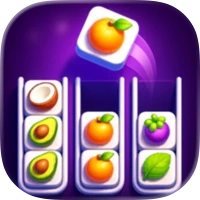
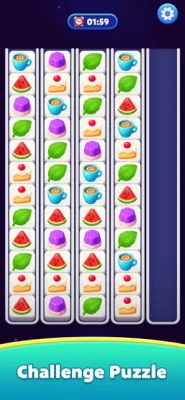
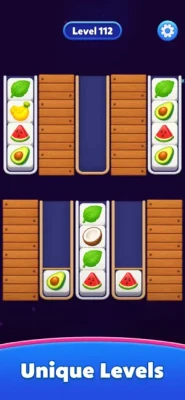
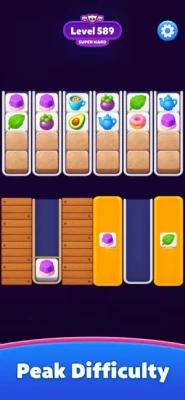
The basic idea is easy to understand: sort colorful tiles, blocks, and patterns into their matching containers using logic and careful planning. As the puzzles become more complicated, recognizing the right order becomes just as important as recognizing the colors.
Unlike games that put you under constant pressure, Tile Sort has no time limits, allowing you to study the board and decide your next move at your own pace.
Game Information
| Feature | Details |
|---|---|
| Game | Tile Sort: Puzzle Game |
| Subtitle | Relaxing Color Match Game |
| Developer | UNICO STUDIO |
| Genre | Puzzle |
| Platform | iPhone, iPad |
| Price | Free with in-app purchases |
| Age Rating | 4+ |
| Size | About 287 MB |
| Languages | English + 21 more |
| Current Version | 1.4.0 |
| Latest Listed Update | September 4, 2026 |
| Requirements | iOS 15.0 or later |
| Advertising | Yes |
| In-App Purchases | Yes |
| Offline Play | Supported |
| Time Limit | None |
The current App Store listing shows a 4.7/5 rating from 68 ratings. It is free to play, contains advertising, and offers optional purchases including a Remove Ads option.
What Is Tile Sort?
Tile Sort takes the familiar idea of water sort and color sorting puzzles and adapts it to tiles, blocks, holders, and visual patterns.
Instead of simply matching three identical pieces, you need to understand how the available tiles are arranged and determine how to sort them into the appropriate containers.
This makes the game a combination of:
- Color sorting
- Tile matching
- Block sorting
- Pattern recognition
- Logic puzzles
- Memory
- Spatial planning
The developer describes it as easy to pick up but harder to master, which is an accurate way to think about the basic design: the controls are simple, while the decision-making becomes more demanding as the puzzles progress.
How to Play Tile Sort
The basic gameplay loop is straightforward.
1. Examine the Board
Before moving anything, look at the colors, patterns, holders, and available spaces.
Try to understand which pieces are immediately useful and which ones may be blocking access to something underneath or behind them.
2. Identify Matching Groups
Look for tiles that belong together.
Matching colors are the obvious starting point, but later puzzles can require more attention to the arrangement and order of the pieces.
3. Sort Carefully
Move the available tiles into their matching containers.
Avoid making a move simply because it is possible. A move can solve one small part of the puzzle while making another section more difficult.
4. Continue Until the Board Is Organized
The objective is to sort the tiles and complete the level.
Because there is no time limit, you can pause and rethink your next move instead of rushing.
Tile Sort Strategy Guide
1. Study Before Making Your First Move
The best habit for Tile Sort is simple:
Look first, move second.
Take a few seconds to inspect the complete arrangement.
Ask yourself:
- Which colors have the most pieces?
- Which containers are already partly filled?
- Which tile is blocking another?
- Which move creates more space?
- Which move could leave a difficult piece stranded?
This short planning period can prevent unnecessary mistakes.
2. Don't Always Sort the Obvious Tile
If you see two matching tiles, it may be tempting to move them immediately.
Sometimes that's the correct move.
Sometimes it isn't.
Consider what happens after the move.
A good sorting move should ideally do at least one of these things:
- Complete a group
- Open another tile
- Create additional space
- Simplify the board
- Prepare the next matching sequence
3. Think About Empty Space
Empty space is one of your most valuable resources.
If a level provides several holders, don't fill them randomly.
Try to keep enough flexibility for future moves.
A board with several partially organized groups can be easier to solve than one where every available space has been filled with unrelated pieces.
4. Work From the Most Accessible Tiles
If some tiles are clearly easier to reach than others, consider solving the accessible area first.
Clearing an obvious group can expose new possibilities and reduce visual clutter.
This is especially useful when the puzzle contains layered or more complicated arrangements.
5. Build Matching Groups Carefully
When you begin collecting tiles of the same color, think about the final state.
Don't create a situation where a useful tile has nowhere to go because all appropriate space is occupied.
A little planning can make the difference between a smooth solution and a board that feels completely blocked.
6. Use Pattern Recognition
Tile Sort isn't only about color.
The game also emphasizes patterns and sorting logic, so pay attention to the visual relationship between pieces rather than treating every tile as an isolated object.
Over time, you'll start recognizing common arrangements and predicting which move is likely to simplify them.
Best Beginner Tips
Take your time
There is no countdown, so use that advantage.
Don't fill every space
Keep some flexibility for future moves.
Match with a purpose
A move should ideally help the next move as well.
Look for blocked pieces
Sometimes the best move is the one that exposes something else.
Think one or two moves ahead
You don't need to predict the entire puzzle. Just consider what your current move will make possible.
Avoid random tapping
Sorting games reward deliberate decisions much more than trial-and-error movement.
Advanced Tile Sort Strategy
Plan Two or Three Moves Ahead
Once the early puzzles become familiar, stop thinking only about the current tile.
Try to anticipate a short sequence:
Move A → opens B → enables C
You don't need to solve the whole board mentally. Even a small amount of forward planning can dramatically improve your consistency.
Prioritize Moves That Increase Options
If you have two possible moves, consider which one leaves you with more choices.
For example, a move that opens two new possibilities can be more useful than a move that only completes one small group.
This is a general principle that becomes increasingly useful on difficult sorting boards.
Avoid Creating Dead Ends
A dead end happens when the remaining pieces technically exist but there is no convenient way to organize them.
To reduce this risk, don't fill containers or spaces without considering what will happen to the remaining colors.
Separate Similar Colors Mentally
When several colors are visually close, slow down.
Don't rely on a quick glance.
Check the exact color or pattern before committing to a move, particularly when the board becomes crowded.
Simplify the Board
A good puzzle solution usually makes the board progressively simpler.
If your moves are creating more clutter than they remove, reconsider the sequence.
How to Solve Difficult Tile Sort Levels
When a level feels confusing, use this process.
Step 1: Stop Moving
Don't make another random move.
Step 2: Identify the Most Restricted Area
Find the section where you have the fewest available options.
Step 3: Find What Is Blocking It
Determine which tile or group is preventing progress.
Step 4: Work Backward
Ask what needs to move before the blocked area can be solved.
Step 5: Preserve Space
Make sure your solution doesn't consume all useful holders.
Step 6: Execute Slowly
Since there is no time limit, there is little reason to rush the final sequence.
This method turns a difficult-looking puzzle into a series of smaller decisions.
Why the No-Time-Limit Design Matters
One of Tile Sort's most useful features is the absence of a time limit.
That changes the way the game should be played.
You don't need to:
- Make rapid decisions
- Memorize a sequence under pressure
- Race against a clock
- Sacrifice accuracy for speed
Instead, the challenge is primarily about logic, observation and planning.
That makes Tile Sort suitable for short breaks as well as longer relaxed puzzle sessions.
Offline Tile Sorting
Tile Sort is designed to support offline puzzle play, allowing players to work through its sorting challenges without requiring Wi-Fi.
That makes it convenient for situations such as:
- Traveling
- Waiting rooms
- Commuting
- Airplane mode
- Short breaks
- Playing when mobile data is unavailable
The offline design also fits the game's self-contained puzzle structure.
Difficulty and Progression
Tile Sort starts with an accessible concept and gradually increases the complexity of its sorting challenges.
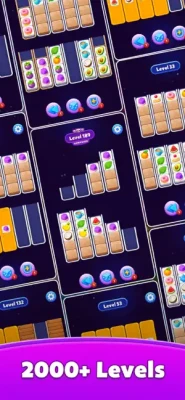
The App Store describes the game as containing hundreds of handcrafted levels with increasing difficulty.
The progression is therefore less about learning complicated controls and more about improving your ability to recognize patterns and plan several moves ahead.
Early levels teach the basic sorting concept.
Later puzzles test:
- Memory
- Spatial awareness
- Color recognition
- Pattern recognition
- Move sequencing
- Problem solving
This gives the game a gentle learning curve while leaving room for more demanding puzzles.
Tile Sort as a Brain Puzzle
Tile Sort is designed around several skills commonly associated with logic puzzles:
Memory: Remember where useful colors or patterns are located.
Pattern recognition: Identify groups and relationships quickly.
Planning: Consider what a move will make possible next.
Problem solving: Work through blocked or restricted arrangements.
Spatial awareness: Understand how the available containers and pieces interact.
The game is better viewed as a casual logic exercise than as a reaction-based puzzle.
Relaxing Gameplay
The presentation is built around a relaxed puzzle experience, with soft visuals, smooth animations and background music. The developer specifically markets it as a stress-free sorting game that can be played at your own pace.
That makes the game particularly suitable for players who enjoy puzzle games without countdown timers or constant pressure.
The appeal is the satisfaction of turning a messy arrangement into a clean, organized one.
Tile Sort Pros and Cons
Pros
- Simple sorting concept
- Easy controls
- Hundreds of handcrafted levels
- Increasing difficulty
- No time limits
- Color and pattern-based challenges
- Offline gameplay
- Relaxing presentation
- Suitable for short sessions
- Requires genuine planning on harder puzzles
- Available on iPhone and iPad
- Supports multiple languages
Cons
- The basic sorting concept will feel familiar to fans of water-sort games
- Players looking for action or story progression may find it too simple
- Advertising can interrupt the experience
- Some players may prefer more variety between puzzle types
The advertising concern is not hypothetical: one current App Store reviewer specifically complained about the frequency of ads, and the developer responded that it was reviewing ad frequency and balance.
Player Feedback
The current App Store listing shows a 4.7/5 rating from 68 ratings. Several visible reviews praise the game as fun and enjoyable, while another reviewer specifically criticized the amount of advertising.
This gives a more balanced picture of the current reception: players who enjoy sorting puzzles appear to like the core gameplay, while advertising frequency is a notable point of criticism in at least one recent review.
Because the review count is still relatively small, it is better to treat this rating as an early snapshot rather than a definitive measure of long-term player opinion.
Recent Updates
The App Store currently lists version 1.4.0, released September 4, 2026, with bug fixes and performance improvements. Previous updates also focused on fixes and performance, while version 1.0.5 added 100 new levels.
The repeated updates indicate that the developer continues to maintain the game, although the recent version notes are primarily focused on stability and performance rather than introducing major new mechanics.
Is Tile Sort Worth Playing?
Tile Sort is most appealing if you enjoy the satisfying process of taking a disorganized board and gradually turning it into an organized one.
Its strongest feature is not a complicated gimmick. Instead, it is the combination of:
simple rules + no timer + increasing difficulty + color sorting + pattern recognition.
The game gives you enough freedom to think about each move while keeping the controls accessible.
If you already play water-sort or tile-sort games, the basic concept will feel familiar. The value comes from the game's large collection of handcrafted puzzles and its gradual increase in complexity.
Who Should Play Tile Sort?
Tile Sort is a good match for players who enjoy:
- Tile sorting games
- Water-sort style puzzles
- Color sorting games
- Block sorting
- Logic puzzles
- Brain teasers
- Pattern matching
- Casual puzzle games
- Relaxing mobile games
- Offline puzzle games
- No-timer games
It is less suited to players looking for:
- Action gameplay
- Competitive multiplayer
- Character progression
- Story-driven campaigns
- Fast reaction challenges
Tile Sort vs Water Sort Games
Tile Sort clearly draws inspiration from the water-sort puzzle formula, but it transfers the basic sorting idea to tiles, blocks, containers and visual patterns.
Traditional water-sort games generally focus on pouring colored liquids between tubes.
Tile Sort instead asks you to organize tiles and blocks into matching holders, giving the puzzle a different visual structure while retaining the satisfying logic of sorting colors.
The common principle is the same:
Understand the current arrangement → make a careful move → create space → organize the remaining pieces.
Honest Review of Tile Sort: Puzzle Game
Tile Sort: Puzzle Game succeeds because its core idea is immediately understandable.
You don't need a tutorial explaining complicated controls. You see the colors and containers, understand that they need to be organized, and can start solving.
The deeper appeal comes from the gradual increase in difficulty. Once the simple color matches stop being enough, you have to think about order, available space and the consequences of individual moves.
The no-time-limit design is another positive feature for players who prefer relaxed puzzle solving.
The main weakness is that the underlying sorting concept is familiar. Players who have spent a lot of time with water-sort, tile-sort and block-sort games may not find the basic formula particularly revolutionary.
Advertising is also worth mentioning. A current reviewer said there were too many ads, and the developer acknowledged the complaint and said it was reviewing the balance.
For players who enjoy casual sorting puzzles, however, the combination of handcrafted levels, increasing difficulty, offline play and no time pressure gives Tile Sort a straightforward reason to keep playing.
Frequently Asked Questions
What is Tile Sort: Puzzle Game?
Tile Sort is a casual logic puzzle where players organize colorful tiles, blocks and patterns into matching containers using sorting and pattern-recognition skills.
Is Tile Sort free?
Yes. The App Store lists Tile Sort as free with optional in-app purchases. It also contains advertising.
Does Tile Sort have a time limit?
No. The game specifically advertises no time limits, allowing players to solve puzzles at their own pace.
Can Tile Sort be played offline?
Yes. Offline puzzle gameplay is one of the features listed by the developer.
Does Tile Sort have many levels?
The App Store description says the game includes hundreds of handcrafted levels with increasing difficulty.
Is Tile Sort suitable for children?
The current App Store age rating is 4+.
Who developed Tile Sort?
Tile Sort: Puzzle Game is developed by UNICO STUDIO.
What iOS version is required?
The current listing requires iOS 15.0 or later on iPhone and iPadOS 15.0 or later on iPad.
Does Tile Sort contain ads?
Yes. The App Store lists advertising, and there is also an optional Remove Ads purchase.
Does Tile Sort have in-app purchases?
Yes. The current listing includes coin packs, bundles and a Remove Ads option.
Final Thoughts
Tile Sort: Puzzle Game takes a familiar sorting concept and turns it into a relaxed collection of color, tile, block and pattern puzzles.
The most useful strategy is to think beyond the move directly in front of you. Before moving a tile, consider what space it will create, which pieces it may expose, and whether the move will make the remaining puzzle easier or harder.
The lack of a timer is especially helpful because it lets you solve difficult arrangements methodically rather than rushing.
For players who enjoy water-sort-style puzzles, color sorting, brain teasers and relaxing mobile games, Tile Sort offers a straightforward experience with hundreds of handcrafted challenges and steadily increasing difficulty.
Rate the Game
User Reviews










Popular Games



















 Android
 iOS
iOS Windows
 Xbox
Xbox