
Latest Version
September 29, 2026
UNICO STUDIO
Puzzle
iOS
0
Report a Problem
More About :game
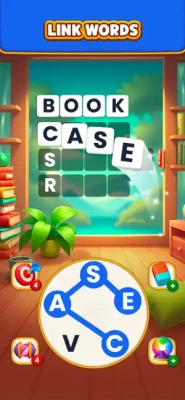
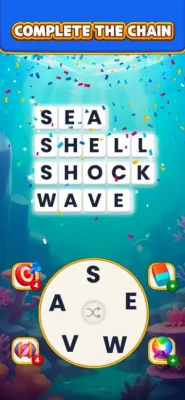
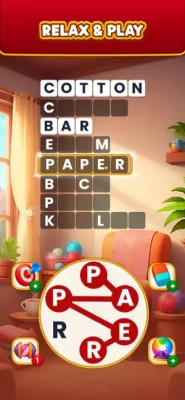
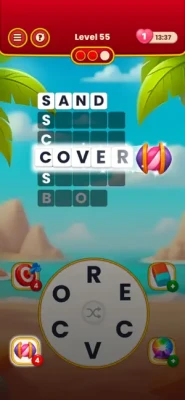
The idea is easy to understand: start with a word, choose the letters for the next answer, and continue the chain by finding a word that connects naturally with the previous one.
Connections can come from compound words or familiar phrases. For example, the game gives examples such as Rain → Bow and Hot → Dog.
As the chains become more complicated, success depends less on simply knowing vocabulary and more on recognizing possible relationships between words.
What Is Word Tangle: Chain Words?
Word Tangle is a casual word game built around word associations, compound words, phrases, vocabulary and logical connections.
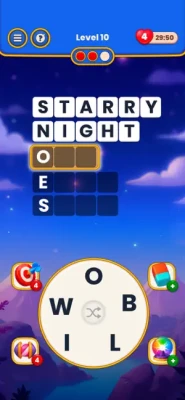
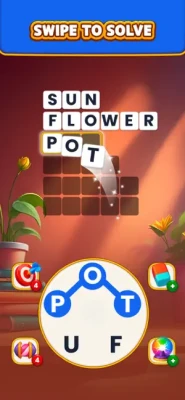
Rather than typing every answer, players select letters to construct the required word. This makes the controls simple while leaving the real challenge in your head.
A typical puzzle can be approached like this:
Starting Word → Related Word → New Connection → Next Word → Complete Chain
The next answer may be:
- Part of a compound word
- The second half of a familiar expression
- A word associated with the previous answer
- A connection that requires thinking beyond the most obvious meaning
This gives the game a word-ladder feeling while still allowing several types of relationships.
How to Play Word Tangle
1. Start With the Given Word
Every chain begins with a starting word.
Don't immediately focus on the available letters. First think about what the starting word could connect to.
For example, if the starting word is:
Rain
possible associations might include:
- Rain + Bow
- Rain + Coat
- Rain + Drop
- Rain + Fall
The available letter choices then help narrow down the intended answer.
2. Look for Familiar Phrases
A useful shortcut is to think in common expressions rather than dictionary definitions.
If you see a word like Hot, consider familiar combinations:
Hot Dog
rather than trying to invent a completely unrelated association.
The game specifically uses compound words and phrases as part of its puzzle design.
3. Build the Next Word
Once you have an idea, construct the word by selecting the correct letters.
You don't need traditional keyboard typing. The game is designed around selecting the letters needed to form the answer.
4. Use the New Word as Your Next Clue
This is the most important part of the game.
Don't treat each answer as an isolated question.
The word you just completed becomes the clue for the next step.
Think:
Word A → What naturally follows? → Word B → What follows Word B? → Word C
That chain reaction is the heart of the game.
Word Tangle Strategy Guide
Strategy 1: Think in Word Pairs
When you're stuck, stop thinking about the entire chain.
Focus on just two words.
Ask:
"What word commonly comes before or after this one?"
This is often much easier than trying to predict the complete puzzle.
For example:
Snow → ?
Possible connections could include:
- Snowball
- Snowman
- Snowfall
- Snowflake
The available letters determine which possibility is intended.
Strategy 2: Search for Compound Words First
Compound words are among the most useful patterns to recognize.
Look for combinations such as:
Sun + Flower
Tooth + Brush
Rain + Bow
Foot + Ball
Cup + Cake
You don't need to memorize hundreds of combinations. Train yourself to recognize when the current word could naturally become the first or second half of another word.
Strategy 3: Think About Both Directions
A common mistake is assuming the next word must always come after the current word.
Try both possibilities.
For example:
House → ?
could lead to:
Houseboat
but another clue might work in the opposite direction:
Tree → House
The important question is not simply:
"What word comes next?"
Instead ask:
"What familiar word relationship does this clue suggest?"
Strategy 4: Use the Available Letters as a Filter
Don't rely only on your vocabulary.
The letters shown on the screen provide valuable information.
Suppose you think of five possible answers, but only one can actually be constructed from the available letters.
That eliminates much of the guesswork.
A strong solving method is:
Think of possibilities → Check letters → Eliminate impossible answers → Complete the word
Strategy 5: Don't Commit to the First Idea
Your first association isn't always the intended answer.
If a word can connect to several possibilities, examine the available letters before choosing.
For example:
Star
could suggest:
- Starfish
- Stardust
- Starship
- Superstar
- Starfish
The board determines which connection is intended.
How to Solve Difficult Word Tangle Puzzles
When a chain becomes difficult, use a structured process.
Step 1: Read the Current Word
Understand its most common meanings.
Step 2: Think of Common Combinations
List familiar compound words and phrases mentally.
Step 3: Check the Letter Options
Eliminate words that cannot be created.
Step 4: Consider Both Word Directions
Try possible words before and after the current clue.
Step 5: Look for a Familiar Expression
The answer may be a phrase that you recognize immediately once you stop thinking literally.
Step 6: Check the Next Connection
Don't only ask whether the current answer works. Ask whether it creates a plausible next step.
This final check is particularly useful when several answers appear possible.
Advanced Word Tangle Techniques
Use the Chain as a Prediction Tool
Suppose you have:
A → B → ?
You can use both A and B to predict the next answer.
Instead of asking:
"What relates to B?"
ask:
"What answer would make the entire chain feel natural?"
This helps when a word has many possible associations.
Think in Categories
If a word doesn't immediately suggest a compound word, consider categories such as:
- Food
- Animals
- Places
- Objects
- Nature
- Sports
- People
- Actions
- Everyday expressions
For example, if the clue makes you think of an animal, search your mental vocabulary for common words connected with that animal.
Look for Everyday Language
The intended answer is often easier to find when you think about words people actually use together.
Don't automatically choose an obscure dictionary word simply because it technically connects.
Start with:
Common phrase → common compound word → familiar expression
before considering unusual vocabulary.
Word Tangle Boosters Explained
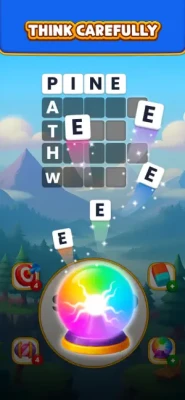
Word Tangle includes a booster system designed to help when a chain becomes difficult.
The App Store specifically lists:
- Pencil
- Eraser
- Bulb
- Letter
These tools can be used as assistance when you need help progressing through a puzzle.
Pencil
Use a booster of this type when you need assistance narrowing down the puzzle without completely giving away the answer.
Eraser
Useful when you have made a selection and need help clearing an unwanted choice.
Bulb
The Bulb is particularly useful when you're completely stuck and need a clue to push your thinking in the right direction.
Letter
A letter-based hint can reduce the number of possible answers by revealing useful information about the intended word.
Best Booster Strategy
Don't spend every booster immediately.
Try solving the puzzle yourself first.
If you can narrow the answer down to two or three possibilities, you're often better off continuing to think rather than using a valuable hint.
Save stronger assistance for situations where the connection genuinely isn't obvious.
Word Tangle Daily Rewards
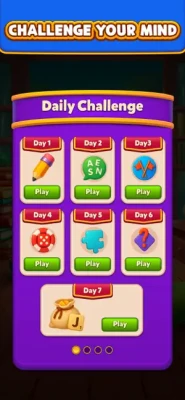
The game includes daily rewards that can provide additional resources for progressing through the puzzles.
If you play regularly, checking the daily reward system can help build up your available resources without relying entirely on purchases.
The App Store description specifically highlights free daily bonuses as part of the game's progression system.
Tips for Building Word Chains
Think Like a Phrase
Instead of treating the puzzle as a spelling test, think about how people naturally speak.
Use Word Families
A word may immediately suggest related forms or common combinations.
Check the Whole Board
Don't stare at only one part of the available letters. Look at every option before deciding.
Keep Your Vocabulary Flexible
If the obvious answer doesn't fit, consider another meaning of the clue.
Avoid Overthinking Easy Connections
Sometimes the answer is simply a familiar phrase you've heard hundreds of times.
Don't Guess Randomly
Random answers can make it harder to understand the intended connection. Use the clue and letters together.
Common Word Tangle Mistakes
Mistake 1: Thinking Only About Definitions
Word Tangle is about relationships between words, not just definitions.
A word can connect through a phrase, compound word or familiar expression.
Mistake 2: Ignoring the Letters
Your vocabulary may suggest several answers, but the available letters usually provide an important clue.
Mistake 3: Looking Only Forward
Try both sides of the current word.
Mistake 4: Using Boosters Too Quickly
Hints are most valuable when you've genuinely exhausted your own ideas.
Mistake 5: Forgetting the Previous Answer
The chain matters.
Always use the previous word as the starting point for the next connection.
Is Word Tangle Difficult?
The basic mechanic is easy to learn, but the difficulty comes from the increasing complexity of the word relationships.
Player feedback on the App Store describes the game as starting relatively easily and becoming more brain-teasing. One player reported reaching Level 1000, while another described the game as challenging without being impossible. These are individual player experiences rather than a universal difficulty rating.
The difficulty generally comes from:
- Less obvious word relationships
- Multiple possible associations
- Longer chains
- Less familiar phrases
- Limited usefulness of the first idea that comes to mind
Word Tangle: Chain Words Features
The current App Store description highlights:
- Word-chain puzzles
- Compound word challenges
- Famous phrases
- Letter-selection gameplay
- Vocabulary challenges
- Logic and memory elements
- Pencil, Eraser, Bulb and Letter boosters
- Offline play
- One-handed gameplay
- Quick puzzle sessions
- Daily rewards
- Multiple languages
- Game Center support
- Free progression without a required paywall
Word Tangle Game Information
| Feature | Details |
|---|---|
| Game | Word Tangle: Chain Words |
| Developer | UNICO STUDIO |
| Genre | Word / Puzzle |
| Main Mechanic | Word chains and associations |
| Gameplay | Compound words and phrases |
| Boosters | Pencil, Eraser, Bulb, Letter |
| Offline Play | Yes |
| Daily Rewards | Yes |
| One-Hand Play | Yes |
| Age Rating | 4+ |
| Languages | English + 18 more |
| iPhone | Supported |
| iPad | Supported |
| iOS Requirement | iOS 13.0 or later |
| Size | About 259.8 MB |
| Advertising | Yes |
| In-App Purchases | Yes |
| Game Center | Supported |
The current US App Store listing shows a 4.8/5 rating from about 3.1K ratings, with the game categorized under Word and rated 4+.
Word Tangle Compatibility
The App Store currently lists support for:
- iPhone
- iPad
- iPod touch
- Mac with Apple silicon
- Apple Vision
The minimum requirement listed for iPhone and iPad is iOS/iPadOS 13.0 or later. The listing also notes that the Mac version requires macOS 11.0 or later and an Apple M1 chip or newer.
Word Tangle Updates
The current version history shown by Apple lists version 0.2.11, released October 30, 2025, with bug fixes and performance improvements.
Several previous updates also focused on stability and performance. Version 0.2.2 introduced motivational voiceovers, while later releases continued with bug fixes and performance improvements.
Because updates can change the experience, older gameplay videos may not always exactly match the current version.
Word Tangle Player Feedback
The current App Store rating is 4.8/5 from approximately 3.1K ratings, but individual reviews point to both positive experiences and some issues.
One player praised the word-chain concept and reported reaching Level 1000, while another reported sound disappearing after advertisements or videos. The developer responded to that report and directed the player toward support for sound and advertising problems. Another player reported that settings such as mute and vibration were resetting, and the developer acknowledged the feedback.
These comments represent individual player experiences and should not be treated as universal problems.
Pros and Cons
Pros
- Original word-chain concept
- Easy-to-understand controls
- Compound-word and phrase puzzles
- Encourages vocabulary and association skills
- Offline play
- One-handed gameplay
- Daily rewards
- Multiple hint tools
- Quick sessions
- Large progression path
Cons
- Some word connections can be difficult to predict
- Boosters may become important on harder puzzles
- Advertising can affect the experience for some players
- Some players have reported occasional sound or settings issues
- Progress-saving concerns have appeared in individual reviews
Frequently Asked Questions
What is Word Tangle: Chain Words?
Word Tangle: Chain Words is a word puzzle game where you build chains by connecting related words through compound words and familiar phrases.
How do you play Word Tangle?
Start with the given word, then select letters to create a related word. Continue connecting words until the chain is completed.
Does Word Tangle require typing?
No. The game uses letter selection rather than traditional keyboard typing.
What types of word connections are used?
The game uses compound words and phrases. Examples from the App Store include Rain → Bow and Hot → Dog.
Can Word Tangle be played offline?
Yes. Offline play is specifically listed among the game's features.
Does Word Tangle have hints?
Yes. The game includes Pencil, Eraser, Bulb and Letter boosters that can assist with difficult puzzles.
Does Word Tangle have daily rewards?
Yes. Daily bonuses are included as part of the game's progression system.
Is Word Tangle free?
The game is free to download and play, with advertising and optional in-app purchases. The current App Store listing includes purchases for coins, ad removal, word packs and other resources.
Is Word Tangle good for vocabulary practice?
The game is designed around word relationships, compound words and phrases, so playing it naturally involves recognizing and recalling vocabulary. It should be viewed as a word-game activity rather than a formal educational program.
How can I get better at Word Tangle?
Focus on common compound words, familiar phrases and word associations. Use the available letters to eliminate impossible answers, and always consider how your current answer could connect to the next word.
Final Word Tangle Strategy
The key to Word Tangle: Chain Words is to think in connections rather than isolated answers.
When you see a word, immediately consider common phrases, compound words and familiar combinations. Then use the available letters to narrow the possibilities.
If you're stuck, work systematically:
Read the Word → Think of Common Pairs → Check the Letters → Consider Both Directions → Test the Connection → Continue the Chain
Don't be afraid to slow down. Word Tangle is designed around quick sessions, but the best way to solve difficult chains is often to take a few extra seconds and explore the possibilities in your head.
The more you recognize common word combinations, the easier it becomes to predict where a chain is heading.
Rate the Game
User Reviews



Popular Games














 Android
 iOS
iOS Windows
 Xbox
Xbox