
Latest Version
September 22, 2026
Hungry Studio
Puzzle
iOS
0
Report a Problem
More About :game
Sudoku Blast! is a mobile Sudoku puzzle game focused on traditional number logic.
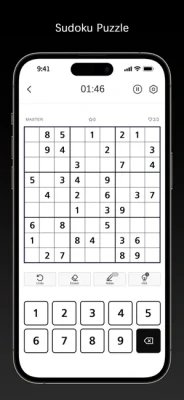
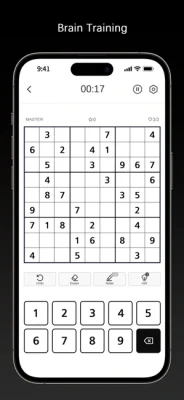
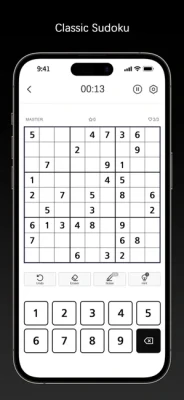
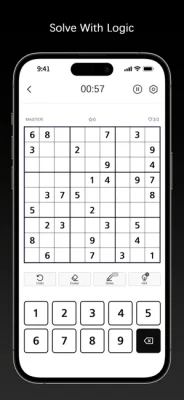
Its current App Store description emphasizes a clean interface, smooth controls, thousands of puzzles, hints, pencil notes, daily Sudoku challenges, and difficulty progression from easy to advanced.
That makes it suitable for both newcomers learning the fundamentals and experienced Sudoku players looking for regular short puzzle sessions.
The game is available on iPhone and iPad and requires iOS 13.0 or later. The App Store listing also indicates support for Apple Vision and more than 40 languages.
Sudoku Blast! Game Information
| Information | Details |
|---|---|
| Game Title | Sudoku Blast! |
| Developer | Hungry Studio |
| Publisher/Seller | ARETIS LIMITED |
| Genre | Puzzle / Board |
| Category | Puzzle |
| Platforms | iPhone, iPad, iPod touch, Apple Vision |
| Price | Free |
| In-App Purchases | Yes |
| Age Rating | 13+ |
| Compatibility | iOS 13.0 or later |
| Languages | English + 40 more |
| Puzzles | Thousands |
| Difficulty | Easy to Advanced |
| Daily Challenges | Yes |
| Hints | Yes |
| Pencil Notes | Yes |
| App Size | About 348 MB |
The U.S. App Store currently lists Sudoku Blast! at 4.9/5 from about 75,000 ratings.
How to Play Sudoku Blast!
The basic Sudoku rules are simple, but solving difficult boards requires careful observation.
A standard Sudoku board contains:
- 9 rows
- 9 columns
- 9 3×3 boxes
- 81 total cells
- Numbers 1 through 9
Every number from 1 to 9 must appear exactly once in each row, column, and 3×3 box.
For example, if a row already contains:
1, 2, 3, 4, 5, 6, 7, 8
the final empty cell must contain:
9
The same principle applies to columns and 3×3 boxes.
The Three Rules You Must Always Check
1. Row Rule
A number cannot appear twice in the same row.
Before entering a number, check the entire horizontal line.
2. Column Rule
A number cannot appear twice in the same column.
Look vertically through the board before placing a number.
3. Box Rule
A number cannot appear twice inside the same 3×3 box.
This is one of the most important checks when solving difficult puzzles.
A number is correct only when it satisfies all three rules simultaneously.
Complete Sudoku Blast! Strategy Guide
Strategy 1: Start With the Most Filled Areas
Do not scan the entire board randomly.
Look for rows, columns, or 3×3 boxes that already contain many numbers.
These areas usually have fewer missing possibilities and can produce easy deductions.
For example, if a 3×3 box contains:
1, 2, 3, 4, 5, 6, 8, 9
the missing number is obviously:
7
This is the fastest type of Sudoku deduction.
Strategy 2: Look for Naked Singles
A naked single occurs when an empty cell has only one possible number.
Suppose a cell cannot contain:
1, 2, 3, 4, 5, 6, 8, or 9.
The only remaining possibility is:
7
Enter it.
Then immediately reconsider nearby rows, columns, and boxes because your new number may unlock another single.
Strategy 3: Use Pencil Notes
Sudoku Blast! includes pencil notes for tracking possible numbers.
Pencil notes are particularly useful on medium and advanced puzzles.
Instead of guessing, write the possible candidates inside an empty cell.
For example:
{2, 5, 7}
means that the cell could currently contain 2, 5, or 7.
As you solve other cells, remove candidates that become impossible.
This turns the board into a logical process rather than a guessing game.
Strategy 4: Find Hidden Singles
A hidden single is slightly more difficult to recognize.
Suppose a 3×3 box needs the number 6, and only one empty cell in that box can legally contain 6.
Even if that cell has several pencil candidates, the 6 must go there.
This technique becomes increasingly useful as Sudoku Blast! puzzles become harder.
Strategy 5: Scan One Number at a Time
Choose a number such as 5.
Then examine:
- every row;
- every column;
- every 3×3 box.
Look for locations where 5 can legally go.
Repeat with other numbers.
This technique is especially effective when the board looks overwhelming.
Instead of solving 81 cells, you are solving one number at a time.
Strategy 6: Use Box-Line Interaction
This is an important intermediate technique.
Imagine that the number 4 can only appear in two cells inside a particular 3×3 box.
Both possible cells happen to be in the same column.
That means no other cell in that column outside the box can contain 4.
You can therefore eliminate 4 from those other cells.
This type of elimination can reveal new singles.
Strategy 7: Look for Naked Pairs
Suppose two cells in the same row contain exactly the same two candidates:
{2, 8}
and:
{2, 8}
Those two cells must contain 2 and 8 in some order.
Therefore, no other cell in that row can contain either 2 or 8.
This is called a naked pair.
The same technique works within columns and 3×3 boxes.
Strategy 8: Use Naked Triples
The same idea can be extended to three cells.
For example:
- Cell A: {1, 4}
- Cell B: {1, 7}
- Cell C: {4, 7}
Together, these three cells must contain:
1, 4, and 7
Therefore, those numbers can be eliminated from other cells in the same row, column, or box.
This technique is useful for advanced Sudoku Blast! puzzles.
Strategy 9: Do Not Guess Too Early
Guessing can quickly destroy a carefully constructed Sudoku solution.
Instead of asking:
"Which number looks right?"
ask:
"Which numbers can I eliminate?"
Sudoku is primarily an elimination puzzle.
Every legal deduction reduces the number of possibilities until the correct answer becomes unavoidable.
Strategy 10: Recheck the Board After Every Major Move
When you place a number, do not immediately jump to a distant part of the board.
Check the affected:
- row;
- column;
- 3×3 box.
The new number may eliminate candidates and reveal another solution.
This creates a chain reaction.
How to Solve Easy Sudoku Blast! Puzzles
For beginner-level boards, use this simple process:
Step 1
Find nearly completed rows.
Step 2
Find nearly completed columns.
Step 3
Check nearly completed 3×3 boxes.
Step 4
Fill obvious missing numbers.
Step 5
Repeat the scan.
Step 6
Use pencil notes when obvious moves disappear.
You should not need advanced techniques for many easy puzzles.
How to Solve Medium Sudoku Puzzles
Medium boards require more candidate tracking.
Try this sequence:
1. Scan for singles.
2. Add pencil candidates.
3. Search for hidden singles.
4. Look for pairs.
5. Use box-line elimination.
6. Repeat the process.
The important part is to continually update your pencil notes.
Old candidates can become invalid after only one new number.
How to Solve Advanced Sudoku Blast! Puzzles
Advanced puzzles require patience.
Start by carefully marking candidates.
Then look for:
- hidden singles;
- naked pairs;
- hidden pairs;
- triples;
- box-line interactions;
- candidate eliminations;
- patterns created by intersecting rows and columns.
Do not rush.
A difficult Sudoku puzzle may require several rounds of elimination before the next obvious number appears.
Best Way to Use Hints
Sudoku Blast! includes helpful hints.
A hint can be particularly useful when you have exhausted your visible deductions.
However, try to understand why the suggested number works.
Before accepting a hint, ask:
- What row restricts this number?
- What column restricts it?
- What 3×3 box restricts it?
- Which candidates were eliminated?
Learning the logic behind a hint is more valuable than simply completing one cell.
Pencil Notes Strategy
Pencil notes are one of the most useful tools for serious Sudoku players.
Use them to record candidates, but avoid filling every cell with unnecessary numbers.
A practical method is:
Early Game
Record candidates only when a cell has several possibilities.
Middle Game
Update candidates whenever a number is placed.
Late Game
Focus on cells with two or three candidates.
This keeps the board readable.
Daily Sudoku Strategy
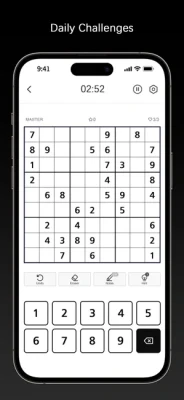
Sudoku Blast! includes daily Sudoku challenges with fresh puzzles.
Use daily puzzles as a way to improve rather than simply chase completion.
After finishing a puzzle, think about:
- Which technique helped most?
- Where did you get stuck?
- Did you use too many guesses?
- Could you have spotted a hidden single earlier?
- Did your pencil notes remain accurate?
Over time, this type of review can improve solving speed.
How to Solve Sudoku Faster
Speed should come from better pattern recognition rather than random guessing.
Use this routine:
First Pass
Look for obvious singles.
Second Pass
Scan each 3×3 box.
Third Pass
Scan rows and columns.
Fourth Pass
Add pencil candidates.
Fifth Pass
Search for pairs and other patterns.
Sixth Pass
Repeat the entire process after each major deduction.
Eventually, common patterns become automatic.
Common Sudoku Mistakes
Mistake 1: Guessing
Guessing can create a chain of incorrect placements.
Mistake 2: Forgetting the 3×3 Box
Checking only the row and column is not enough.
Mistake 3: Keeping Old Pencil Notes
A candidate that was possible five moves ago may now be impossible.
Mistake 4: Solving Only One Area
Sudoku is interconnected. A number in one box can affect several other areas.
Mistake 5: Playing Too Quickly
Speed without accuracy creates unnecessary mistakes.
Mistake 6: Ignoring Simple Singles
Advanced techniques are unnecessary when an obvious single is already available.
Sudoku Blast! Features
Thousands of Sudoku Puzzles
The App Store listing describes thousands of Sudoku puzzles covering different skill levels.
Multiple Difficulty Levels
The game progresses from easy puzzles toward more advanced challenges.
Pencil Notes
Players can mark possible numbers in empty cells, making candidate-based solving easier.
Hints
Hints are available when players need assistance identifying the next move.
Daily Sudoku
Fresh daily challenges give players a reason to return regularly.
Clean Interface
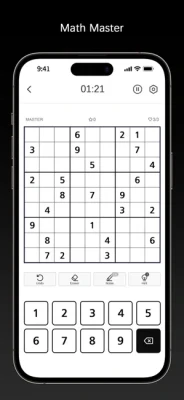
The game is designed around a straightforward Sudoku board rather than a complicated visual presentation.
Visual Style and Atmosphere
Sudoku Blast! takes a minimalist approach to the Sudoku experience.
The emphasis is on the puzzle grid, numbers, pencil notes, and solving process rather than elaborate characters or story elements.
That makes the game appropriate for players who prefer a focused number puzzle without unnecessary gameplay systems.
Difficulty and Challenge
The difficulty is primarily determined by how much information is initially provided and how complex the required deductions become.
Easy
Mostly obvious singles and basic scanning.
Medium
More candidate tracking and hidden singles.
Hard
More elimination techniques and careful pencil notes.
Advanced
Complex candidate relationships may be required before the next number becomes clear.
The important skill is not memorizing numbers. It is recognizing relationships between rows, columns, boxes, and candidates.
Player Feedback
The U.S. App Store currently displays a 4.9/5 rating from around 75,000 ratings, indicating substantial positive user feedback overall.
Reviews also show that players appreciate features such as pencil notes and different difficulty options. At the same time, some recent reviewers have criticized the frequency or presentation of advertisements, including ads appearing during gameplay. Those are individual user reports and do not represent every player's experience.
This is useful context when describing the game honestly rather than presenting only its advertised features.
Recent Updates
The current App Store version history shows frequent updates focused on improving the playing experience and fixing issues. The listing currently shows version 2.6.2, with recent releases including versions 2.6.1 and 2.6.0.
The recent update notes describe these releases as improvements and fixes for a smoother Sudoku experience.
Device Requirements
Sudoku Blast! requires iOS 13.0 or later and is available for iPhone and iPad. The listing also indicates compatibility with Apple Vision.
The U.S. App Store lists the app at approximately 348.3 MB and supports English plus more than 40 additional languages.
Pros and Cons
Pros
- Classic Sudoku rules
- Thousands of puzzles
- Multiple difficulty levels
- Daily challenges
- Pencil notes
- Helpful hints
- Clean interface
- Suitable for short sessions
- Regular updates
- Available on iPhone and iPad
Cons
- Advertising can interrupt the experience for some players
- Advanced puzzles can become demanding without careful candidate tracking
- Some useful solving features become more important as puzzle difficulty increases
Is Sudoku Blast! Worth Playing?
Sudoku Blast! is built around the core appeal of traditional Sudoku: clear rules, logical deduction, and progressively more difficult puzzles.
Its combination of thousands of puzzles, daily challenges, pencil notes, hints, and multiple difficulty levels gives both beginners and experienced Sudoku players plenty to work through.
The main consideration is the advertising experience, which some App Store reviewers have criticized.
For someone looking specifically for a straightforward mobile Sudoku game with a large collection of puzzles and familiar solving tools, the game provides a focused Sudoku experience.
Quick Sudoku Blast! Winning Checklist
Before entering any number, ask:
1. Is the number already in the row?
2. Is it already in the column?
3. Is it already in the 3×3 box?
4. Is this the only possible number for the cell?
5. Is this number restricted to one cell in the row, column, or box?
6. Can a pair or triple eliminate candidates?
7. Have my pencil notes been updated?
Following this checklist prevents many common mistakes.
Frequently Asked Questions
What is Sudoku Blast!?
Sudoku Blast! is a number puzzle game from Hungry Studio based on classic Sudoku rules. It offers thousands of puzzles, different difficulty levels, hints, pencil notes, and daily challenges.
Is Sudoku Blast! free?
Yes. The App Store lists Sudoku Blast! as free with optional in-app purchases.
Does Sudoku Blast! have daily puzzles?
Yes. Daily Sudoku challenges are one of the game's listed features.
Does Sudoku Blast! have pencil notes?
Yes. Pencil notes are available for recording possible numbers in empty cells.
Does Sudoku Blast! have hints?
Yes. The game includes hints to help players when they are stuck.
Does Sudoku Blast! have different difficulty levels?
Yes. The game provides progression from easier puzzles to more advanced Sudoku challenges.
What is the goal of Sudoku?
The goal is to fill the entire 9×9 grid so every row, column, and 3×3 box contains the numbers 1 through 9 exactly once.
Can I play Sudoku Blast! on iPad?
Yes. The App Store lists both iPhone and iPad compatibility.
What iOS version is required?
The current listing requires iOS 13.0 or later.
Who developed Sudoku Blast!?
The App Store identifies Hungry Studio as the developer.
Final Thoughts
Sudoku Blast! keeps the traditional Sudoku formula at the center of the experience while adding modern mobile conveniences such as pencil notes, hints, daily puzzles, and multiple difficulty levels.
The best way to improve is to stop thinking of Sudoku as a guessing game. Every correct placement should come from a logical reason.
Start with obvious singles, examine rows and columns, inspect the 3×3 boxes, maintain accurate pencil notes, and gradually move into techniques such as hidden singles, pairs, and box-line elimination.
Once those patterns become familiar, even difficult Sudoku Blast! boards become much more manageable.
Rate the Game
User Reviews















Popular Games



















 Android
 iOS
iOS Windows
 Xbox
Xbox