

Latest Version
September 17, 2026
ABI GLOBAL LTD.
Puzzle
iOS
0
Report a Problem
More About :game
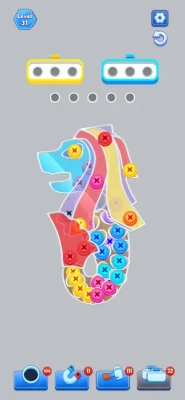
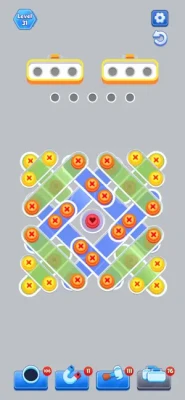
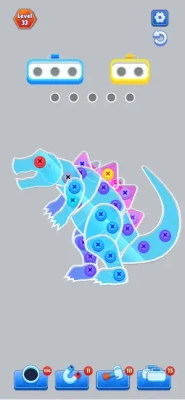
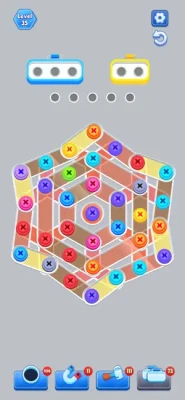
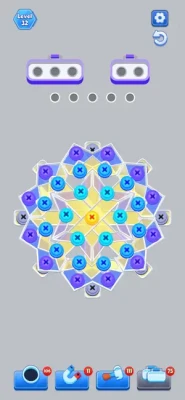
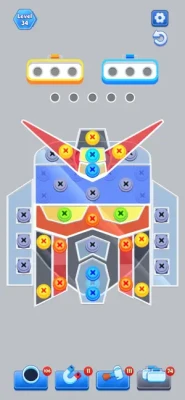
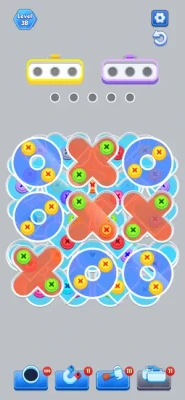
The game looks simple when you first start playing, but later boards require careful observation, forward planning, and an understanding of how the stacked pieces interact. With more than 1,000 advertised levels, different board shapes, obstacles, boosters, and increasingly complicated layouts, there is plenty of room for the puzzle mechanics to become progressively more demanding.
Pin Jam Puzzle Game Information
| Information | Details |
|---|---|
| Game | Pin Jam Puzzle |
| Developer | ABI GLOBAL LTD. |
| Genre | Casual / Puzzle |
| Platform | iPhone, iPad |
| Game Style | 3D pin sorting puzzle |
| Main Mechanic | Remove pins in the correct order |
| Objective | Match pins with the appropriate colored toolboxes |
| Levels | 1,000+ advertised levels |
| Boosters | Available |
| Sound | ASMR-style effects |
| Age Rating | 9+ |
| Price | Free with in-app purchases |
| iOS Requirement | iOS 12.0 or later |
| iPad | Supported |
The App Store listing currently identifies version 1.9 as the latest listed version and shows a September 18, 2024 update entry.
What Is Pin Jam Puzzle?
Pin Jam Puzzle combines several familiar puzzle ideas into one 3D board.
Pins hold colorful boards together, while the available holes determine which pieces can be removed. Each pin has to be handled in an appropriate sequence, and the pins need to be organized into matching toolboxes.
The important part is that you cannot simply remove pins randomly. A pin that looks easy to tap may actually be blocking another piece, while using a hole at the wrong moment can leave you without enough space for the next move.
That makes every level a small planning exercise.
How to Play Pin Jam Puzzle
The basic controls are simple:
- Examine the entire board before tapping.
- Identify which pins are currently accessible.
- Remove a pin only when its position makes sense.
- Place the pin into the appropriate color toolbox.
- Watch how removing that pin changes the board.
- Continue opening the structure one layer at a time.
- Use boosters when a position becomes genuinely difficult.
The App Store description specifically notes that the boards can be stacked, the number of available holes is limited, and placed pins cannot simply be retracted.
That last point is especially important on harder levels.
Complete Pin Jam Puzzle Strategy Guide
1. Study the Board Before Making Your First Move
The first tap is often more important than it appears.
Do not immediately select the easiest-looking pin. Instead, spend a few seconds looking at:
- Which pins are exposed
- Which pins are underneath other boards
- Which colors appear repeatedly
- Where the available holes are
- Which pins appear to be blocking several others
- Which toolbox colors will fill quickly
Think of the opening position as a map rather than a collection of individual pins.
Your first objective should be to create more options.
2. Remove Blocking Pins First
A useful pin is not necessarily the pin closest to you.
Look for pins that prevent several pieces from becoming accessible. Removing one strategically important pin can expose an entire section of the board.
This creates a chain reaction:
Blocking pin → newly exposed pin → newly exposed board → additional moves
When choosing between two available pins, ask:
Which one will give me more choices afterward?
That question is much more useful than simply asking which pin can be removed fastest.
3. Pay Attention to the Toolbox
The colored toolboxes are a major part of the puzzle.
A common mistake is to focus entirely on the board and ignore how your toolbox is filling.
If several pins of the same color are likely to become available soon, avoid filling your available space with unrelated colors unless the move helps open the board.
Try to maintain flexibility.
A good rule
Keep your toolbox options open until you understand the next section of the board.
This becomes increasingly important when several colors are competing for limited space.
4. Plan Around Limited Holes
The limited holes are one of the game's biggest strategic restrictions.
Every placement changes your available options.
Before tapping a pin, consider:
- Where will it go?
- Will that placement occupy a useful hole?
- What pin will I need to place next?
- Will another color become inaccessible?
- Can I still remove the next blocking piece?
If the answer to the last question is unclear, pause before making the move.
5. Work Through the Layers
Because the boards can be stacked, you should think vertically as well as horizontally.
A pin that appears unimportant on the upper layer may be preventing access to a valuable piece underneath.
Instead of trying to clear the visible surface immediately, identify the pins that allow you to penetrate deeper into the structure.
Layer strategy
Top layer: Find safe opening moves.
Middle layer: Prioritize pins that reveal important pieces.
Lower layer: Avoid filling your remaining spaces until you know what the exposed pieces require.
This approach prevents many unnecessary dead ends.
6. Think Two or Three Moves Ahead
You do not need to predict the entire level.
Instead, try to predict the next few consequences.
For example:
Remove blue pin → expose red pin → open lower board → access another blue pin
That is a useful sequence.
Compare it with:
Remove blue pin → fill space → no useful pin exposed
The second option may look equally valid at first, but it gives you fewer future choices.
7. Avoid Filling Your Space Too Quickly
Fast players often make the same mistake: they keep removing pins because every move feels productive.
But removing a pin is not automatically progress.
If your available space is becoming crowded while the board remains mostly intact, slow down.
You want to remove pins that solve a problem, not simply reduce the number of pins on screen.
8. Use Color Groups Intelligently
When multiple pins of one color are exposed, consider whether removing them together will create a cleaner board.
However, do not blindly prioritize one color.
The correct sequence depends on accessibility.
A color may look attractive because several matching pins are visible, but removing those pins could occupy the spaces you need for another critical sequence.
The best move is usually the one that balances:
- Color matching
- Board access
- Available space
- Future moves
9. Look for the Pin That Controls the Puzzle
Some levels have a key pin that effectively controls access to an entire section.
Finding this pin can dramatically simplify the puzzle.
Look for pins that:
- Sit over several pieces
- Prevent a board from being removed
- Block a large section
- Open multiple new positions
- Allow access to a previously hidden color
Once you identify the controlling pin, build your solution around it.
10. Don't Waste Boosters on Small Mistakes
Pin Jam Puzzle includes boosters designed to help when you become stuck.
That does not mean every difficult-looking position requires one.
Before using a booster, check whether you simply missed an accessible pin or made an inefficient move.
Save boosters for situations where:
- The remaining pins create a genuine jam
- Your available spaces are severely restricted
- A critical move is inaccessible
- The board has become difficult to recover
Using a booster only when necessary makes your resources much more valuable.
How to Solve Difficult Pin Jam Puzzle Levels
Hard levels usually become difficult for one of three reasons:
Limited space
You have very few safe places to put upcoming pins.
Solution: Remove only pins that improve your available space.
Layered boards
Important pins are hidden behind other pieces.
Solution: Identify which upper pins are preventing access to the lower layers.
Poor move order
Several pins appear removable, but only one sequence keeps the board solvable.
Solution: Compare the consequences of each available move before committing.
The Three-Step Hard-Level Method
When a level feels impossible, use this process:
Step 1: Find the bottleneck
Look for the pin, hole, color, or board section limiting your choices.
Step 2: Protect your free space
Do not fill every available position simply because you can.
Step 3: Open the board gradually
Make moves that reveal more information instead of moves that merely reduce the pin count.
This turns a confusing board into a sequence of smaller decisions.
Beginner Tips for Pin Jam Puzzle
If you are just starting, these habits will make the game much easier:
- Look at the whole board before tapping.
- Do not rush the first move.
- Prioritize pins that reveal new areas.
- Watch your available holes.
- Keep different color options open.
- Think several moves ahead.
- Avoid filling spaces without a reason.
- Study the lower layers before committing.
- Restart mentally before using a booster.
- Use boosters for genuine jams rather than ordinary mistakes.
The game is designed to be easy to understand initially, but its limited-space mechanics reward careful planning rather than rapid tapping.
Common Mistakes to Avoid
Randomly Removing Pins
This is the fastest way to create a jam.
Every removal should have a purpose.
Ignoring the Lower Layers
The visible surface is only part of the puzzle. Hidden pieces can determine whether your current sequence works.
Filling Every Available Space
Having empty space is valuable. Do not treat every hole as somewhere that must immediately be filled.
Chasing One Color
Matching colors is important, but accessibility comes first.
Using Boosters Too Early
A booster can rescue a difficult position, but it is better to understand why the level became stuck first.
Playing Too Fast
Pin Jam Puzzle rewards observation. Speed is useful only after you understand the board.
Pin Jam Puzzle Advanced Techniques
The Sacrifice Move
Sometimes you need to place a pin that does not immediately improve the board because doing so creates access to a more important piece.
The key is making sure the sacrifice produces a future advantage.
The Opening Move
The first few actions establish the entire rhythm of the level.
Try to create maximum freedom during the opening rather than immediately chasing completion.
The Space Reserve
Keep at least some room available whenever possible.
Think of empty space as a resource.
A player with three open positions and several possible moves has much more flexibility than a player with one open position and a single forced move.
The Color Forecast
Before committing to a sequence, look at which colors are likely to appear after the next layer opens.
This prevents situations where you fill your available space with one color and then discover that the next required move belongs to another.
The Recovery Check
If you make a questionable move, do not immediately continue tapping.
Stop and inspect the board.
Ask:
- What did that move block?
- What did it reveal?
- How many spaces remain?
- Which color is now most urgent?
- Is there still a safe route forward?
This can save a level without requiring a booster.
Pin Jam Puzzle Features
According to the App Store listing, the game includes:
- 3D colorful puzzle boards
- Pin removal mechanics
- Matching colored toolboxes
- Stacked board layouts
- Limited available holes
- Multiple board themes
- Different shapes and colors
- ASMR-style sound effects
- More than 1,000 advertised levels
- Obstacles and additional challenges
- Boosters
- Rewards
- In-app purchases
The App Store lists the game as a free download with optional in-app purchases and a 9+ age rating.
Difficulty and Progression
Pin Jam Puzzle starts with a straightforward idea: remove pins and organize them into their matching destinations.
The challenge increases when the game combines several restrictions at once.
A level can become significantly harder when:
- More pins are stacked together
- Fewer holes are available
- Several colors appear simultaneously
- Important pins are hidden
- The removal order becomes less obvious
- Obstacles interfere with the normal sequence
This means difficulty is not simply about having more pins. The real challenge comes from how those pins interact.
Is Pin Jam Puzzle Good for Puzzle Fans?
Pin Jam Puzzle is aimed at players who enjoy short, accessible logic challenges but still want levels that reward planning.
Its strongest idea is the combination of pin removal, color organization, stacked boards, and limited space. The simple controls make it approachable, while the ordering problem gives experienced players something to think about.
The ASMR-style sound design and colorful board themes also give the game a more relaxed presentation.
Players looking for a fast puzzle session can complete a few levels at a time, while those who enjoy optimization can spend more time working out efficient sequences.
Pin Jam Puzzle Pros and Cons
Pros
- Simple tap-based controls
- Easy to understand
- Increasingly challenging puzzle layouts
- 3D board presentation
- Color-based organization
- Layered puzzle structures
- More than 1,000 advertised levels
- Boosters for difficult situations
- Relaxing sound effects
Cons
- Some puzzles can punish a single poor move
- Limited spaces make mistakes costly
- In-app purchases are available
- The App Store listing shows a relatively small rating sample
- Later levels can require considerable planning
The US App Store listing currently shows a 3.5/5 rating from four ratings, so that rating should not be treated as a broad measure of overall player sentiment.
Frequently Asked Questions
What is Pin Jam Puzzle?
Pin Jam Puzzle is a 3D casual puzzle game where players remove pins in the correct order and organize them into matching colored toolboxes.
How do you play Pin Jam Puzzle?
Tap accessible pins, place them into the appropriate color toolbox, and carefully manage the limited available holes while gradually clearing the stacked board.
Does Pin Jam Puzzle have many levels?
Yes. The App Store description advertises more than 1,000 challenging levels.
Are boosters available?
Yes. Boosters are included to help players deal with difficult puzzle situations.
Is Pin Jam Puzzle available on iPhone?
Yes. The App Store listing supports iPhone and iPad and requires iOS 12.0 or later.
Does Pin Jam Puzzle have in-app purchases?
Yes. The App Store lists multiple optional in-app purchases, including starter offers, coin packs, boosters or favors, and ad-removal options.
What is the best strategy for hard levels?
Study the complete board first, identify blocking pins, preserve empty spaces, and plan several moves ahead before committing to a sequence.
Final Thoughts
Pin Jam Puzzle takes a simple idea and adds enough restrictions to make each level a genuine planning exercise. The controls are easy, but solving a crowded board requires more than simply tapping the first available pin.
The most important lesson is to think about what each move creates rather than what each move removes.
Look for blocking pins, protect your available spaces, watch the toolbox colors, and use the board's layers to your advantage. Once these habits become automatic, difficult Pin Jam Puzzle levels become much easier to read and solve.
Rate the Game
User Reviews








Popular Games


















 Android
 iOS
iOS Windows
 Xbox
Xbox