

Latest Version
September 17, 2026
Dawid Fatyga
Puzzle
iOS
0
Report a Problem
More About :game
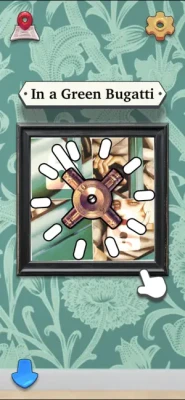
The game is inspired by classic combinatorial puzzles such as the Rubik's Cube, so the challenge is based on recognizing patterns, understanding how pieces move, and planning sequences rather than simply matching two identical images.
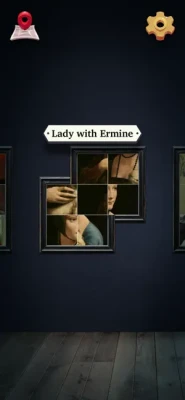
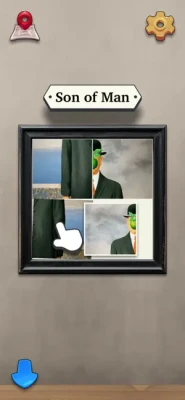
What makes the game unusual is its combination of puzzle solving and art discovery. Once a painting has been restored, you can learn more about the artwork and its artist. The collection includes recognizable names such as Vincent van Gogh and Leonardo da Vinci, alongside artists such as Zdzisław Beksiński and Keith Haring.
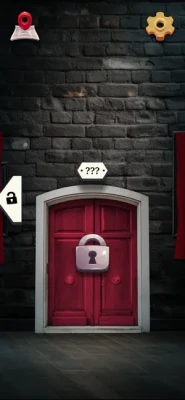
The App Store listing describes more than 70 paintings, gradually increasing difficulty, optional rooms containing harder paintings, and an accessibility option that allows players to unlock puzzles and explore them in any order.
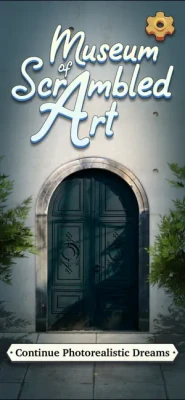
Museum of Scrambled Art Game Information
| Information | Details |
|---|---|
| Game | Museum of Scrambled Art |
| Developer | Dawid Fatyga |
| Genre | Puzzle |
| Platform | iPhone, iPad |
| Main Mechanic | Unscrambling paintings |
| Puzzle Style | Combinatorial / logical |
| Artwork Collection | 70+ paintings advertised |
| Difficulty | Gradually increasing |
| Museum Rooms | Multiple rooms |
| Harder Content | Optional challenging rooms |
| Free Content | 15 puzzles |
| Full Game | One-time purchase |
| Advertisements | No ads |
| Age Rating | 4+ |
| Language | English |
| Current App Size | 86.4 MB |
The current US App Store listing says players can try 15 puzzles for free and unlock the full game with a one-time purchase. It also states that there are no advertisements.
What Is Museum of Scrambled Art?
Museum of Scrambled Art combines an art museum atmosphere with a logical puzzle system.
Each challenge presents a scrambled artwork. Your task is to figure out how the pieces have been rearranged and restore the painting.
The important distinction is that this is not simply a traditional jigsaw puzzle where you drag a piece into an obvious empty space.
The developer describes the game as being inspired by combinatorial puzzles, meaning that the relationship between individual moves matters.
That gives the game two complementary sides:
Puzzle side
You need to reason about the position of pieces and discover a sequence that restores the image.
Museum side
You gradually discover artists, paintings, historical information, and background details as you progress.
The result is a slower, more thoughtful puzzle experience rather than a fast arcade game.
How to Play Museum of Scrambled Art
The basic objective is simple:
Take a scrambled painting and restore it to its correct arrangement.
A good approach is:
- Examine the entire scrambled painting.
- Identify recognizable sections.
- Look for edges, colors, shapes, and visual patterns.
- Determine how the puzzle's movement system works.
- Plan a sequence instead of making random moves.
- Restore large sections first.
- Use distinctive details to confirm positions.
- Finish the remaining difficult sections.
- Explore the information about the completed artwork.
Because the puzzles are based on logical movement rather than ordinary image matching, understanding the puzzle's movement rules is just as important as recognizing the artwork itself.
Complete Museum of Scrambled Art Strategy Guide
1. Study the Painting Before Making a Move
The best first move is often no move at all.
Take a moment to examine the scrambled artwork.
Look for:
- Faces
- Strong vertical lines
- Strong horizontal lines
- Distinctive colors
- Architectural shapes
- Objects
- Clothing
- Landscape boundaries
- Large blocks of similar color
- Recognizable artistic details
These features give you landmarks that can help you determine where individual sections belong.
2. Find the Most Distinctive Section
Not every part of a painting is equally useful.
A face, bright object, sharply defined building, or strong geometric pattern is much easier to track than a large area of similar color.
Start with the most recognizable feature.
For example, if a scrambled painting contains a clearly recognizable face, use that area as an anchor.
Once its surrounding pieces begin to make sense, the rest of the composition becomes easier to reconstruct.
3. Think in Sections, Not Individual Pieces
One of the biggest mistakes is trying to solve every piece independently.
Instead, divide the painting mentally into sections:
- Upper area
- Lower area
- Left side
- Right side
- Central subject
- Background
- Foreground
Then work on one section at a time.
A correctly positioned group of several pieces is much more useful than correctly positioning one isolated piece.
4. Use Color Transitions as Clues
Paintings often contain natural color boundaries.
Examples include:
- Sky meeting buildings
- Clothing meeting skin
- Water meeting land
- Walls meeting floors
- Bright objects against dark backgrounds
These transitions can help you recognize which pieces belong beside each other.
A piece containing half of a strong color boundary can be easier to identify than a piece showing a uniform area.
5. Use Straight Lines as Anchors
Paintings with architecture, furniture, frames, buildings, or geometric elements often contain strong straight lines.
These are excellent puzzle landmarks.
If you identify a continuous line across several scrambled sections, try to reconstruct that line.
Once the line is restored, neighboring pieces become easier to place.
Understanding the Combinatorial Puzzle Style
Museum of Scrambled Art is inspired by classic combinatorial puzzles, so efficient solving requires more than visual recognition.
A useful way to think about the puzzle is:
Position → movement → new position → future movement
Every move changes the possibilities available to you.
This means a move that makes one area look better may still be a poor move if it makes the remaining arrangement harder to solve.
6. Plan Several Moves Ahead
Try not to think only about the immediate result.
Before making a move, ask:
Where will this piece be afterward?
Then ask:
What will that allow me to do next?
You don't need to calculate the entire puzzle.
Planning two or three meaningful moves ahead is often enough to avoid unnecessary backtracking.
7. Avoid Destroying a Correct Section
Once you have reconstructed a useful section of the painting, treat it as valuable.
Don't disturb it unless the puzzle requires you to.
A common puzzle-solving mistake is repeatedly moving pieces that are already close to their final positions.
Build progress gradually.
Correct section → preserve it → solve neighboring section → connect the two
8. Use Large Visual Features Before Tiny Details
When reconstructing an artwork, start with major shapes.
For example:
- A large red coat
- A blue sky
- A building
- A face
- A large table
- A tree
- A distinctive geometric pattern
Small details can be solved afterward.
This reduces the number of possibilities you need to consider.
9. Look for Symmetry and Repetition
Some paintings contain repeated patterns.
These can provide useful clues when individual pieces look similar.
Check for:
- Repeated windows
- Similar brush strokes
- Matching colors
- Repeated shapes
- Symmetrical structures
- Parallel lines
When several pieces look almost identical, compare their surrounding details rather than trying to identify the piece by itself.
10. Keep a Mental Map
As you make progress, remember where important features are located.
For example:
Face → center-left
Bright object → lower-right
Dark background → upper section
This mental map helps you recognize when the board has moved into a useful configuration.
Museum of Scrambled Art Hard Puzzle Strategy
The later puzzles become more demanding because you need to combine visual recognition with better move planning.
When a puzzle becomes difficult, use this sequence.
Step 1: Stop moving randomly
Random movement can destroy useful progress.
Step 2: Find a visual anchor
Choose a face, object, line, or strong color boundary.
Step 3: Reconstruct a small section
Don't attempt the whole artwork immediately.
Step 4: Protect the solved area
Avoid unnecessary moves through the completed section.
Step 5: Connect another section
Gradually expand your solved area.
Step 6: Check the whole image
Once several sections are organized, the remaining pieces often become easier to identify.
How to Solve Similar-Looking Pieces
Some artwork contains large areas where many pieces look almost identical.
This is where players can lose time.
Instead of asking:
"Where does this blue piece go?"
Ask:
"What is immediately next to this blue piece in the original image?"
Look for:
- Brush-stroke direction
- Color gradients
- Lines
- Shadows
- Object boundaries
- Texture changes
Two pieces may have almost the same color but completely different neighboring details.
How to Handle Portrait Paintings
Portraits can actually provide some of the best landmarks.
Look for:
- Eyes
- Nose
- Mouth
- Hairline
- Clothing collar
- Shoulders
- Background around the head
A face can often give you a strong central anchor.
Once the facial features are correctly arranged, use the surrounding clothing and background to expand outward.
How to Handle Landscape Paintings
Landscapes provide natural horizontal divisions.
Look for:
- Sky
- Horizon
- Mountains
- Trees
- Water
- Ground
- Buildings
A good strategy is to identify the horizon first.
Once the sky and ground are separated correctly, the remaining pieces become easier to classify.
How to Handle Abstract or Unfamiliar Art
The game intentionally includes artists that players may not already know. The App Store specifically highlights lesser-known artists alongside famous names.
If the painting is unfamiliar, don't worry about identifying the artist first.
Instead focus on:
- Color transitions
- Shapes
- Texture
- Repeated forms
- Lines
- Symmetry
- Relative position
You can learn about the artwork after solving the puzzle.
This is one of the game's interesting design choices: the puzzle can introduce you to art you might not otherwise encounter.
Museum Rooms and Progression
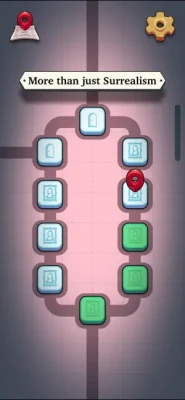
The game is organized around museum-style rooms containing different paintings.
The developer describes several rooms, including areas with famous artists and other rooms featuring more challenging artwork.
The progression is designed to increase difficulty gradually.
That means early puzzles can be used to learn:
- How pieces move
- How to identify visual anchors
- How to preserve solved sections
- How to plan sequences
Later puzzles then demand more deliberate planning.
Optional Challenging Rooms
Players who want additional difficulty can explore optional rooms containing more challenging paintings.
These are useful if you enjoy solving puzzles without needing the progression to remain completely linear.
The game also provides an accessibility option that allows players to unlock puzzles and explore them in any order.
That makes the experience more flexible for players who prefer exploration over a fixed progression path.
Museum of Scrambled Art Tips for Beginners
If you're just starting, remember these simple rules:
- Study the painting before moving anything.
- Find one distinctive visual feature.
- Build small sections instead of chasing individual pieces.
- Use strong color boundaries as clues.
- Watch for straight lines and repeated shapes.
- Avoid disturbing a correctly arranged section.
- Think a few moves ahead.
- Compare neighboring details when pieces look similar.
- Don't rush through unfamiliar artwork.
- Use the completed painting as your visual reference.
The most important beginner lesson is:
Recognition comes first; movement comes second.
Advanced Puzzle Techniques
The Anchor Technique
Choose one unmistakable feature and use it as the center of your reconstruction.
The Boundary Technique
Look for boundaries between different colors, objects, or textures.
These often reveal which pieces belong together.
The Chain Technique
Solve one piece, then use that piece to identify its neighbor, then continue outward.
Piece A → Piece B → Piece C → Piece D
This is particularly effective when the artwork contains strong visual continuity.
The Preservation Technique
Once an area is correct, treat it as fixed unless absolutely necessary.
The Reverse Planning Technique
If you know what the final arrangement must look like, think backward from a recognizable finished section.
How to Improve Your Puzzle Efficiency
Solving the painting is only part of the experience. You can also improve the way you solve.
After completing a difficult puzzle, consider:
- Did I make unnecessary moves?
- Did I disturb solved areas?
- Could I have used a better anchor?
- Did I spend too much time identifying individual pieces?
- Did I overlook an obvious color boundary?
Learning from one puzzle can make the next one easier.
Museum of Scrambled Art Art Collection
The game includes a mixture of well-known and less familiar artists.
The App Store specifically names:
- Vincent van Gogh
- Leonardo da Vinci
- Zdzisław Beksiński
- Keith Haring
The developer describes the paintings as carefully curated and says each puzzle includes interesting facts and background information about the artwork.
This makes the game more than a visual puzzle collection. Completing a puzzle also opens a small opportunity to learn about the artwork you have just restored.
What Makes Museum of Scrambled Art Different?
Several elements distinguish the game from a standard image puzzle.
Art discovery
The paintings are part of the gameplay rather than merely decorative backgrounds.
Logical movement
The puzzles are inspired by combinatorial puzzle concepts rather than simple drag-and-drop jigsaws.
Gradual difficulty
The game increases the challenge as you progress.
Educational information
Completed paintings include facts and background information.
Relaxed atmosphere
The museum presentation uses simple graphics and cozy music to create a calm environment.
Free Version and Full Game
The App Store listing currently offers 15 puzzles for free, with a one-time purchase unlocking the full game. It also states that the game has no advertisements.
The current US listing shows the full-game purchase at $5.99.
This is different from games that rely on repeated energy systems or constant advertising interruptions.
Museum of Scrambled Art Features
Key features include:
- Scrambled painting puzzles
- More than 70 paintings advertised
- Multiple museum rooms
- Gradually increasing difficulty
- Optional challenging rooms
- Famous and lesser-known artists
- Art history information
- Painting backstories
- Combinatorial puzzle inspiration
- 15 free puzzles
- One-time full-game unlock
- No advertisements
- Cozy music
- Simple visual presentation
- Accessibility option for unlocking puzzles
Difficulty Guide
Beginner
Focus on learning how the puzzle movement works and recognizing obvious visual anchors.
Intermediate
Start planning sequences and preserving completed sections.
Advanced
Use dependency thinking, visual boundaries, and multi-step planning.
Challenging Rooms
Expect to spend more time analyzing the artwork before making moves.
The game intentionally increases difficulty gradually rather than making every puzzle immediately complex.
Common Mistakes
Moving Too Quickly
A fast first move can create unnecessary work.
Solving Isolated Pieces
A single correctly positioned piece is less useful than a correctly arranged group.
Ignoring Neighboring Details
Similar colors can be misleading. Always inspect the surrounding texture and lines.
Breaking Completed Sections
Once you've established a correct area, protect it.
Trying to Solve Everything at Once
Divide the artwork into manageable regions.
Focusing Only on Famous Paintings
Some of the game's appeal comes from discovering artists you may not already know.
Museum of Scrambled Art Pros and Cons
Pros
- Original combination of art and puzzle solving
- More than 70 paintings advertised
- Famous and lesser-known artists
- Gradually increasing difficulty
- Optional harder rooms
- Art history information
- Relaxing museum atmosphere
- Cozy music
- No advertisements
- 15 free puzzles before the full-game purchase
- Accessibility option for flexible puzzle selection
Cons
- The experience is deliberately slow-paced
- Players looking for action or fast gameplay may find it too quiet
- Some scrambled paintings can be difficult to reconstruct without careful observation
- The full collection requires a one-time purchase
- The game is currently presented primarily as an English-language experience
The current US App Store listing shows approximately 4.0/5 from 108 ratings, while another current App Store regional listing shows 4.1 from 113 ratings; ratings can vary by storefront and change over time.
Frequently Asked Questions
What is Museum of Scrambled Art?
Museum of Scrambled Art is a cozy logical puzzle game in which players unscramble paintings while learning about the artworks and their artists.
How does Museum of Scrambled Art work?
Each puzzle presents a scrambled artwork. You must use logical planning and visual recognition to restore the painting to its correct arrangement.
How many paintings are in the game?
The App Store description advertises more than 70 paintings to discover and unscramble.
Which artists are featured?
The listing specifically mentions Vincent van Gogh, Leonardo da Vinci, Zdzisław Beksiński, and Keith Haring, alongside other artists.
Is Museum of Scrambled Art educational?
It has an educational element because completed puzzles include interesting facts and background information about the artworks and artists.
Is Museum of Scrambled Art free?
You can try 15 puzzles for free. The full game is unlocked through a one-time purchase.
Does Museum of Scrambled Art have advertisements?
The App Store listing states that the game has no advertisements.
Are there difficult puzzles?
Yes. The game has gradually increasing difficulty and optional rooms containing more challenging paintings.
Can I choose puzzles freely?
An accessibility option allows players to unlock all puzzles and explore them in any order.
What is the best strategy for difficult paintings?
Start with a distinctive visual anchor, reconstruct small connected sections, preserve correct areas, and plan several moves ahead rather than moving pieces randomly.
Final Thoughts
Museum of Scrambled Art takes an unusual approach to puzzle gaming by making the artwork itself part of the challenge.
The game asks you to do two things at once: solve a logical puzzle and discover an artwork.
The best strategy is to slow down, study the painting, identify strong visual landmarks, and build the image back together in connected sections. Don't worry about solving every piece individually. A recognizable face, architectural line, color boundary, or distinctive object can provide the anchor you need.
The museum setting, cozy music, gradually increasing difficulty, art-history information, and collection of more than 70 advertised paintings give the game a different rhythm from typical mobile puzzle titles.
For players who enjoy art puzzles, logical challenges, relaxing games, painting restoration, and learning about artists, Museum of Scrambled Art offers a thoughtful combination of visual problem-solving and digital museum exploration.
Rate the Game
User Reviews









Popular Games
















 Android
 iOS
iOS Windows
 Xbox
Xbox