
Latest Version
Visit PageMore About :game
The basic controls are easy to understand, but good scores require planning. Blocks cannot be rotated, so every placement matters. There is also no time limit, allowing you to slow down, study the board, and choose your next move carefully.
The game supports offline play and is designed for both quick sessions and longer puzzle sessions. Google Play currently lists it with 50M+ downloads and a 4.5-star rating, while the listing describes it as suitable for all ages.
What Is Color Block: Combo Blast?
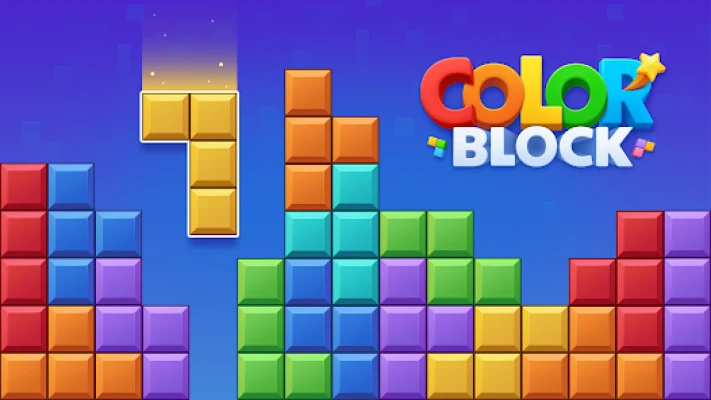
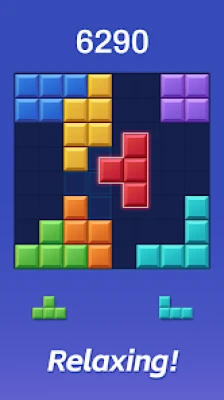
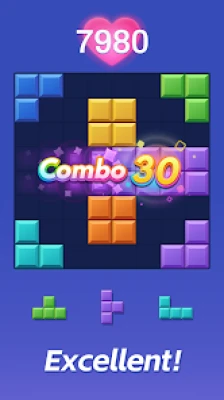
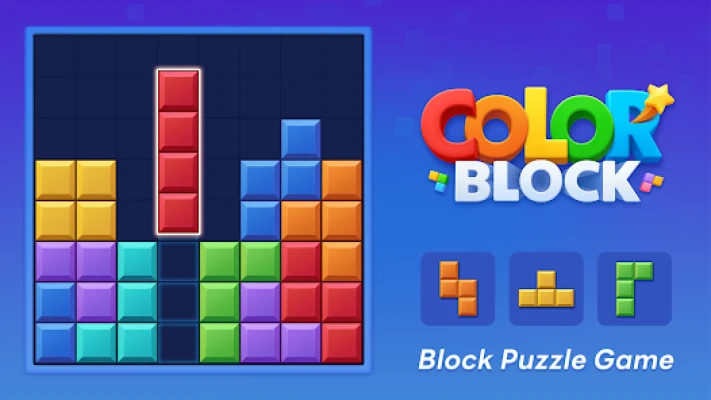
Color Block: Combo Blast is a classic-style block puzzle game with a modern presentation. Instead of racing against a clock, you are given blocks and must find useful positions for them on the board.
The main objective is straightforward:
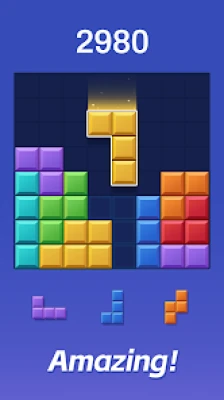
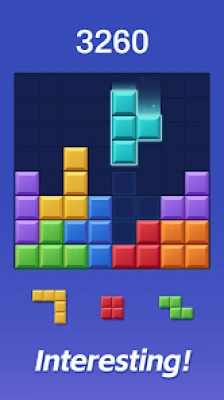
- Drag blocks onto the puzzle board.
- Complete horizontal or vertical lines.
- Clear completed lines.
- Preserve empty spaces.
- Plan several moves ahead.
- Continue as long as possible without running out of useful space.
The most important rule is that blocks cannot be rotated. This makes positioning much more important because the shape you receive is the shape you must work with.
Game Features
Classic Block Puzzle Gameplay
The core gameplay follows the familiar block-puzzle formula while keeping the presentation clean and accessible.
No Time Limit
There is no countdown forcing you to make rushed decisions. You can examine the board before committing to a placement.
Offline Play
The Google Play listing states that the game can be played without an internet connection, making it suitable for travel, commuting, or quick offline sessions.
Simple Controls
The main control system is based on dragging and dropping blocks into available positions.
Endless Puzzle Challenges
The game is designed around continued puzzle play rather than a single short campaign.
Relaxing Presentation
The listing highlights themed visuals, smooth controls, animations, and relaxing background music.
Android and Windows Availability
Google Play currently lists Color Block: Combo Blast for Android and Windows.
How to Play Color Block: Combo Blast
The best way to approach the game is to think about the future shape of the board, not just the move that looks best immediately.
Start by examining the available blocks. Before dragging one onto the board, identify which rows or columns could potentially be completed.
When a placement completes a line, that line disappears and creates valuable empty space. Use that space deliberately rather than immediately filling it with another block.
Because pieces cannot be rotated, do not force a block into an awkward location simply because it fits. Consider whether placing it there will make the next few moves harder.
Full Strategy Guide
1. Protect the Center of the Board
Avoid filling every central space too early.
The center often provides flexibility because larger and differently shaped blocks may need room there later. Whenever possible, keep several useful open spaces available.
2. Think About More Than One Move
A common beginner mistake is asking:
"Where can I put this block?"
A stronger question is:
"Where can I put this block while keeping my next options open?"
Before placing a piece, quickly consider the next possible placements.
3. Build Lines Intentionally
Do not randomly scatter blocks around the board.
Instead, gradually work toward completing rows and columns. A nearly completed line can be more valuable than several disconnected pieces because clearing it immediately creates additional space.
4. Do Not Chase Every Immediate Clear
Clearing a line is useful, but not every available clear is automatically the best move.
Sometimes leaving a nearly completed line intact gives you a better position for the next block.
Look at the complete board before deciding.
5. Leave Escape Spaces
Always try to maintain some open areas large enough for awkward pieces.
This is particularly important when you receive a larger block that requires several connected empty cells.
If the board becomes fragmented into tiny spaces, you may find that perfectly reasonable pieces have nowhere useful to go.
6. Use Corners Carefully
Corners can be useful for pieces that naturally fit there, but they can also become dead zones.
Do not automatically place every small piece into a corner. Ask whether that corner could later accommodate a larger shape.
7. Keep the Board Balanced
Avoid allowing blocks to build excessively on only one side.
A balanced board generally gives you more options for future placements. If one side becomes much higher than the other, try to use incoming pieces to reduce that imbalance.
8. Look for Double Clears
One of the most satisfying opportunities is completing a horizontal and vertical line with a single placement.
Whenever you have a piece that can interact with both directions, inspect the board carefully before placing it.
A double clear can dramatically increase the amount of free space.
9. Avoid Creating Tiny Gaps
Small isolated gaps can become difficult to use.
If you have several possible placements, prefer the one that leaves larger, connected areas of empty space rather than producing many awkward single-cell gaps.
10. Use Difficult Pieces as Planning Tools
When a difficult shape appears, don't panic.
Instead of immediately searching for somewhere to drop it, scan the board for the area where its shape can contribute to a future line.
The right placement may not produce an immediate clear.
11. Do Not Rush
Because the game does not impose a time limit, speed is rarely more important than accuracy.
Take a few seconds to examine all available options.
12. Think About Space Before Score
A high score comes from surviving and continuing to make useful placements.
Therefore, maintaining board space is often more important than taking a small immediate scoring opportunity.
Advanced Color Block: Combo Blast Tips
Create a Flexible Base
Early in a run, concentrate on creating a stable arrangement rather than filling random gaps.
A flexible board gives you more ways to respond when the available shapes become less convenient.
Plan Around the Largest Piece
If one available piece is significantly larger or more awkward than the others, consider it first.
Small blocks are usually easier to place later. The difficult piece may determine whether your current position is sustainable.
Clear Space Before the Board Becomes Crowded
Don't wait until the board is nearly full before thinking about clearing lines.
Once too many areas become blocked, your options can disappear quickly.
Combine Horizontal and Vertical Planning
Don't focus exclusively on rows.
A placement that contributes toward a horizontal line while also helping a vertical line can create much more efficient board management.
Learn From Failed Runs
When a run ends, look back at the final several moves.
Usually the problem began earlier than the final blocked position. Identifying where the board became inflexible can improve future attempts.
Common Mistakes to Avoid
Filling the board too quickly:
Open space is your most important resource.
Ignoring awkward shapes:
Always consider where difficult pieces could eventually fit.
Playing only for immediate clears:
A clear is useful, but preserving future options is often more important.
Creating isolated holes:
Tiny unusable spaces can gradually make the board harder to manage.
Ignoring the entire board:
Before each move, look at the whole arrangement instead of focusing on one convenient empty area.
Playing too quickly:
There is no time limit, so use the extra thinking time.
Best Strategy for Beginners
If you are new to Color Block: Combo Blast, use this simple routine:
- Look at every available block.
- Find the largest or most awkward piece.
- Identify potential lines.
- Avoid filling the center unnecessarily.
- Keep large open areas available.
- Prefer placements that help future moves.
- Look for opportunities to clear two directions at once.
- Avoid creating isolated gaps.
- Recheck the board before every placement.
- Prioritize long-term space over short-term convenience.
Gameplay Experience
Color Block: Combo Blast is designed around a relaxed puzzle experience rather than fast reflexes. The absence of a time limit makes it possible to study the board and make deliberate decisions.
Its simple drag-and-drop controls make the game approachable, while the inability to rotate pieces gives experienced players an additional strategic constraint.
The current Google Play listing also highlights smooth controls, animations, relaxing music, offline play, and lightweight gameplay.
Difficulty
The basic mechanics are easy to understand, but maintaining an open board becomes increasingly challenging as pieces accumulate.
The difficulty comes less from complicated controls and more from spatial planning.
For new players, the biggest learning curve is understanding that a move can be good immediately but harmful several moves later.
Pros
- Easy-to-understand block puzzle mechanics
- No time pressure
- Offline gameplay
- Simple drag-and-drop controls
- Relaxing presentation
- Suitable for short or extended sessions
- Requires planning rather than fast reflexes
- Supports Android and Windows according to Google Play
Things to Consider
- Blocks cannot be rotated.
- Ads are present according to the Google Play listing.
- The game includes in-app purchases.
- Some recent user reviews discuss the advertising experience, including concerns about certain advertisements. These are individual user reports rather than a statement that every player will see the same advertisements.
Ratings and Player Response
At the time checked, Google Play displayed a 4.5-star rating and more than 69,000 reviews in the main listing, with the ratings section showing 63.4K reviews for the displayed device category. The game also shows more than 50 million downloads.
Recent reviews include positive comments about the smooth gameplay, colors, different game styles, and overall puzzle experience, while some users have raised concerns about advertisements.
Game Information
Game: Color Block: Combo Blast
Developer: Ivy / JOYTAP INC
Genre: Puzzle
Mode: Single player
Style: Abstract, light-hearted
Internet: Offline play supported
Content Rating: Everyone
Ads: Yes
In-App Purchases: Yes
Platforms listed: Android and Windows
Latest Google Play update checked: September 18, 2026
Downloads: 50M+
Google Play rating: 4.5 stars
Color Block: Combo Blast FAQ
Is Color Block: Combo Blast free?
Yes. Google Play lists the game as available to install, while also showing advertisements and in-app purchases.
Can I play Color Block: Combo Blast offline?
Yes. The game's Google Play description specifically states that offline play is supported.
Does Color Block: Combo Blast have a time limit?
No. The game's description says there are no time limits, allowing players to solve the board at their own pace.
Can blocks be rotated?
No. Blocks cannot be rotated, so players need to work with each piece in the orientation provided.
What is the main goal?
The main goal is to place blocks on the board, complete horizontal or vertical lines, clear them, preserve space, and continue the puzzle for as long as possible.
Is Color Block: Combo Blast suitable for beginners?
Yes. The basic controls are simple, but players can gradually develop more advanced board-management and planning skills.
Is Color Block: Combo Blast available on Windows?
Google Play currently lists Windows availability alongside Android.
Final Verdict on the Gameplay Experience
Color Block: Combo Blast takes a familiar block puzzle formula and keeps the controls simple while giving players plenty of room to think. Its strongest strategic element is the requirement to work with pieces that cannot be rotated.
The key to progressing is not simply clearing lines as quickly as possible. The better approach is to maintain useful empty space, avoid creating awkward gaps, and think several moves ahead.
If you enjoy relaxing block puzzle games, offline challenges, and games that reward careful placement rather than fast reactions, Color Block: Combo Blast offers a straightforward puzzle experience with plenty of room to develop better strategies.
Rate the Game
User Reviews









Popular Games



















 Android
 iOS
iOS Windows
 Xbox
Xbox