



Latest Version
September 20, 2026
LinkDesks Classic Puzzle Games
Puzzle
0
Report a Problem
More About :game
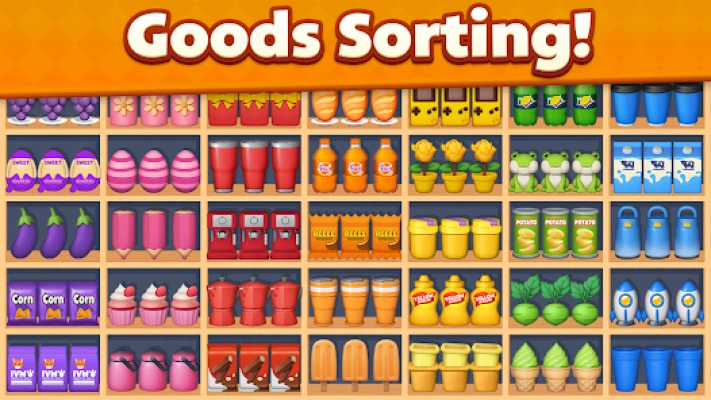
The game comes from LinkDesks Classic Puzzle Games and is available on Android. The current Google Play listing describes it as a single-player, offline-friendly puzzle game with stylized 3D visuals and a lighthearted presentation.
How Goods Story: Sort Puzzle Works
The basic gameplay loop is easy to understand:
Look at the shelves → find matching goods → drag items into position → make groups of three → clear the shelf → finish the level → earn stars → help characters.
The challenge comes from deciding which items to move first.
A careless move can expose an awkward combination or leave important goods trapped behind other objects. As the shelves become more crowded, planning becomes increasingly important.
How to Play Goods Story
1. Scan the Entire Shelf
Before making your first move, look over the whole puzzle.
Identify:
- Groups that are already close to matching
- Items partially hidden behind others
- Shelves with limited free space
- Goods that appear frequently
- Items that could become difficult to access later
The official game description encourages players to first scan the messy shelves before beginning to sort.
2. Find Easy Matches First
If you can immediately identify three identical goods, consider clearing them early.
Removing a complete group creates space and can expose items underneath or behind it.
3. Don't Fill Shelves Randomly
One of the biggest mistakes in sorting games is moving items simply because they are available.
Before placing an item, ask:
Where will the other two matching items go?
If you cannot answer that question, another move may be safer.
The Three-Match Strategy
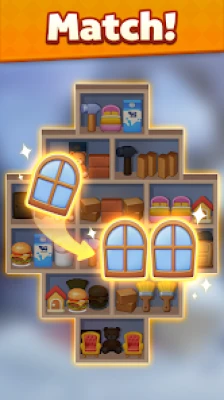
The central mechanic is matching three identical goods on the same shelf.
A useful approach is to think of every item as part of a future group.
For example, if you see:
- 2 identical drinks
- 1 different snack
- 1 identical drink hidden nearby
You should consider whether moving the visible drinks will help expose the third item.
The goal isn't merely to create matches. It is to create matches without blocking future moves.
Best Sorting Strategy
Start With the Most Accessible Matches
Look for goods that can be matched without disturbing too many other items.
Clear Crowded Areas
If one shelf is becoming congested, removing a complete group can give you more room to maneuver.
Track Hidden Items
Don't forget about goods that are partially covered.
A visible item may be less important than the object underneath it.
Keep Future Matches in Mind
Every move should ideally contribute toward a future three-item combination.
Preserve Space
Free shelf space is one of your most valuable resources.
Don't fill available positions just because they are empty.
How to Avoid Getting Stuck
A strong sorting player thinks several moves ahead.
Before moving an item, ask:
Will this create a match?
If not:
Will it expose something useful?
If neither answer is yes, look for another move.
This simple habit can prevent many unnecessary moves.
Goods Story Level Strategy
As levels become more complicated, use a structured approach.
Step 1: Identify Complete Matches
Find any obvious groups of three.
Step 2: Find Pairs
Pairs are valuable because they only need one additional matching item.
Step 3: Locate Hidden Goods
Determine which objects need to be moved before important items become accessible.
Step 4: Open Space
Clear completed groups before the shelves become overcrowded.
Step 5: Create Chains
Whenever possible, make one match expose the goods required for another match.
Step 6: Finish Carefully
Near the end of a level, don't rush. A nearly empty board can still become difficult if the remaining goods are handled in the wrong order.
How to Think About the Shelves
Imagine every shelf has limited working space.
You have three categories of objects:
Immediate matches – groups that can be cleared now.
Potential matches – pairs or partial groups that need another item.
Blocked items – goods that cannot be accessed efficiently until other objects move.
Your priority should generally be to turn blocked items into potential matches and potential matches into completed groups.
Advanced Matching Techniques
Pair Preservation
If you have two identical goods but the third one is difficult to reach, don't automatically move both.
Sometimes keeping a pair in a predictable location makes it easier to complete the combination later.
Exposure Moves
A move that doesn't immediately produce a match can still be valuable if it reveals an important item.
Space Management
When the board becomes crowded, prioritize moves that reduce clutter.
Chain Reactions
Look for sequences where:
Match → clear space → reveal item → create new match → clear more space.
These chains are among the most efficient ways to handle complicated shelves.
How to Earn Stars
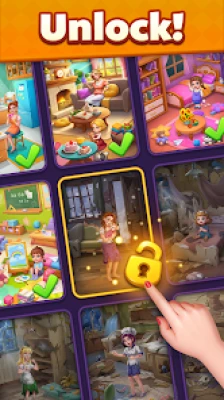
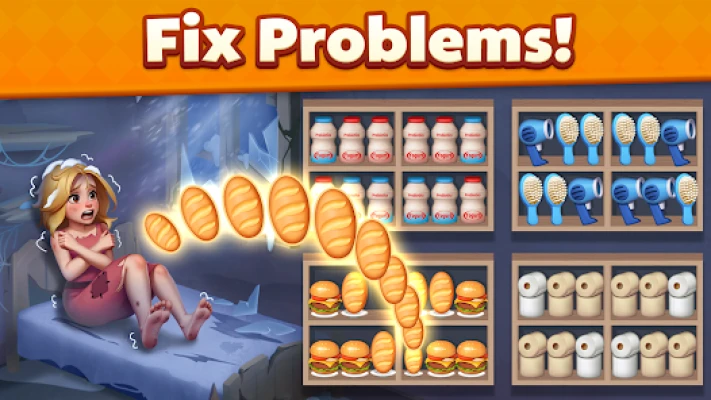
Completing sorting levels allows you to earn stars, which are then used to advance the game's rescue and renovation stories.
The stars are therefore more than a simple level reward.
They connect the puzzle gameplay to the game's story progression.
Think of each completed sorting challenge as contributing toward a larger objective.
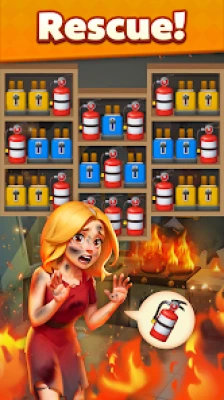
Rescue and Renovation Stories
Goods Story adds a narrative layer to the sorting gameplay.
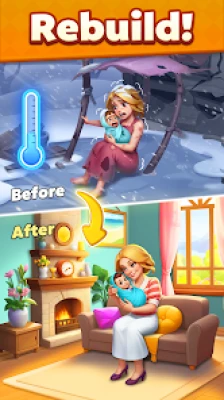
The game's description explains that earned stars can help characters renovate homes, rebuild shops, and restore their dreams.
This creates a simple progression loop:
Sort goods → complete puzzles → earn stars → repair something → advance the story.
Characters mentioned in the game's description include people dealing with difficult circumstances, as well as a puppy, giving the renovation system a more personal and emotional purpose.
Tips for Faster Progress
Focus on Efficiency
Don't move items unnecessarily.
Clear Groups Quickly
Completed groups create additional working space.
Think Before Using a Helpful Item
If the game gives you a sorting helper or similar assistance, save it for situations where it can genuinely prevent a failed level.
Don't Panic When the Board Looks Messy
The visual clutter is part of the challenge. Pause and identify the easiest match before making another move.
Use Short Sessions
The game is designed around relatively short puzzle sessions, making it suitable for playing a few levels at a time. The Google Play listing specifically highlights short, satisfying levels and offline play.
Common Mistakes in Goods Story
Moving the First Item You See
The first available move isn't necessarily the best move.
Ignoring Pairs
Pairs can be important because they indicate where a future match may come from.
Blocking Your Own Shelf
Placing unrelated goods together can make later matching much harder.
Forgetting Hidden Items
Always consider what might be underneath or behind the goods currently visible.
Using Helpers Too Early
Keep assistance available for genuinely difficult situations when possible.
Playing Too Quickly
Sorting games reward planning more than speed.
How to Solve a Difficult Level
If you are stuck, stop making random moves.
Try this method:
Pause → scan every shelf → identify pairs → find hidden goods → clear the safest match → reassess the board.
If the puzzle still doesn't open up, consider whether one of your earlier moves created the problem.
Starting over can sometimes be more efficient than continuing from a badly organized position.
Goods Story Offline Gameplay
The current Google Play listing identifies Goods Story as an offline-capable puzzle game, allowing players to enjoy its sorting challenges without a continuous internet connection.
That makes it suitable for:
- Short breaks
- Travel
- Waiting rooms
- Commuting
- Casual evening play
- Quick puzzle sessions
Visuals and Sound
Goods Story uses colorful 3D goods and shelf environments, combined with satisfying sound effects designed to reinforce the feeling of sorting and organization. The game's listing specifically highlights its 3D visuals and ASMR-style presentation.
The result is less about intense action and more about creating a relaxing sense of order from visual chaos.
Goods Story Features
- Sorting puzzle gameplay
- Match-three mechanics
- 3D goods and shelves
- Rescue-story progression
- Home renovation
- Shop rebuilding
- Character-focused stories
- Star-based progression
- Relaxing ASMR-style effects
- Offline play
- Single-player gameplay
- Free-to-play structure
- Optional in-app purchases
- Advertisements
Recent Updates
The Google Play listing currently shows a September 10, 2026 update with bug fixes and performance improvements.
Third-party tracking also shows continued development and a September 2026 version update, indicating that the game is still actively maintained.
Player Experience
The current Google Play listing shows a high overall rating and more than 24,000 reviews.
Player feedback is mixed on some practical aspects of the experience. Some reviews praise the relaxing sorting gameplay and story elements, while others have reported freezing or gameplay glitches at certain levels. There are also complaints about the frequency of advertisements. The developer has responded to some of these reports, including requests for information about when freezing occurs and complaints concerning advertisements.
For a game page, this is worth mentioning honestly rather than presenting the experience as completely problem-free.
Goods Story: Sort Puzzle Pros and Considerations
What Players May Enjoy
- Simple sorting mechanics
- Relaxing visual presentation
- Satisfying three-item matches
- Story-driven rewards
- Renovation progression
- Short sessions
- Offline gameplay
- Colorful 3D graphics
Things to Consider
- Later puzzles can become considerably more crowded
- Some players have reported freezing or level-specific glitches
- Advertising is part of the free-to-play experience
- Players who prefer fast action may find the slower sorting format repetitive
Recent developer responses indicate that performance and advertisement-related feedback has been received and addressed through ongoing improvements.
Goods Story Beginner Guide
If you're just starting, follow this simple routine:
First: scan all shelves.
Second: locate obvious groups of three.
Third: identify pairs.
Fourth: look for hidden or blocked matching goods.
Fifth: clear the safest complete group.
Sixth: use the newly created space to expose more goods.
Seventh: repeat until the shelves are organized.
This approach is more reliable than simply dragging whatever item happens to be closest to your finger.
Goods Story Advanced Strategy
At higher levels, stop thinking about individual goods and start thinking about the entire board.
A good player asks:
- Which shelf is most dangerous?
- Which item is blocking the most possibilities?
- Which pair is easiest to complete?
- Which move creates the most free space?
- Which goods should remain untouched?
- Can one match expose another?
This changes the game from simple matching into a small planning puzzle.
Frequently Asked Questions
What is Goods Story: Sort Puzzle?
Goods Story: Sort Puzzle is a sorting and match-three puzzle game in which players organize shelves, match three identical goods, earn stars, and use those rewards to help characters rebuild homes, shops, and other parts of their lives.
How do you play Goods Story?
Drag goods into the correct positions and match three identical items on a shelf to clear them. Continue organizing the shelves until the puzzle is completed.
Is Goods Story a match-three game?
Yes. Its sorting mechanic is based on matching three identical goods, while the game adds shelf organization and story progression to the familiar match-three concept.
What are stars used for?
Stars earned from completing puzzles help progress the rescue stories, including renovating homes and rebuilding shops.
Can Goods Story be played offline?
Yes. The current Google Play listing identifies offline play as one of the game's features.
Is Goods Story free?
Yes. Goods Story is free to download and play, while the Google Play listing also identifies advertisements and in-app purchases.
Who made Goods Story: Sort Puzzle?
The game is published under the name LinkDesks Classic Puzzle Games.
What should I do when I get stuck?
Stop making random moves. Look for pairs, identify blocked goods, create additional shelf space, and try to build a sequence where one match exposes another.
Does Goods Story have a story?
Yes. Puzzle rewards are connected to rescue and renovation stories involving characters who need help rebuilding aspects of their lives.
Final Strategy
Goods Story: Sort Puzzle looks simple because the main rule is straightforward: match three identical goods and clear them from the shelves.
The real challenge is deciding which three to match first.
The strongest strategy is to protect your available space, identify pairs, expose blocked goods, and look for sequences that allow one match to create another.
Don't treat every move as an isolated action. Think about what the board will look like after the move.
Once you start planning several moves ahead, the shelves become much easier to control—and the satisfying progression from messy shelves to renovated homes and rebuilt shops becomes much more rewarding.
Best quick rule to remember:
Match carefully, preserve space, reveal hidden goods, and always think about your next move.
Rate the Game
User Reviews





Popular Games

















 Android
 iOS
iOS Windows
 Xbox
Xbox