

Latest Version
September 16, 2026
ABI GLOBAL LTD.
Puzzle
iOS
0
Report a Problem
More About :game
The game is developed by ABI GLOBAL LTD. and is listed in the Puzzle category. It is free to download with advertising and optional in-app purchases.
How to Play Bus Loopy
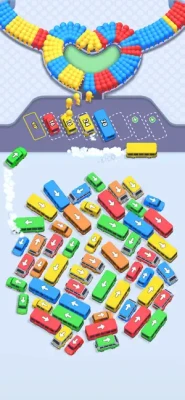
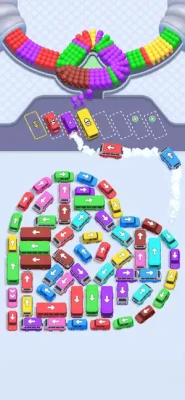
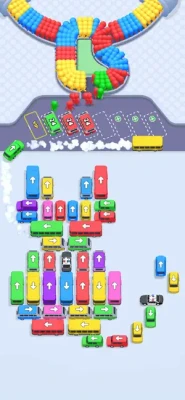
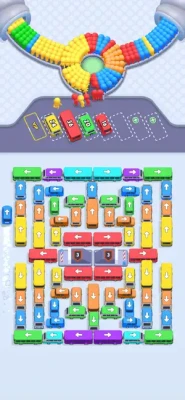
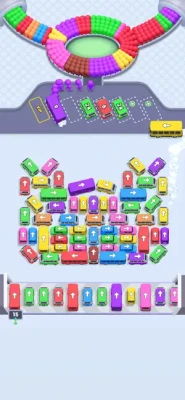
Each puzzle presents a busy traffic situation that needs to be organized.
Your main objectives are to:
- Examine the buses and passengers.
- Identify which passenger belongs to which bus.
- Plan the order in which buses should move.
- Clear blocked areas of the road.
- Create enough space for other buses.
- Complete the required passenger matches.
- Use boosters when a puzzle becomes difficult.
The key is order. Moving the correct bus at the wrong time can leave another vehicle trapped or create unnecessary congestion.
Main Features
Traffic Puzzle Challenges
Bus Loopy turns traffic management into a logic puzzle. Instead of simply driving around a city, you must determine the correct sequence of moves to clear the road.
Passenger and Bus Matching
Passengers need to reach the appropriate ride. Matching the right passengers with the correct buses is one of the main objectives of each puzzle.
Busy Roads
The roads can become crowded, making the order of your actions important. Clearing one section can create room for the next move.
Colorful Buses and Passengers
Bright buses and passengers make it easier to recognize the different combinations while giving the game a cheerful visual style.
Relaxing Puzzle Gameplay
The App Store describes Bus Loopy as a relaxing and satisfying puzzle experience, with smooth animations and colorful visuals.
Helpful Boosters
Bus Loopy includes several tools for difficult situations:
- Quick Move – instantly moves buses across the road when assistance is needed.
- Shuffle – rearranges the order to give you another approach.
- Extra Slot – creates additional space when the traffic situation becomes difficult.
Full Bus Loopy Strategy Guide
1. Study the Entire Road Before Moving Anything
The biggest mistake beginners make is moving the first available bus immediately.
Before tapping, inspect:
- Bus colors
- Passenger groups
- Available road space
- Blocked buses
- Possible destinations
- Which vehicle is preventing another move
A few seconds of observation can reveal the correct sequence.
2. Match Passengers Before Making Random Moves
Passenger matching should guide your decisions.
If you know which bus is needed by a particular group of passengers, look for a safe way to move that bus without blocking another important route.
Don't move buses simply because they are available.
3. Clear the Biggest Obstruction First
Sometimes one bus is effectively acting as a roadblock.
If removing it opens several possible moves, it may deserve priority even if it doesn't immediately complete a passenger match.
Think about the effect of a move on the entire road rather than just the bus being moved.
4. Plan Several Moves Ahead
Try to predict what the road will look like after your next move.
Ask:
What becomes possible after this bus leaves?
Then ask:
Which bus will I need after that?
This two- or three-step planning habit becomes increasingly useful on complicated levels.
5. Don't Fill Every Available Space
Road space is a resource.
If you create a situation where too many buses occupy the same area, your next move may become impossible.
Whenever possible, maintain enough room to react to the next traffic change.
6. Prioritize Moves That Open the Road
A useful move often has two benefits:
- It moves the correct bus.
- It creates additional space.
When choosing between two possible actions, consider which one gives you more options afterward.
7. Use the Passenger Groups as Clues
Passenger placement can help reveal the intended solution.
If a group clearly needs a specific bus, trace the path required to bring that bus into position.
Then determine which vehicles must move first to make that path possible.
8. Don't Assume the Closest Bus Is the Right Bus
The nearest vehicle isn't necessarily the best choice.
Traffic puzzles are about sequence rather than distance.
A bus farther away may need to move first because it is blocking the vehicle you actually need.
9. Reassess After Every Major Move
After moving a bus, stop for a moment and look at the updated road.
You may now have:
- A newly available bus
- A clear path
- A new passenger match
- More road space
- A previously blocked vehicle
Don't blindly continue the original plan if the board has changed.
Advanced Bus Loopy Strategy
The Traffic-Flow Method
For harder levels, divide the puzzle into three stages.
Stage 1: Identify the Blockers
Find the buses preventing other vehicles from moving.
Stage 2: Create Space
Move the minimum number of vehicles necessary to open the road.
Stage 3: Complete the Matches
Once the road is organized, focus on delivering passengers to their appropriate buses.
This approach helps prevent unnecessary movements.
Use a Priority List
When several buses are available, mentally rank them:
1. Bus blocking several vehicles
2. Bus needed for an immediately available passenger group
3. Bus that opens an important route
4. Bus that can safely move without affecting anything else
This is a useful general framework, although individual levels can require different solutions.
Think About Consequences, Not Just Moves
A move is valuable when it improves the next position.
For example:
Bus moves → road opens → second bus becomes accessible → passengers can board → traffic clears.
The first move may not appear useful by itself, but it can be the key to solving the entire puzzle.
Bus Loopy Tips and Tricks
- Study the whole board before your first move.
- Identify passenger-to-bus matches.
- Find buses that are blocking multiple routes.
- Create road space before the traffic becomes crowded.
- Plan at least two moves ahead.
- Avoid unnecessary bus movements.
- Recheck the board after every major move.
- Use the passenger arrangement as a clue.
- Don't automatically choose the nearest bus.
- Keep important routes open.
- Save boosters for genuinely difficult situations.
- Use Shuffle when your current arrangement offers poor options.
- Use Extra Slot when space is the main problem.
- Use Quick Move when a particular bus needs immediate assistance.
- Learn from failed attempts rather than repeating the same sequence.
Booster Strategy
Quick Move
Quick Move is useful when a bus needs to cross the road immediately or when normal movement is preventing you from making progress.
Save it for positions where the extra assistance creates a meaningful opening.
Shuffle
Shuffle is particularly useful when your current arrangement has become awkward.
Rather than repeatedly making moves that do not improve the puzzle, a shuffle can provide a different arrangement and another route toward the solution.
Extra Slot
Extra Slot is designed for situations where available space is the main obstacle.
Use it when the puzzle has become crowded and one additional position can give you enough room to finish the required sequence.
How to Solve Difficult Bus Loopy Levels
When you are stuck, use this process.
Step 1: Stop Moving
Don't make another random move.
Step 2: Identify Every Passenger Group
Determine which bus each group requires.
Step 3: Locate Those Buses
Find the vehicles needed to complete the matches.
Step 4: Find the Blockers
Determine which buses are preventing those vehicles from reaching the required positions.
Step 5: Remove Only Necessary Blockers
Avoid moving extra buses unless doing so creates useful space.
Step 6: Complete the First Match
Once the route is open, complete the easiest useful passenger match.
Step 7: Recalculate
The road has changed, so analyze the new position before continuing.
Common Mistakes in Bus Loopy
Moving Buses Without a Plan
Every move should have a purpose. Randomly moving vehicles can quickly create a traffic problem.
Ignoring Passenger Requirements
A clear road isn't enough. You also need to connect passengers with the correct ride.
Blocking Your Own Route
Moving one bus into a poor position can prevent another vehicle from reaching its destination.
Using Boosters Immediately
Boosters are most valuable when they solve a specific problem. Don't spend them simply because a level looks complicated.
Forgetting About Road Space
A puzzle can fail even when the correct buses are available if there isn't enough room to move them.
Repeating the Same Failed Sequence
If a particular order of moves creates a dead end, change the sequence rather than repeating it.
A Simple Winning Routine
Use this routine whenever you start a new Bus Loopy level:
Observe → Match → Clear → Move → Reassess
Observe
Study the buses, passengers, and available road space.
Match
Identify which passengers belong to which buses.
Clear
Remove the vehicles creating the biggest obstruction.
Move
Execute the safest useful sequence.
Reassess
Check the new road layout before continuing.
This keeps the puzzle manageable and reduces unnecessary moves.
Bus Loopy Progression
The App Store describes Bus Loopy as a game where players can start quickly and discover new challenges as they progress. The developer has also released frequent updates specifically marked as level updates.
The latest visible version history shows repeated level updates, including versions 1.9, 1.10, and 1.11.
This means level availability and layouts can change over time, so individual puzzle solutions may differ as new content is added.
Player Experience
The App Store describes Bus Loopy as easy to learn while offering increasingly challenging puzzle situations. Its presentation emphasizes short sessions, smooth animations, colorful visuals, and a relaxed pace.
The current U.S. App Store listing displays a 4.6/5 rating from 76 ratings, although ratings can vary by storefront and change as more players submit reviews.
Current Update Information
The App Store currently shows version 1.11, with the latest version history entry listed as a level update. Earlier releases also repeatedly added or updated levels.
Platforms and Requirements
Bus Loopy is available for iPhone and iPad. The current App Store listing requires iOS 15.0 or later on iPhone and iPadOS 15.0 or later on iPad. Compatible Mac use requires macOS 12.0 or later with an Apple M1 chip or later, while Apple Vision is also listed as supported.
The game is free to download and contains advertising and optional in-app purchases.
Frequently Asked Questions
What is Bus Loopy?
Bus Loopy: Traffic Puzzle is a logic puzzle game where you guide buses through crowded roads and match passengers with the correct rides.
How do you play Bus Loopy?
Study the traffic layout, determine which passengers need which buses, move vehicles in the correct order, and create enough road space to complete the puzzle.
Is Bus Loopy a traffic puzzle game?
Yes. Traffic management and road-clearing puzzles are the central gameplay mechanics.
What are the Bus Loopy boosters?
The game includes Quick Move, Shuffle, and Extra Slot boosters. Each is designed to help with a different type of difficult traffic situation.
What does Quick Move do?
Quick Move helps move buses across the road when you need assistance.
What does Shuffle do?
Shuffle rearranges the available order and can provide another approach to a difficult puzzle.
What does Extra Slot do?
Extra Slot provides additional space when the road situation becomes difficult to manage.
Is Bus Loopy free?
Yes. Bus Loopy is listed as free with advertising and optional in-app purchases.
Is Bus Loopy available on iPad?
Yes. The App Store lists both iPhone and iPad compatibility.
What is the best strategy for difficult levels?
Study the entire road first, identify the passenger-to-bus relationships, remove important blockers, preserve space, and plan several moves ahead.
Final Thoughts
Bus Loopy turns everyday traffic problems into simple but engaging logic puzzles. Its controls are easy to understand, but solving crowded levels efficiently requires careful sequencing.
The most important lesson is to think about the entire road before moving the first bus. Identify the passengers, locate their buses, find the vehicles causing the biggest obstruction, and then create a path that gives you more options rather than fewer.
For difficult levels, remember the basic formula:
Observe → Match → Clear → Move → Reassess.
With colorful buses, passenger-matching objectives, relaxing presentation, frequent level updates, and useful boosters, Bus Loopy offers a straightforward puzzle experience that rewards planning rather than fast tapping.
Rate the Game
User Reviews















Popular Games



















 Android
 iOS
iOS Windows
 Xbox
Xbox