
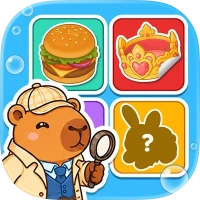






Latest Version
September 16, 2026
ABI GLOBAL LTD.
Puzzle
iOS
0
Report a Problem
More About :game
Instead of simply matching identical objects, you need to understand how different stickers relate to their themes and plan your swaps carefully. Some cards belong to two themes, while hidden stickers reveal their images only after being placed in the appropriate category.
The game offers hundreds of handcrafted puzzles, boosters for difficult stages, relaxing visuals, no time limit, and regularly added themes and levels.
What Is Topicdom?
Topicdom is a sticker sorting and logic puzzle game from ABI GLOBAL LTD.
The central objective is to organize stickers into their correct themed groups. You tap and swap pieces to move them into position, using visual clues and pattern recognition to determine where each sticker belongs.
The gameplay can be summarized as:
Observe → Identify Themes → Plan → Swap → Sort → Complete
As you progress, the game introduces mechanics that make the simple sorting system considerably more strategic.
Topicdom Gameplay Features
Sticker Sorting
The main mechanic is moving stickers into their correct themed groups.
Each puzzle presents a collection of stickers that need to be organized. The challenge comes from determining which pieces belong together and finding a sequence of swaps that solves the board efficiently.
Theme Matching
Topicdom isn't simply about matching pictures.
You need to recognize the relationship between stickers and their themes.
For example, several visually different objects may belong to one category, requiring you to think about what they have in common rather than searching only for identical images.
Dual-Color Cards
One of Topicdom's more interesting mechanics is the dual-color card.
Some stickers have two colors and can belong to two different themes. To clear these cards correctly, you need to consider both categories rather than treating the sticker as belonging to only one group.
These cards can become particularly important when a puzzle has limited moves.
Hidden Stickers
Some stickers are initially hidden.
Their true image is revealed after they are placed into the correct category, adding an element of uncertainty to the puzzle.
This means you sometimes have to make a logical decision without seeing the complete information beforehand.
Boosters
Topicdom includes helpful boosters designed to assist with more difficult puzzles.
They are best treated as problem-solving tools rather than something to use automatically.
No Time Limit
The game does not impose a traditional time limit on its puzzles.
That makes careful planning possible, especially when a puzzle introduces dual-color or hidden stickers.
However, individual puzzles can still require you to manage a limited number of moves.
Topicdom Full Strategy Guide
1. Study the Board Before Making Your First Swap
The first move can influence the rest of the puzzle.
Before touching anything, scan the board and identify:
- Obvious matching themes
- Stickers that appear misplaced
- Dual-color cards
- Hidden stickers
- Pieces blocking useful positions
- Groups that are nearly complete
A few seconds of planning can prevent several unnecessary swaps.
2. Identify the Themes First
Don't begin by asking, "Which sticker matches this sticker?"
Instead ask:
"What category does this group represent?"
Once you understand the theme, identifying the correct stickers becomes much easier.
This is especially important in puzzles where the objects themselves are different but share a common category.
3. Solve the Most Obvious Groups First
Look for groups where the answer is highly certain.
Completing an obvious group can simplify the rest of the board and reduce the number of possible positions you need to consider.
Don't immediately attack the most confusing part of the puzzle.
Start with the information you know.
4. Think About Your Next Two or Three Moves
A swap can solve one problem while creating another.
Before moving a sticker, consider:
Where will this piece go?
Then ask:
What will that move do to the other stickers?
Planning several steps ahead becomes increasingly useful when the board contains limited movement opportunities.
5. Treat Dual-Color Cards Carefully
Dual-color stickers are among the most important pieces to understand.
Because they can relate to two themes, placing one incorrectly can interfere with another group.
Before moving a dual-color card, determine which theme currently needs it and whether another sticker can fulfill the alternative category.
Think of these cards as flexible pieces rather than ordinary stickers.
6. Don't Rush Hidden Stickers
Hidden stickers create uncertainty because you cannot immediately see their final appearance.
Instead of randomly moving them around, use the available category information.
If the hidden sticker must belong to a particular group, place it where the current logic of the puzzle indicates it belongs.
Once revealed, reassess the board before making your next move.
7. Preserve Useful Empty Positions
Open spaces can be extremely valuable.
A free position gives you room to move another sticker and can help you rearrange a crowded group.
Don't assume every empty space should immediately be filled.
Sometimes leaving a position available gives you more flexibility for the next few moves.
8. Avoid Unnecessary Swaps
If a sticker is already correctly positioned, there may be no reason to move it.
Every unnecessary swap increases the chance of disrupting another part of the puzzle.
Use the simplest sequence that achieves the solution.
9. Work From Fixed Information
When a sticker's category is certain, use it as an anchor.
Then determine which pieces need to move around it.
This is particularly effective when the puzzle includes:
- Clear theme groups
- Dual-color cards
- Hidden stickers
- Multiple nearly completed categories
The more certain information you have, the fewer possibilities you need to consider.
10. Save Boosters for Genuine Problems
Boosters can help when a puzzle becomes difficult, but using one every time you encounter uncertainty can make you dependent on them.
Try solving the puzzle manually first.
Use a booster when:
- You're genuinely stuck
- A hidden sticker creates an unexpected situation
- Several possible swaps appear equally useful
- You're close to solving the board but cannot find the final sequence
Best Topicdom Beginner Strategy
If you're new to the game, use this simple process.
Step 1: Scan Everything
Don't make a move immediately.
Look at the entire board.
Step 2: Identify Obvious Themes
Find the groups that are easiest to recognize.
Step 3: Lock in Certain Pieces
Determine which stickers clearly belong to each category.
Step 4: Handle Flexible Pieces
Pay special attention to dual-color cards.
Step 5: Investigate Hidden Stickers Carefully
Use category information rather than guessing.
Step 6: Plan Your Swaps
Consider the consequences of every move.
Step 7: Finish the Simplest Groups
Clear the categories with the fewest uncertainties.
Step 8: Reassess
After several swaps, stop and look at the new board.
The best move can change after the board has been rearranged.
How to Solve Topicdom Puzzles More Efficiently
Efficiency in Topicdom is mostly about reducing unnecessary movement.
A useful approach is:
Recognize → Organize → Reserve → Swap → Recheck
Recognize
Identify the themes.
Organize
Determine which stickers belong to each theme.
Reserve
Keep flexible pieces and useful empty spaces available.
Swap
Move only the stickers that contribute toward the solution.
Recheck
After a major change, reassess the board.
This prevents you from blindly following a plan that may no longer work after several swaps.
Topicdom Dual-Color Card Strategy
Dual-color cards deserve special attention because they can satisfy two thematic relationships.
When you see one:
- Identify both colors.
- Determine both possible themes.
- Check which theme has fewer alternatives.
- Consider whether another sticker can fill the other category.
- Avoid committing the dual-color card too early if it is useful elsewhere.
A dual-color card can effectively function as a flexible puzzle piece.
The key question is not simply "Where can this card go?"
Instead ask:
"Where is this card most valuable right now?"
Topicdom Hidden Sticker Strategy
Hidden stickers change the way you approach the board.
Because their final appearance is unknown initially, don't treat them like ordinary pieces.
Before revealing one:
Look at the surrounding categories.
After revealing one:
Immediately reconsider the board.
The newly revealed information may:
- Complete a category
- Change the best swap
- Make another sticker unnecessary
- Create a new possible sequence
Hidden stickers therefore reward patience and logical deduction.
Topicdom Booster Strategy
Boosters are most valuable when they solve a genuine obstacle.
Before using one, ask:
Can I solve this by rearranging the existing pieces?
If yes, continue manually.
If not, consider using a booster to get past the difficult section.
Because Topicdom includes hundreds of puzzles, learning how to solve boards without constantly relying on assistance can also improve your ability to recognize patterns later.
Topicdom Tips and Tricks
Tip 1: Never make a random first move
Study the board first.
Tip 2: Identify themes before individual stickers
The category can tell you more than the picture itself.
Tip 3: Keep dual-color cards in mind
They can potentially serve two different thematic purposes.
Tip 4: Treat hidden stickers as information opportunities
Their reveal can change the entire puzzle.
Tip 5: Avoid disturbing completed groups
Once something is correctly positioned, leave it alone unless the puzzle requires otherwise.
Tip 6: Use empty spaces strategically
Open positions provide flexibility.
Tip 7: Think several moves ahead
Don't optimize only the immediate swap.
Tip 8: Don't waste boosters
Reserve them for puzzles where normal sorting becomes difficult.
Tip 9: Reassess after major moves
The best strategy can change as the board changes.
Tip 10: Focus on efficiency rather than speed
There is no time limit, so use the available thinking time.
Common Topicdom Mistakes
Moving Stickers Too Quickly
A fast swap can create a bigger problem elsewhere.
Ignoring the Theme
A sticker may look similar to another piece but belong to a completely different category.
Misusing Dual-Color Cards
Treating them as ordinary one-theme pieces can make the puzzle harder.
Revealing Hidden Stickers Without a Plan
Hidden pieces should be approached with the surrounding board in mind.
Using Boosters Too Early
Save assistance for situations where it provides real value.
Filling Every Empty Position Immediately
Sometimes an empty position is useful for future rearrangement.
Solving Only One Part of the Board
A good solution considers how the entire board interacts.
Topicdom Puzzle Progression
Topicdom begins with straightforward sorting puzzles and introduces additional mechanics as you progress.
The developer describes the game as starting simply before introducing new mechanics that make later puzzles more challenging.
The progression can be thought of in stages:
Early Levels
Learn basic sticker swapping and theme sorting.
Intermediate Levels
Deal with more complicated arrangements and multiple themes.
Advanced Levels
Manage dual-color cards, hidden stickers, limited moves, and more complicated combinations.
Later Challenges
Combine several mechanics and require more deliberate planning.
Topicdom Game Modes and Puzzle Style
Topicdom focuses on handcrafted puzzle levels rather than fast-paced game modes.
The current App Store description highlights:
- Hundreds of handcrafted puzzles
- Sticker sorting
- Theme matching
- Dual-color cards
- Hidden stickers
- Boosters
- No time limit
- Regularly added themes and levels
This makes it suitable for both short sessions and longer puzzle-solving sessions.
Topicdom Difficulty Guide
The difficulty does not come from complicated controls.
Instead, it comes from the relationships between stickers.
A puzzle can become difficult when:
- Several stickers fit similar themes
- A dual-color card has multiple possible uses
- A hidden sticker conceals important information
- You have limited moves
- One incorrect swap disrupts several categories
The controls remain simple, but the decision-making becomes more demanding.
Topicdom Updates
The current App Store listing shows version 1.0.5, with the latest update focused on gameplay improvements and bug fixes. Version 1.0.4 was listed on August 12, while the current listing shows 1.0.5 as the newest version.
The developer also states that new themes and levels are added regularly.
Topicdom Platforms and Requirements
The current App Store listing identifies Topicdom as a Puzzle game developed by ABI GLOBAL LTD.
It supports:
- iPhone
- iPad
- Apple Vision
- Apple Silicon Mac compatibility
The listing states that iPhone requires iOS 15.0 or later, while iPad requires iPadOS 15.0 or later. Apple Silicon Macs require macOS 12.0 or later.
Topicdom is currently rated 4+ on the App Store and supports English, French, German, Japanese, Korean, Simplified Chinese, Spanish, and Traditional Chinese.
Topicdom FAQ
What is Topicdom?
Topicdom is a sticker-sorting puzzle game where players swap stickers and organize them into matching themed groups.
How do you play Topicdom?
Tap and swap stickers to move them into their correct positions. Use theme recognition, pattern recognition, and logical planning to complete each puzzle.
What are dual-color cards in Topicdom?
Dual-color cards are stickers associated with two colors and potentially two themes. They must be sorted while considering both thematic relationships.
What are hidden stickers?
Hidden stickers initially conceal their images. Their true appearance is revealed after they are placed in the appropriate category.
Does Topicdom have a time limit?
No. The developer states that Topicdom has no time limit, allowing players to focus on planning their solutions.
Does Topicdom have boosters?
Yes. Boosters are available to help players get through difficult puzzles.
Is Topicdom difficult?
The game starts with simple sorting mechanics and introduces additional mechanics as you progress. Later puzzles can require more planning because of dual-color cards, hidden stickers, and move management.
How many puzzles are in Topicdom?
The current App Store description says the game contains hundreds of handcrafted puzzles.
Does Topicdom receive new levels?
Yes. The developer states that new themes and levels are added regularly.
Is Topicdom free?
The App Store lists Topicdom as free. The current listing also indicates advertising.
What is the best strategy for Topicdom?
The most useful approach is to identify themes before swapping, preserve flexible dual-color cards, consider hidden stickers carefully, avoid unnecessary moves, and plan several steps ahead.
Final Thoughts
Topicdom takes a simple sticker-matching idea and adds enough logic to make each board more interesting. The combination of theme sorting, swapping, dual-color cards, hidden stickers, boosters, and limited moves means that later puzzles require considerably more thought than the basic gameplay initially suggests.
The most important lesson is to think before you swap.
Identify the themes, recognize the pieces that are already in useful positions, keep dual-color cards flexible, and use empty spaces intelligently. Since there is no time limit, there is little reason to rush.
Rate the Game
User Reviews











Popular Games



















 Android
 iOS
iOS Windows
 Xbox
Xbox