



Latest Version
December 04, 2024
Easybrain
Word
Android
0
com.easybrain.word.puzzle.game
Report a Problem
More About :game
Easy Words is a brain-training word puzzle game from Easybrain that puts you in a head-to-head battle of vocabulary and strategy. Rather than simply solving scrambled words, you build words directly on a board and earn points according to the letters you use and the positions where you place them.
Each player receives seven letter tiles and takes turns creating words horizontally or vertically. The objective is straightforward: score more points than your opponent before the game ends.
The game currently has more than 1 million downloads on Google Play and carries a 4.8-star rating from more than 137,000 reviews, making it a well-established choice for players who enjoy word games.
Easy Words Gameplay Overview
The core gameplay is easy to understand but offers plenty of room for strategy.
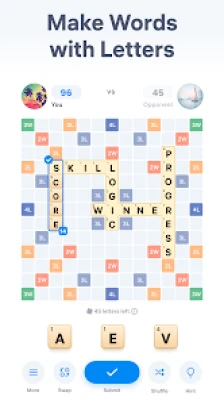
You begin with seven letter tiles. On your turn, arrange some or all of your available letters to create a valid word on the 13×13 game board. New letters are then drawn from the tile bag as the match continues.
Words can be constructed horizontally or vertically, and new words can connect with letters already placed on the board. This means every move can affect the possibilities available on your next turn.
The strongest players therefore think beyond the word they can make immediately. They also consider the board position, bonus spaces, remaining letters, and opportunities they might create—or deny—for their opponent.
How to Play Easy Words
1. Start With Your Letter Rack
At the beginning of a match, you receive seven letters. Look at the entire rack before deciding what to play rather than immediately forming the first word you notice.
2. Build Words on the Board
Place letters to create words horizontally or vertically. The opening player must create a word containing at least two letters, with at least one tile positioned on the central square.
3. Connect New Words
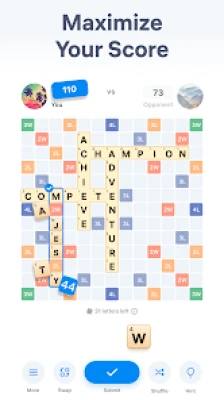
After the board develops, use existing letters to create new words. A well-positioned letter can become part of multiple words, allowing one move to produce a significantly better score.
4. Look for Bonus Cells
Easy Words includes 44 bonus cells. Depending on where you place a tile, these spaces can multiply the value of an individual letter or the entire word.
5. Keep an Eye on Your Opponent
This is not only a vocabulary challenge. Your opponent is also building words and scoring points. Sometimes the best move is not the one with the biggest immediate score but the one that prevents your opponent from accessing a valuable part of the board.
Key Features
Classic Letter-Tile Wordplay
Easy Words delivers familiar word-building mechanics in a straightforward mobile format. Create words, connect letters, and accumulate points.
13×13 Word Board
Matches take place on a 13×13 board, providing enough room for the game to evolve while keeping the playing field manageable.
Seven-Tile Racks
Both players receive seven letters from the tile bag. Managing these letters efficiently is an important part of every match.
Bonus Squares
Special board cells can increase letter or word scores, giving strategic placement a major role in the game.
Joker Tiles
Joker tiles can substitute for letters you need, providing flexibility when your rack does not contain the combination you want.
Built-In Word Definitions
The game includes a dictionary that provides definitions for words placed on the board, making matches an opportunity to discover unfamiliar vocabulary as well.
Hints
If you're stuck, the hint feature can suggest a strong word based on your available letters and the bonus opportunities on the board.
Tile Swapping
A difficult rack does not necessarily mean the end of your strategy. You can swap tiles to receive different letters and search for a better combination.
Tile Shuffle
Shuffling your rack gives you another way to view the letters and potentially spot a word that was hidden in the original arrangement.
Game Rules and Scoring
Every letter carries its own point value, so the goal isn't simply to create the longest word possible. Choosing valuable letters and positioning them effectively can make a shorter word more profitable than a longer one.
Bonus cells add another layer of scoring strategy. Placing the right letter in the right location can multiply its value or increase the score of an entire word.
A match can finish when a player uses their final tile, when both players skip two consecutive turns, or when a player has no possible moves remaining. Players can also resign, although resigning gives the win to the opponent. The player with the higher final score wins.
Best Strategies for Easy Words
Save Flexible Letters
Do not always spend your most useful letters immediately. Keeping versatile letters can give you more opportunities on later turns.
Think About the Next Move
Before placing a word, examine the surrounding spaces. Ask yourself what your move will allow you to build next.
Use Bonus Cells Carefully
A bonus square is valuable, but its value depends on the letter and word you place there. Try to maximize the multiplier rather than using a bonus space simply because it is available.
Watch the Board
A strong word can still be a poor strategic move if it gives your opponent an easy route to a high-value bonus cell.
Use Hints as a Learning Tool
Hints are particularly useful when you're learning the game. Instead of treating them only as a shortcut, study why the suggested word produces a strong score.
Don't Be Afraid to Swap
If your letters are difficult to use, holding onto them indefinitely can limit your options. A carefully chosen swap can completely change your next turn.
Beginner's Guide
If you're new to word board games, start by focusing on three things:
- Learn how the board connects words.
- Become familiar with common short words.
- Pay attention to bonus cells.
You don't need an enormous vocabulary to enjoy Easy Words. Good board placement and efficient use of your letters can compensate for not knowing extremely long or unusual words.
As you gain experience, you'll naturally begin looking for opportunities to create multiple words from a single placement.
Advanced Tips
Experienced players should think about rack management as much as individual words.
Try to maintain a balanced collection of letters rather than repeatedly using every useful letter in your rack. Consider what letters you're leaving behind and how they could combine with future tiles.
It's also worth studying the opponent's board position. A high-scoring move that opens a premium square may ultimately cost you more points than it gains.
The strongest approach combines vocabulary knowledge, probability, board awareness, and defensive play.
Joker Tile Strategy
Jokers are among the most flexible tiles available because they can represent the letter you need.
However, flexibility itself has strategic value. Instead of automatically using a joker for the biggest immediate word, consider whether keeping it available could help you create a much stronger combination later.
Use jokers when they solve a difficult rack, unlock a valuable bonus opportunity, or help create multiple connected words.
Difficulty
Easy Words has a low barrier to entry but a higher strategic ceiling.
New players can understand the basic rules quickly, while experienced word-game fans can spend much more time thinking about scoring, positioning, tile management, and defensive play.
The difficulty therefore depends heavily on your vocabulary and how seriously you approach the competitive side of each match.
Game Experience
The appeal of Easy Words comes from the combination of familiar wordplay and tactical board decisions.
A simple word can suddenly become valuable because of its placement, while an apparently powerful move may create an opportunity for the opponent. This makes matches feel different even though the basic rules remain consistent.
The built-in definitions also add a small educational element, allowing players to discover meanings of words they may not have encountered before.
Ads and In-App Purchases
The Google Play version is free to download but contains advertisements and in-app purchases. The developer also provides an option to remove ads through the game's interface.
Player reviews show that advertising frequency is one of the more common criticisms, while other players praise the underlying word-game mechanics. Easybrain has responded to some reviews by explaining that advertisements help support the free version of the game.
Latest Update
The Google Play listing currently shows an update dated September 1, 2026, with the latest release focused on performance and stability improvements.
An upcoming event shown on the current listing is scheduled to begin on September 18 and offers medals for players competing for the top position.
Technical Details
- Game: Easy Words - Word Puzzle Games
- Developer: Easybrain
- Platform: Android
- Genre: Word / Puzzle
- Content Rating: Teen
- Downloads: 1M+
- Google Play Rating: 4.8 stars
- Reviews: 137K+ currently displayed
- Monetization: Ads and in-app purchases
- Board: 13×13
- Letters per player: 7
- Latest listed update: September 1, 2026
Pros and Cons
Pros
- Simple rules that are easy to learn
- Strategic word-building gameplay
- 13×13 board provides plenty of tactical possibilities
- Bonus cells add depth to scoring
- Joker tiles provide additional flexibility
- Built-in word definitions
- Hints help when you get stuck
- Tile swapping and shuffling improve replayability
- Large existing player base
Cons
- Advertising can interrupt the experience
- Some players have reported issues with ads and game interruptions
- Tile luck can sometimes produce difficult racks
- Players looking for a purely offline solo word puzzle may prefer a different style of game
Easy Words vs. Traditional Word Board Games
Easy Words will feel familiar to anyone who enjoys traditional crossword-style or letter-tile board games, but it is designed around mobile play.
The smaller 13×13 board, seven-tile rack, bonus spaces, hints, swapping, and shuffle options create a streamlined experience suited to shorter sessions.
The built-in word definitions are another useful touch for players who enjoy expanding their vocabulary while playing.
Who Should Play Easy Words?
Easy Words is a good choice for players who enjoy:
- Word puzzles
- Vocabulary games
- Crossword-style gameplay
- Letter tile games
- Brain-training games
- Competitive puzzle games
- Strategic board games
- Short mobile gaming sessions
- Games that reward planning and word knowledge
It is particularly appealing if you like the idea of a classic word board game but want something designed specifically for mobile devices.
Expert Rating
Overall: 8.7/10
Gameplay: 9/10
Strategy: 9/10
Accessibility: 9/10
Replay Value: 9/10
Presentation: 8/10
Monetization Experience: 7/10
The core word-building system is easy to understand while providing enough strategic depth to remain interesting over many matches. The biggest drawback is the advertising experience reported by some players.
Final Verdict
Easy Words - Word Puzzle Games is a polished mobile word game that combines vocabulary with tactical board placement. Its 13×13 board, seven-letter racks, bonus cells, joker tiles, hints, and tile-management options make each match more than a simple exercise in finding long words.
The game is especially enjoyable when you start thinking several moves ahead. A good vocabulary helps, but smart positioning and careful rack management can make an equally important difference.
If you enjoy word puzzles, crossword-style games, or competitive letter games, Easy Words is worth trying.
Frequently Asked Questions
Is Easy Words free to play?
Yes. Easy Words can be downloaded for free, although the Google Play version contains advertisements and offers in-app purchases.
How many letters do players receive?
Each player receives seven letter tiles from the tile bag.
How large is the game board?
Matches are played on a 13×13 board.
Can words be placed vertically?
Yes. Words can be created horizontally or vertically, similar to classic crossword-style board games.
Does Easy Words have bonus squares?
Yes. The game contains 44 bonus cells that can multiply letter or word scores.
What are joker tiles?
Joker tiles can substitute for any letter you need while creating a word.
Can I swap my letters?
Yes. The swap feature allows you to exchange tiles for random letters from the tile bag when your current rack isn't useful.
Does Easy Words include a dictionary?
Yes. A built-in dictionary provides definitions for words placed on the board.
Does Easy Words have hints?
Yes. Hints can suggest a strong possible word based on your letters and available bonus opportunities.
Is Easy Words good for vocabulary practice?
It can be useful for vocabulary practice because players encounter different words and can view definitions through the built-in dictionary.
Rate the Game
User Reviews






Popular Games



















 Android
 iOS
iOS Windows
 Xbox
Xbox