



Latest Version
October 07, 2026
Radiant Cat Studio
Puzzle
iOS
0
Report a Problem
More About :game
The simple rules are easy to understand, but each board creates strategic decisions. You need to choose which playable card to move, which slot to use, and which cards should be cleared first so that hidden cards become available.
The game is published by Radiant Cat Studio and is listed on the App Store as a Puzzle game for iPhone and iPad. It is free to play with advertising and optional in-app purchases. The current listing also describes overlapping card stacks, hidden cards, three slots, boosters, and the Lucky mechanic.
What Is Cunos: Color Match Solitaire?
Cunos takes the familiar idea of solitaire and changes the way cards interact.
Instead of simply arranging cards according to traditional solitaire rules, you are given cards that can be matched when they share either:
The same color
The same number
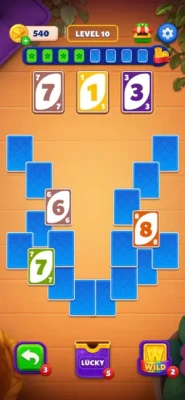
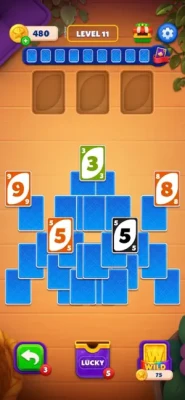
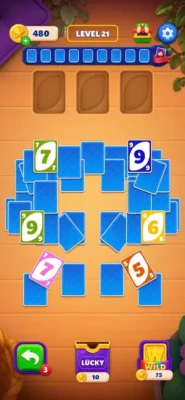
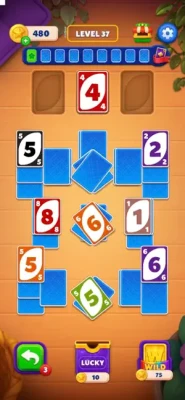
Cards are arranged in overlapping stacks, meaning some cards are hidden beneath others.
Your goal is to clear the available cards while opening the board and revealing the cards underneath.
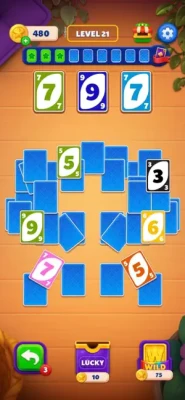
The three-slot system adds an important strategic layer because every move affects the space available for future cards.
How Cunos Gameplay Works
The basic gameplay loop is straightforward:
Examine the available cards.
Identify possible color or number matches.
Select a playable card.
Drag it into one of the three slots.
Create matches whenever possible.
Clear cards from the active area.
Reveal cards hidden underneath.
Continue opening the stacks.
Plan ahead before filling all three slots.
Clear the entire puzzle.
The official App Store description specifically explains that only uncovered cards can be played while cards underneath remain hidden.
That means every move should be considered in terms of both its immediate match and the cards it may reveal.
The Three-Slot System
The three slots are one of the most important features in Cunos.
Traditional solitaire often gives you a single active area, but Cunos requires you to manage three available positions.
This creates a simple but important question:
Which card should occupy each slot?
A good player does not simply take the first available match.
Instead, think about what the board will look like after the move.
Keep Space Available
Avoid filling all three slots unless you have a clear plan.
An apparently useful move can become dangerous if it leaves no room for the next playable card.
Try to maintain at least one flexible position whenever possible.
Use Slots for Future Matches
When choosing between two possible moves, consider which card gives you more future options.
A card that can connect to several possible colors or numbers is often more valuable than one that creates only a single immediate match.
Matching by Color
Color matching is one of the two fundamental ways to clear cards.
When two cards share the same color, look at whether matching them will also expose a hidden card or create another useful move.
Do not judge a color match only by whether it removes one card.
Consider its effect on the entire stack.
Color Strategy
When several color matches are available:
Prefer matches that reveal hidden cards.
Avoid unnecessarily blocking your slots.
Look for chains of the same color.
Consider what cards could become playable afterward.
Save flexible cards when possible.
Matching by Number
Number matching gives you another way to connect cards.
This is particularly useful when there is no convenient color match.
Before making a number match, check whether another card with the same number can create a better sequence.
A number match can sometimes be more valuable than a color match because it may open a specific stack.
Reveal Hidden Cards
One of the most important objectives in Cunos is uncovering cards.
The board uses overlapping stacks, so cards underneath cannot be played until the cards above them are removed.
This means that clearing a card is not always about the card itself.
Sometimes the real reward is the card underneath it.
The Reveal Principle
When deciding between two moves, ask:
Which move exposes more of the board?
If one move clears a card without revealing anything and another move opens a hidden card, the second move may be strategically stronger.
Clear Stacks in the Right Order
Do not automatically attack the largest or most convenient stack.
Instead, examine which stack contains the most useful hidden cards.
A stack that looks difficult may contain the card needed to unlock several other moves.
A good order is often:
Open → Reveal → Match → Clear → Repeat
Cunos Strategy Guide for Beginners
1. Study the Whole Board
Before moving a card, inspect every visible playable card.
You may have more than one possible move.
2. Look for Multiple Options
A card that can match by both number and color is especially valuable.
Do not waste a flexible card without considering future moves.
3. Reveal Cards Early
Opening hidden cards increases your options.
Whenever possible, choose moves that expose new cards.
4. Protect Your Three Slots
The three slots are limited space.
Filling them without a follow-up plan can quickly turn a manageable puzzle into a difficult position.
5. Think One Move Ahead
Before moving a card, ask:
What will I do next?
Then ask:
What happens after that?
Even thinking two moves ahead can dramatically improve your results.
Advanced Cunos Strategy
Once you understand the basic rules, start thinking about card flexibility.
Some cards have more potential matches than others.
A card may be useful because it can connect through its color, its number, or both.
When choosing between moves, favor the option that preserves more possibilities.
The Flexibility Rule
If you have two possible moves:
Move A: creates one obvious match.
Move B: creates a match but leaves several possible follow-up moves.
Move B is usually the stronger strategic choice.
The goal is not simply to remove cards.
The goal is to keep the board playable.
Avoid Creating Dead Ends
A dead end occurs when your remaining cards cannot be arranged into useful matches or your three slots become filled with cards that do not help your next move.
To reduce the chance of this happening:
Keep one slot open when possible.
Avoid unnecessary matches.
Prioritize cards that reveal hidden stacks.
Do not spend flexible cards too early.
Check all available matches before committing.
Think about the next card you may need.
When Should You Use Lucky?
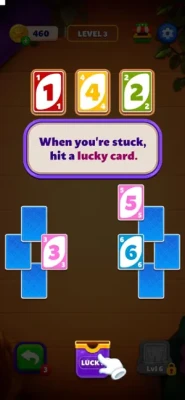
Cunos includes a Lucky mechanic that can provide a card that may create the match you need when you are stuck. The App Store listing also mentions Lucky and other boosters as tools for difficult card puzzles.
Lucky should be treated as a recovery tool rather than your first strategy.
Use it when:
You have no useful normal match.
Your available cards are blocking progress.
You need a particular type of card.
The remaining board has become difficult to open.
You are close to solving the puzzle but lack the required connection.
Using a booster too early can make it harder to learn the underlying strategy.
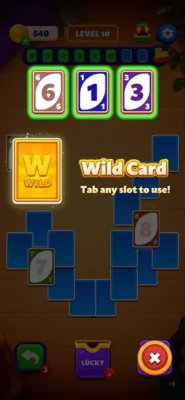
How to Use Boosters Wisely
Boosters are most valuable when they solve a genuine strategic problem.
Before using one, ask:
Can I solve this with a different move?
If the answer is yes, save the booster.
If the answer is no and your available moves are exhausted, the booster can provide a useful escape.
The Best Way to Clear a Difficult Board
When a board becomes complicated, stop thinking about individual cards.
Look at the board as a system.
Ask four questions:
Which cards are currently playable?
Which move reveals the most hidden cards?
Which move preserves the most slot space?
Which match creates the strongest follow-up?
This turns the puzzle from a reaction game into a planning exercise.
Common Mistakes in Cunos
Filling All Three Slots Too Quickly
This is one of the easiest ways to lose control of the board.
Always consider what happens after the third slot is occupied.
Taking the First Available Match
The first match is not necessarily the best match.
Look for a move that improves your overall position.
Ignoring Hidden Cards
A visible card is only part of the puzzle.
The cards underneath the stacks are often more important.
Clearing Without a Follow-Up
Removing one card feels productive, but if it leaves you with no useful next move, it may have been a poor decision.
Using Lucky Too Early
Try to solve the board naturally before relying on assistance.
Focusing Only on Color
Remember that number matches are equally important.
If color does not provide a useful move, check the numbers.
Cunos Color Match Solitaire Tips for Better Results
Tip 1: Prioritize Board Access
Opening a hidden card usually creates more possibilities than simply removing an already exposed card.
Tip 2: Keep Your Options Open
Flexible cards are valuable.
Do not use them unless the move improves your position.
Tip 3: Compare Color and Number
For every important card, check both properties.
A card may have a useful color match and an even better number match.
Tip 4: Watch the Slots
The three slots should be treated as strategic resources.
Tip 5: Think in Chains
Try to identify sequences such as:
Match → Reveal → Match → Clear → Reveal
The strongest moves often create these chains.
Tip 6: Do Not Panic
A board can look blocked while still containing a solution.
Review the available cards and rethink your order of play.
Cunos Gameplay Flow
A strong gameplay routine looks like this:
Observe the board
↓
Find every possible match
↓
Identify the best stack to open
↓
Choose the move that creates future options
↓
Manage the three slots
↓
Reveal hidden cards
↓
Build matching chains
↓
Use Lucky only when necessary
↓
Clear the remaining stacks
This approach gives you a consistent method for solving increasingly complicated card puzzles.
Why Cunos Feels Different From Classic Solitaire
Cunos keeps the familiar appeal of solitaire while adding a matching-puzzle structure.
Classic solitaire often focuses heavily on card sequencing and traditional tableau rules.
Cunos instead emphasizes:
Color matching
Number matching
Limited slots
Hidden-card discovery
Stack clearing
Strategic planning
Boosters
Puzzle progression
That makes it closer to a hybrid of solitaire, card matching, and logic puzzle gameplay.
Graphics and Atmosphere
Cunos uses a colorful presentation designed to make the card board easy to understand.
The visual style supports the relaxing nature of the game while keeping the important gameplay elements visible.
Because the main challenge is strategic rather than action-based, the presentation does not need complicated effects to make the gameplay engaging.
The focus remains on cards, colors, numbers, stacks, and the decisions you make.
Controls
The controls are designed around simple touch interactions.
The primary action is dragging playable cards into the appropriate slot.
This makes the game easy to pick up for casual players while leaving the strategic difficulty in the decisions rather than the controls.
The App Store listing confirms that Cunos is designed for iPhone and iPad.
Game Features
Color and Number Matching
Cards can be matched through either their color or number, creating multiple possible solutions and strategic choices.
Three-Slot Gameplay
Three slots provide a limited resource that must be managed carefully.
Hidden Cards
Cards are arranged in overlapping stacks, requiring you to clear upper cards before accessing the cards beneath them.
Strategic Solitaire Gameplay
The game combines familiar card-game ideas with puzzle mechanics and forward planning.
Lucky Mechanic
Lucky can help provide a useful card when you are stuck.
Boosters
Additional boosters can assist with difficult puzzles.
Relaxing Puzzle Sessions
The game is designed around deliberate decisions rather than fast reflexes.
Cunos: Color Match Solitaire Difficulty
Cunos is easy to learn because its basic rule is simple:
Match the color or match the number.
The challenge comes from deciding when and where to make each match.
As boards become more complicated, players need to think about hidden cards, slot management, future matches, and the order in which stacks are cleared.
This creates a good balance between accessibility and strategy.
Who Will Enjoy Cunos?
Cunos is particularly suitable for players who enjoy:
Solitaire games
Card matching games
Color matching puzzles
Number puzzles
Casual strategy games
Relaxing brain games
Logic puzzles
Offline-style card puzzle experiences
Short mobile gaming sessions
Strategic matching challenges
If you enjoy traditional solitaire but want a more puzzle-focused variation, Cunos offers a different approach.
Pros and Cons
Pros
Easy-to-understand matching rules
Color and number matching
Three-slot strategic system
Hidden cards create additional planning
Overlapping stacks encourage careful play
Relaxing presentation
Simple touch controls
Lucky and booster mechanics
Good fit for short puzzle sessions
Combines solitaire and matching gameplay
Cons
Limited slots can create frustrating situations
Some boards may require careful planning rather than casual play
Boosters and in-app purchases may appeal more to some players than others
The game currently has too few App Store ratings for Apple to display an overall ratings summary.
Cunos: Color Match Solitaire App Information
Developer: Radiant Cat Studio
Category: Puzzle
Age Rating: 4+
Platform: iPhone, iPad
Language: English
App Size: Approximately 340.7 MB
Requires: iOS 15.0 or later
iPad Requirement: iPadOS 15.0 or later
Contains: Advertising
In-App Purchases: Yes
The current App Store listing gives these specifications and also lists macOS support for Apple Silicon Macs, along with Apple Vision compatibility.
In-App Purchases
Cunos includes optional purchases for coins, Lucky Cards, and bundles.
The current App Store listing includes several coin packages as well as Lucky Card purchases and larger bundles.
Players who prefer a strategic approach can focus on learning the card system first rather than immediately depending on purchased assistance.
Is Cunos: Color Match Solitaire Worth Playing?
Cunos is an interesting choice for anyone who wants a casual card game with more strategic depth than simply matching cards.
Its strongest feature is the combination of color matching, number matching, hidden cards, and three-slot management.
The rules are simple enough for beginners, but the limited slots and overlapping stacks create meaningful decisions.
The best players will not simply ask:
"What can I match?"
They will ask:
"What should I match first?"
That is the central strategic idea behind Cunos.
Final Verdict
Cunos: Color Match Solitaire gives solitaire fans a colorful alternative built around matching and strategic planning.
Its three-slot system makes every move important, while overlapping card stacks encourage players to think about what they can reveal next. Matching by both color and number adds flexibility, but it also creates more decisions because the strongest match is not always the most obvious one.
For players who enjoy solitaire, card matching, color puzzles, number puzzles, and relaxing strategy games, Cunos offers an approachable experience with enough depth to reward careful planning.
The key to success is simple:
Clear intelligently, reveal aggressively, protect your slots, and always think about your next move.
Frequently Asked Questions
What is Cunos: Color Match Solitaire?
Cunos is a card strategy puzzle game that combines solitaire-style card stacks with color and number matching.
How do you match cards in Cunos?
Cards can be matched when they share the same color or the same number.
How many slots does Cunos have?
Cunos uses three slots, making slot management an important part of the strategy.
What are the hidden cards?
Cards are arranged in overlapping stacks. Cards underneath cannot be played until the cards above them have been cleared.
What is Lucky in Cunos?
Lucky is a gameplay feature that can provide a card that may help create a needed match when you become stuck.
Are there boosters in Cunos?
Yes. The App Store description mentions Lucky and other boosters for helping with difficult card puzzles.
Is Cunos similar to solitaire?
Yes, but it is not traditional solitaire. It combines solitaire-style stacks with card matching and strategic three-slot gameplay.
Can you match cards by number?
Yes. Number matching is one of the two primary ways to match cards.
Can you match cards by color?
Yes. Cards can also be matched by color.
Is Cunos available on iPhone?
Yes. Cunos is available for iPhone and iPad and requires iOS 15.0 or later.
Is Cunos free to play?
The App Store lists Cunos as free with advertising and optional in-app purchases.
What is the best Cunos strategy?
The best approach is to reveal hidden cards, preserve slot space, compare both color and number matches, and choose moves that create future opportunities instead of focusing only on immediate matches.
Rate the Game
User Reviews















Popular Games



















 Android
 iOS
iOS Windows
 Xbox
Xbox