


Latest Version
October 07, 2026
Radiant Cat Studio
Puzzle
iOS
0
Report a Problem
More About :game
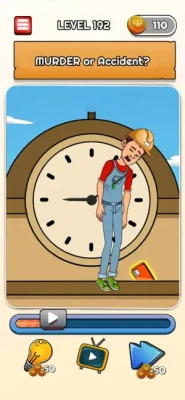
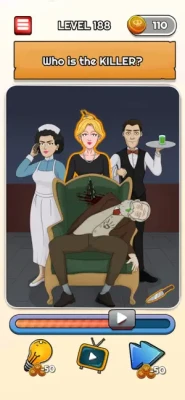
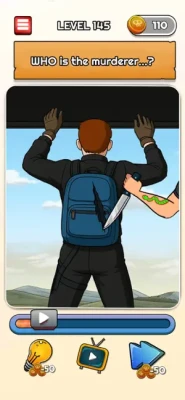
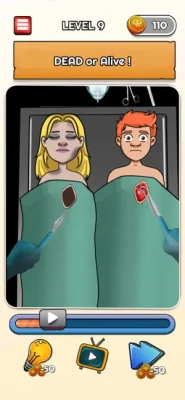
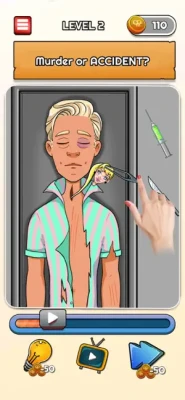
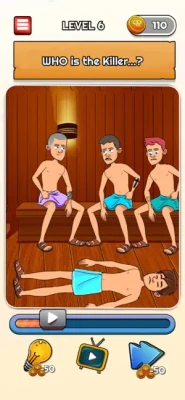
The game combines riddles, logic puzzles, IQ challenges, hidden clues, visual observation, and short mystery scenarios. Its time-control mechanic gives the puzzles a distinctive twist because an important clue may only become obvious after watching the same situation from another moment.
The App Store currently lists Flashback as a free game with optional in-app purchases, a 4.6-star rating from more than 170,000 ratings, and support for iPhone and iPad. The listing also describes hundreds of puzzles and IQ tests, multiple characters, animated scenes, and a time-control mechanic.
What Makes Flashback Different?
The biggest attraction is the way Flashback turns time into part of the puzzle.
A scene may initially appear straightforward, but something important can happen before or after the moment you are watching. Instead of guessing immediately, you can manipulate the timeline and search for the event that explains the situation.
This makes Flashback feel partly like a traditional riddle game and partly like a miniature detective game.
The main gameplay ideas include:
Time-control puzzle mechanics
Tricky riddles and brain teasers
Hidden clues
Logical deduction
Visual observation
Multiple characters and scenarios
IQ-style challenges
Animated puzzle scenes
Hundreds of challenges
Increasing puzzle difficulty
Short mystery situations that require careful interpretation
The official listing specifically highlights the ability to watch scenes, go back in time, find clues, and complete levels.
How the Gameplay Works
Flashback usually gives you a small scenario containing characters, objects, actions, or environmental details.
Your objective is to determine what is really happening.
The solution might require you to:
Watch the entire scene.
Identify anything unusual.
Move backward or forward through the available time.
Look for an action that explains the mystery.
Examine objects and characters.
Connect clues together.
Select or perform the correct solution.
Continue to the next challenge.
The important lesson is simple: do not assume the first thing you see is the whole puzzle.
Flashback rewards players who investigate the scene instead of immediately searching for an answer.
Flashback Time-Control Strategy
Time manipulation is the game's most important mechanic, so learning how to use it efficiently makes later puzzles much easier.
Watch Before You Act
When a new level begins, resist the temptation to start tapping randomly.
Watch the scene carefully first.
Pay attention to:
Character movements
Objects being picked up
Objects disappearing
Changes in the environment
Unexpected reactions
Characters entering or leaving
Actions that happen only briefly
Anything that seems inconsistent
A few seconds of observation can reveal more than several random attempts.
Rewind Important Moments
If something interesting happens, go backward and watch that section again.
The second viewing should have a specific purpose.
Instead of watching everything from the beginning, focus on the moment where the clue appeared.
Ask yourself:
What changed?
That question is often more useful than simply asking what the answer is.
Look for Cause and Effect
Many puzzles become easier when you identify the relationship between two events.
For example:
Event A → Event B
If B seems strange, investigate what happened immediately before it.
The solution may depend on discovering that A caused B.
How to Solve Difficult Riddles
Some Flashback puzzles are designed to make the obvious answer look correct when it is actually a distraction.
Use this process when you become stuck.
Step 1: Describe the Situation
Before trying anything, explain the scene to yourself in simple terms.
For example:
Who is present?
What are they doing?
What changed?
What looks unusual?
What information is missing?
Reducing the scene to basic facts prevents you from becoming distracted by unnecessary details.
Step 2: Find the Odd Detail
Every strange object, movement, expression, or event deserves attention.
Ask:
Why did the developer put this here?
If something appears unusual, there is a good chance it is relevant.
Step 3: Check the Timeline
Go backward.
Then go forward.
Compare what happens before and after the important event.
Sometimes the clue is not an object at all. It is the order in which events occur.
Step 4: Test Your Theory
Once you think you know the answer, perform the action that should prove it.
If it fails, do not immediately start guessing randomly.
Ask which part of your theory was wrong.
This makes each failed attempt useful.
Best Flashback Tips for Beginners
1. Never Rush Through a Scene
The game is about observation more than speed.
Take your time.
2. Look Beyond the Obvious
The largest object on screen is not necessarily the clue.
Small details can be much more important.
3. Use Time as a Detective Tool
Don't think of the rewind feature as simply a way to replay the level.
Think of it as your investigation tool.
4. Remember Character Behavior
Characters can provide important information through their actions.
If someone suddenly moves, disappears, reacts differently, or interacts with an object, investigate why.
5. Don't Tap Everything Randomly
Random tapping can occasionally produce progress, but it teaches you very little.
Observation and deduction are much more reliable.
6. Rewatch Suspicious Moments
If something feels important but you don't understand why, watch it again.
7. Think Literally Before Thinking Creatively
Some riddles have clever solutions, but start with what is actually visible.
Only move toward unusual interpretations after the straightforward explanation fails.
Advanced Puzzle-Solving Strategy
As the puzzles become more complicated, you should start building a mental timeline.
Imagine the level as:
Before → Event → Reaction → Result
Then determine which part of that chain contains the mystery.
For example, if a character suddenly has an object they did not have earlier, don't immediately ask where the object came from.
Instead ask:
At what exact point did the object appear?
That gives you a much smaller area to investigate.
How to Find Hidden Clues
Flashback is heavily based on visual information.
When searching for clues, inspect:
Objects in the background
Character positions
Hands and movements
Changes between frames
Items that appear or disappear
Environmental interactions
Unexpected character reactions
The sequence of events
A good rule is:
If something changes, find out why.
This is particularly useful when the scene looks ordinary at first.
Handling Trick Questions
Flashback's riddles are not always traditional questions with straightforward answers.
A puzzle may deliberately encourage you to make an assumption.
Before committing to an answer, ask:
What does the game actually show?
What am I assuming?
Is there another explanation?
Did I miss an event?
Does the timeline contradict my first idea?
This approach prevents many unnecessary mistakes.
When You Get Stuck
Getting stuck is part of the experience.
Instead of repeatedly trying the same action, reset your thinking.
Use the Three-Pass Method
Pass One: Watch normally.
Pass Two: Watch only for movement and changes.
Pass Three: Watch only for cause and effect.
Each pass gives you a different way of reading the same puzzle.
If you still cannot solve it, take a short break and return later. Puzzle games often become easier when you stop forcing an answer.
Managing Hints and Skips
Hints can be useful when a puzzle genuinely blocks your progress, but they are more valuable when you first attempt to understand the clue yourself.
A good approach is:
Try → Observe → Rewind → Think → Hint
rather than:
Try → Fail → Skip
Using the investigation process first helps you learn the game's puzzle language.
Understanding Flashback's Difficulty
Flashback starts with concepts that are easy to understand but gradually expects more careful observation and deduction.
The challenge does not necessarily come from complicated controls.
Instead, difficulty often comes from:
Misleading situations
Multiple possible interpretations
Hidden visual clues
Unexpected character behavior
Timing
Logical connections
Details that are easy to overlook
That makes the game suitable for players who enjoy brain teasers but want something more interactive than a traditional riddle app.
Characters and Mystery Scenarios
The game uses multiple characters across different puzzle situations, helping each challenge feel like a small story rather than a completely isolated question.
The animated presentation is important because characters and objects can provide clues through their actions.
Do not treat the characters as decoration.
Watch what they do.
A character who suddenly changes direction, interacts with an object, reacts to another character, or appears at a different point in the timeline may be giving you the solution.
Graphics and Atmosphere
Flashback uses colorful illustrated scenes and animated characters rather than realistic graphics.
The presentation supports the game's lighthearted mystery style.
Scenes are designed to be readable enough for players to identify objects and character actions while still hiding enough information to make careful observation worthwhile.
The result is a playful atmosphere that fits short puzzle sessions.
Flashback on iPhone and iPad
The current App Store listing supports both iPhone and iPad. It is listed at approximately 545.7 MB and requires a compatible modern version of iOS/iPadOS.
The larger iPad screen can be particularly useful for players who prefer examining illustrated scenes and small environmental details.
The game is also designed around touch interaction, making it easy to investigate scenes and manipulate the timeline.
Game Features
Brain Training
Flashback encourages observation, deduction, logical thinking, and problem solving through its collection of riddles and IQ-style challenges.
Time Manipulation
The ability to move through a scene's timeline is the game's defining feature.
Hundreds of Puzzles
The game provides a large collection of challenges covering different scenarios and puzzle types.
Different Characters
Multiple characters appear throughout the game's scenarios, creating different situations to investigate.
Animated Scenes
Movement is an important part of the puzzle design, so watching the scene carefully matters.
Progressive Challenge
Later puzzles can require more attention to detail and more careful reasoning.
Flashback Strategy Guide: Best Overall Approach
For the most consistent results, follow this routine on every difficult level:
Observe → Identify → Rewind → Compare → Test → Solve
Observe
Watch the entire situation.
Identify
Choose the most suspicious object, character, or event.
Rewind
Return to the moment immediately before the suspicious event.
Compare
Look at what changed.
Test
Perform the action that should solve the mystery.
Solve
If your theory is correct, complete the level and move forward.
This approach is much more reliable than randomly tapping objects.
Common Mistakes to Avoid
Ignoring the Timeline
If you only inspect the scene at one moment, you may miss the clue entirely.
Assuming the First Explanation Is Correct
The game frequently encourages you to look deeper.
Focusing Only on Characters
Objects and environmental changes can be just as important.
Overthinking Simple Clues
Not every puzzle requires an elaborate theory.
Start with the evidence you can actually see.
Repeating Failed Actions
If the same action fails repeatedly, change your hypothesis instead of repeating it.
Using Hints Too Early
Try to understand the puzzle first. Hints are most useful when you have already narrowed down the possibilities.
Is Flashback: Tricky Fun Riddles Difficult?
The difficulty depends heavily on your puzzle-solving style.
Players who naturally notice small visual changes and enjoy logical deduction may progress quickly.
Players who prefer direct instructions may find some scenarios frustrating because the game expects them to discover the answer themselves.
That is part of the appeal: the satisfaction comes from realizing what you missed.
Pros and Cons
Pros
Creative time-control puzzle mechanic
Large collection of riddles and brain teasers
Many different scenarios
Strong emphasis on observation
Simple touch-based controls
Colorful animated presentation
Good choice for short puzzle sessions
Suitable for players who enjoy mystery challenges
High player rating on the App Store
Cons
Some puzzles can feel intentionally misleading
Certain solutions may require repeated observation
Players who dislike trial and error may become frustrated
The game contains advertising and optional premium features
Some player reviews have reported individual level or progression issues
The App Store listing currently shows a 4.6-star rating with more than 170,000 ratings, while player reviews include both strong praise for the gameplay and reports of occasional glitches.
Flashback: Tricky Fun Riddles Rating and Player Reception
Flashback has built a substantial audience on the App Store, with the current listing showing more than 170,000 ratings and an overall 4.6-star score.
Recent player feedback highlights the game's relaxing but challenging nature, while older reviews also mention enjoying the mystery and riddle mechanics. Some players have reported problems with individual levels, showing that the experience can vary depending on the puzzle and version being played.
The game's version history continues to include performance improvements and bug fixes, indicating ongoing maintenance.
Flashback: Tricky Fun Riddles vs Traditional Riddle Games
Traditional riddle games usually give you a question and ask you to select an answer.
Flashback goes further by placing the puzzle inside an animated situation.
You are not simply answering:
"What is the answer?"
You are investigating:
"What actually happened?"
That distinction gives the game its strongest identity.
Who Should Play Flashback?
Flashback is a good choice for players who enjoy:
Brain games
IQ tests
Tricky riddles
Detective puzzles
Logic games
Mystery scenarios
Visual puzzles
Hidden clues
Casual mobile games
Short puzzle sessions
It is especially appealing if you like games where the solution requires observation rather than fast reflexes.
Final Verdict
Flashback: Tricky Fun Riddles is an inventive mobile puzzle game that turns ordinary brain teasers into interactive mystery scenes.
Its strongest idea is the time-control mechanic. Instead of simply staring at a puzzle and guessing, you can revisit events and search for the moment that reveals the answer.
The combination of animated scenarios, hidden clues, riddles, IQ challenges, and logical deduction gives Flashback a distinctive identity among mobile brain games.
If you enjoy solving mysteries, finding details other players miss, and figuring out how events connect, Flashback is well worth trying.
Frequently Asked Questions
What is Flashback: Tricky Fun Riddles?
Flashback: Tricky Fun Riddles is a mobile brain puzzle game combining riddles, IQ tests, visual clues, mystery scenarios, and time-control gameplay.
What is the main mechanic in Flashback?
The main mechanic is controlling the timeline of puzzle scenes. Players can revisit events and search for clues that reveal what happened.
Does Flashback have many puzzles?
Yes. The game is built around hundreds of puzzles and IQ-style challenges across different scenarios.
Is Flashback a puzzle or adventure game?
It combines both styles. The App Store categorizes it under Adventure while describing it as a brain and puzzle game.
Is Flashback available on iPhone?
Yes. The current App Store listing supports iPhone and iPad.
Does Flashback require fast reflexes?
No. Observation, logical thinking, and understanding the sequence of events are much more important than reaction speed.
What should I do when I cannot solve a level?
Watch the scene again, rewind important moments, identify what changed, and test a different explanation. Avoid repeating the same failed action without changing your theory.
Is Flashback good for brain training?
The game is designed around riddles, logical challenges, IQ tests, observation, and problem solving, making it a natural choice for players looking for casual brain-training gameplay.
Does Flashback contain in-app purchases?
Yes. The App Store listing states that the game contains in-app purchases and a premium subscription option with additional features and an ad-free experience.
Rate the Game
User Reviews












Popular Games


















 Android
 iOS
iOS Windows
 Xbox
Xbox