

Latest Version
October 05, 2026
Gamehouse LLC
Puzzle
iOS
0
Report a Problem
More About :game
With more than 190 levels, nine hidden-object modes and over 20 historical events, the game combines observation, puzzle solving and exploration with a stylish time-travel story.
What Is Zapplin Time! Hidden Object?
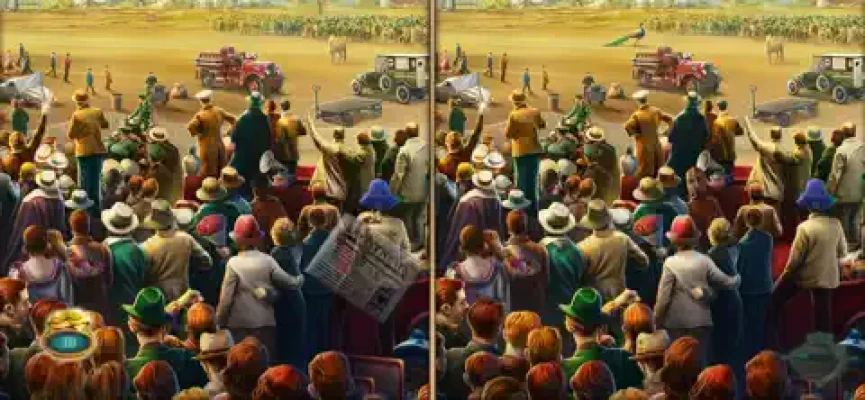
Zapplin Time! Hidden Object is a puzzle and mystery adventure from GameHouse that blends classic hidden-object gameplay with a time-traveling journey through the 1920s.
Players board the fictional Zapplin airship and travel around the world, visiting locations inspired by the glamorous atmosphere of the Roaring Twenties.
The adventure includes destinations such as Parisian cafés, Berlin cabarets and New York mansion parties, creating a strong historical atmosphere around the hidden-object gameplay.
Instead of simply searching through unrelated scenes, players follow mysteries and historical events while collecting objects, completing puzzles and unlocking achievements.
Zapplin Time! Hidden Object Gameplay
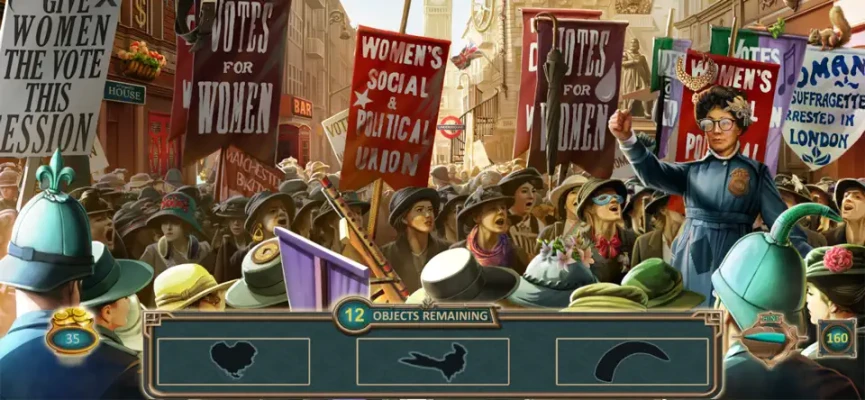
The central gameplay revolves around searching detailed scenes for specific hidden objects.
A typical level asks you to examine the environment carefully and locate objects that may be blended into the scenery.
The challenge comes from:
Small or partially concealed objects
Distracting background details
Different hidden-object modes
Time or performance pressure
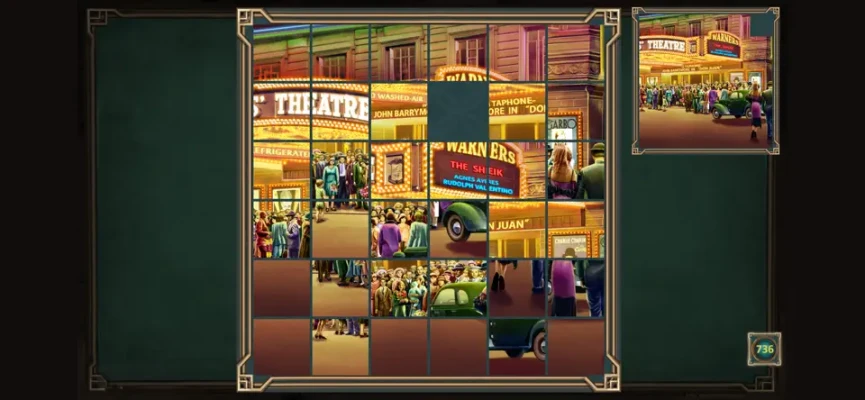
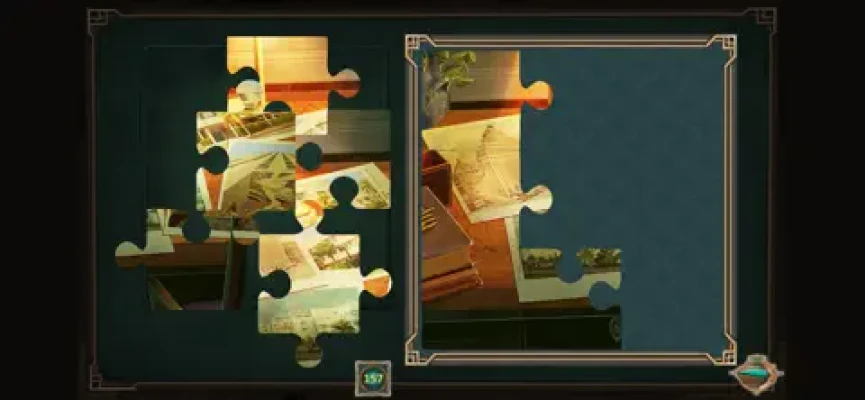
Puzzle sequences
Increasingly complicated scenes
Objects that don't immediately look like their expected shape
The game contains more than 190 levels, giving players a substantial amount of hidden-object content to work through.
The 1920s Time-Travel Adventure
The setting is one of the game's biggest attractions.
The Zapplin airship provides the framework for a journey through the 1920s, allowing the adventure to move between different places and historical situations.
Rather than presenting history as a textbook, the game incorporates historical themes into its mystery and hidden-object structure.
Players can explore locations inspired by:
Paris
Elegant cafés and the sophisticated atmosphere of 1920s Paris provide some of the game's most visually distinctive environments.
Berlin
Cabarets and nightlife create a very different visual style and introduce new surroundings to search.
New York
Mansion parties capture the wealth and social energy associated with the era.
The game ultimately covers more than 20 worldwide historical events, giving the adventure a broader scope than a conventional hidden-object title.
Complete Hidden Object Strategy Guide
1. Don't Search Randomly
One of the easiest ways to waste time is scanning the entire screen without a plan.
Instead, divide the scene into sections.
For example:
Top left → top center → top right → middle → bottom
Search each section systematically before moving to the next.
This prevents your eyes from repeatedly checking the same areas.
2. Look for Unusual Shapes
Hidden objects are often designed to blend into their surroundings.
Instead of searching for a perfect, obvious image, look for:
Unusual outlines
Unexpected colors
Straight lines in natural environments
Objects partially covered by other items
Familiar shapes in unusual locations
Train yourself to recognize silhouettes rather than relying only on color.
3. Check the Edges of the Screen
Objects near the edge of a scene are easy to overlook.
Always inspect:
Corners
Door frames
Windows
Furniture edges
Shelves
Decorative borders
Dark areas
A quick scan around the perimeter before searching the center can save considerable time.
4. Search From Large Objects to Small Details
Start by identifying large pieces of scenery.
Then examine the areas surrounding them.
For example, if you see a large cabinet, don't just inspect the cabinet itself. Look at:
Handles
Shelves
Objects on top
Gaps underneath
Decorative elements
This makes complicated scenes easier to break down.
5. Use Contrast to Your Advantage
Objects that blend into the scene may still have subtle differences in brightness or texture.
If you're searching for something dark, check dark corners and shadows carefully.
If you're looking for a bright object, inspect reflective surfaces and illuminated areas.
The goal is to notice something that doesn't quite belong.
6. Don't Overthink the Object's Location
A common mistake is assuming that an object should logically appear where it belongs.
A shoe doesn't necessarily need to be near clothing.
A kitchen item doesn't necessarily need to be beside other kitchen objects.
Hidden-object games deliberately place items in unexpected locations.
Search based on appearance rather than logic.
How to Find Objects Faster
When the scene becomes crowded, use a consistent process.
Step 1: Read the entire object list.
Don't immediately search for the first item you see.
Step 2: Identify easy objects.
Remove obvious targets first.
Step 3: Search distinctive shapes.
Items with unusual silhouettes are easier to identify.
Step 4: Scan difficult areas.
Move toward cluttered shelves, furniture and dark corners.
Step 5: Recheck the scene.
After several objects disappear, previously hidden details can become much easier to see.
This final step is particularly useful in complicated scenes.
Strategy for Different Hidden-Object Modes
Zapplin Time! Hidden Object includes nine different hidden-object modes, so players shouldn't expect every level to follow exactly the same search pattern.
The best strategy is to first determine what the current mode is asking you to recognize.
Some modes may reward simple visual recognition, while others can require closer attention to details, patterns or unusual object presentations.
General rule:
Understand the search rule before searching for the objects.
Trying to use the strategy from one mode in another can make an easy level feel unnecessarily difficult.
Puzzle-Solving Tips
Hidden-object scenes aren't the only challenge.
The game also includes puzzles that help move the mystery forward.
When facing a puzzle:
Examine every interactive element.
Look for visual patterns.
Check whether nearby objects provide clues.
Don't rush through unfamiliar mechanics.
Remember unusual symbols or numbers.
Test one idea at a time.
If you become stuck, step away from the puzzle briefly and examine the surrounding scene again.
A clue that seems meaningless at first may become obvious after you understand the objective.
How to Avoid Missing Hidden Objects
Some objects can be surprisingly difficult to spot because they blend into the environment.
Use these techniques:
Zoom Your Attention
Even if the game doesn't provide a conventional zoom function, mentally enlarge small sections of the screen by focusing on one area at a time.
Look Behind Decorations
Inspect objects placed near paintings, furniture, curtains and decorative items.
Check Repeated Patterns
An object may be hidden inside wallpaper, clothing patterns or architectural details.
Search for Color Breaks
A tiny difference in color can reveal an object that otherwise disappears into the background.
Recheck After Completing Part of the List
Once several objects have been found, the remaining targets often become easier to notice.
How to Handle Difficult Levels
When a level feels impossible, don't immediately assume that you're missing one tiny object.
First ask:
Have I searched every corner?
Did I check behind large objects?
Did I inspect the background?
Have I searched by shape rather than meaning?
Did the current hidden-object mode change the rules?
Have I accidentally overlooked an object that blends with the environment?
A systematic second search is usually more effective than randomly tapping the screen.
Airship Customization
The Zapplin is more than a way to travel between locations.
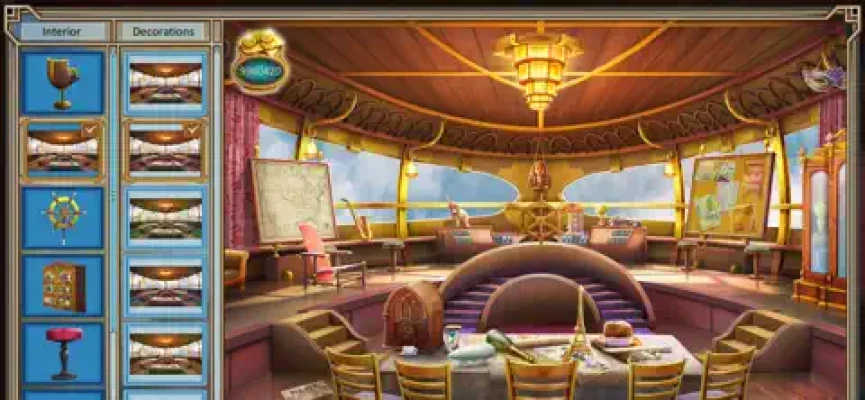
Players can customize the airship's:
Interior
Exterior
Appearance
This provides a progression system outside the hidden-object scenes and lets players personalize their time-traveling base.
Take advantage of customization as you progress rather than treating it as a purely cosmetic afterthought. It gives the adventure a stronger sense of personal progression.
Character Costume Customization
The game also allows players to customize passenger and character costumes.
This fits naturally with the 1920s setting, where fashion is an important part of the game's atmosphere.
Costume customization adds variety between hidden-object stages and reinforces the feeling that you're traveling through a distinct historical era.
Trophies and Achievements
Completing hidden-object levels isn't the only form of progression.
The game includes trophies and accolades connected to solving mysteries and progressing through the adventure.
If you're aiming for full completion, don't simply rush through every scene.
Pay attention to:
Puzzle opportunities
Mystery progression
Special objectives
Different hidden-object modes
Collectible or achievement-related goals
A completion-focused playthrough should treat each location as more than just another hidden-object screen.
How to Approach the 190+ Levels
With more than 190 levels, maintaining a consistent strategy becomes increasingly important.
Don't try to memorize every scene.
Instead, memorize your search method.
A good routine is:
Read → scan → clear easy objects → search difficult areas → recheck → solve the puzzle → continue the mystery.
This works better over a long campaign than relying on memory alone.
Historical Events and Exploration
One of the game's distinctive features is the combination of hidden-object puzzles with historical settings.
The adventure includes more than 20 worldwide historical events, making exploration an important part of the experience.
This gives the game a broader identity than a standard hidden-object collection.
The historical environments also create opportunities for visual storytelling. Architecture, clothing, furniture and social settings help make each location feel different.
Best Tips for New Players
If you're starting Zapplin Time! Hidden Object for the first time, keep these tips in mind:
Don't Tap Randomly
Random tapping wastes time and doesn't improve your ability to recognize objects.
Develop a Search Pattern
Always move through scenes in the same general order.
Look for Silhouettes
Shape can be more recognizable than color.
Inspect Clutter
The busiest parts of the screen often hide the hardest objects.
Read Carefully
The exact wording of an object can sometimes give you a clue about what you're looking for.
Learn Each Mode
Nine hidden-object modes means the rules can change.
Enjoy the Story
The mystery and historical journey are a major part of the game's appeal.
Advanced Hidden-Object Techniques
Use Peripheral Vision
Don't stare at the center of the screen exclusively.
Your peripheral vision can detect unusual movement, color or shape differences around the edges.
Search by Category
If the target list contains several objects of a similar type, search the scene for that general category.
For example, if you need several pieces of clothing, scan wardrobes, chairs, mannequins and characters first.
Use Negative Space
Sometimes an object is easier to identify by the empty area around it.
If a shape interrupts an otherwise regular background pattern, investigate it.
Recheck Changed Areas
After objects are found, the scene can become visually easier to read.
Always make a final scan of previously difficult areas.
What Makes Zapplin Time! Hidden Object Different?
Several features give the game its own identity.
Time Travel
The 1920s setting provides a strong theme for the mystery.
Airship Adventure
The Zapplin acts as the centerpiece of the journey.
Global Locations
The game travels through different locations rather than remaining in one setting.
Historical Events
More than 20 historical events are incorporated into the adventure.
Multiple Hidden-Object Modes
Nine modes help prevent every level from feeling identical.
Customization
The airship and character costumes can be customized.
Mystery and Puzzles
The game combines object searching with puzzle solving and mystery progression.
Graphics and Atmosphere
The game's greatest visual strength is its period setting.
The 1920s provide plenty of opportunities for distinctive environments, from elegant social gatherings to atmospheric European locations.
Parisian cafés, Berlin cabarets and New York mansion parties each create a different visual identity.
The result is a hidden-object adventure that feels more like a journey through a historical mystery than a collection of unrelated puzzles.
Difficulty Guide
The difficulty of a hidden-object game isn't determined only by the number of objects.
Scene design matters just as much.
A scene with fewer objects can actually be harder if:
The colors are similar.
Objects blend into the background.
The target is unusually small.
The scene contains many distracting details.
The object appears in an unexpected form.
When difficulty increases, slow down and become more systematic rather than simply searching faster.
Pros and Cons
Pros
More than 190 levels
Nine hidden-object modes
20+ historical events
Time-travel mystery setting
Global locations
1920s atmosphere
Airship customization
Character costume customization
Puzzle-solving elements
Trophies and accolades
Large amount of hidden-object content
Cons
Some scenes can become visually cluttered
Players who dislike repetition may find long hidden-object sessions tiring
The free version contains advertising
Optional GameHouse+ subscriptions and in-app purchases are available
The App Store currently lists the game with an 18+ age rating
The current App Store listing shows a 4.9/5 rating from 27 ratings. It also lists advertising and optional in-app purchases.
Is Zapplin Time! Hidden Object Worth Playing?
If you enjoy hidden-object games, mystery adventures, historical settings and puzzle games, Zapplin Time! Hidden Object has a lot to offer.
Its biggest advantage is variety. Instead of placing players in one repeated environment, it uses the Zapplin airship to create a worldwide adventure through the 1920s.
The combination of more than 190 levels, nine hidden-object modes, historical events, puzzles and customization gives the game enough variety to appeal to dedicated hidden-object fans.
The historical theme is particularly effective because the locations aren't simply backgrounds. They help establish the identity and atmosphere of the adventure.
Frequently Asked Questions
How many levels does Zapplin Time! Hidden Object have?
The game features more than 190 levels.
What is Zapplin Time! Hidden Object about?
It is a time-travel mystery adventure in which players travel aboard the Zapplin airship through the 1920s while finding hidden objects and solving mysteries.
How many hidden-object modes are included?
The game features nine different hidden-object modes.
Does the game include historical events?
Yes. The game features more than 20 worldwide historical events as part of its time-travel adventure.
Can you customize the Zapplin?
Yes. Players can customize the airship's interior and exterior.
Can you customize characters?
Yes. Character and passenger costumes can be customized.
Does Zapplin Time have puzzles?
Yes. In addition to hidden-object scenes, the game includes puzzles and mystery-solving elements.
Does the game have achievements?
Yes. Players can unlock trophies and accolades as they solve mysteries and progress through the adventure.
Is Zapplin Time! Hidden Object free?
The App Store lists the game as free with advertising and optional in-app purchases. GameHouse+ also provides subscription options, including an ad-free VIP option.
What is the best strategy for hidden-object scenes?
Search systematically instead of randomly tapping. Divide the screen into sections, identify easy objects first, then inspect cluttered areas and recheck the scene after finding several targets.
Final Verdict
Zapplin Time! Hidden Object is a strong choice for players who enjoy searching, puzzles and mystery adventures but want something with a distinctive setting.
The combination of a time-traveling airship, 1920s locations, more than 190 levels, nine hidden-object modes and over 20 historical events gives the game a substantial amount of content.
Its best quality is the way the hidden-object formula is connected to a larger journey. You're not simply moving from one random picture to another; you're traveling through different historical environments while following mysteries and unlocking trophies.
For the best results, develop a consistent search pattern, learn how each hidden-object mode works, inspect clutter carefully and take your time with puzzles.
If you're a fan of hidden-object puzzle games, mystery games, time-travel adventures or historical casual games, Zapplin Time! Hidden Object is well worth adding to your list.
Rate the Game
User Reviews










Popular Games


















 Android
 iOS
iOS Windows
 Xbox
Xbox